Randy Greenwald

Concerning Life as It Is Supposed to Be

George Whitefield, Celebrity

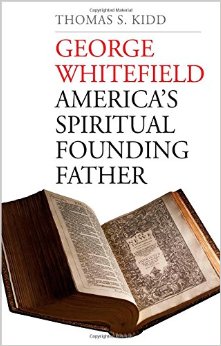
I joked recently that I’ve done irreparable damage to any chance of ever becoming a celebrity pastor by, well, just being me. There never has been any danger of my being swept up on the celebrity circuit and I’m okay with that. Thoughts about celebrity and its place in the Christian world have been on my mind for some time and were brought to the forefront recently by my reading of the concise, readable, and helpful biography of George Whitefield by Thomas Kidd, George Whitefield: America’s Spiritual Founding Father.

George Whitefield was an influential figure in the Evangelical Awakening of the mid-18th Century, a powerful preacher, and probably the most famous person in America and England during the time of his prominence. Think Bono. With a powdered wig. Bono WhitfieldKidd tells Whitefield’s story with care and insight.

A trap that can plague biographies of Christian heroes is that the authors can so fawn over their subject that weaknesses disappear. A corresponding and opposite trap is that authors can so labor to avoid the first that they will hide their genuine admiration for their subject and in so doing downplay aspects of their subject that makes him or her admirable. Kidd clearly admires Whitefield and believes his contribution to evangelical Christianity as well as American history is a story needing to be told. At the same time, he does not hesitate to expose Whitefield’s disappointingly pragmatic take on slavery and his insensitive and neglectful treatment of his wife. Some may think that these faults so color Whitefield’s legacy that we should be wary of praising him, and I tend in that direction. Kidd is wise enough to not pass that judgment. No saint comes without vice. I get that.
Whitefield Kidd
Whitefield, born just over 300 years ago, as 1715 dawned, was converted to evangelical Christianity as a young man and was early captured with a passion to preach to the conversion of others. He was ordained in the Anglican church but never filled a traditional clerical role. Driven to preach an evangelistic message he sought the crowds where they might be found, and more often than not they were found outside in massive gatherings both in the England of his birth and on seven trips across the Atlantic, in the colonies of the Americas. Through such labor he became the most famous man in the English world of the time.

That is, he was a celebrity. Word would spread that he would be preaching at a certain location at a certain time, and before long, sometimes as many as 20,000 or more people would gather to hear him. Then, as now, I suspect that caused the ordinary parish preacher to wonder what he would need to do to live up to the expectations that the passing celebrity would leave in his wake.

Kidd wants us to be aware of Whitefield’s impact upon the American character and the movement that would two centuries hence be known as evangelicalism. As a pastor and a Christian I want to know what was going on in Whitefield’s heart. Whitefield left a series of published journals, but these were edited by him prior to publication. What would I excise from my journals were I to edit them for publication? It would depend upon the image that I wanted to present, and I wonder to what effect such editing colors what we know of Whitefield. The specter of celebrity creates a filter behind which no doubt some hide.

Celebrity is often the price that those who are called to lead in the church must pay. My ministry has been shaped by men who would be labeled celebrity but whose celebrity has arisen from gifts which God has used to give leadership to the broader church. Those celebrated for their leadership deserve to be heard. Those who promote themselves in order to be celebrated do not. And rarely, I suppose, can we tell the difference.

George Whitefield is a strong biography and I am grateful for it and commend it highly. That I come away from it with a lower regard for its subject than I probably should is more a reflection of my own bias toward local church ministry and away from the mass public ministry of the celebrity. That will continue, of course, until I become one. I think I might be waiting a while.

Note: special thanks to my son Seth for any alleged Photoshop work which might appear in this post.
Moral Order

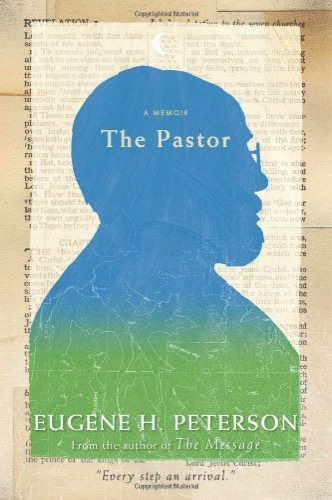
I hope it was not implied in my previous post that because I thought that Eugene Peterson’s memoir The Pastor was not a good memoir that I therefore thought any less of Peterson himself. Far from it. His voice is still a clear and meaningful one for those of us seeking to be pastors in the 21st century.

As such, I find that I resonate with him on many topics. One incidental comment made in his memoir has to do with detective fiction:

When I don’t know what to do, I read a murder mystery. Murder mysteries are the cleanest, least ambiguous moral writing that we have. All the while you are reading, no matter how confused you are about the motives or the significance of clues, you know that eventually the murderer will be identified and justice done. Just stay at it long enough and everything will be sorted out.”

Agreeing with this is Denis Haack as he quotes mystery author P. D. James:

“What the detective story is about,” author P. D. James says, “is not murder but the restoration of order.” …we yearn for order, prefer it, and instinctively know that disorder can blossom into a chaos that can be deadly. In such a world, when a detective solves the crime a bit of order is restored in a corner of our badly fragmented world. Even a fictional account can refresh our hope that against all odds order just might be able to be restored.

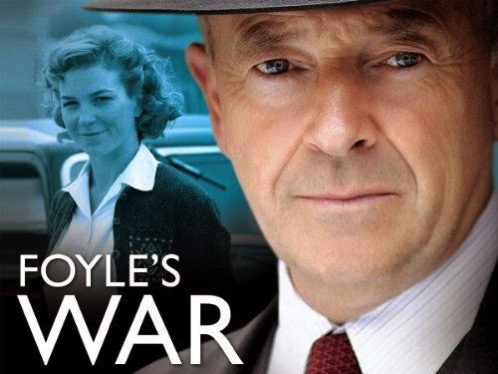
Haack goes on to commend a recently completed ten-year British detective show called Foyle’s War which exemplifies this point.
Foyle s War 1

We have watched some of the episodes multiple times, purely for the enjoyment of seeing them. At the end we are always satisfied, not simply because a measure of order has been restored, but because we feel edified, having watched a virtuous character bring law, justice, and mercy into his corner of a broken world.

I hope to have more to say about Foyle’s War, easily my favorite television series in recent memory. In the meantime, read P. D. James or sit on the couch and begin the 20 plus episodes of Foyle’s War. Well, well worth it.

The Pastor – Eugene Peterson

Over half of my thirty years of pastoral ministry have been deeply marked by the refreshing vision of pastoral ministry embodied by Eugene Peterson and given expression in his books, particularly The Contemplative Pastor and A Long Obedience in the Same Direction. His sense of pastoral vocation affirmed for me a focus on pastoral care and the weekly rhythms of congregational life. He came to me as a freeing mentor delivering me from ministry models majoring on ways to grow a church. His affirmation in many ways has saved me from burning out and giving up. His is a critical voice for those called to be ordinary pastors.

So when a friend recently mentioned that he was reading and enjoying Peterson’s 2011 memoir titled simply and profoundly The Pastor, my heart ached to read it. Perhaps I should have tempered my fan-boy expectations, for I came away disappointed and sadly unsatisfied.The pastor

Peterson is foremost a story-teller, and this book is best when he simply tells his story. When freed to tell his stories, he soars. But then he attempts to apply them or draw a moral from them, and the wind falls from beneath the wings. This is more an exposition of his pastoral theology with his life and that of his congregation serving as extended illustrations of the pedagogical purpose. There is a place to develop a pastoral theology. Just don’t call it memoir. It feels as if he has begun to no longer trust his reader to draw the lessons he feels can be learned from his life, and so he insists on telling, and not just showing, and this detracts from the whole.

But unquestionably the greatest flaw is the book’s lack of transparency. Too much is hidden and unsaid. This is fatal in a memoir.

The pastors I know struggle. We struggle with doubt, with disappointment, with anger, and we feel these things intensely. A pastor’s heart is often broken. We disappoint people, we make mistakes, we worry, we question, we hurt and are hurt. How can this book about a pastor’s life be genuine and real without stories of heartache and rejection? A pastor’s life without darkness does not sound like any pastor I know. The only glimpse we have of Peterson’s emotional life are the tears at his mother’s funeral.

Of course, ministry has joys as well. When he speaks of joy in ministry it comes across as clinical. He speaks of his writing, but he says nothing about the thrill of being published, nothing about the agony or prospects of rejection, nothing of his writing habits, little of the tension between his writing and his pastoral ministry. It’s all very theologized, and in fact, boring for those who want to know both what is it like to be Eugene Peterson and what it might be like to be a pastor who also writes.

The lack of honesty tilts to a kind of boasting which conflicts with the humility I’ve come to expect from Peterson. A number of the sections begin with his analysis of weakness in a pastoral model, or a way of ‘doing church’, and then proceeds to show how he, and his church, got it right. This is off-putting, and feels false.

But maybe he was different? I don’t think so. The final three pages of the book is a letter he wrote to a young pastor. Here alone, at the end, we see hidden references to the honesty lacking from the rest of the book. He speaks to this young pastor of not knowing what to do, of making mistakes, and of ‘faithless stretches’. This feels real, like the vocation I inhabit. But he says nothing more about it, and that is the glaring hole at the center of the book.

This is not a bad book. Eugene Peterson is not capable of writing a bad book. But it does not feel honest or true to its genre, and that makes it uninteresting, and that, in the end, makes me sad.

To Love Psalm 127

After our third child was born we thought our family had found its natural limit. That was before we discovered there were ways to have children AFTER the wife has a total hysterectomy.

After the fifth was born and hauled home in our VW Vanagon, I joked that the proper translation of Psalm 127:5 was ‘blessed is the man whose Vanagon is full of them’. And suddenly, there was a sixth and an eight passenger van.

I joked. For many, this verse is no joking matter. It us the centerpiece of disappointing controversy and deep sorrow. And it is the psalm I preached on this past Sunday.

Psalm 127 can be dicey territory for a preacher. A friend knowing that I was heading into ‘quiver-full’ territory emailed me, “I hate that quiver-full verse. I cringe every time I read it.” It’s no wonder she would. An entire industry of guilt has arisen around it.

In the sermon (which you can hear here when it is posted) I did not address directly the ‘have-as-many-babies-as-you-can’ corruption of the psalm that some have made popular. I was not avoiding it. It’s just that this is NOT what the psalm is about. The psalm is about the rest that comes to those who belong to God, which makes the guilt inducing application of the psalm particularly troublesome to me. Along the way, I made these interpretive points:

  1. Just because a text mentions a thing does not mean that the text is about that thing.
  2. This psalm is about blessing, not command.
  3. This psalm is not about how we do a thing, but how we view a thing.

The application of the psalm is in verse 2: God grants rest. He grants rest through his justifying us in Christ. In Christ, we are blessed. In him we find sleep without restlessness because what matters most to the wandering soul is to know he has a home and that he is at peace with God.

The fallen human impulse is to seek to justify ourselves, to seek to make ourselves somehow worthy in the eyes of those who matter to us: parents, employers, friends, the world, God. We find what matters to those we wish to please, and we try to provide the success, talent, looks, money, houses, children, or whatever else is the currency of justification in order to gain the acceptance we crave. But that is all vain – for what matters is not what we do but who we are, and we are, through Christ, his. Rest only comes when we embrace that. That is what the psalm is about.

The reference to children in this psalm is not the application of it, but an illustration of the point that the things we think we produce to earn favor we can never produce. They, like success, security, and whatever else we crave, are a gift from his hand. This passage is NOT about children. It is about rest, relief from the agony of self-justification.

We are told that children are a blessing and that it is therefore imperative that genuinely godly people not do anything that would limit the blessing of God. That is the guilt trip mapped out for couples who consider limiting the size of their families.

Of course children are a blessing. So are, in this psalm, houses and security. So are, elsewhere, food on the table and crops in the field. We set limits on blessings all the time. We are not animals acting upon impulse and bound by biology. We are men and women created in the image of God. We have wisdom; we understand prudence.

A large or small family is not an emblem of godliness in either direction. Every couple must exercise wisdom and prudence in these decisions, and they are best made with good counsel in a healthy community. I will in fact remind couples who are making these decisions to think carefully about the anti-child bias of our culture that we as Christians easily imbibe. But there is no biblical mandate commanding every or any couple to have as many kids as the wife’s body can produce.

To impose one vision of ‘the good-life’ and to invoke spurious biblical justification for it is deeply irresponsible. It causes people who love Jesus and who want with every fiber of their being to glorify him in every area of their lives, like my friend, to battle a guilt they need never feel.

That a psalm written to encourage rest becomes ‘cringe-full’ multiplies the tragedy. I want to reclaim this psalm for the exhausted who need rest. That would be just about all of us.

White/Gold and Blue/Black Sermons

Ah, the Dress. By now we all know about The Dress. One color combination to one group of people; a different combination to another. The phenomenon was all the rage and ‘so last week’.

Dress

This is a phenomenon well known to any preacher. Several weeks ago I met with a friend on a Tuesday morning, and he got serious with me.

“Randy, I want to tell you this as a friend. Sunday’s sermon was way too long. I even checked with my wife, and she agreed.”

I take such things to heart. But then I don’t know what to do with them when the next day I hear from another.

“Randy, when is that sermon going to be posted online? It was so helpful and I need to hear it again.”

I asked if it was too long and, as expected, the answer was, “Heaven’s no.”

There is nothing new under the sun. Just occasionally, the Internet notices it.

Gilead, Re-visited

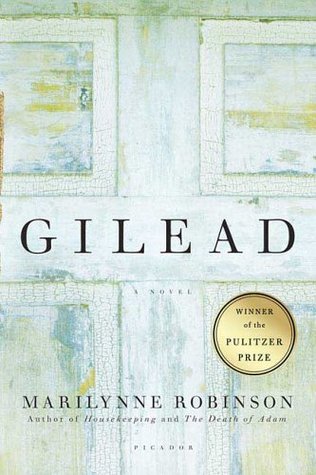
Recently I was approached by a woman who was reading, or attempting to do so, Marilynne Robinson’s novel Gilead for a book discussion group. The group had chosen the book upon my recommendation, so her considerable frustration with the book was focused on me.

“Tell me why it is you are making me read Gilead.”

“I’m not making you read it.”

“I know. But you must have some reason for recommending it, something we’re supposed to see in it. But I’m just not seeing it.”

Her conclusion was that she was simply too stupid to ‘get’ it which, obvious to all who know her, is by no means the case. I suggested she stop reading something she doesn’t enjoy, but she is of that stock that will plow to the end of the row no matter how many stones lie in the path.

I have yet to hear whether she has completed it. But the conversation raised a good question. Why would I recommend this book? Since I was nearing the end of my own (second!) reading, I was in a place to consider it.

❦ ❦ ❦

Gilead

Gilead is the name of a small town in Iowa, the home of the Reverend John Ames, the elderly pastor of the local Congregational church, a church served previously by his father and his grandfather. Though in his 70s, Rev. Ames has a seven year-old son, his only child. He knows that his time with his son will be brief and not like that of other fathers. He sets out, therefore, to write a letter to convey something of his heart and history to a son with whom his time will be short. The book is this letter.

This father’s desire is to say to his son what needs saying. He wants to give him not only a sense of his history, but some direction for his future. He recounts stories, and sometimes personal or theological reflections on those stories. Through it, Rev. Ames wishes to honor and bless his son and leave him an enduring legacy.

❦ ❦ ❦

Great books invite multiple visits yielding fresh treasures with each visit. Gilead does not disappoint.

My first reading impressed me with wonder at the care and sensitivity with which the author, a lay female, had drawn the character of her protagonist, a male pastor. [I commented on that first reading here.] She sketches him with insight and care neither magnifying his weaknesses nor obscuring his sins. In John Ames, we see reflected the best that can be said for those whose desire it is to care for the souls of others while trying to make sense of his own. In him I see those many I’ve been privileged to know and observe, pastors rarely noticed by the world they faithfully serve.

When the spotlight normally falls on pastors, it is because of their exceptional gifts or prodigious foolishness. The ordinary faithful and flawed pastor (of which there are many) goes largely unnoticed. To find a pastor so sympathetically and accurately portrayed in a novel so widely acclaimed is a wonder which alone makes reading the book worthwhile. It gives honor to countless men and women who quietly and faithfully serve Christ in such undramatic but substantive ways.

My second reading, however, has pushed the impressions of the first to the side. Larger themes, noticed but unconsidered in the first reading, have emerged. The book brims with reflections on fathers and sons and the relationship between them. How do older generations bless the younger? Or, as it may sometimes be, curse them? How do younger generations genuinely honor the older? How can the powerful impact of the generations be navigated so as to possibly maximize blessing? Good art raises and rarely answers questions. Fiction creates a parallel world by which we can measure our own.

The book also addresses the struggle between belief and doubt. Faith is never taken for granted or shown to be an easy thing. Doubt wells up with differing levels of intensity in different characters. Are some of us meant to believe and others meant not to believe? Do we freely choose belief and unbelief? Pastor Ames wrestles with his faith mightily and is troubled by the doubts of others, particularly his friend’s son Jack. In Jack, he sees an inverse reflection of himself, and it troubles him.

Fathers, sons, faith, doubt, and through it all grace. Grace displayed, lived out, and, sometimes, rejected.

❦ ❦ ❦

Robinson Marilynne

Huckleberry Finn introduces the novel titled after him by threatening to shoot anyone trying to find a plot in the book. Those attempting to find a plot in Gilead might wish to shoot the author. The plot is revealed in a non-linear fashion. A story is told of a life well-lived, intersecting and impacting the lives of others in a profound way. There is conflict; there is climax; there is resolution. It develops slowly and erratically and is meant to be savored, not devoured. First one, and then another character is illuminated, as then, in their reflection, are we. And that is good.

Or it can be.

I’m glad that my friend is diligent and will finish the book. I hope she grows as fond of the Reverend John Ames, and of his creator, as I have. I hope she thanks me for ‘making’ her read it.

Unsupported Assumptions

A pastor queried for a series being run on the website of The Gospel Coalition made this observation to support his advice to young pastors:

Much evangelical preaching tends to be either therapeutic or moralistic, regardless of theological persuasion.

That may or may not be true, of course, but there is no way of disputing it. The man making the claim preaches most Sundays, so he can’t have much personal experience by which to make such a judgment. I can’t imagine how he has researched this claim, nor does he cite the research of others. How can he make the claim? Is it because we grant such leeway unthinkingly to prominent pastors?

I’m not sure why without support we are supposed to accept such claims. Maybe no one does. Or maybe they do. I can’t claim to know one way or another.

Randy and the Professor

The church I pastor is located just two miles from a seminary that trains pastors for many denominations, including my own. One of the professors there is a friend who was a classmate of mine when we ourselves were in seminary several centuries ago. Not too long ago he posted something on Twitter that I thought would be worth discussing and which I saw as a good excuse to meet him for breakfast. The Professor suggested we meet on Thursday, January 22.What follows is what happens when the pastor tries to make a date to meet the professor.

The Professor suggested we meet on Thursday, January 22, to which I replied:

That Thursday is just about the only morning I CAN’T do breakfast. Normally, any morning T-F works great. How about another suggestion? My only conflicts would be 2/4 and 2/5.

So, the Professor shot back this counter-offer:

Monday, 1/26?

Which puzzled me and launched me into some exegetical fantasy at his expense:

Your exegesis of my email is lacking at ONE crucial point, Professor. Before I give you a low grade, I’ll give you a chance for a do-over.

Here was the crucial sentence:

“Normally, any morning T-F works great.”

Some commentators suggest that this was the work of a later redactor, but I think a case could be made that it was indeed a part of Randy’s original epistle. Some have suggested that the technical term T-F is a reference to a time period beginning ‘Today’ and extending to ‘Forever’ but most lexicons agree that a more probable understanding is a time period occurring repetitively beginning with ‘Tuesday’ and terminating on ‘Friday’. Given the former interpretation, Monday, 1/26 would in fact be acceptable. But if the standard lexical data is correct, then a suggestion of Monday, 1/26 falls outside the given parameters.

So, please redo the assignment and submit it by noon today for no loss of grade.

The Professor, getting into the spirit of the thing, parried my challenge with this:

So you think you divine my intentions? There is a conditional construct well-known to students of George W. Knight termed “contrary to fact.” An example would be an offer for an engagement on a day when the offeree is not available, such as “I know you can’t do it then (implied), but how about Monday?”

But granting the perspicuity of the original author, How about 2/27? Is 7:30 okay? 7:00 is fine, too. We could meet near or in the direction of campus.

In reality, I judged this to be an oddly distant date, but I put it in my calendar nonetheless:

The Tuskawilla Panera is fine. I think we met there before. And either time is okay. On a Friday, the 730 is slightly better for me.

There we were set. I thought. The Professor confirmed thus:

Let’s do 7:30 at Tuskawilla Panera on Tuesday, 1/27.

Puzzled, I responded:

You ARE making exegesis tough. Now we need to bring textual criticism into play, and I’m not very good at that. The earlier text, which should have the preference, says 2/27.

“But granting the perspicuity of the original author, How about 2/27?”

However, the later manuscript adds detail, Tuesday, and is more likely since the original proposed a date that was so far out.

“Let’s do 7:30 at Tuskawilla Panera on Tuesday, 1/27.”

Now, I judge the later manuscript in this case to be the more accurate, harking back more closely to the original intent of the author. That being the case, the Mitchell Hammock Panera would, in fact, be more convenient for me. And this being a Tuesday and not a Friday, the time does not matter. We’ll stick with 730 unless you prefer the earlier time.

Replied the Professor, on Tuesday, January 20, mind you:

Oh the glories of multitasking. Yes, I intended March 27…just kidding. I intended Jan 27. If that works, please absolve me and I”ll see you a week from tomorrow.

Which required this from me:

So, though a week from tomorrow will be Wednesday the 28th, nevertheless, I’ll stick with the weight of the given manuscripts and be at Panera on Mitchell Hammock at 730 on Tuesday, January 27th. Here I stand; I can do no other.

Which left us one exasperated Professor:

God help us all. Can’t believe it’s Tuesday already.

For all I know, I’ll be having breakfast alone tomorrow!

So(m)ber and Dull

Stephen Kumalo, as far as I know, never existed. He is the fictional Zulu Anglican priest in Alan Paton’s novel Cry, the Beloved Country. His faithfulness, his integrity, and his suffering there portrayed have been qualities which have endeared him to me. And if, in fact, he never existed, his kind nevertheless exists in pastors who are like him in character and work laboring in obscurity throughout the world. So, I honor him and those he represents in naming this blog after the qualities ascribed to him in Paton’s novel, a further explanation of which can be found here.

But there is apparently a problem.

Recently I received an email bearing an urgent message. Someone had both discovered my blog AND discovered the novel from which the blog’s name arose. This led to my correspondent’s bewilderment:

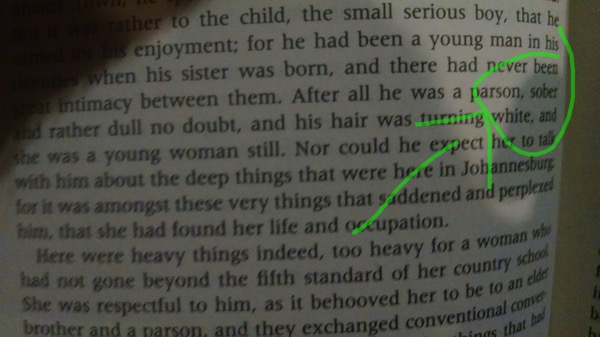
I regret to inform that a rather serious and mildly amusing matter has come to my attention. Your blog is titled somber and dull and on it you cite cry the beloved country as inspiration, however I am currently reading said book and having found the quote you reference, and I’m afraid to say that it in fact reads “sober and rather dull”. Note that’s sober not somber. I don’t know how you wish to proceed from here but whatever choice you make I will support.

I chuckled at his erroneous reading. Even though he attached a photo of the page, it was clearly from a different edition of the novel than is standard. In order to clarify for him his error, I looked up the reference in my own edition.

IMG 20141229 205642

Of course, you will have by now surmised that he was not the one in error. I stared at the page. I laughed at the oddity of it all. I puzzled over what to do.

Sober though I may have been the day I chose the title for this blog, I made a mistake that has led to the naming of this blog and my ownership of the domain “somberanddull.com”! The ripples are many.

At least one person over the past number of years has assumed from the title that I’m writing about depression. I easily dissuaded him of his notion. But if I changed the title to ‘Sober and Dull’ to reflect an accurate reading of the novel, I’m certain there would be those, many perhaps, who would assume that I am a recovering alcoholic or addict writing about recovery, and unhappy recovery at that.

So, it’s best to make no changes. I will, however, ponder the unhappy fact that over the years I seemed to have inspired at most only ONE person to read the novel. Alas. I may have to toss down a couple glasses of wine to process such a somber realization and with that we could toss out the notion of sobriety.

Great Moments in Philosophy

It is a little know fact that philosopher and mathematician René Descartes was an avid runner long before the sport achieved its current fanatical status. Descartes found in his running the opportunity to chew on puzzling questions of existence and meaning which he would later rework and record.

Returning home one afternoon after a furious and philosophically productive run he was confronted by his roommate. Offended by Descartes’ foul smell, the roommate shooed him out of the house at which moment all that he had been thinking came together in a lightning bolt of insight.

Descartes stared deeply into the eyes of his accuser and said, “I run, therefore I stink. I stink, therefore I am.”

And the rest is history.

Sort of.

Page 24 of 142

Powered by WordPress & Theme by Anders Norén