Randy Greenwald

Concerning Life as It Is Supposed to Be

Droopy Illusions

My wife is growing tomatoes in our backyard, and they are doing quite well. We look forward to their bearing fruit. I grow things, too. And what I grow, sometimes in secret, and sometimes where others can see, is this illusion that I can write. Yes, I’m teetering on the precipice of 60 – but still like to think that maybe I have picked up along the way some ability to string words together.

So, I nurture this illusion and I fertilize it and even prune it now and then. And just about when I have it to the place of blossoming, I read stuff I wished I could have written. My illusions suffer trauma, stems turn brown, leaves fall off, the whole thing kinda droops.

The source of the trauma this time is a sports writer named Joe Posnanski. He’s done this to me before. Posnanski writes for NBC Sports as well as for his own projects. He, like all those to whom I’m drawn, has a passion for storytelling. His fascination is with the people who do the sport, not just with the sport itself. Statistics matter only so far as they help to reveal the person. And he does all this with a light touch and often a clearly discernible grin. (Read the bio I linked above to discover that.)

I was first consciously exposed to Posnanski when he wrote about the Tampa Bay Rays’ improbable 2011 run to the baseball postseason, and the remarkable Game 162. His line in that piece that has stuck with me is this:

I never argue with people who say baseball is boring, because baseball is boring. And then, suddenly, it isn’t. And that’s what makes it great.

He’s not just a baseball guy. He wrote an article about a wacky NFL game last season that I can’t track down. His take is always a bit wry and carefully considered no matter what sport. Still, I find his stories about baseball to be the most engaging.

He’s 2/3 of the way through writing about the top 100 players (in his judgment) to ever play the game, and each article, from Pete Rose to Cal Ripken to Ozzie Smith is laced with compassion and humor and pathos. I read this morning his accounting of #32, the early 20th century pitcher Grover Cleveland Alexander. A movie was made about Alexander, apparently, one starring Ronald Reagan. And yet

“The Winning Team” stars Ronald Reagan as Grover Cleveland Alexander, making Alex the only American who will ever be NAMED for a U.S. President and PLAYED by a U.S. President in the movies. That alone should make it interesting…. But it does not. “The Winning Team” is so spectacularly bad, there is no possible way you can watch it for more than 10 minutes without your eyes bleeding.

I wish I had written that.

And as he tells Alexander’s story, from his glorious control as a pitcher to his descent into alcoholism, we find this account near the end of his life:

He was broke, and he was drunk, and he was in great pain. Alexander might be the origination of one of the saddest lines in sports literature.

“Aren’t you Grover Cleveland Alexander?” he was asked.

“Used to be,” he said.

Posnanski talks about what made him great as a ball player, but he also talks about what made him human.

Among his few possessions when he died was a typewriter, and inside the rollers was a half-written letter to [former wife] Aimee about how much he longed to see her again.

I knew nothing about this man before reading this. Posnanski introduced me and made me care.

We’ll get tomatoes off my wife’s plants, and my carefully nurtured illusions will survive, somehow. Droopy things will come undrooped. But at this point I can do nothing better than to encourage you to at least sample, and enjoy, some Posnanski. [Any of his vignettes on the top 100 baseball players are worth reading. But don’t be fooled by #57a like I was.]
More on Spotlight

My comments on the movie Spotlight last week spawned a thoughtful and articulate response from a reader. I did not want all her effort and insight to get lost buried in a comment and so she consented to allowing the comment in it’s entirety to be posted here. Thanks, Suzanne, for your contribution to this conversation!

I appreciate your willingness to address ‘the elephant in the room’. This is huge!

You make an excellent point, that abuse is not a Catholic issue, but rather a problem in Protestant churches as well. Whether is it physical abuse, sexual abuse, or verbal abuse, our churches, and our country, is filled with it. I think it has become a problem within the church for several reasons, it is rarely addressed, predators have unsupervised access to children, parents are blind to the facts, (or they ignore them) and when predators do confess, members are not informed of the potential threat. I also believe that we tend to turn off our ‘intuitions’ and so the signs go undetected. If we did happen to suspect something suspicious, we would probably ignore it in the belief that God will protect our children, or that we shouldn’t think bad thoughts about our fellow brothers/sisters. Sadly, the abuse goes on and it takes years before the victims come forward, usually after much anguish and turmoil of feeling like perhaps it was their fault. Even more pathetic is the fact that when they finally come forward, they are met by leaders who want to cover it up. Leaders inflict additional damage by reinforcing the fact that it must have been something they had done to cause the person to ‘lust’ after them. In the countless cases I have known, when the abuse was exposed, the emphasis was to ‘love’ and ‘forgive’ the abuser. Oddly, those who preach unconditional love and forgiveness for all, withdrew from the victim, leaving them helpless and hurting. I personally have NEVER seen where the ‘victim’ was wrapped in love and supported. Actually, I have NEVER seen where the victim was shown the ‘grace’ that the abuser was shown, but rather the opposite. This results in a victim wondering why God abandoned them and why the church abandoned them. The scars are carried throughout their life.

The thing about being abused, is that you know the signs and you can sense a predator almost upon first observance. Perhaps the awareness helps by saving a victim or two. I think predators know when someone can see through them. Perhaps we should all tune into our intuitions and be more vigilant. I don’t think Christ would stand silently by while predators attacked the children he loved so much, nor do I think he would have been silent at the men/women who abuse either verbally or physically.

Thank you for reminding us that we must not get complacent and that we must address these issues. I am grateful for Marci Preheim and Sarah Taras, and for movies like “Spotlight’ that bring about awareness. I am very grateful that you are willing to bring to light the ‘hidden’ things. I appreciate your transparency for it says to every victim that there is someone who cares, and someone who will be their advocate. This is a tremendous aid in their healing process.

Some alarming stats below.

“Every year more than 3 million reports of child abuse are made in the United States involving more than 6 million children. The United States has one of the worst records among industrialized nations – losing on average between four and seven children every day to child abuse and neglect.” -National Child Abuse Hotline

I Hate Sunday!

I posted recently some thoughts on rest. Since that is such a strong biblical theme, I thought a few more thoughts on the matter might be well placed. Of course, my writing on rest is akin to the 300 pound sports reporter writing on tennis – it is something he observes from afar but doesn’t do very well himself.

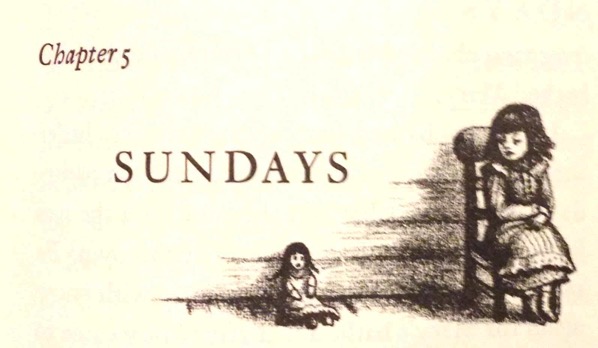
The subject of ‘rest’ invites us to think about the biblical idea of Sabbath. But for some of us, “Sabbath” does not speak of rest but of restriction. Laura Ingalls Wilder in her book Little House in the Big Woods recounts what Sundays were like for her as a little girl.

“On Sundays Mary and Laura must not run or shout or be noisy in their play. Mary could not sew on her nine-patch quilt, and Laura could not knit on the tiny mittens she was making for Baby Carrie. They might look quietly at their paper dolls, but they must not make anything new for them. They were not allowed to sew on doll clothes, not even with pins.
“They must sit quietly and listen while Ma read Bible stories to them, or stories about lions and tigers and white bears from Pa’s big green book, The Wonders of the Animal World. They might look at pictures, and they might hold their rag dolls nicely and talk to them. But there was nothing else they could do.”

Sundays

Some of you are familiar with such restrictions and you understand clearly the reaction of the impetuous Laura:

“One Sunday after supper she could not bear it any longer. She began to play with Jack, and in a few minutes she was running and shouting. Pa told her to sit in her chair and be quiet, but when Laura sat down she began to cry and kick the chair with her heels.
“‘I hate Sunday!’ she said.”

I understand Laura’s frustration. I don’t think we were meant to hate Sunday.

But perhaps that has not been your experience and for you Sunday has never been different from any other day of the week. For you, perhaps for the majority of people today, though they have been given no reason to HATE Sunday, they’ve been given no reason to LOVE it either. In our swinging to extremes we have lost the spirit of the Sabbath captured by Isaiah when he commands us to

…call the sabbath a delight… (Isaiah 58:13)

In that text, Isaiah mentions some restrictions that should attend the Sabbath. But the restrictions, oddly, are mean to make the Sabbath delightful. What we have done is to focus on restrictions as if Sabbath is about restrictions. We rebel against restrictions because we do not consider what the restrictions are for.

If we have, as I think we have, lost the ability to rest, to be silent, to be still, to reflect, to think, to meditate, to pray, or even to have conversation with each other, it is because we have allowed busyness to crowd such needful activities our of our lives. We may say that we want to do any one of these things, but we are simply too busy. And so large chunks of human delight are cast aside because other things, more noisy and clamorous things, get in our way.

Into this reality God invites us to Sabbath rest. To put aside certain activities, so that we can in fact, be renewed in body and spirit. The restrictions always have a purpose, an end, a good goal. As a fellow student in college challenged me, “What if God gave us the commandments because he loves us and knows what we need?”

What if. What if, one day in seven, we denied ourselves Netflix or the NFL or the lawn or the grocery shopping? What if we put those things on another day and set aside one day for the things that get crowded out of every other day? What if we devote that day to worship, to loving others, to sitting in a quiet place, to prayer, to reading the Bible, to reading books that feed the soul? What if?

What if we saw that the reasons we do not do certain things on a Sunday are so that we might do other, more important but less urgent things? That changes the meaning of the restrictions.

We say that we don’t have time to pray, we don’t have time to read, we don’t have time to write letters to our kids, we don’t have time to think. And we don’t. But we can, if we were to see that God has commanded us to take one day in seven to turn our attention to the things that matter to him and are needful to us. Maybe he does, in fact, want us to rest?

I’m not calling for a return to Laura’s world. But I do want us to consider what we might be missing if we neglect the discipline of rest.

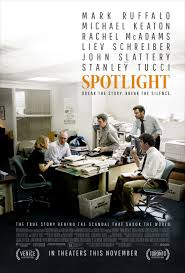
Spotlight

In their engaging, sad, and highly personal reflection on sexual abuse in the evangelical church, Marci Preheim and Sarah Taras comment:

If abuse requires silence, deception, and wordsmithing to flourish, then the way to kill it is to bring it into the light.

I can’t tell from reading their post whether that was an intentional or accidental reference to the recent Best Picture Oscar winner Spotlight, but it certainly made me think of it.

Spotlight2For some time my friend and fellow pastor Mike had urged me to see Spotlight. I resisted mainly because I was certain that my movie-going partner, my wife, would not want to see it. I think, though, as well, that a part of me just does not want to be made to feel uncomfortable. And that, for sure, is a problem that is shared by too many.
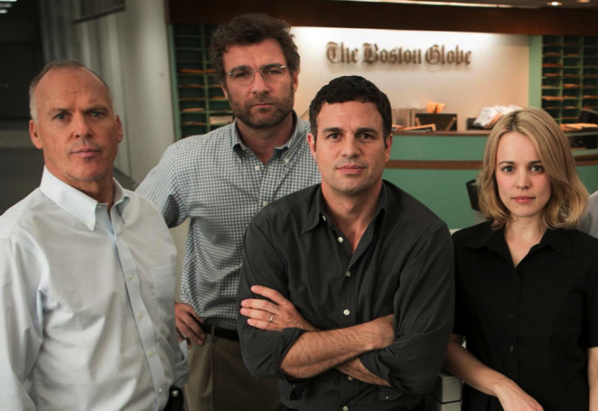
I was surprised to discover that my wife, in fact, WANTED to see the movie, and we were both glad we did. Spotlight is far and away one of the best movies I’ve seen in quite some time.

In the first place, it is simply a well told story. It follows the journalistic efforts that uncovered the scope of the sex-abuse scandal in Boston telling that story with energy and passion. The film is well paced, sustaining interest from the beginning until the end. Unlike many movies, I did not stop to consider the time. I was engaged the full length of the film.

The movie was written and directed by Tom McCarthy who has been a favorite of mine for a long time. (If you’ve not seen The Visitor, put that one on your list, as well.) This movie is his best.

I was particularly impressed with the acting of Mark Ruffalo. His “it could have been me” speech about 3/4 of the way through was one of the best sustained monologues that I can recall having seen.Spotlight1

The topic is handled deftly and without making it solely a problem of the Catholic Church. That’s important because the abuse of children and the protection of the abusers is NOT a Catholic issue. It may have found a home there, and the sheer size of the church magnifies the scale of the problem, but this is shamefully a problem in Protestant churches as well as the article referenced at the beginning makes clear. The value of a spotlight is that the hidden things must be brought to light, and the light must never be shut off, no matter how uncomfortable we are with what it exposes.

The film is honest enough to say that it was not simply the church that allowed this to go on for so long. There is a human complacency that settles upon us all. We don’t like boats that are rocking, and we don’t want to be the ones doing the rocking. Blame is spread far enough to make us all look deeply at the issues of which we are even now aware, but don’t want to engage. Abuse? Abortion? Poverty? Sexual slavery and trafficking?

It is so often easier, to our shame, to simply close our eyes.

The movie forces us to open our eyes, but is never heavy handed in doing so. One leaves the theater strangely hopeful and blessed for having spent the time.

Spotlight is not likely to be in theaters much longer. If you have not seen it, and cannot see it in theaters, it is available on Blu-ray and DVD.

Wit and Wisdom

Watching the deeply moving movie Wit several years ago made me deeply appreciative of the work that nurses do. Among other things, the film reminds us that the most direct connection between medical care and the patient is the nurse. Her (or his) skill and compassion makes a world of difference in how illness and death is experienced.

After it was over, I had to call my daughter, a nurse, and thank her for what she did. (Further thoughts on that first viewing here.)

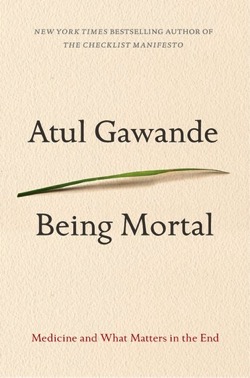
20696006I recently finished reading Being Mortal by surgeon, professor, speaker, writer, husband, and father (a man with way more time than the rest of us) Atul Gawande. It is a deeply personal, well-written, and engagingly thoughtful book, subtitled “Medicine and What Matters in the End”. Gawande leads us through the tangled web of issues that confront us when we consider death and what leads up to it. I read it as a pastor but found that it would be a worthy read for any who expect that someday they might, you know, die.

I especially appreciated the tour that Gawande gives of the line, the very thin and often imperceptible line, between decisions that prolong life and those that simply postpone death.

If the hero of Wit is the nurse, the heroic role in Being Mortal is played by hospice. Hospice nurses and doctors navigate that line between life and death with greater insight and often a better hold on reality than the rest of us. In my experience, and that of Gawande, they humanize experiences that others make clinical. And they do it well. In thirty years of ministry when I’ve been in the presence of death, I’ve always found the presence of hospice to be deeply comforting and an indispensable blessing.

And so, when I finished reading Being Mortal, I had to, once again, pass on my appreciation to my daughter who is, to be precise, a hospice nurse.

The point for readers here is not my daughter, as it is for me. The point is to watch the movie, to read the book, and to be pointedly grateful for those you know whose work and calling bring them to the side of those who need them when, in life and death, they need a humanizing touch.

Branding, 2

Speaking of ‘branding’, I ran across this interestingly named barbershop today:

LadyJane

I don’t know what idea this is supposed to conjure in the average person’s mind, but to name a barbershop, one especially with ‘Hot Lather Neck Shaves’, after a woman whose claim to fame was her being beheaded is, well, a bit surprising.

I halfway expect it to be located next door to the ‘St. Joan BBQ’.

It wasn’t.

Lady Jane Getting a Haircut Lady Jane. Getting a haircut.

Branding

Branding, oh, how I hate thee. And clearly, I’m lousy at it.

In marketing classes around the country, professors are even now, I’m sure, pointing to a certain web site named ‘Somber and Dull’ as the worst possible title EVER for a blog that has aspirations of drawing thoughtful and engaging readers. It’s as if Coca-cola named itself ‘Brown Sugar Flavored Water’ and hoped to get people to drink it. I never buy dessert at a restaurant. Unless, of course, the restaurant is named CHEESECAKE Factory, and then I have to buy cheesecake.

Branding. It makes a difference.

I was with some fellow pastors the other morning and someone mentioned having read something I had posted on this blog. Some others, unaware that I had a blog, asked for the name of my blog so they could check it out. So I told them. Out loud. I don’t think I’ve ever done that hoping to get people to read it. One of them said something like, “Well, that’s inviting.”

Pastors are such sarcastic souls.

I explained the genesis and background of the title. (You can read about that here.) It makes sense. It’s a meaningful personal story based upon one of my favorite characters in all of fiction. And it once made for a pretty fun April Fools joke.

But it just does not have pizzaz.

So, if you have suggestions, make them. I’m happy to give each suggestion the sober, or somber, consideration it deserves. Especially if you are a marketing professor.

With Deliberate Malice

I’m not far enough into Moby-Dick to speak with any authority to its meaning. Nor am I sufficiently advanced in wisdom to untangle the spaghetti-like complexity that is human sin, divine providence, and demonic havoc. Nevertheless, Melville’s Ishmael at one point defends the notion that a sperm whale would, under certain conditions, act with malice.

Again, it is very often observed that, if the sperm whale, once struck, is allowed time to rally, he then acts, not so often with blind rage, as with wilful, deliberate designs of destruction to his pursuers.

As a pastor, I hear about and often witness great acts of harm done by people in the name of the church. The authority and trust given to Christians in general and Christian leaders in particular are often mishandled and grave damage is done. I understand why many fear if not hate the church and the god in whose name men and women in the church often act. And Christians and Christianity come under particular scrutiny for acts of betrayal and abuse and control as these run counter to the ideals for which we should stand. The more passionately we embrace the ideals, the more clearly we see what the church should be, the harder it is to accept the aberrations, and the darker we will paint her when she fails.

And fail she does. She fails because people fail. She fails because she confuses her purpose. She fails for all kinds of reasons. Among these, I am persuaded, is the ‘wilful, deliberate designs of destruction’ of the one who is the enemy of God and of his people. We cannot bow out of responsibility by saying ‘the devil made him/her/me do it’ but we cannot ignore the deliberate malice with which he who stands against all things good will lash out at that which is closest to God’s heart.

With all I know, with all I’ve seen, and with all I’ve experienced, I can’t look at the church with anything but the deepest affection. I know that is hard for many, for those who have been wounded at the very deepest places. I understand. And so to counter those feelings of harm I want any church of which I am a part to be as genuine, and as safe, as possible.

Yes, it is not the church we are to trust, but God. And yes, it is not the church with whom we are in union, but Jesus. And yet the church, as broken and as failing as she will, through acts of goodness, often obscured, be that which will strike the blows that will stir the blind rage and deliberate malice of the enemy. This should surprise us not the least and should only incite us to aim with other saints eager to strike such blows. These blows can only be struck, however, by acts of integrity and genuineness and compassion and sacrifice. Let him rage against that.

To Rest

One of the more famous, or oft-quoted, observations of Herman Melville in Moby-Dick is his judgment that it is rest that best equips the harpooneer to fulfill his role of spearing the whale.

To insure the greatest efficiency in the dart, the harpooneers of the world must start to their feet from out of idleness, and not from out of toil.”

As with many such observations, we can manipulate this one to fit our situations, even to justify our transgressions. “Mom, I can’t clean my room right now as I’m preparing to do my homework and, as Melville says, ‘To insure the greatest efficiency’ I must start to my feet ‘from out of idleness, and not from out of toil.'”

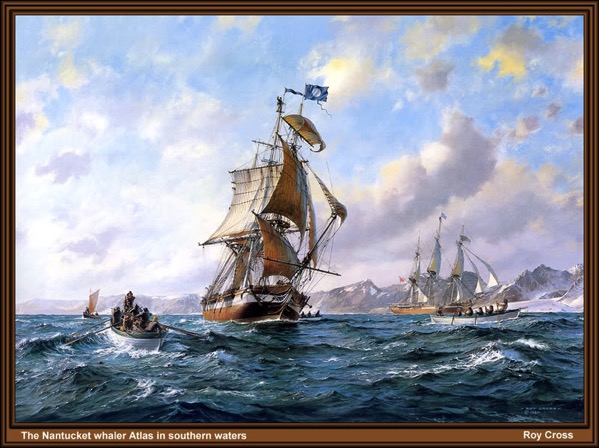
Whaler

Still, the observation bears the aroma of painfully ignored wisdom. For many, and pastors such as I can be the worst offenders, rest is equated with inactivity and inactivity with idleness and idleness with ungodliness.

Through such twisted logic we limp to our pulpits worn out from too many late nights and early mornings. We put off our children and friends until we can fit them into our schedules. We assign our wives one night of conversation per week. And we leave our passions untouched and our gifts un-nurtured until we ‘find the time’ that forever eludes. We lead lives of noisy and busy, not quiet, desperation.

Rest is a precious gift that characterizes much that we can profitably say about Christianity which is why my inability to rest is at best counterintuitive and at worst a revelation of a deep-seated lack of faith. Jesus calls to himself all ‘who are weary and burdened’ so that he might give them rest. And through the prophet Isaiah God says:

“Come, everyone who thirsts,
come to the waters;
and he who has no money,
come, buy and eat!
Come, buy wine and milk
without money and without price.
Why do you spend your money for that which is not bread,
and your labor for that which does not satisfy?
Listen diligently to me, and eat what is good,
and delight yourselves in rich food.” (Isaiah 55:1, 2)

I come. Slowly, but I come. And I come with the help of kind and generous friends. Friends within and outside of my church last weekend sent my wife and I away to a resort cottage near the Gulf of Mexico. Our orders were to do nothing, to avoid certain stressors, and to reconnect with ourselves and one another. We went. We rested. And maybe we moved closer to genuine habit. Time will tell.

Melville set his famous observation as a corrective to the then common practice of making the harpooneer serve as an oarsman on the whaling boat. When the boat drew near to the whale and the time came for him to launch his spear his energy was spent. So Ishmael observes,

…in the vast majority of failures in the fishery, it has not by any means been so much the speed of the whale as the before described exhaustion of the harpooneer that has caused them.

Rereading Moby-Dick (Or Re-reading Moby Dick)

A friend has encouraged me to re-read Herman Melville’s Moby-Dick (or is it Moby Dick? Apparently this is a controversy.) I’m aware that for some being ‘urged’ to read, much less RE-read Moby-Dick would bear the aroma of an enemy’s nefarious scheming. But this is a genuine friend who himself re-read the book (or maybe he ‘reread’ it?) recently and found the labor rewarding. I’m a sucker for such urgings, and so I bit. (Yes, the fishing allusion is intentional.)

via Smithsonianmag.com

What made my initial reading, perhaps forty years ago, feel tedious was Melville’s repeated walks down seemingly inconsequential pathways. There are forays into the anatomy and classification of whales (which are, we discover, fish – ‘spouting fish with horizontal tails’), and into various aspects of life onboard a whaling ship, all of which seem unrelated to the basic plot of the book – one man’s monomaniacal pursuit of revenge. The latter we get – revenge movies are all the fad (see Tarantino, Quentin) – but the slow pace at which Melville gets us there is hard for many of us to fathom. (Look! Another Nautical Reference!)

This time through, I’m thinking the problem is not with Mr. Melville but with us. Told as it is through the eyes of the novice whaler Ishmael, this is a story to be told on a back porch or at a table in a pub. The storyteller knows what he knows from first hand (first-hand?) experience, and knows that his listeners cannot begin to grasp the nature of what he saw without knowing something of the realities of his world. And so over the span of hours, perhaps days, he slowly spins his tale, revealing the depths of his heart and mind wanting us, the hearers, to sense and smell the horrors he lived through.

I find that if I accept his terms and quit looking for those pieces of ‘action’ that advance the plot toward that inevitable moment when Captain Ahab finally engages the whale in mortal combat, then I can sit back, savor the atmosphere, reflect upon its meaning, and enjoy the tale-teller as much as the tale.

Modern man, of which I am one, is impatient and perhaps that reflects the immaturity of our age. To get to the end seems to be our passion, not to embrace the wisdom of the journey. And perhaps it is this latter that I really need to learn.

Page 20 of 142

Powered by WordPress & Theme by Anders Norén