Concerning Life as It Is Supposed to Be

Category: Books Page 14 of 19

On the Reading Desk: Practice

Yesterday, I outlined my goals for reading – the “whys” behind what I do. Below are the books which currently fill out that outline.

Personal:

Olive Kitteridge by Elizabeth Strout, referred to already here.

The History of the Medieval World by Susan Wise Bauer.

Professional:

At this point I have tried to link several works which have been sitting on my shelf into something of a ‘Christian Life’ theme. Some will see the threads connecting these works. Thus far, this has been very fruitful.

Theology: The Doctrine of the Christian Life by John Frame.

Practical: Surprised by Hope and After You Believe, both by N. T. Wright.

Professional: God’s Empowering Presence by Gordon Fee and Dynamics of Spiritual Life by Richard Lovelace.

Historical: Calvin by Bruce Gordon.

My categories can be critiqued, but this is just a snapshot and a snapshot does not always catch things perfectly arrayed. I hope to be able to say something about each of these works as the days progress.

It is safe to say that I do not read enough. However, without the plan I have, I would read far less, and be that much more deprived. I’m grateful for then, the encouragement to set forth a plan.

On the Reading Desk: Theory

In general I like to be reading several books at once. My reading can be broken up into two general groups, ‘personal’ and ‘professional,’ but being a pastor the two cannot be so easily divided as perhaps they might be if I were, say, a civil engineer. Often what I read on the personal side has profound implications for what I believe, preach, or teach, and what I read on the professional side moves me and effects how I live my personal life. It’s a wonderful place to be.

I think it important to separate what I’m calling here my professional reading from my labor to produce sermons and classes. They may overlap, but the reading I’m speaking of here is reading that is designed primarily to feed me spiritually and professionally. That sounds on the one hand a selfish thing. But for a church to have a pastor who himself is spiritually deprived and whose vision is limited by the trials and struggles of his own situation is never good. It is a wise church that encourages its pastor to invest time in his own growth and maturity.

The temptation will be for a pastor to read what is currently creating a stir. Sometimes the stir is so great that I give in, but generally I let the fads pass. Rather, I try to steer my reading in four directions, listed here in no order of priority:

1. Professional

2. Practical

3. Historical

4. Theological

There is much written that is designed to help pastors do the varied tasks that are before them. Topics may concern preaching or counseling or leadership or the nature of the church. One could be consumed and read nothing but these things. Or one could think one is above all of that and neglect what is helpful. Neither option is good.

Secondly, I am of a reflective and contemplative nature. It is important that I read works which direct my thinking toward the practical nature of the Christian life – books on marriage, on sanctification, on evangelism, on idolatry, or the like.

Thirdly, there is much to be learned from the saints who have come before us. General history or biography are important in keeping me grounded with a well rounded sense of where we have come from.

And fourthly, it can be too easy for a pastor to narrow his reading to his own area of theological interest. To counter that, I always have some work of general theology on the list to be worked through.

And I should add, I will now and then read something that just seems fun, or which seems aimed at a hole in my heart. Appetite can lead to wonderfully nourishing meals.

This is my thinking. Tomorrow, specifics.

As Olive Sees It

“Sometimes, like now, Olive had a sense of just how desperately hard every person in the world was working to get what they needed. For most, it was a sense of safety, in the sea of terror that life increasingly became. People thought love would do it, and maybe it did. But even if, thinking of the smoking Ann, it took three different kids with three different fathers, it was never enough, was it?”

(from Elizabeth Strout’s 2008 Pulitzer Prize winning novel Olive Kitteridge, page 211)

But there is another way.

“In you, O LORD, do I take refuge; let me never be put to shame! In your righteousness deliver me and rescue me; incline your ear to me, and save me! Be to me a rock of refuge, to which I may continually come; you have given the command to save me, for you are my rock and my fortress.”

(Psalm 71:1-3)

To understand these two worlds and to bring them together is why I preach.

Code Blue on the Couch

I love books. I love to read books. I love to write and talk about books. But I’ve done little of either in 2010. The reason is historic upheaval and a history logjam.

I have three windows for reading. The first is Monday morning, when I read books related to my calling as a pastor. I read then books specifically from my pastoral library – books of theology, the Christian life, and practical pastoral application. My second window is early Saturday morning, my day off. I ‘sleep in’ but still get up early, and with a cup of coffee have the freedom to read whatever I want. The third is at night when I go to bed. All three windows have been hard to keep open in 2010.

As friends and readers of this blog know, 2010 has been a year of historic upheaval for my family and me. We left a city and church which had been a stable part of our lives for 25 years. We came to a new city and a new church, a transition which has shattered routine and proved as exhausting as exhilarating. Routine crumbles under such upheaval. Windows close. Books have been started, but the time to complete them has been strained.

But 2010 has ‘historic’ in another sense of the word. I have chosen for my two ‘non-pastoral’ slots (though, as most pastors find, ALL reading has pastoral application at some level) to read books of history. And books of history can share two common qualities: they can be dense and they can be long. Density means we read slowly; length means that we read the same book for a long time.

Add to this general weariness from transition and the assumption of a new job, and the pace of reading slows to such a level that were it a heartbeat they’d be calling in the code team. “Code Blue on the living room couch. Stat.” But, no, I’m still alive. Still breathing. Just slow.

Every available Saturday morning, I’ve had a date with Susan Wise Bauer’s The History of the Ancient World. And every night when I go to bed, I’ve been hanging out with Barbara Tuchman’s A Distant Mirror: The Calamitous 14th Century.

Bauer and I have been doing quite well together. I began reading the day after Christmas, and this morning, completed the 777th and last page. (Glacial to some of you, I know.)

Tuchman and I have been having a harder time of it. After long days, and getting to bed much later than I should, I’m lucky if I tuck three or four of the 700 pages under my belt before I fall asleep with a three pound book on my chest.

Both have created a logjam of, well, literary proportions. So many books have backed up, so many recommended, gifted, purchased, sitting, waiting patiently for their turn.

I am nearing the end of A Distant Mirror and this morning finished The Ancient World. The Saturday window is now open and the routine has returned. The problem is this: one of the books patiently waiting in line is Bauer’s The History of the Medieval World. The backlog may only grow greater.

How can I leave Rome on the brink of destruction with a newly ‘converted’ emperor?

Pooh

pooh-190x293.jpg

I don’t have time to read this, but I wish I did.

A Discovery…

Like an alcoholic discovers beer.

Like a Trekkie discovers Spock.

Like a sports fan discovers DVR and a remote.

I have made a discovery.

Orlando-ites will understand: I have now a 41¢ credit at BrightLight Books.

BrightLight Books is a used book/dvd/cd store. Many have sung the store’s praises. I have visited the store several times, but I had not, shall we say, inhaled.

Today, I inhaled.

I met a ‘pusher’ who soothingly told me that if I took in, say, a DVD, they would give me $2.50 cash, OR $5.00 store credit. My wife and I scooped up a few random things on our way out the door tonight, and stopped by. We had in short order $21.00 in store credit, and walked out with $20.59 in books.

I still have a 41¢ credit. I must go back.

I have made a discovery.

Uh-oh.

Trampling the Sacred? or Waking the Stodgy?

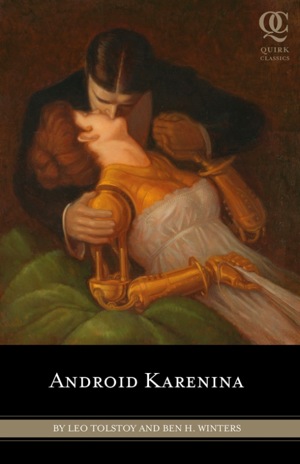
First, there was
android-karenina-cover.jpg

Pride and Prejudice and Zombies

Then came

Sense and Sensibility and Sea Monsters

And now, there is

Android Karenina

Wow.

I have no comment.

Super Extra Holy People

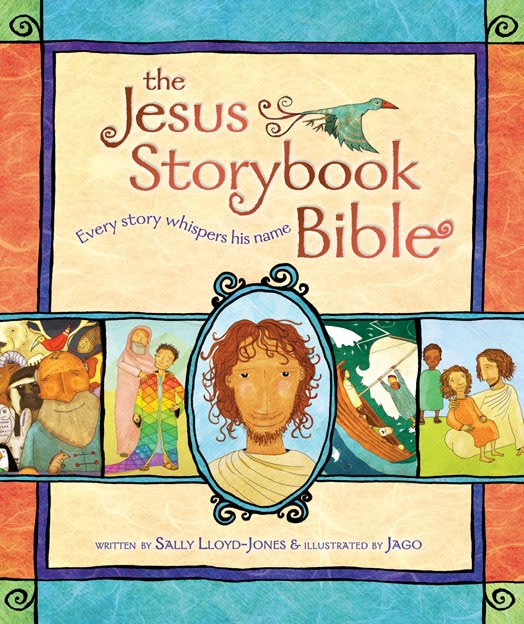
When I met with the Presbytery of Central Florida to handle some details of my transfer there, the devotion for the morning came from a little book called The Jesus Storybook Bible.
It may seem odd that a gathering of presbyterian leaders was brought together by a reading from a children’s book of Bible stories, but that only speaks of the profound simplicity of the book. The particular story which was read was reverently and carefully told with a clear allusion to how the hopes of the story are fulfilled by Jesus. Hence the book’s subtitle: “Every Story Whispers His Name”.

Soon after, I ordered a copy of the book, and Wednesday night we read together as a family a story from it. We could have started at the beginning, with creation, but I flipped randomly and decided to begin by reading the chapter in which where Jesus contrasts sincere prayer with boastful public prayer and introduces the Lord’s Prayer. The first sentence hooked me:

In those days there were some Extra-Super-Holy People (at least that’s what they though), and they were called “Pharisees.”

How can you not love a book like this?

The book is written by Sally Lloyd-Jones who acknowledges her indebtedness to Tim Keller. It is wonderfully illustrated by someone who goes by the name Jago.

Salvation by Starbucks

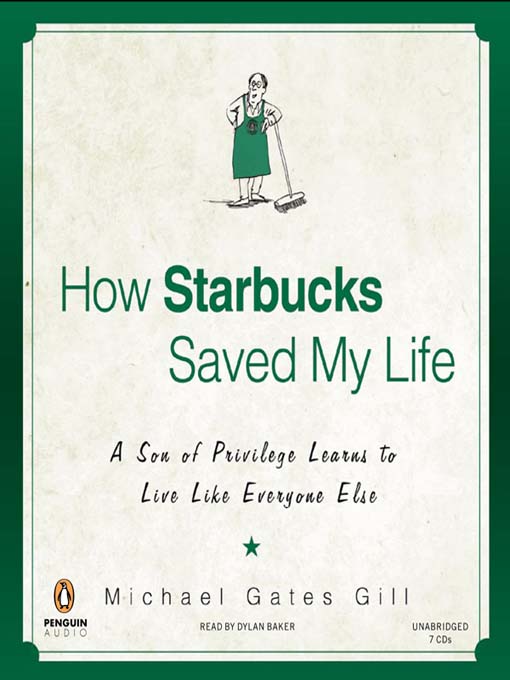
Needing a break from the fairly heavy reading of A Distant Mirror and The History of the Ancient World, I was glad to receive for my birthday from my son and daughter-in-law the book How Starbucks Saved My Life by Michael Gates Gill.

A friend had been recommending this book to me for some time. It is a book that could be enjoyed and tossed aside without much of a thought. However, there is more here of value than one might at first imagine.

The book’s subtitle rightly casts Michael Gates Gill as a son of privilege. His father was a writer for the New Yorker, his Yale education was a matter of course, and his rise to prominence in a major New York advertising firm partially due to the connections his background afforded him.

But at around age 60, it all fell apart. He was fired from his job (younger men were cheaper and just as capable) and he lost his marriage (due to an affair he now sees as foolish) and, in due time, his fortune. Trying still to maintain some semblance of success, he was sipping a latte at a New York Starbucks one day when the African-American manager offered him a job.

Being desperate he took the job. The story unfolds from there. He who in his previous life would argue against the expectations of affirmative action found himself working for a black woman whose mother had been a drug dealer, and alongside of men and women he would have barely noticed much less trusted before. And it all morphs into the happiest time of his life.

Starbucks was the context for Gill’s transformation, and much about the Starbucks culture contributed to his transformation, but the points at which his transformation occurred transcend Starbucks and expose tendencies many of us need to examine. One example will suffice.

Gill is honest about his elitist and arrogant treatment of those unlike him. He was a man who had in his life met the likes of Ernest Hemingway and Jackie Kennedy and was used to treating underlings as capital to be spent and cast aside. At Starbucks, however, he began to see those who were once ‘invisible’ and ‘dispensable’ as real human beings.

One night, he was closing the store with two African-American partners, Charlie and Kestor. When their work was done, they got ready to head to the subway together.

“Kester and Charlie were changing into their street clothes: do-rags, big caps, baggy pants, and boots. They were completely transformed from the smiling Partners in green aprons. They both had earphones dangling down their chests. When I went back upstairs, I was accompanied by two guys who I would have at one point typed as hip-hop artists or gangsters—probably both. But now I knew when I saw guys like these, they might be something else, too. They had lives and loves that were as full or fuller than mine.”

Gill had to fall to see what many of us do not see yet. We look at people and type them: gay, atheist, bitter, happy, homeless, buddhist, liberal, Republican. Once we type them, we fail to see them as real people. They are merely categories about whom we form blanket opinions.

It was no coincidence that I was reading this alongside my study of John 4, where Jesus crosses gender, lifestyle, racial, and religious barriers to do what no one else was doing: treating a sinful Samaritan woman as a real person. May his grace so infiltrate our souls so that we might do the same, see others as people having “lives and loves that [are] as full or fuller than” our own.

Alfred Gore

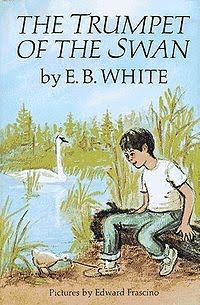
My son and I just finished listening to a wonderful recorded version of E. B. White’s The Trumpet of the Swan.

This story of the trumpeter swan, Louis (as in Louis Armstrong), born without a voice and who learns to play a stolen trumpet and must earn money to pay off his debt and win his love is one of the sweetest in the catalog. The recorded version is special as it is read by the author. Mr. White reads with a certain New England ambience that adds real character to the story. I commend this edition to anyone.

The author introduces a character who makes an appearance on the streets of Billings, Montana, with a name that is strangely familiar: Alfred Gore. Though it is not quite right, even Google can’t tell the difference. Search for Alfred Gore and the top hit is former VP Al Gore’s Wikipedia page.

What’s funny is that poor Alfred Gore, created by Mr. White when the future Vice President was a mere 20 year old still hitting the bars with Harvard roommate Tommy Lee Jones, is presented as a character with little environmental knowledge or concern. I smile.

I introduce you here to Mr. Alfred Gore:

[A storekeeper who has just decided to donate money to the Audubon Society is speaking.]

“The Audubon Society is kind to birds. I want this money to be used to help birds. Some birds are in real trouble. They face extinction.”

“What’s extinction?” asked Alfred Gore. “Does is mean they stink?”

Page 14 of 19

Powered by WordPress & Theme by Anders Norén