Concerning Life as It Is Supposed to Be

Category: Books Page 13 of 19

“Delicious” Fun

In a moment of financial weakness a couple months ago, my wife and I bought a library cataloging program for the Mac called Delicious Library. It cost more than we should have spent, but it has provided more fun than we could have imagined.

The software has the capability of reading the UPC codes off books and DVDs and the like to create a record which can be stored offsite for insurance or other purposes. One can also enter the info by hand, which is necessary for older items, but what fun is that.

It has as well the capability of tracking books or DVDs loaned out to others, which is a decided advantage for us, far superior to the ‘write the name on a scrap of paper and drop it in the cookie jar’ method of the past.

The most fun, however, has come from the UPC misreads. Apparently while a book’s ISBN remains the same and is unique to that item, UPC codes on the other hand get re-assigned over time. So, since the program scans the UPC codes, some interesting mismatches arose. Enjoy:

Scanning Steven Pressfield’s novel of the Spartan stand at Thermopylae Gates of Fire led to His Way: An Unauthorized Biography Of Frank Sinatra by Kitty Kelly.

Colin Powell’s fascinating pre-Secretary of State years memoir My American Journey produced Interview with a Vampire. Is this trying to tell us something?

Intriguingly, my paperback version of Crime And Punishment became The Empty Land by Louis L’Amour.

And finally, Character by Gail Sheehy popped up as a result of scanning The Brothers Karamazov. There just seems something appropriate in that.

I confess. I’m hooked.

Andre’s Ghost

One of the comments attached to my post on Andre Agassi’s book Open noted that the book must have been ghost written. I assume that with nearly all memoirs, that is a given. In this case, Agassi makes every effort to communicate his great respect for and dependence upon the man who formed his story into captivatingly readable prose.

On the publisher’s web page there is, nestled among accolades from sources such as the New York Times and Time Magazine this snippet from Entertainment Weekly:

“Not only has Agassi bared his soul like few professional athletes ever have, he’s done it with a flair and force that most professional writers can’t even pull off.”

I get the impression that this reviewer somehow really believed that Agassi wrote this. But he is right: most professional writers can’t pull it off, and so Agassi turned to a Pulitzer Prize-winning professional writer. It is only fitting that the story of one of the best in one field should be written by one of the best in another.

There is a context in which ghostwriting can be a dishonest act (and it’s prevalence in Christian publishing is a dirty little secret). But this is not one of those cases. The ghost is not invisible. In his acknowledgements, after four paragraphs describing the extent of their collaboration, Agassi says this:

I asked J.R. many times to put his name on this book. He felt, however, that only one name belonged on the cover. Though proud of the work we did together, he said he couldn’t see signing his name to another man’s life. These are your stories, he said, your people, your battles. It was the kind of generosity I first saw on display in his memoir. I knew not to argue. Stubbornness is another quality we share. But I insisted on using this space to describe the extent of J.R.’s role and to publicly thank him.

Such humility and honesty I find refreshing. These qualities do not live in the acknowledgements alone, and this is what gives the book value and makes it a worthy and enjoyable read.

Even if there are no hills in Bradenton.

The Hills of Bradenton

It is not often that my life intersects those of famous athletes. Living for 25 years in Bradenton, Florida did up the odds of that happening, but only incidentally, in that many do make their homes in the Sarasota/Bradenton area.

So among other lines of interest, I began Andre Agassi’s memoir Open, interested in reading about his time spent at the Nick Bollettieri Tennis Academy in Bradenton. Bollettieri’s academy, now IMG, has received renown over the years as the training ground for tennis greats Agassi, Jim Courier, Monica Seles, and Maria Sharapova, among others. Agassi arrived in Bradenton about the same time as I, he a 14 year old tennis phenom, and me a rookie pastor.

His recollections of the place, however, are vastly different than my own. Those who know Bradenton will immediately see what I mean from this quote:

Every day at the Bollettieri Academy starts with the stench. The surrounding hills are home to several orange-processing plants, which give off a toxic smell of burned orange peels. It’s the first thing that hits me when when I open my eyes, a reminder that this is real, I’m not back in Vegas. I’m not in my deuce-court bed, dreaming. I’ve never cared much for orange juice, but after the Bollettieri Academy, I’ll never be able to look at a gallon of Minute Maid again.

I’ll give the guy some slack due to the fact that he hated tennis and doubly hated his time at Bollettieri’s, and therefore has no fond memories of Bradenton. And I’ll factor in that he was an angry teenager at the time. But at the same time I chuckle to read in the acknowledgments that the text was meticulously fact-checked. Clearly, they missed a few.

Yes, there is an occasional, not daily, smell from the single, not several, orange processing plant, Tropicana, not Minute Maid. That smell, from the process by which orange peel is turned into feed for livestock, is endearing to some of us, as it identifies the town’s heritage and heart. But to others, it is annoying, and so I can accept Agassi’s negative recollection.

But hills? Hills? Really? Hills?

I know it is a minor and silly detail, but how can one spend more than a day in Bradenton, Florida, elevation 5 feet, where the highest landmark may be an interstate overpass, and speak of hills? One has to travel an hour or two away from Bradenton to find anything remotely resembling a hill. The predominant geography of Bradenton is flatness and water.

I trust the recollections from the rest of his life are more accurate.

My Christmas Stash

When I was a child, the primary conversation held with friends each year after Christmas centered around what we got. If you are reading this, I have to consider you friends. Therefore, I imagine you asking me what I got, and I’m more than happy to share with you.

Among other items, from camping pots to caramel popcorn, the book-lover in me has ruled this a successful Christmas. The following have fallen solidly in my queue.

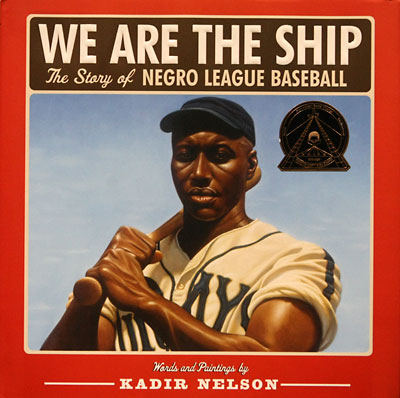
we_are_the_ship-winner.jpg

We Are the Ship: The Story of Negro League Baseball – This is a beautiful book even if there was not a fascinating story associated with it. I told my wife that we now need a coffee table to display such a book upon! It is a book recommended to me by my administrative assistant, and dedicated to a long-time resident of Sarasota, “Buck” O’Neil.

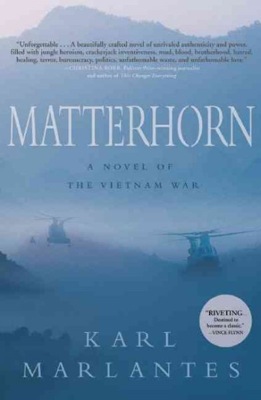
matterhorn.jpg

Matterhorn: A Novel of the Vietnam War – I am told that this is one of the best novels about the Vietnam War. I don’t like reading about war, and yet it is something that defines so many of us. This book has appeared on a number of ‘best of 2010’ lists.

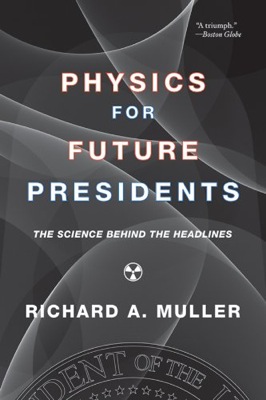
Physics.jpg

Physics for Future Presidents: The Science Behind the Headlines – I may from this book gain only enough knowledge to make myself dangerous. But so many political and ethical questions today are based upon the claims of ‘science’ that I thought it would be helpful to have some introduction by which I could at least come to understand the terms used in the debates.

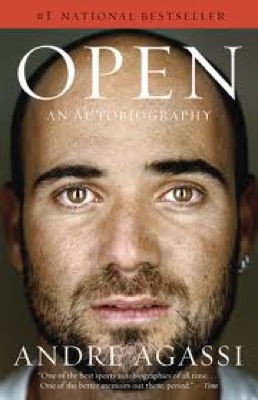
Open.jpeg

Open: An Autobiography – This is reputed to be one of the best sport memoirs ever in terms of its honesty. Agassi was one of the world’s greatest tennis players, one who hated tennis. That in itself draws me in.

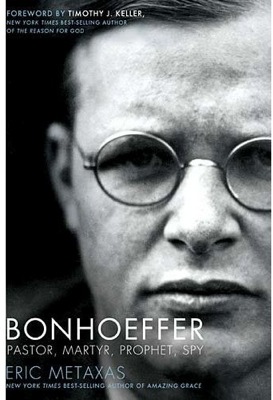
bonhoeffer-by-eric-metaxas.jpg

Bonhoeffer: Pastor, Martyr, Prophet, Spy – I’m almost fearful of this book. Bonhoeffer was everything the subtitle says, and I’m only comfortable with the first.

Expect to see comments on some if not all of these books in the weeks… no, months… ahead!

Sin: Read All About It

Why would anyone read, much less recommend, a book on sin? Perhaps the following, from the introduction to Cornelius Plantinga’s accessible and enthralling book, Not the Way It’s Supposed to Be : A Breviary of Sin,
will sufficiently intrigue you that you will put this one on your reading list for 2011.

“Slippage in our consciousness of sin, like most fashionable follies, may be pleasant, but it is also devastating. Self-deception about our sin is a narcotic, a tranquilizing and disorienting suppression of our spiritual central nervous system. What’s devastating about it is that when we lack an ear for wrong notes in our lives, we cannot play right ones or even recognize them in the performances of others. Eventually we make ourselves religiously so unmusical that we miss both the exposition and the recapitulation of the main themes God plays in human life. The music of creation and the still greater music of grace whistle right through our skulls, causing no catch of breath and leaving no residue. Moral beauty begins to bore us. The idea that the human race needs a Savior sounds quaint.

“So the broader goal of this study is to renew our memory of the integrity of creation and to sharpen our eye for the beauty of grace.” (xiii)

History of the Whole World

In the early 1990s, I had the privilege of driving Dr. James Montgomery Boice, then pastor of Philadalphia’s Tenth Presbyterian Church, from Bradenton, Florida, after a speaking engagement at our church, to the train station in Tampa, where he was to catch a train (he was weary of flying) back to Philadelphia.

On that ride, Dr. Boice revealed to me that he was then beginning to read again Will and Ariel Durant’s 11-volume history The Story of Civilization. I was impressed by his desire to be well rounded and in his curiosity in all things.

So when I heard of Susan Wise Bauer’s similar but more compact four-volume history, I decided to jump in. (I have finished The History of the Ancient World and am in the middle of The History of the Medieval World.)

I’m glad that I have done so, and from the vantage point of 1400 pages in, I feel that I’m in a position of making an observation or two.

First, I’m impressed. Knowing something of how hard it is to write, and how difficult it can be to sustain one’s productive interest in a project of this magnitude over a prolonged period of time, I cannot imagine how tough it is for her to keep at this project for so long. Add to this the fact that she is not an historian, but a professor of English, I am more amazed at her ability to grasp and wrestle to the ground such massive amounts of information.

Secondly, she tells this story with as much passion and interest and personality as she can muster. The narrative is punctuated with wry observations about the myriad characters involved. She is able, for example, to see through and expose with a wink a king’s supposed ‘holy’ purpose when it is clearly a raw grab for power.

Thirdly, her purpose is incredibly noble. She is not trying to write a typical Euro-centric ‘world’ history, but a true history of the whole world, giving the stories of China and India and Japan and the Islamic states, and one imagines in the future, those of Africa and South and North America, equal coverage.

The problem I find is that the task is just so monumental that I’m sure that it is impossible to do.

Compressing such massive amounts of information into a mere four volumes of 900-1000 pages each results in a narrative that moves from one battle to another, one political play for power to another military victory, from one region to another. Sprinkled within are occasional glimpses of life, and now and again the pace slows to give the back story to contemporary events (such as the intriguing explication of the different claims of Sunni and Shia Muslims). But overall, something of the human in the story is lost.

I’m thinking that part of the problem is my own. My knowledge of, say, the ninth century, is so insipid that the parade of names and places leaves me as dazed as a first reading of the prophecy of Isaiah must to the person new to the Bible.

But I can’t help but think that the issue is bigger than that. That it is impossible when one moves further and further away and condenses an era into fewer and fewer pages to write much more than about tectonic shifts in power. Lost is the detail that makes the living of life human.

I have calculated that if one were to shrink the earth to the size of a bowling ball, that the resulting sphere would be, if possible, smoother than a bowling ball. That is, all the detail and contrast which make the earth wonderful to observe would be gone. All that would be left to describe would be surface detail. For the most part, that is how I feel in reading these books. They are well done. But the scope is too large.

Somewhere, a family this morning is sitting down to a breakfast of waffles and sausage, perhaps celebrating the return of a son or daughter from military service or mourning the loss of a family patriarch. Elsewhere, a young man is plotting the means of telling his girl of his undying love and desire to marry her. And still elsewhere, a child is going to sleep hungry, struggling with his family to find the food to eat in an impoverished land.

All over this drama goes on and has gone on, but none of it is visible to the writer of a general history. And the further we are removed from these stories, the more sterile a history MUST become. When one pulls back further and further, one is left with little but battles and wars and usurpations and power struggles. And no matter how well that history is written – and this one is written well – the end result can be tedious.

Perhaps I’m not James Montgomery Boice after all.
Woman Crushed to Death in Her Sleep

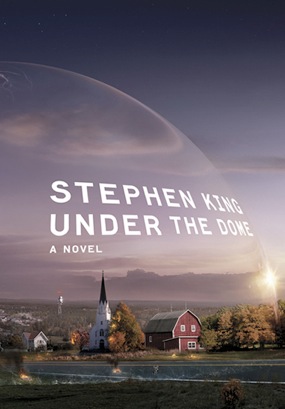
That’s a headline I’m expecting to see soon. under-the-dome.jpg

Barb is reading Stephen King’s Under the Dome, all 1074 hardcover pages of it, lying in bed. Thus far the only affliction she has suffered has been loss of sleep stemming from an inability to turn the light out.

I’ve thought about getting it for my iPhone Kindle app, but I’m afraid that would make my phone too heavy to carry in my pocket.

The Kindle App

Tinkers, reviewed here yesterday, was the first book I’ve ever read completely on an electronic reading device.

Shortly after getting my first ‘smart phone’, an iPhone, this summer, I was shown that I could get a Kindle App for use on the iPhone which opened up to me Amazon’s collection of ebooks, a collection both more extensive and less expensive than that available for the the more elegant iBook app pre-installed on the iPhone.

Though I immediately bought Tinkers which had recently been recommended to me, and a couple of others, I have resisted reading in that format.

Now that I’ve done it, a couple of thoughts.

1) The reading experience was good. After a while, I did not miss the smell of pages and the physical feel of the book in my hands. Once the content took over, the delivery system was not missed.

2) I loved being able to read at night without turning on the light. I found that I could hold the phone and ‘turn’ the pages adeptly with one hand even while lying in bed.

3) I find that I can always have a book at hand. The iPhone is light, fits in my pocket, and goes with me everywhere. (I can’t see what the advantage of the Kindle itself would be over the iPhone for delivering this content.) My pride takes a hit, though. If I’m sitting somewhere waiting for someone, and am staring at my phone, I’d rather people know I’m reading a good book rather than playing “Angry Birds”!

4) On the other hand, I tried to mark passages in Tinkers. It was simply not as quick and easy as with a paper book.

5) And the reason that I cannot see myself ever moving to this method other than for the occasional book is the loss of the library. When I’ve read a book that mattered to me, I like to put it on the shelf. There it lives next to other books which have been a part of my life. At will I can pull it down, flip through some pages, find a passage. I can pick it up and hand it to a friend for them to look at. I’m emotionally bonded to the paper and ink in a way that I never will be to the 1s and 0s.

Ebooks are a great tool. I would gladly receive a Kindle gift certificate any day – for, say, Christmas… :-). But I cannot see it ever surpassing the love affair I have with the hold in your hand variety of books.

Tinkers

I don’t know enough to make this statement, but I’ll make it anyway, the first of several inflated claims to follow:

When the baby boom generation was young, we wrote and filmed tales about the young. The novel The Catcher in the Rye and the movie Rebel without a Cause come to mind. Now that that generation has aged, we seem to be thinking a great deal more about, well, aging and the Terminal Event. The movies Something’s Gotta Give and Solitary Man come to mind, as do the recent and well celebrated novels Gilead,  Olive Kitteridge, and this recent Pulitzer winner, Tinkers. Our generation may not be invincible after all.

Tinkers, like every work mentioned above, focuses upon a life in relationship with those around it. The central life here is that of one George Crosby, a teacher, guidance counselor, and through the end of his life, a successful ‘horologist’ – an expert in the workings and repair of old clocks. We are introduced to George on his death bed, as he variously hallucinates and remembers, and drifts in and out of connection with those who have gathered to be present with him as he dies, those whom he can no longer recognize.

The story is told with soul and depth and poetic art. We enter a dying man’s hallucinations and experience an epileptic seizure first hand. And we watch George Crosby’s minister grandfather go slowly insane. This is a dying man with a troubled and unhappy past. With similarities to Olive and to Gilead, this is the telling of the tale of lives lived and looked back upon. The characters all are non-heroic, such heroism as there is being nothing more than the ability to survive in this broken and unhappy world. I am left with a series of impressions, of poetic images, many of which feel real, but at the same time sober and disquieting.

To say more would require a re-read and further reflection, and even then I’m not sure I would be able to put my finger on the point of it all, if there is one. One character in Tinkers is technically a ‘tinker’ (“…a person who travels from place to place mending metal utensils as a way of making a living.”) and another ‘tinkers’ with clocks. At some level, though, I get the impression that included among this group of ‘tinkerers’ may actually be the creator, who is doing a damn poor job of getting his world to run properly.

There is an obscurity here that makes the reading slow rolling, and keeps me, for all the beautifully phrased run-on sentences, from wanting to return. I’m loathe to be critical beyond that. However, let me digress a moment.

I believe in the authority of aesthetic elders. I believe that we should bow before the breadth of knowledge and depth of insight of those who really KNOW a thing before we presume to pronounce a judgment on it. I must leave, for example, the judgment between ‘good’ jazz and ‘bad’ jazz to others, and yet at the same time accept on the authority of those who know music that jazz itself is something worth listening to and knowing.

So in this spirit I do defer to my literary elders, those who guided the author, Paul Harding, through the writing workshops and measured his work against others on the Pulitzer committee. I accept their judgment that this is a very good book.

But still, I protest when a non-linear narrative forces me, the reader, to become a detective patching together a meaningful story out of seemingly random flashbacks, hallucinations, recollections, and quotes from an 18th century book on horology. This style may be good, but I’m not a fan.

The trend toward the elimination of quotation marks and the inconsistent and often changing point of view makes the reading a more difficult and less enjoyable task. Why, I wonder, would an author want to make his reader work harder, unless, as I gathered from a Cormac McCarthy interview with Oprah Winfrey, such authors assume that if we are too stupid to figure it out we ought to just stick to Go, Dog. Go!
.

Okay. I’m over-reacting.

But I am puzzled by the intentionally obscure considered as art. I sometimes wonder if there is an arrogance infiltrating the literary elite which excludes plebeians like me.

Upon reflection, the book has grown in my favor. But slowly. I know that good art is often characterized by a certain measure of ambiguity allowing understanding at multiple depths. So perhaps – no promises – perhaps I’ll return to Tinkers some day, and puzzle again over what makes it tick.

Mornings on Horeseback

Teddy Roosevelt was a unique and fascinating individual. David McCullough writes his Mornings on Horseback as an investigation into what made him that way.

As always, McCullough accomplishes the task with such skill that given sufficient uninterrupted time, one might want to finish it in a day.

Roosevelt was nothing if not the product of a strong and close knit family. He was a part of a tightly bonded and mutually supportive clan. Surely he was uniquely gifted and had unparalleled access to privileges and opportunities so beyond most of us that we would never dream of them. (When are YOU planning to take a year off and tour Europe? What, you haven’t planned it?) When he was at Harvard, his income from his father’s estate was nearly double that which the president of Harvard was receiving in income (a massive $8000/year).

Clearly he was a child of privilege and the greatest of his privileges was his family. There was a ‘tightness’ between his siblings and himself and his parents that defined them all. He greatly honored his father and was certain that he would never live up to the standard of public service and compassion his father evidenced. In reality, so greatly did he exceed the stature of his father, that he obliterated it. History now forgets that there was a Theodore Roosevelt, Sr., a man of great public service and vision, who not only weekly cared for orphans at a home for boys, but also was instrumental, among other accomplishments, in founding New York’s Metropolitan Museum of Art and American Museum of Natural History.

Critics might find room to challenge aspects of Roosevelt family life, but whose life would escape such scrutiny? Family life, or its lack, has a profound impact on a child’s life, which is clearly on display here. And it is good.

Given the tendency of many to stand in awe of one of such stature, Geoffsnook asks rightfully about the existence of TR’s warts. There are two ways to skew a biography. One is to set out to smear a man by putting only the worst spin on what he is reported to have done. The other is to present a treatise which overlooks the faults and paints everything in the finest of pastels.

David McCullough never writes about people he does not admire. He admires Roosevelt and is clearly captivated by the power of the entire family. And yet we never get the impression that he is glossing over anything. He is careful to debunk several mythologies about Roosevelt that other, less critical biographers, might allow to stand. He details Roosevelt’s odd neglect of his first wife and child from his later autobiographical works. TR comes across with warts. I retain my trust in David McCullough as a reporter truly ‘fair and balanced’.

There is no moral to the story, no ‘go and do likewise’ exhortation attached to this life. What we have here is a window cracked upon a fascinating person set in a story engagingly, as always, told.

Page 13 of 19

Powered by WordPress & Theme by Anders Norén