Concerning Life as It Is Supposed to Be

Category: Books Page 15 of 19

Nearly Complete Lewis Library for Sale

Few know that C. S. Lewis was an accomplished baker who wrote a number of books probing the remote corners of the baker’s art. These books are rare, and treasured in the Christian baking community.

I have been privileged to come in contact with a man who has a nearly complete collection of Lewis’ baking works which I have been authorized to offer for sale. Before posting this to Craig’s List, I thought I’d give readers of Happy and Bright the first crack.

All works in this set are in good condition, with some underlining in pencil. All are paperbacks, but the glue is tight and the spines uncracked.

This set includes:

The Four Loaves

Surprised by Soy

A Yeast Observed

The Problem of Grain

Till We Have Biscuits

The Sourdough Letters

Sourdough Proposes Toast

The Abolition of Manna

Also here, for the children:

The Lion, the Witch, and the Whole-Wheat Waffle

The Voyage of the Dawn Donut

The Last Bagel

and, a rare find, his classic defense of Christian baking:

Mere Crustianity

Bidding will start with the first serious offer.
Kindle Shelf

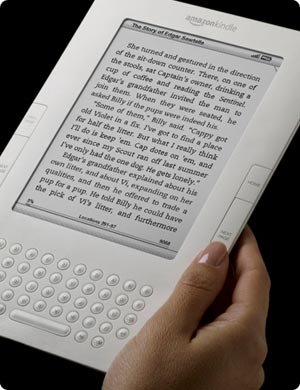
I use technology and am not afraid of technology. But I’m always wanting to ask what the technology will do for me and what it will take away from me. So, I have resisted ANY temptation to put down money for an Amazon Kindle. I love the feel of a real book in my hand, the ability to mark it, and for that mark to be there when I flip through the book years later.

But when I read this article, and realized that even the heaviest book became light on the Kindle, I was momentarily intrigued.

But then later on, flipping through the magazine, (another pleasure lost on an electronic device) I found this cartoon, and whatever desire I had just totally disappeared. (To be fair, I believe that is an iPad in the cartoon.)

I still would like to hold one in my hand someday.

Postman on Technology

The following quote is from Neil Postman’s 2000 book Building a Bridge to the 18th Century. It’s a wonderful book and worth reading. Like Postman’s classic Amusing Ourselves to Death the book is filled with pointed insights engagingly presented.
In light of yesterday’s technology post, I thought it would be fun to include these words from Postman (published in 2000).

I suppose I cannot put myself forward as a model citizen of the digital age. In fact, there are many people who, when describing my response to the digital age, continually use the word ‘dinosaur.’ I try to remind them that the dinosaurs survived for a hundred million years, mostly because, I would imagine, they remained impervious to change. Nonetheless, I find it useful to ask of any technology that is marketed as indispensable, What problem does it solve for me? Will its advantages outweigh its disadvantages? Will it alter my habits and language, and if so, for better or for worse? My answers may not be yours, almost certainly are not yours. I write my books with pen and paper, because I have always done it that way and enjoy doing so. I do not have a computer. The Internet strikes me as a mere distraction. I do not have voice mail or call-waiting, both of which I regard as uncivil. I have access to a fax machine, but try to control my use of it. Snail mail is quite adequate for most of my correspondence, and I do not like the sense of urgency that faxes inevitably suggest. My car has cruise control, but I have never used it since I do not find keeping my foot on the gas pedal a problem.

You get the idea. I will use technology when I judge it to be in my favor to do so. I resist being used by it. In some cases I may have a moral objection. But in most instances, my objection is practical, and reason tells me to measure the results from that point of view. Reason also advises me to urge others to do the same. An example: When I began teaching at NYU, the available instruments of thought and teaching were primitive. Faculty and students could talk, could read, and could write. Their writing was done the way I am writing this chapter — with a pen and pad. Some used a typewriter, but it was not required. Conversations were almost always about ideas, rarely about the technologies used to communicate. After all, what can you say about a pen except that you’ve run out of ink? I do remember a conversation about whether a yellow pad was better than a white pad. But it didn’t last very long, and was inconclusive. No one had heard of word processors, e-mail, the Internet, or voice mail. Occasionally, a teacher would show a movie, but you needed a technician to run the projector and the film always broke.

NYU now has much of the equipment included in the phrase ‘high tech.’ And so, an eighteenth-century dinosaur is entitled to ask, Are things better? I cannot make any judgments on the transformations, if any, technology has brought to the hard sciences. I am told they are impressive, but I know nothing about this. As for the social sciences, humanities, and social studies, here is what I have observed: The books professors write aren’t any better than they used to be; their ideas are slightly less interesting; their conversations definitely less engaging; their teaching about the same. As for students, their writing is worse, and editing is an alien concept to them. Their talking is about the same, with perhaps a slight decline in grammatical propriety. I am told that they have more access to information, but if you ask them in what year American independence was proclaimed, most of them do not know, and surprisingly few can tell you which planet is the third from the sun. All in all, the advance in thought and teaching is about zero, with maybe a two- or three-yard loss.

We can quibble with him, but the questions and observations are at least worth pondering. I have an uneasy relationship with technology. But I find it inevitable. Change is inevitable. We learn to live and adapt. We must. And even though the electric stove, the dishwasher and the microwave oven have changed the way the family relates in and around the kitchen, I’m still rather fond of them.

Our Friend Jenny…

…is now a published author!


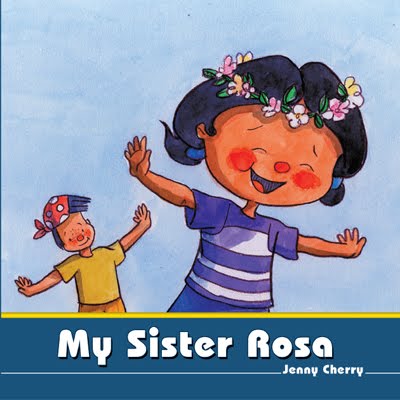
Her book My Sister Rosa has just been published and is available through Amazon.

My wife and I have seen this book in its original form, as it was prepared as Jenny’s senior project for her illustration degree at Ringling College of Art and Design. The book is a wonderful story, based largely on Jenny’s own experience with an autistic brother, and reflects her tender heart and beautiful spirit.

Buy it. You won’t be disappointed.

*****

UPDATE: The product description on the Amazon site describes this as a murder mystery. (“A routine trip to the local hardware store propels Chris Landrum into a world of revenge, hate, and murder….”) That is, uh, not quite accurate.

The correct description is here: “My Sister Rosa is a story about a a little girl with autism, named Rosa, and her life, activities, and problems are narrated by her big brother Tomas. They live in a small, hipanic community, and even though Tomas tries to include Rosa in his activities, she often plays within her own small world, this world is not understood by the other neighborhood children, and as a result, teasing ensues. As the good big brother, Tomas rises in defense and will eventually he will come to know his sister more and the world she lives in.”

UPDATE #2: The typos in the above are as they exist on the Crossbooks site. Not mine.

Pippin Discovers Facebook

“I wish that we could have a Stone that we could see all our friends in.” said Pippin, “and that we could speak to them from far away.”

from The Lord of the Rings: The Return of the King, Book Six, Chapter VI, “Many Partings”

Building a Pastor’s Library, Part 4

This is part 4 of a 4 part series. Parts 1 – 3 are here, here, and here. This was composed in response to a request from a young man hoping some day to be a pastor.
————————

I have two final recommendations regarding your pastoral library. First, start early keeping an electronic record of all your books. If you start early, it is not a foreboding task. Then each time you buy a new book, you can add it to your record. You don’t want to start this once your library reaches 500 volumes!

Why would you do this? Insurance. If the place where you books are kept burns to the ground, you need to produce a record for the insurance company. At least this is what I’ve been told. I keep my record in a simple spreadsheet on my computer, and store it online as well. A snapshot of a portion of that is below. It could cost upwards of $20,000 or more to replace the contents of a mature library. Keeping a record is a small step of protection.


Secondly, resist, resist, resist the temptation to lend your books to others. I know that you are kind and nice and want to be helpful. But in my experience, two things happen when you lend your books. 1) They never come back. 2) As soon as you lend out that book that you’ve not needed for two years, suddenly, in THIS week’s sermon preparation, you remember something in that very book that would be helpful. And you don’t have it.

Books are your tools. You need to have them handy.

* * * * *

My pastoral library is in the vicinity of 1100 volumes right now, though it could stand to be pruned a bit. How many volumes you have may simply be a product of the space and resources you have available.

One day my brother, who is not a pastor, and has a cynical bent about him, walked into my study and harumphed at my books, saying, “So, have you read all these?” “Some,” I carefully replied, “I’ve read twice.”

He seemed satisfied with that true, but slightly disingenuous, answer.

Building a Pastor’s Library, Part 3

This is part 3 of a 4 part series. Parts 1 and 2 are here and here. This was composed in response to a request from a young man hoping some day to be a pastor.
————————

The rest of the library grows, for me, in something of a haphazard way. When I was young, the core of my library was formed by books I had purchased for seminary classes. This should give you a good foundation of good, useful, classic books.

As one studies, one realizes that there are certain works that one must have simply to be literate as a pastor. Most of these one will have picked up for classes but not all.

In building a library, I must remind myself of a couple of things: 1) I am a pastor, not an academic. My library will be restrained by that fact. And 2) my worth to the kingdom is not defined by the numbers of books lining my walls. I love books, but I am not in a competition to own the most. I just want them to be useful.

Within this framework, I want to have in reach books that either have been helpful in my pastoral work or show promise of being helpful. My books are my tools, and having tools that never serve any purpose and never will just does not make much sense. So occasionally, I go through my library and prune it of books that a) I’ll never read and b) show no promise in contributing anything to my future study or preparation.

Recommendations for new purchases come from a myriad of sources, not the least of which are my own peculiar interests. I read book reviews in magazines and journals and ask myself the question, “Is this book interesting enough to me or important enough that I will want to read it or will need to make reference to it sometime in the future?”

If the answer is yes, and I have the money, I’ll buy it. But I have learned that restraint is a good thing. I will often put books of interest on a wish list at Amazon, and there it will sit, not forgotten, but not purchased. Three months after determining that it is a ‘must have book’ I’m likely to see that no, it wasn’t that important after all!

Besides reviews in magazines, I take seriously what others I respect read and recommend – specifically other pastors and those whom I know are reading the kinds of things of interest to me.

Building a Pastor’s Library, Part 2

This is part 2 of a 4 part series. Part 1 is here. This was composed in response to a request from a young man hoping some day to be a pastor.
————————

In building my library, one of the things I’ve wanted to do is to have at least one good commentary on each book of the bible handy and available. There are times when an issue comes up on a text in, say, 2 Thessalonians. It’s good to have something handy to help me address that.

Initially one can depend upon a good one-volume commentary. There is only one I recommend: New Bible Commentary: 21st Century Edition. I recommend that over a popular favorite: Matthew Henry. I would not buy Henry – his comments are available for free in a lot of places. He has good devotional insight, but reading him can be tedious and not altogether helpful.

The easiest way to cover ‘every book of the Bible’ is to lay hold of a good commentary set. However, I have avoided that in general because of the inconsistencies from volume to volume in most sets.

I almost suggested that at least you should buy Calvin’s Commentaries. But mid-sentence I decided to commit heresy and suggest that as much as I think you could benefit from Calvin, don’t go for him immediately. His insights are amazingly relevant. However, I find that I rarely use him in my weekly sermon preparation.

The goal then is to have at least one good commentary for each book (or book grouping – like 1 and 2 Corinthians, or whatever). To pick the best ones, there are lists available. Professors are often happy to provide a list. I’d be able to steer you to some good commentaries. There are two frequently updated survey books out there by good conservative scholars which I have found very helpful: Donald Carson’s New Testament Commentary Survey and Tremper Longman’s Old Testament Commentary Survey.

When I was a young pastor, I was blessed with a generous gift of $900 (in 1988 dollars!) which I was able to use to build my skeleton of commentaries. If any of you would like bless a young pastor, give him such a gift (in 2010 dollars, of course!).

When I am going to be preaching or teaching on a book, I buy additional commentaries to flesh out my resources on that book. In this way, the library grows. Generally I find two to five good commentaries on a book which I use consistently when doing sermon preparation.

Building a Pastor’s Library, Part 1

A young man I know is working his way through college with an eye toward attending seminary and eventually pastoring a church. That’s a great aim, for sure. God may redirect him along the way, but for now, and perhaps for good, that is his passion.

He asked me a few months ago some questions about books which I only recently got around to answering. I decided to post my answer here (modified for blog consumption) for two reasons.

1) There may be other students in a similar situation who might find some helpful ideas here, and

2) I’d like to encourage other pastors to add via the comments below their own ideas or guidelines for my friend.

His questions were two:

1) Where do you get your books?

2) How do you decide which books to get?

The first is markedly easier to answer, for sure. My answers for both questions will span four separate posts.

So, where do I get my books?

In general, I buy all my books from Amazon.com. It is so convenient that I can’t force myself to go elsewhere. I have occasionally checked prices at and purchased from Cumberland Valley Bible Book Service, but it is so much more convenient to search and buy on Amazon. [I know that there are many, many worthy small independent Christian booksellers. My conscience smites me here. But at Amazon I can go from login to payment in about 30 seconds and have my books in two days. I’m hooked.]

Occasionally, I want to buy a hardcover for a book that is no longer published in hardcover, or I need to buy a book that is simply out of print. For that, I use one of two on-line used book clearinghouses: ABEBooks (normally) or Alibris (sometimes). I’m sure there are other sources out there, but those are the ones that I have used successfully.

Now Up…


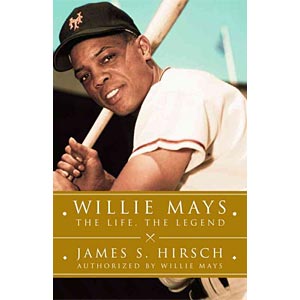
Now stepping up to the plate, at the top of my Amazon.com wish list, this. Can’t wait.

Page 15 of 19

Powered by WordPress & Theme by Anders Norén