Randy Greenwald

Concerning Life as It Is Supposed to Be

A Remarkable Book

At the encouragement of several of you, I inserted into my reading list Harper Lee’s To Kill a Mockingbird between Anna Karenina and my current read, Ex Libris. I’m grateful to those who urged me to do so.

I’m probably one of a dozen people who managed to make it through high school and college (BA in English education, mind you) without ever reading this book. What a loss.

So for you eleven others, this: the book is told through the eyes of a precocious young girl, as she tells of life in a small Alabama town and the impact of her attorney father defending a young black man against a spurious charge of rape.

Sounds depressing, but it’s not. There is life here, the life of young children coming to understand the gray world we inhabit, yes, but children enjoying the delights of childhood. There are fussy, nosy, hypocritical old ladies, but ones we come to understand and with whom we sympathize as well. Depressing? How can a book which portrays a father and his children in a deep relationship of love and respect be depressing? How can a book who has its character dress as a ham be depressing?

There is sadness, yes, but not a sadness devoid of hope.

The remarkable thing is how well Lee inhabits the skin of her characters, be they white, black, young, old, sympathetic, or scoundrel. I grew to love Scout (the narrator), to pity Tom Robinson (the accused), to despise Bob Ewell (the accuser), and to want to be Atticus, the attorney/father/Hero, (aka Gregory Peck).

The movie is wonderful. But it cannot match the power of the book.

+ + + + +

I must make note of the view that nine year old Scout takes of her fifty year old lawyer/father, whom she calls by his first name, Atticus.

Atticus was feeble; he was nearly fifty…. He was much older than the parents of our school contemporaries….

Our father didn’t do anything. He worked in an office, not in a drugstore. Atticus did not drive a dump-truck for the county, he was not the sheriff, he did not farm, work in a garage, or do anything that could possibly arouse the admiration of anyone.

Besides that, he wore glasses….

He did not do the things our schoolmates’ fathers did: he never went hunting, he did not play poker or fish or drink or smoke. He sat in the livingroom and read.


I wonder how I, a fifty-three year old bespectacled pastor/father, appear to my nine year old son?!

Does a Sermon Have Authority?

[This is the second in a series on preaching stimulated by John Stott’s book Between Two Worlds. It was prepared originally for the Bradenton Herald and appeared there on May 9, 2009.]

A preacher has an intriguing job. Weekly, at least, he stands in front of a group of people and tells them what to do and think. Who else (besides third world dictators) gets to do that?

And who else gets to do that with such immediate feedback? The feedback is, however, coded: “Good sermon” may mean no more than, “I agree.” “Interesting” translates as “You don’t expect me to believe that, do you?”

But DO we expect others to believe or agree with what preachers say? Why should preachers have any more inherent authority than, say, Rush Limbaugh?

The answer depends largely on the individual preacher, what he says, and how. But clearly if the authority of the preacher resides solely in him, then his words occupy no unique space and can be embraced or discounted according to the whims of the listener.

Perhaps the preacher derives his authority from the church in whose pulpit he stands. For a church to set a man apart implies that the body is granting to that man some authority to speak in its name. Is that sufficient? Should we accept and believe what the preacher says because of the eminence of the church behind him?

Yes, to some degree. It is better to hear from a man who has the approbation of others. But is the church that which gives the preacher’s words their ultimate authority? No.

What makes the preacher unique is that he is not, if he is doing what he is supposed to do, rehearsing his own clever ideas to impress a consenting audience. He is, rather, seeking to represent and explain the Bible.

I remember once standing before a group of Kenyan pastors who had come to hear me speak. Me. Not Billy Graham. Not John Stott. Me. My thought then was that I had nothing to say to these fine men. Nothing. Only if what I said accurately reflected Biblical truth would my words have any significance for these men. It is the Bible that gives the preacher authority.

But even to see this is not to have climbed the ladder far enough. The Bible is a book. A good book. A culturally influential book. But the preacher’s authority is grounded in this book only if we understand that this book’s author has authority. The preacher has authority because what he preaches arises from a book whose author is God himself.

To think this way has huge implications for the humility of the preacher. It has implications as well for those who hear sermons. The authority of the message resides in God. When we hear a message whose roots are in Scripture, we are not hearing a mere man speaking mere words. We are, in a very real sense, listening to God speak to us.

If I believed that, I would, as a preacher, be very careful about what I say. And if I believed that, I would, as a listener, be very excited about getting to a church on Sunday!

(500) Days of Summer

In high school, I met a girl at a Cincinnati city-wide church youth rally. I was taken with her, I pursued her and, I thought, she responded. Since we lived in opposite parts of the city, our relationship was long distance except for our one date (a telling detail) when we went to see a performance of Jesus Christ, Superstar at Cincinnati’s Music Hall.

A few days later I called her on the phone. We talked, sort of. There would be longish bits of conversation on my part followed by extended silences on her part. Finally, sensing something going down, I said “What are you doing?”

“Algebra.”

That was, to put it mildly, cold. Clearly I was beginning to learn what many guys learn at that age: girls are evil.

If you are alert at the beginning of the new, and strangely good, movie (500) Days of Summer, you will sense that a similar experience must lie behind it.


As the narrator tells us, this is not your typical movie love story. It is, rather, a story about love. To tell you that by the end of the 500 days that Tom Hansen (Joseph Gordon-Levitt) spends with Summer Finn (Zooey Deschanel), the two have parted ways is not to ruin the film. We find that out immediately.

This is not your typical romantic comedy. Here, boy meets girl, and girl dumps boy. Who wants to see that? The romantic genre is an escape. We expect happily ever after. This story more real than fantasy, so real for some that it may be painful. (My wife said as we drove away from the theater, “That happened to me.”)

And yet, the story’s realistic elements are so well balanced with humor and creativity that it is not only bearable, but at times fun. My wife pointed out the the film made her sad and made her angry, but as well made her laugh and made her happy.

One leaves the film not quite knowing what to think. Personally, I wanted to run Zooey Deschanel through with a sharp object, behavior unbecoming a pastor, to be sure. I mean, love must mean never having to say “I’m sorry” because to my recollection Summer Finn never does.

Does the film encourage or discourage romance? Are we to sympathize with Tom’s struggle, or are we to see his foolishness? Is romance a reality or an illusion? Does the movie encourage casual sex or is it showing the inherent perils of it? What are we to think?

Clearly the first 30 seconds of the film set the tone. The final 30 seconds redeem the whole. What lies between makes me glad that I’m enjoying this on film, and no longer for real.

With Apologies to Honest Lawyers…

…both of you.

I meant to add this to the previous post, but forgot. The irony of these two things in juxtaposition will be obvious.

After the report on the health care debate on NPR this morning, the local affiliate added its own boilerplate support spot. I’ve heard this hundreds of times before, but this morning I heard something distinctly different (names have been changed because, well, they sue people):

“Morning Edition is brought to you by the liars of Smith, Roe, Jones, and Doe”

My brain tells me that the announcer must have said ‘lawyers’, but my ears reported ‘liars’ so distinctly that I did an aural double take and wished I could replay the moment.

Elusive Political Truth and Health Care

To believe that politicians will lie is not to embrace cynicism, but to be wary and wise. To believe that those engaged in a high profile debate of great significance will lie is to simply to grasp the obvious. But when that debate is greatly significant, complex, and politically divisive, the ability to extract truth from the mix is difficult.

In the current US debate regarding health care reform (aka the effort to impose socialized medicine upon an unsuspecting population – choose your preferred label) finding what is true and not true is extremely difficult. The line that has been the most damaging to those pushing for greater government involvement in health care has been that the proposed system would in effect create ‘death panels’. The thinking here is that with the government doling out resources for medical treatment, elderly patients would be denied treatment if it were determined by government regulators that such treatment would not significantly improve the quality of life when measured against the total expense.

(It seems to me that the market now determines this, and the market is no kind arbiter of life and death decisions. But that is beside my point.)

Conservative opponents to (further) government involvement in health care are pushing the ‘death panel’ idea and those supporting proposals now making their way through the legislative process label the idea as a preposterous lie.

My problem is that I think both sides of the debate are capable of manufacturing and massaging reality in order to make their case.

I was intrigued this morning by a reporter on NPR (I know that to some readers I’ve already conceded the case by even listening to NPR, but bear with me) who submitted claims regarding the British system to a British surgeon and government advisor for his factual assessment. He asserted that the claims were not only absurd, but outright lies.

If this reporter were to speak with a different British surgeon or official, would he get a different answer? All things are possible, and that is my problem. I just don’t see how anyone can speak with any certainty on such a politically charged issue in an environment where to so many of the participants in the debate, truth is not as important as victory.

UPDATE: I originally linked to the wrong story. My apologies.

Fill Him with Pins

I will have some substantive things to say about Paul Miller’s excellent and thoughtful book A Praying Life, but today let’s just settle with one simply ‘Amen’ that is not related to prayer at all.

In discussing how vestiges of greek thinking leaves us with an over-spiritualized idea of prayer, he says that these ideas ‘seeped into the church, equating spirituality with a suppression of desire and emotion.’

Then he points out what made me smile:

‘That’s why Jesus comes across in so many films as a bit strange and effeminate. He walks slowly, talks slowly, and moves slowly. You want to put a pin in him.’

That’s exactly what I want to do.

Sad

I wonder, really, how some men can sleep at night.

And it’s sad when I realize that all of Christianity is tainted by this aberration.

Quick Movie Notes

Our movie watching does not normally involve going to a theater. Most often, we are at home, watching big screen fare on our relatively tiny and old-fashioned 27-inch LDTV (!) screen. Unlike some, therefore, my movie reports are rarely current.

Plus, I don’t always get around to reporting on what we watch. So, Let me run through a few quickly in advance of the weekend.

What a Girl Really Wants

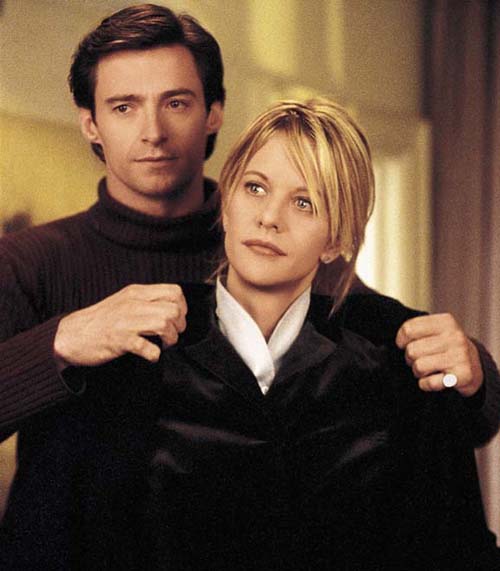
My movie watching partner is a ‘chick’ and so weekends include at least one ‘chick flick’. Last weekend we watched, for the third or fourth time, Kate and Leopold with Hugh Jackman and Meg Ryan in the starring roles, with a good supporting performance by Liev Schreiber. This movie is unique in many ways, but its real appeal lies, I think, in the way the girl is won.

Jackman plays a 19th Century Brit brought into the late 20th century. What wows the girl is his treating her with respect, showing her honor, defending her, and protecting her. He wins her affection by being a gentleman. What a concept, and by no means is it outdated. My impression, guys, is that it still is what a girl wants.

What Brothers Want

I really am not interested in yet another movie about the holocaust, but here we are with Defiance. We are told that this is based upon a true story. Aren’t they all?

I don’t mean to be snarky, for I am often moved by these stories of courage and integrity and forbearance in the face of such evil. This has all of that, and is a good story.

There just wasn’t much to make it stand out from the pack. Perhaps it was the young man fulfilling a Moses type role while denying the need for God that bothered me. “This is a miracle we will accomplish on our own,” he says, or something nearly like it. Perhaps it was that none of the characters were truly heroic (with the exception of the character played by Mia Wasikowska, about whom we will certainly be hearing more).

Daniel Craig and Liev Schreiber (yes, him again – he’s one of my favorites) take sibling rivalry to new levels, and bring it all to a satisfying conclusion.

What the French Want

If Barb has a weakness for the action flick and the chick flick (the above two were her choices), I have a weakness for the quirky, offbeat drama. Bottle Shock fits the bill there admirably. This movie tells the story of a British wine snob, Severus Snape, (oops… wrong movie) who runs a wine shop in Paris. In a marketing ploy of international proportions he sets up a blind tasting comparing the classic French wines with the upstart Californian varieties. The result shocked the world.

At least that’s what I’m told. I was alive in 1978 when this happened, and it had no impact on my world.

But it makes a fun movie. It has elements of dramatic tension, of humor, of father-son angst, of friendship, and of the loser-stoner making good, getting the girl, and getting a very sweet follow-up role.

What No One Wants

Sometimes my desire for a quirky, offbeat drama leads me astray. The real fun of The Great Buck Howard was watching both Colin Hanks and his father Tom Hanks play in the same movie. As a father and son, no less. Pretty cool.

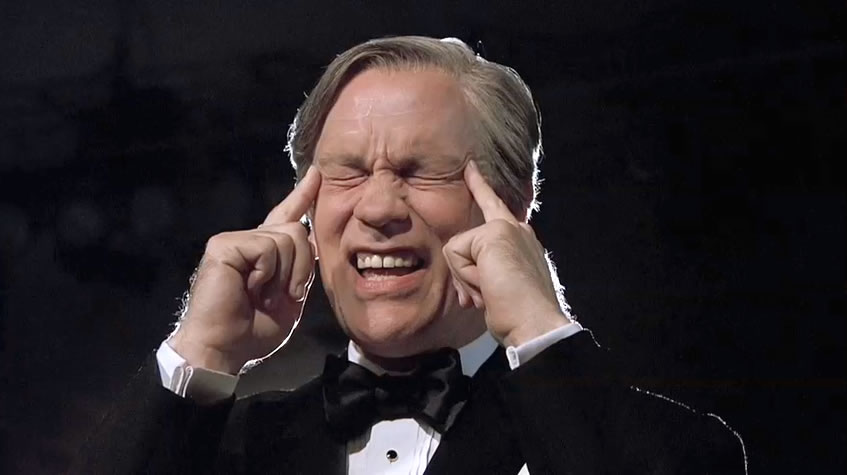
Buck Howard is based loosely upon the career of the ‘mentalist’ known as The Amazing Kreskin. John Malkovich is one of the most phenomenal actors out there, so that this film is also redeemed by watching a master of his craft create a character and sustain it through the whole movie.

I found that the movie failed to really sustain my interest. It wasn’t bad, exactly. The idea of watching the career of a man about whom it is said, “He is all washed up, and everyone knows it but him” does not make for very hopeful fare. There is, however, a note of redemption in the end, for which I was grateful.

The Major Media


Ashton Kutcher has nearly two million people following him on Twitter. This means, if I understand the reports correctly, that more people follow him than follow CNN.

I’m not sure if this is a good thing or a bad thing. But it seems to make his Twitter account a “Major Medium”.

This causes me to reflect upon an assertion I stumbled upon some twenty years ago. The contention was made then that among the ‘major media’ the pulpit was primary. That is, though little recognized and appreciated, the pulpit is the vehicle through which the greatest impact is made on human life and thinking.

I thought then and I think now that such a view is overly optimistic and tinged with an idealism that borders on the delusional. It ignores the fact that, for example, 1.36 billion Americans passed through the stiles of movie theaters last year. Who knows how many rent them, download them, or catch them on TV.

We get our news and entertainment on-line or on-screen. We are surrounded by schools and universities which shape and mold students apart from whatever Christian underpinnings some of them might have once had. Celebrities dominate our news (and our Twitters) and we drink from many streams of influence. Who can say what the major influences upon public thinking are. Few would include the lowly sermon in the list.

But then again, over three billion Americans passed through the doors of churches last year (take that Academy), so perhaps my skepticism is out of place.

This fact remains: there is no other medium with such a rich heritage and tradition. For 2000 years the Christian faith and life has been passed on by preaching. There have been times when the church has been at a low point, but still there were preachers. There have been times when preachers preached and immediately their sermons were printed, distributed, and read. The role of the sermon has ebbed and flowed, but it has always been there.

And it is unique.

No other medium even imagines that its message possesses a divine origin. Yet every (faithful) preacher who stands in the pulpit is intent upon opening God’s word to his congregation and therefore is seeking to bring a word from God to them. And though many have emerged from the movies or from the concert hall persuaded that their lives had been unalterably changed by what they heard or saw, when Christ is preached, lives are turned from eternal damnation to eternal life, from falsehood to truth, from an empty life to a meaningful life.

And though preaching is an ancient medium, it is gaining in relevance. In a recent unpublished document distributed among a group of pastors to which I belong, the following was noted:

‘One of the interesting phenomena noted by many writers studying the so-called emergent generation, or post-moderns, is that there is, in younger people, a hunger for deeper and more serious and authentic preaching of the Scriptures.
In the book The Emerging Church, Dan Kimball writes: “I sense a renewed hunger for theology and an interest in discussing the mysteries of God. Emerging generations are starving for depth in our teaching and preaching and will not settle for shallow answers. In his chapter on preaching in that book he says: “I know of several churches drawing hundreds and thousands of younger people in which the message is forty to fifty minutes long.”’

I am a preacher, and so I want to think that the work in which I am involved is indeed significant. I can’t claim one million Twitter followers, and only 200 or so visit my blog, and that in a good week, and most of those visit but don’t read. And yet, God has preserved his church and prospered his kingdom and persevered his people through something which seems so foolish, so mundane, so pedestrian, as preaching.

And I get to do it.

Wow.

AK Project Status Update #3

Those who have been following my progress through Tolstoy’s massive novel Anna Karenina will be pleased to know that as of today, August 11, 2009, I completed my first reading of it.

I say first reading because Mortimer Adler stresses that to really come to grips with a book requires multiple readings. As well, several of the readers of this blog have confessed to multiple readings. Will there be for me a second reading of this book?

That was the question that came to me around page 700. Yes, I read novels slowly, and only at night and on vacation. And, yes, this being the heart of baseball season, I had been consuming some of my reading time watching (with increasing levels of frustration) the Tampa Bay Rays on television. But as Tolstoy seated me as observer to yet another political discussion by his characters, I told myself that there would by no means ever be a second reading of this book. It was just taking too, too long.

I confessed this, and was told, “Wait – something BIG is yet to happen.”

It did, and I’m not likely ever to forget it.

Tolstoy uses a lot of words, but he is not wordy. Words and situations are carefully chosen to clearly and precisely introduce us to a society of people who, though created 130 years ago, are as modern and relevant as any you and I meet today. At the center of it are two: young, beautiful, passionate Anna, and sober, thoughtful, suffering Levin. They are so real to me, having spent the past two and a half months with them, that one would be hard pressed to persuade me that they no longer exist.

And in a very important sense, they do exist. Or shall I say that WE exist with elements of both, in differing proportions, within us.

Yes, I wanted Tolstoy to snap it along. I wanted a quicker pace and less detail about Russian politics, farming, peasant life, and social conventions. But now that I have completed it, I’m not sure what I would have eliminated. Moby Dick without long dissertations on whaling would no longer be Moby Dick.

So, will I read it a second time? Perhaps. Hard to say. But thanks to those who urged me to read it the first time, and to press on when wanting to abandon ship at page 700!

Page 88 of 142

Powered by WordPress & Theme by Anders Norén