Randy Greenwald

Concerning Life as It Is Supposed to Be

Heaven Is Not Your Home

I encourage all Christians to listen and give attention to this message by Dr. Richard Pratt:

Heaven Is Not Your Home

This was delivered to a gathering of the Central Florida Presbytery of the Presbyterian Church in America. I am not sure when, and I’m not sure how it came into my possession. However, it is a significant expression of the truth that what God is doing, and therefore what WE are to be doing, extends beyond personal salvation. It includes personal salvation, but is so much broader than that.

Meditative reflection upon the nature of the kingdom that Christ is building will impact how we see and direct our own efforts in ministry. I cannot stress the importance of this enough. Give it a listen.

* * * * *

This message is posted with the permission of Third Millennium Ministries, of which Dr. Pratt is the founder and president.

Why Am I Here?

The story below is from a publication of Mission to the World, the mission sending arm of the Presbyterian Church in America. It is written by Lyn Newbrander who writes it concerning a time when she and her husband were living and working in the Netherlands. I share it here partly for its honesty, and partly for its encouragement.

But I share it as well because of what I call the ‘Gospel Blimp Syndrome’– the idea that real outreach and real missions and real evangelism occurs only when we are in somebody’s face preaching at them. More likely than not, it is not proclamation which softens hearts to the gospel, but incarnation. This story warmly illustrates that.

* * * * *

“Why Am I Here?”

I was having a rainy KLM day. You know those days: get on the first KLM flight back to America and ditch the whole thing. I lifted three-year-old David off my bike and unloaded groceries from the saddle bags. Wet and loaded down, we faced the long trek up our 48 stairs, with David practicing, “St-ep, st-ep, st-ep.”

Life with three small children in Amsterdam was full of mommying, juggling groceries on bikes, and transporting kids to Dutch kindergarten. Why was I here, anyway? Between diapers, I’d somehow learned the language well, even speaking Dutch when people spoke English to me. But there weren’t a lot of people lining up at my door, wondering (in Dutch) why my life was so incredibly joy-filled.

As I set David down at the table for his lunch of peanut butter on whole wheat, the bell rang. It was Margaretha from across the hall. Soon after we had moved in, we met unexpectedly. When she came home from the hospital after a high-risk pregnancy, I ran down the stairs and immediately jumped in: “I’m-your-neighbor-shall-I-take- the-baby-up-for-you?” Barely waiting for an answer, I flitted up the 4 flights, set the baby in his seat by their door, and dashed back down, late to get David from school. Margaretha later told me that she felt as though an angel suddenly appeared, swooped up the baby, and dashed down, adding, “Baby’s at the door! Welcome home! Bye!”

Over time, a friendship developed. Margaretha helped me with my Dutch, comforted me during my 19 weeks of bed rest (she knew!), and we left a “baby phone” with each other when running a quick errand while children napped.

Today, I opened the door to Margaretha, still feeling discouraged. “What’s the matter, Lyn?” she asked. By this time, Margaretha knew I was a missionary, and since she had grown up in the church, she might understand.

“I’m just discouraged. You know, Margaretha, I don’t know what I’m doing here. I could be back home, doing all of the same things with much more ease, in my own language, close to my family. I just wish I could pack up and go home. There really isn’t any point to my being here.”

Margaretha told me something I will never forget: “You know, Lyn. It took an American coming to Holland to make me feel at home in my own country. I don’t know about all those other things you wish you could do, but I thank God that He sent you here just for me.”

Tears filled my eyes. Was one Dutch friend across the hall worth all the time and effort in support raising and in learning the language? I laughed, knowing the answer. Obviously, God thought that Margaretha was worth my sacrifices—and His.

Pippin Discovers Facebook

“I wish that we could have a Stone that we could see all our friends in.” said Pippin, “and that we could speak to them from far away.”

from The Lord of the Rings: The Return of the King, Book Six, Chapter VI, “Many Partings”

The 14th Century Perspective

My wife just emailed me to tell me that another severe earthquake has hit Chile. I don’t know what really has been the damage, and my sympathies go out to those who must be suffering greatly

Apart from the tragedy that such things are, I know what someone will soon tell me. Soon, someone will be telling me that this is just another sign of the end of the world and of the eminent return of Jesus.

Maybe it is. But there are two things that lead me to discount such interpretations of current events.

First, when Jesus speaks of natural disasters and rumors of wars in Matthew 24 and in Mark 13, his emphasis seems to me to be that these things are NOT to be taken as signs of his eminent return. His very point seems to be that we cannot accurately read these things as harbingers of the eminent end.

But Secondly, I can’t grasp how we can be saying that things are so bad. Yes, absolutely, if we were in the city center of Port Au Prince or Santiago, we would be overwhelmed with the suffering and the sorrow. I don’t mean to discount that. But what I wonder is by what historical measure can we so assuredly declare, as I’ve heard many do, that things are so bad that Christ must return? The implication of many and the expressed affirmation of others is that things could never have been as bad as they are for us. I seriously question that.

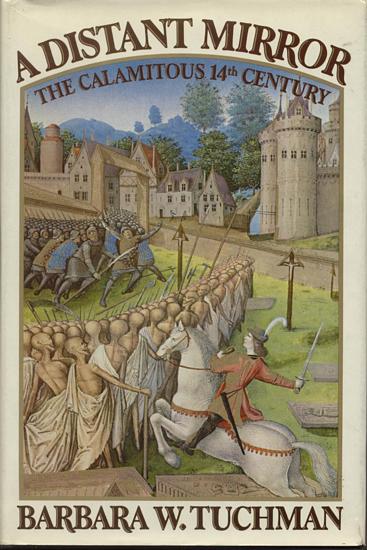
I have on my night stand a book I’ve been wanting to read for some time, A Distant Mirror: The Calamitous 14th Century. The author, Barbara Tuchman, has written what many believe to be a riveting and fascinating story of life in the 14th century. This would be the days during which Europe’s way of life, no, very existence, was threatened by corrupt church politics, public immorality, the incursion of ‘heathen hordes’, a 100 Years War, and the death of 1/3 of the population due to the Black Death, the bubonic plague.

I think any citizen surviving the 14th Century would probably laugh at us for claiming that we have it bad.

I think we as Christians need to be less confident in our knowledge of ‘what God is doing’ and more confident in what he has called us to do, and then just do it.

Hangin’

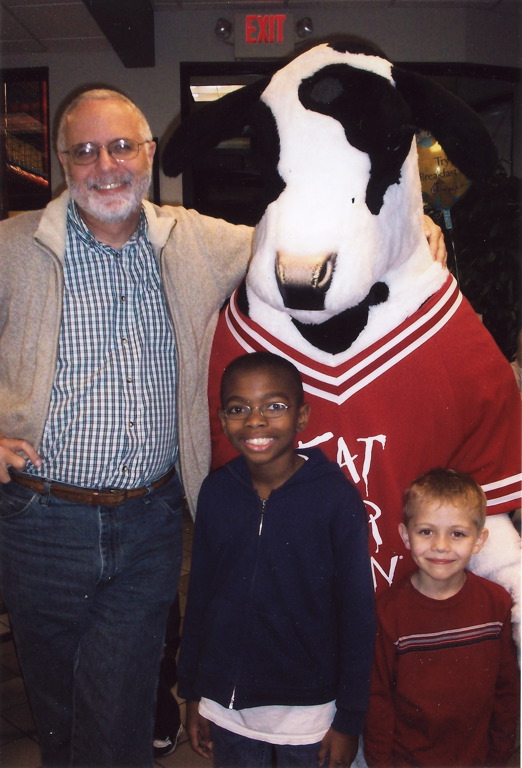
NOTE: Astute observers might compare the picture of the young man at the bottom right of this photo to the photo in my profile at the right and conclude that we are related. What do you think?!

Asking

I mentioned a week or two ago what James Montgomery Boice taught me about how to get smart. His curiosity was well developed. You can read about that here.

Wanting to inspire my children to his level of curiosity and intelligence, I told my children all about this.

Several weeks later I was working on a project of some kind, and my second son was hanging around. He was, as children are want to do, pestering me with an unending barrage of questions.

Finally I had had enough and I asked him if he wouldn’t really rather go play outside. He declined, preferring to stay and ask me questions that I could not answer.

Finally, my answer giving limit was reached, and I asked him to please do something else.

He said, “But Dad, you said this is the way to get smart.” (And, of course, being a son, he just wanted to be with me, but that was nothing he could express.)

It takes pretty good skill to fail as an intellectual mentor AND as a father at the same time. But I accomplished it.

Building a Pastor’s Library, Part 4

This is part 4 of a 4 part series. Parts 1 – 3 are here, here, and here. This was composed in response to a request from a young man hoping some day to be a pastor.
————————

I have two final recommendations regarding your pastoral library. First, start early keeping an electronic record of all your books. If you start early, it is not a foreboding task. Then each time you buy a new book, you can add it to your record. You don’t want to start this once your library reaches 500 volumes!

Why would you do this? Insurance. If the place where you books are kept burns to the ground, you need to produce a record for the insurance company. At least this is what I’ve been told. I keep my record in a simple spreadsheet on my computer, and store it online as well. A snapshot of a portion of that is below. It could cost upwards of $20,000 or more to replace the contents of a mature library. Keeping a record is a small step of protection.


Secondly, resist, resist, resist the temptation to lend your books to others. I know that you are kind and nice and want to be helpful. But in my experience, two things happen when you lend your books. 1) They never come back. 2) As soon as you lend out that book that you’ve not needed for two years, suddenly, in THIS week’s sermon preparation, you remember something in that very book that would be helpful. And you don’t have it.

Books are your tools. You need to have them handy.

* * * * *

My pastoral library is in the vicinity of 1100 volumes right now, though it could stand to be pruned a bit. How many volumes you have may simply be a product of the space and resources you have available.

One day my brother, who is not a pastor, and has a cynical bent about him, walked into my study and harumphed at my books, saying, “So, have you read all these?” “Some,” I carefully replied, “I’ve read twice.”

He seemed satisfied with that true, but slightly disingenuous, answer.

Building a Pastor’s Library, Part 3

This is part 3 of a 4 part series. Parts 1 and 2 are here and here. This was composed in response to a request from a young man hoping some day to be a pastor.
————————

The rest of the library grows, for me, in something of a haphazard way. When I was young, the core of my library was formed by books I had purchased for seminary classes. This should give you a good foundation of good, useful, classic books.

As one studies, one realizes that there are certain works that one must have simply to be literate as a pastor. Most of these one will have picked up for classes but not all.

In building a library, I must remind myself of a couple of things: 1) I am a pastor, not an academic. My library will be restrained by that fact. And 2) my worth to the kingdom is not defined by the numbers of books lining my walls. I love books, but I am not in a competition to own the most. I just want them to be useful.

Within this framework, I want to have in reach books that either have been helpful in my pastoral work or show promise of being helpful. My books are my tools, and having tools that never serve any purpose and never will just does not make much sense. So occasionally, I go through my library and prune it of books that a) I’ll never read and b) show no promise in contributing anything to my future study or preparation.

Recommendations for new purchases come from a myriad of sources, not the least of which are my own peculiar interests. I read book reviews in magazines and journals and ask myself the question, “Is this book interesting enough to me or important enough that I will want to read it or will need to make reference to it sometime in the future?”

If the answer is yes, and I have the money, I’ll buy it. But I have learned that restraint is a good thing. I will often put books of interest on a wish list at Amazon, and there it will sit, not forgotten, but not purchased. Three months after determining that it is a ‘must have book’ I’m likely to see that no, it wasn’t that important after all!

Besides reviews in magazines, I take seriously what others I respect read and recommend – specifically other pastors and those whom I know are reading the kinds of things of interest to me.

Building a Pastor’s Library, Part 2

This is part 2 of a 4 part series. Part 1 is here. This was composed in response to a request from a young man hoping some day to be a pastor.
————————

In building my library, one of the things I’ve wanted to do is to have at least one good commentary on each book of the bible handy and available. There are times when an issue comes up on a text in, say, 2 Thessalonians. It’s good to have something handy to help me address that.

Initially one can depend upon a good one-volume commentary. There is only one I recommend: New Bible Commentary: 21st Century Edition. I recommend that over a popular favorite: Matthew Henry. I would not buy Henry – his comments are available for free in a lot of places. He has good devotional insight, but reading him can be tedious and not altogether helpful.

The easiest way to cover ‘every book of the Bible’ is to lay hold of a good commentary set. However, I have avoided that in general because of the inconsistencies from volume to volume in most sets.

I almost suggested that at least you should buy Calvin’s Commentaries. But mid-sentence I decided to commit heresy and suggest that as much as I think you could benefit from Calvin, don’t go for him immediately. His insights are amazingly relevant. However, I find that I rarely use him in my weekly sermon preparation.

The goal then is to have at least one good commentary for each book (or book grouping – like 1 and 2 Corinthians, or whatever). To pick the best ones, there are lists available. Professors are often happy to provide a list. I’d be able to steer you to some good commentaries. There are two frequently updated survey books out there by good conservative scholars which I have found very helpful: Donald Carson’s New Testament Commentary Survey and Tremper Longman’s Old Testament Commentary Survey.

When I was a young pastor, I was blessed with a generous gift of $900 (in 1988 dollars!) which I was able to use to build my skeleton of commentaries. If any of you would like bless a young pastor, give him such a gift (in 2010 dollars, of course!).

When I am going to be preaching or teaching on a book, I buy additional commentaries to flesh out my resources on that book. In this way, the library grows. Generally I find two to five good commentaries on a book which I use consistently when doing sermon preparation.

Building a Pastor’s Library, Part 1

A young man I know is working his way through college with an eye toward attending seminary and eventually pastoring a church. That’s a great aim, for sure. God may redirect him along the way, but for now, and perhaps for good, that is his passion.

He asked me a few months ago some questions about books which I only recently got around to answering. I decided to post my answer here (modified for blog consumption) for two reasons.

1) There may be other students in a similar situation who might find some helpful ideas here, and

2) I’d like to encourage other pastors to add via the comments below their own ideas or guidelines for my friend.

His questions were two:

1) Where do you get your books?

2) How do you decide which books to get?

The first is markedly easier to answer, for sure. My answers for both questions will span four separate posts.

So, where do I get my books?

In general, I buy all my books from Amazon.com. It is so convenient that I can’t force myself to go elsewhere. I have occasionally checked prices at and purchased from Cumberland Valley Bible Book Service, but it is so much more convenient to search and buy on Amazon. [I know that there are many, many worthy small independent Christian booksellers. My conscience smites me here. But at Amazon I can go from login to payment in about 30 seconds and have my books in two days. I’m hooked.]

Occasionally, I want to buy a hardcover for a book that is no longer published in hardcover, or I need to buy a book that is simply out of print. For that, I use one of two on-line used book clearinghouses: ABEBooks (normally) or Alibris (sometimes). I’m sure there are other sources out there, but those are the ones that I have used successfully.

Page 72 of 142

Powered by WordPress & Theme by Anders Norén