
Randy Greenwald

Concerning Life as It Is Supposed to Be

Insights from the Country

Most Christian bloggers I see quote hymns and songs which inspire and uplift.

I’ve decided to post the lyrics from a country song. I think that may disqualify me from the fraternity.

I fetched these lyrics off the internet in anticipation of using them in Sunday’s sermon, which already was too long, and so they got snipped.

The point of the sermon (which will be posted here later this week) was that the discontent we feel with the status quo is often an indicator of our longing for God. So, we switch our affections to something else, and find the substitute equally unsatisfactory. The cycle continues until our restless hearts find their rest in Jesus. And even then, even then, we forget his fulness, and are just not satisfied, which is why Christians must repeatedly return for long draughts from the well of God’s grace.

Anyway, the song is “I Keep Looking” and was recorded by Sara Evans a number of years ago. (I’ve pasted it as I found it on the internet. No corrections made.)

Back when I was young,
Couldn’t wait to grow up,
get away and get out on my own;
looking back now ain’t it funny how
I’ve been trying to get back home.

When my low self esteem
needs a man loving me
and I find me a perfect catch
then I see my friends having wild weekends
and I don’t wanna get quite so attached

Just as soon as I get what I want
I get unsatisfied,
Good is good but could be better

I keep looking, I keep looking for,
I keep looking for something more
I always wondered what’s on the other side
of the number two door
I keep looking, looking for something more.

Well the straight haired girls they all want curls
and the brunettes wanna be blonde
it’s your typical thing
you got yin you want yang
It just goes on and on

They say hey its only human to never be satisfied
well i guess I’m as human as the next one

I keep looking, I keep looking for,
I keep looking for something more
I always wondered what’s on the other side
of the number two door
I keep looking, looking for something more.

Note: Pay special attention to the lines “it’s your typical thing / you got yin you want yang”. Only in country music could you rhyme ‘thing’ and ‘yang’!

Special note to Matthew: I hear you laughing.

Postman on Technology

The following quote is from Neil Postman’s 2000 book Building a Bridge to the 18th Century. It’s a wonderful book and worth reading. Like Postman’s classic Amusing Ourselves to Death the book is filled with pointed insights engagingly presented.

In light of yesterday’s technology post, I thought it would be fun to include these words from Postman (published in 2000).

I suppose I cannot put myself forward as a model citizen of the digital age. In fact, there are many people who, when describing my response to the digital age, continually use the word ‘dinosaur.’ I try to remind them that the dinosaurs survived for a hundred million years, mostly because, I would imagine, they remained impervious to change. Nonetheless, I find it useful to ask of any technology that is marketed as indispensable, What problem does it solve for me? Will its advantages outweigh its disadvantages? Will it alter my habits and language, and if so, for better or for worse? My answers may not be yours, almost certainly are not yours. I write my books with pen and paper, because I have always done it that way and enjoy doing so. I do not have a computer. The Internet strikes me as a mere distraction. I do not have voice mail or call-waiting, both of which I regard as uncivil. I have access to a fax machine, but try to control my use of it. Snail mail is quite adequate for most of my correspondence, and I do not like the sense of urgency that faxes inevitably suggest. My car has cruise control, but I have never used it since I do not find keeping my foot on the gas pedal a problem.

You get the idea. I will use technology when I judge it to be in my favor to do so. I resist being used by it. In some cases I may have a moral objection. But in most instances, my objection is practical, and reason tells me to measure the results from that point of view. Reason also advises me to urge others to do the same. An example: When I began teaching at NYU, the available instruments of thought and teaching were primitive. Faculty and students could talk, could read, and could write. Their writing was done the way I am writing this chapter — with a pen and pad. Some used a typewriter, but it was not required. Conversations were almost always about ideas, rarely about the technologies used to communicate. After all, what can you say about a pen except that you’ve run out of ink? I do remember a conversation about whether a yellow pad was better than a white pad. But it didn’t last very long, and was inconclusive. No one had heard of word processors, e-mail, the Internet, or voice mail. Occasionally, a teacher would show a movie, but you needed a technician to run the projector and the film always broke.

NYU now has much of the equipment included in the phrase ‘high tech.’ And so, an eighteenth-century dinosaur is entitled to ask, Are things better? I cannot make any judgments on the transformations, if any, technology has brought to the hard sciences. I am told they are impressive, but I know nothing about this. As for the social sciences, humanities, and social studies, here is what I have observed: The books professors write aren’t any better than they used to be; their ideas are slightly less interesting; their conversations definitely less engaging; their teaching about the same. As for students, their writing is worse, and editing is an alien concept to them. Their talking is about the same, with perhaps a slight decline in grammatical propriety. I am told that they have more access to information, but if you ask them in what year American independence was proclaimed, most of them do not know, and surprisingly few can tell you which planet is the third from the sun. All in all, the advance in thought and teaching is about zero, with maybe a two- or three-yard loss.

We can quibble with him, but the questions and observations are at least worth pondering. I have an uneasy relationship with technology. But I find it inevitable. Change is inevitable. We learn to live and adapt. We must. And even though the electric stove, the dishwasher and the microwave oven have changed the way the family relates in and around the kitchen, I’m still rather fond of them.

Terrible Technology: Bad News for Luddites

Meg Ryan’s live-in in Sleepless in Seattle 2 (aka You’ve Got Mail) was a Luddite of the first degree. He was a writer who eschewed the computer for his beloved typewriter. He was making a valiant stand against a formidable foe.

A couple of things can be said about advances in technology: They will change us and they cannot be withstood.

The digitizing of music files and their easy dissemination in an mp3 format has forever changed the way we listen to music (there may never be another Dark Side of the Moon). But no effort to stop this change has proven successful, Napster’s demise notwithstanding.

I write sermons differently now that I do the whole process on a computer. I have been irretrievably changed by the process. But I can’t go back.

Technology will always have curses mixed in with its blessings. But there is simply no way to stand in its way, and so we adapt to it.

I’m stimulated in these thoughts by the technological advances of the Middle Ages. According to Barbara Tuchman in her book A Distant Mirrora major advance incorporated in 14th century structures was invented sometime in the 11th: the mantled chimney.

I think most of us looking back would say that this structural improvement was a huge step forward over the typical ‘hole in the ceiling’ approach popular before then.

But this advance was not without its social consequences. As Tuchman notes:

As distinct from a hole in the roof, these chimneys were a technological advance of the 11th century that by warming individual rooms, brought lords and ladies out of the common hall where all had once eaten together and gathered for warmth, and separated their owners from their retainers. No other invention brought more progress in comfort and refinement, although at the cost of a widening social gulf.

Surely someone should have stood in the gap and have opposed this technological advance.

*****

Note: One can expect occasional posts stimulated by this wonderful book as I read it over the next, oh, 18 years or so. My grandson saw it and said, “Wow! That book must have a thousand pages!” He wasn’t far off.

Good News for Aspiring Screenwriters

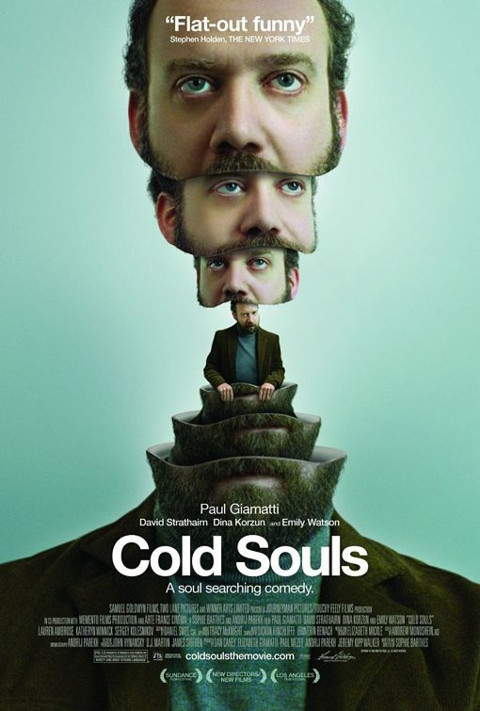
Last weekend we watched Cold Souls with Paul Giamatti and Post Grad with Alexis Bledel.

The first had great potential as an idea. An accomplished actor is having trouble getting into a role because the troubles of his soul are so great. To lighten his load, he has his soul extracted (it is a chickpea) and put in storage for a couple weeks.

A soulless actor is not much better than one with a troubled soul, and so he looks through a catalog of smuggled souls and has implanted in him the soul of a Russian poet. Now he can really act. In the meantime, his own soul goes missing, and so the search begins.

The idea is clever, and has potential for examining all kinds of, uh, soulful themes. But it doesn’t. It is occasionally funny, but generally weak.

The second was actually one of the worst movies I’ve seen in quite a while. Bledel plays a recently graduated over-achiever who can’t get a job. Her best friend is a high school buddy who has had a crush on her since grade school, but she refuses to see it. You already know how this ends.

We are willing to accept knowing how a movie will end if the path there is fun. Romantic comedies are formulaic to begin with. But this one pushed the conventions to their most trite extremes. Every stock idiocy of the genre is brought to play. Honestly, it comes across as a first attempt in a beginning screenwriting class.

Which tells me that there is hope for aspiring screenwriters. If you have a good idea that you can’t fully mine, no problem. And if you want to play the RC game, you don’t need to have a knack for dialog or characterization or anything of the sort.

If these movies can get made, so can yours.

Sadness

Nigel Rudolph mugs are beautiful, useful, comfortable, heat-retaining, unique, lovingly hand-made, and dishwasher safe.

But they are not unbreakable.

This is what happens when one misses the table with his (favorite) mug full of coffee early in the morning.


Sadness.

Bracket Time

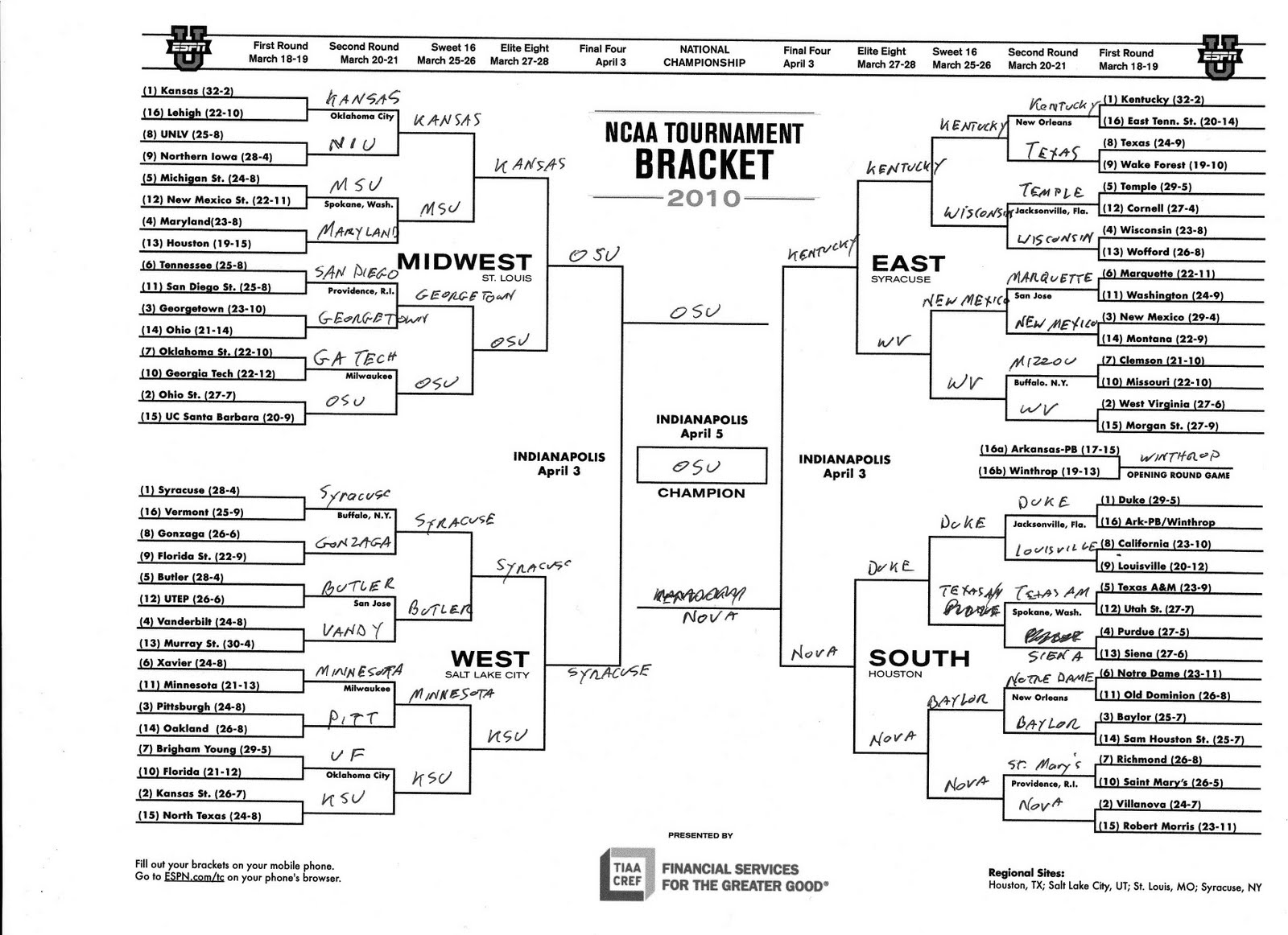
At the risk of total and complete public embarrassment, I post this for all to see.

At least the three of you who actually visit my blog.

Click on the image and you should see my picks.


It’s hard for a graduate of Michigan State to send Ohio State to the national championship. But I’ve seen Michigan State play. They may not make it as far as I’ve got them going.

—————–

UPDATE: I picked 9 of the first 16 winners. Students of probability will note that I could have done that well by aimlessly guessing or flipping a coin.

It’s a Shame about Tokyo

There has been, observers tell us, a revival of sorts throughout the land. A revival of grace.

I can’t speak for what goes on throughout the land, I can only speak for myself and my own limited circles. In my own life, an appreciation for grace has renewed me, my ministry, my preaching.

This trend is, though, to some, disturbing. It leads, it is said, toward anti-nomianism, that is, toward a disregard for the demands of biblical law. We need to preach the demands of obedience.

On the flip side are those who have been so exhausted by the demands of obedience that they flee any exposition of law. They fear any preaching suggesting that Christians must do anything. To preach the law is to denigrate our freedom in Christ.

And as these two tussle like Godzilla and King Kong, Tokyo gets destroyed. Lost in the smoke and devastation of clashing titans is the grace-filled biblical piety of those who simply love Jesus because he first loved them, and act out of the strength and freedom of that love.

It’s a shame that Tokyo gets squished. I like Tokyo.

The Working Poor

This made my day.

I mean, come on. I FEEL for these guys.

* * * * *

Note: For those of you who don’t know the ‘star’ of this video, Fernando Perez plays outfield for the Tampa Bay Rays, when he is not assigned to the Rays AAA team in Durham, NC. He is only the second major league player with a degree from Columbia University. (Trivia question: Who was the other?) He has a degree in creative writing and when not playing ball writes for a poetry magazine. Plus, he has GREAT hair, and, we discover, a great sense of humor.

In the Papers

Monthly I write a column for the local Bradenton newspaper. Clergy columns tend to be evangelistic because those who write them fail to realize that those who read clergy columns are not generally going to be your unbelieving masses. I approach the column assuming that my readers will mostly be Christians. I write to these Christians knowing that our conversation will be overheard by the occasional non-Christian. This then directs what I say and how I say it.

Clearly that is the case with this month’s article. TulipGirl has sensitized me to a large Christian home-schooling subculture whose faulty hermeneutic in the hands of the wrong people has bred lasting harm. In the hopes that some might be alerted to the dangers I wrote this article.

I know that that will be available on-line for only a short time, so I’m posting it here as originally submitted:

* * * * *

In Memoriam

Last month, seven-year old Lydia Schatz was admitted to a California hospital, her body so beaten that her internal organs had shut down. She died shortly thereafter.

She had been beaten by her Christian, home-schooling parents, by all accounts good people who wanted to do the right thing with their children. Good people who did not stop to think.

They had been told that to be good Christian parents, they should home-school. So, they home-schooled. They were persuaded by the homeschool milieu they inhabited that the Christian child should be perfectly obedient. They were further told that the Christian way to get such perfect obedience was to whip their children with 1/4 inch plumbing supply line. They were told that loving Christian training required spanking children until their crying turns into a ‘wounded, submissive whimper’ or leaves them ‘without breath to complain.’

And now a child is dead.

The quotes above are lifted from a February 22 article in Salon.com and reference the child rearing teaching of Michael and Debi Pearl. The Pearls have mined gold playing upon the fears and desires that many Christian parents have for their children. The war cry is to guard, protect, and isolate our children and to eradicate from them any vestige of sinful rebellion. This plays well among good people who want to do the right thing in raising their children.

Sadly, good desire is wrapped in bad theology and worse practice. Sin can no more be beaten out of a child as it can be beaten out of you and me. The only thing which frees us is the gospel, the fresh wind of grace, the kindness and mercy of God. That is what we must show our children and embrace ourselves.

I know how powerfully fear and control can play in the mis-handling of our children. One need not be a home-schooling Christian to fall prey to such patterns. But when we add to our base emotions an apologetic for beating and call it ‘Christian Parenting’ we have created a harmful brew. Only a few will die outwardly; many will die inwardly.

All because we as Christians stupidly follow without thinking.

I am a conservative Christian. My wife and I homeschool our children. It is easy to form stereotypes when the darker side of this movement is exposed. Please don’t do that.

But my heart breaks for these children, and I am angered by the teaching that encourages it.

It is too late for Lydia. It is too late for many others emerging scarred from such environments. It may not be too late for others. Think. Follow no one blindly. Consider the kindness and grace of God. Love your imperfect children as God loves you.

Our Friend Jenny…

…is now a published author!


Her book My Sister Rosa has just been published and is available through Amazon.

My wife and I have seen this book in its original form, as it was prepared as Jenny’s senior project for her illustration degree at Ringling College of Art and Design. The book is a wonderful story, based largely on Jenny’s own experience with an autistic brother, and reflects her tender heart and beautiful spirit.

Buy it. You won’t be disappointed.

*****

UPDATE: The product description on the Amazon site describes this as a murder mystery. (“A routine trip to the local hardware store propels Chris Landrum into a world of revenge, hate, and murder….”) That is, uh, not quite accurate.

The correct description is here: “My Sister Rosa is a story about a a little girl with autism, named Rosa, and her life, activities, and problems are narrated by her big brother Tomas. They live in a small, hipanic community, and even though Tomas tries to include Rosa in his activities, she often plays within her own small world, this world is not understood by the other neighborhood children, and as a result, teasing ensues. As the good big brother, Tomas rises in defense and will eventually he will come to know his sister more and the world she lives in.”

UPDATE #2: The typos in the above are as they exist on the Crossbooks site. Not mine.

Page 71 of 142

Powered by WordPress & Theme by Anders Norén