
Randy Greenwald

Concerning Life as It Is Supposed to Be

Abraham Lincoln and Effective Rhetoric

Charity in debate is something I long for. I’m not a good one to champion it, of course. I often find after a heated discussion with someone on some topic mattering to the two of us the need to go to that person and ask his forgiveness for my tone or for words carelessly spoken.

But this pot would still like to address the kettle so that we all might step away from our blackness, listen to how we sound, and ameliorate our rhetoric in such a way that we might be heard and be effective in our persuasion.

The concern for civility has entered the national debate recently as a result of the shooting of Arizona Congresswoman Gabrielle Giffords. I’m not persuaded that this shooting was the result of uncivil discourse. My hope is not that Rush Limbaugh would tone down his rhetoric. He won’t, nor will others whose shrillness is a part of their entertainment schtick. My hope is that those of us concerned for persuasion and not entertainment would stop letting those voices be the ones which inform our content and style. My concern is ultimately that the church, first, would become a place where variant views can be heard, discussed, and even strongly disagreed with, in a context of mutual respect and understanding.

With this background, I am intrigued, therefore, to read how Abraham Lincoln framed his rhetoric regarding slavery prior to his election to the presidency. There is no question that Lincoln opposed slavery. He was realistic enough to know, though, that the most to be hoped for politically at the time was containment, not abolition. He pursued what was politically viable and for that, he is skewered. But should he be?

It is easy to embrace and speak moral absolutes. But to be politically persuasive is far more difficult. And being persuasive was Lincoln’s goal.

Lincoln knew that in any debate there are several groups. There are hardened partisans on both sides of the issue. In his case, these were the abolitionists on the one end and the defenders of slavery on the other. He could not hope to take ardent defenders of the Southern practice of enslavement and move them to the abolitionists’ side no matter how skilled his tongue or passionate his desire. What he could hope to do was to persuade a third group, those uncertain, those whose opinions were not yet hardened. And so at these he aimed his message.

Doris Kearns Goodwin provides a fascinating account of his approach in her Team of Rivals: The Political Genius of Abraham Lincoln, a book that I cannot recommend highly enough.

Lincoln appealed to the principles of the Declaration of Independence, arguing that these principles alone forbid the right of one man to govern another without his consent. What was he trying to accomplish by so doing?

“By appealing to the moral and philosophical foundation work of the nation, Lincoln hoped to provide common ground on which good men in both the North and the South could stand.”

He knew that that common ground would not be embraced if he simply shouted angry slogans across the divide. His goal was not to shout and to alienate, but to reason and to draw together. His approach was radical for its time, and radical in our own. This observation is key:

“Unlike the majority of antislavery orators, who denounced the South and castigated slaveowners as corrupt and un-Christian, Lincoln pointedly denied fundamental differences between Northerners and Southerners. He argued that they ‘are just what we would be in their situation. If slavery did not now exist amongst them, they would not introduce it. If it did now exist amongst us, we should not instantly give it up…. When it is said that the institution exists; and that it is very difficult to get rid of it, in any satisfactory way, I can understand and appreciate the saying. I surely will not blame them for not doing what I should not know how to do myself.'”

He models for us something that our more passionate anti-abortion allies, and at times I, find very hard to comprehend:

“Rather than upbraid slaveowners, Lincoln sought to comprehend their position through empathy.” (page page 167)

This is hard, and it seems pragmatic. And yes, it did not persuade the hardened. The country still went to war; Lincoln was still assassinated. But there is something fundamentally right in his approach, right and important for all our personal discussions, whether it be political or religious.

Everything said in these pages (I have quoted from pages 167-168) is helpful. The whole book is helpful. But I leave you with this:

“Though the cause be ‘naked truth itself, transformed to the heaviest lance, harder than steel,’ the sanctimonious reformer could no more pierce the heart of the drinker or the slaveowner than ‘penetrate the hard shell of a tortoise with a rye straw. Such is man, and so must he be understood by those who would lead him.’ In order ‘to win a man to your causes,’ Lincoln explained, you must first reach his heart, ‘the great high road to his reason.’ This, he concluded, was the only road to victory — to that glorious day ‘when there shall be neither a slave nor a drunkard on the earth.'”

May God give us ears to hear.

Ineffective Shouting

No topic stirs emotion, and emotional rhetoric, like abortion. I understand the emotion. I have three children given life by three courageous women who suffered greatly in order to give life when the world around them, including their friends, was telling them to end their pregnancy.

I know the emotion.

I am, however, saddened, and at times angered, by the rhetoric that such emotion generates.

Justin Taylor’s blog Between Two Worlds is one of the most respected sources of insightful Christian reflection on the internet. He consistently points to good resources and interacts thoughtfully with contemporary issues. He cares deeply about the abortion issue, and I could learn something from his passion.

And yet in a recent post, he draws attention to some comments made on the subject of abortion by author Randy Alcorn. He quotes, I assume favorably, from a larger article written by Mr. Alcorn, which I subsequently tried to read. The article is a severe and uncharitable indictment leveled against Christians who differ with Mr. Alcorn on several points. I found it to be the kind of rhetoric that causes those who already agree to cheer, but changes the mind and heart of no one. He shouts at us, and most of us turn off shouting pretty quickly.

Its only impact is to cause one group within the church to mistrust, if not hate and despise, another group within the church. And that is wrong.

Several quotes will capture the essence of Alcorn’s charges against those whom he should consider his brothers and sisters in Christ:

“I think that every Christian who keeps voting for ‘prochoice’ candidates and who opposes showing the photos of dead babies, while defending what kills the babies in the photos, should question their faith (is it biblical, or does it merely mirror the current drift of our culture?).”

If I read this correctly, he is saying this:

If I find that there are compelling reasons for thinking that one candidate, who will do more for creating a just land, a peaceful future, and a society which cares deeply for the weak, but who is deluded or confused or just wrong about abortion, and I vote for him instead of the avowed pro-life candidate who has no political skills, no knowledge of how government works, and no possibility of doing anything positive in office, but simply is a puppet or tool of a conservative political agenda, then I am not a Christian?

Wow. Question my judgment. But don’t question my salvation.

Or, this:

“I think every church member who is against the observance of Sanctity of Human Life Sunday (this weekend in many churches) and thinks the church shouldn’t talk about abortion—and every pastor who refuses to speak about it from the pulpit—needs to be taken on a virtual tour of that Pennsylvania clinic and come to terms with what abortion really is.”

That is, if I conclude that the church should in its public worship only mark the redemptive events in the life of Christ, and should avoid marking political events (the Fourth of July), the anniversary dates of certain political persons (Martin Luther King), or particularly impact-laden judicial decisions (Roe v. Wade), then a confrontation with what I already know to be a horrific practice and a moral evil is supposed to change my fundamental view of the nature of Christian worship and how the church interfaces with the world?

Again, my judgment may be wrong. But it is judgment that needs to be argued on logic, not emotion.

Or:

“If you lack the conviction or the courage to stand up and say to your church, who you are accountable to lead, “It is wrong to kill unborn babies, God hates it and God will judge it,” then you should not be a pastor. If you don’t have the guts to say “These are children—we must stop killing them” then you need to do something that doesn’t even pretend to take on a biblical and prophetic mantle.”

That is, if I refuse to take a confrontational and judgmental and angry tone from the pulpit on this particular moral issue, then I am gutless pretender to the gospel ministry?

There are many reasons why I think myself unfit for ministry, but this is not one of them. My heart condemns me daily for presuming to step into the pulpit on any given Sunday. But don’t question my courage or my conviction or my fitness for ministry simply because I refuse to take the tack or tone that you think I must.

Believe me, I struggle with how to address this issue, and how to address it as a church in a way that is truly effective in broadening the base of those who share the conviction that abortion is wrong. I am constantly evaluating how to include this in my preaching.

But to be told that one needs to be removed from the pulpit and/or to be shown the door of the church because one’s methodology is judged wrong reveals a spirit that I think is poisonous to the church and poisonous to the worthy goal which, I think, Mr. Alcorn and I both desire to pursue. His words arise from an understandable frustration, and yet they are irresponsible nonetheless.

Mr. Alcorn, shouting at me, or to the world about me, will never change me.

But perhaps changing me is not really what this is all about.

“Delicious” Fun

In a moment of financial weakness a couple months ago, my wife and I bought a library cataloging program for the Mac called Delicious Library. It cost more than we should have spent, but it has provided more fun than we could have imagined.

The software has the capability of reading the UPC codes off books and DVDs and the like to create a record which can be stored offsite for insurance or other purposes. One can also enter the info by hand, which is necessary for older items, but what fun is that.

It has as well the capability of tracking books or DVDs loaned out to others, which is a decided advantage for us, far superior to the ‘write the name on a scrap of paper and drop it in the cookie jar’ method of the past.

The most fun, however, has come from the UPC misreads. Apparently while a book’s ISBN remains the same and is unique to that item, UPC codes on the other hand get re-assigned over time. So, since the program scans the UPC codes, some interesting mismatches arose. Enjoy:

Scanning Steven Pressfield’s novel of the Spartan stand at Thermopylae Gates of Fire led to His Way: An Unauthorized Biography Of Frank Sinatra by Kitty Kelly.

Colin Powell’s fascinating pre-Secretary of State years memoir My American Journey produced Interview with a Vampire. Is this trying to tell us something?

Intriguingly, my paperback version of Crime And Punishment became The Empty Land by Louis L’Amour.

And finally, Character by Gail Sheehy popped up as a result of scanning The Brothers Karamazov. There just seems something appropriate in that.

I confess. I’m hooked.

Assassins and Rhetoric

In recent days, the most interesting and level headed report on the connection between political rhetoric and assassination suggests not only that there is no connection between the rhetoric and the violent response, but even more that the political position of the political target is not even a motive for the assassin. He is more likely to pick a target based upon the fame he will receive. In the report, Alix Spiegel revisits a study produced by the Secret Service in 1999.

What emerges from the study is that rather than being politically motivated, many of the assassins and would-be assassins simply felt invisible. In the year before their attacks, most struggled with acute reversals and disappointment in their lives. Which, the paper argues, was the true motive. They didn’t want to see themselves as non-entities.

She quotes the author of the story:

“They [the assassins] experienced failure after failure after failure, and decided that rather than being a ‘nobody,’ they wanted to be a ‘somebody.'”

You can read (and listen to) the whole report here.

That drive for fame seems counter-intuitive to most of us because we are able to find other, more socially acceptable, ways to satisfy that basic human drive to be someone.

Whether there is a connection between rhetoric and violence remains to be proven, though greater civility in our public, political, and, yes, ecclesiastical, discourse is always to be desired. I tend to agree with the Atlantic’s Megan McCardle’s assessment, addressing the most recent tragedy, that the only violent rhetoric this guy was listening to were the voices in his head. She concludes by saying:

A terrible thing happened. We live in a universe in which terrible things happen. That’s no one’s fault — or maybe, everyone’s fault. Either way, I don’t see much in the way of solutions coming out of this – only terrible, terrible sadness.

I could decorate this paragraph with theological garland linking it to the Biblical story. But it would say the same thing.

Tablet Evolution

My son and I got 1 minute and 36 seconds of enjoyment out of this. Thought you might as well.

I particularly like the early date for the Exodus…

The Diary

Interesting men and women of the past kept diaries. They would record, often daily, without the aid of Steve Jobs or Bill Gates (or Thomas Edison for that matter) thoughts, observations, joys, sorrows, all threaded through a running narrative of their daily lives.

Do they still? I really don’t know. I don’t.

In Team of Rivals: The Political Genius of Abraham Lincoln Doris Kearns Goodwin tells the stories of four men who rose to prominence in the 19th century: Lincoln, and three rivals who eventually served with him on his cabinet. She records the diary keeping habits of one of these men, Edward Bates of St. Louis.

Beyond commentary on his family and his city, Bates filled the pages of his diary with observations of the changing seasons, the progress of his flowers, and the phases of the moon. He celebrated the first crocus each year, his elm trees shedding seed, oaks in full tassel, tulips in their prime. (page 67)

Goodwin goes on to note that Bates was a “contented man”. That in and of itself is a rare thing.

Taking time to regularly take note of one’s place in life and to reflect on the rhythms around us by recording our narratives would be beneficial, especially for those who process life by writing, and could perhaps serve to feed contentment.

Why did such men and women keep diaries? Were they kept by only certain social strata? Did they keep them with the expectation that they would be read? If they lived now, would they trade the diary for Facebook, Twitter, or a blog? Did anyone ever begrudge them the time spent in their diary keeping? Where did they find the time, discipline, and motive to keep a diary?

Those questions could make an interesting study, which I’m sure has been done. But my real interest is whether anyone, perhaps among my readers, yet keeps a diary. If you do, please share some of your thoughts with the rest of us.

Andre’s Ghost

One of the comments attached to my post on Andre Agassi’s book Open noted that the book must have been ghost written. I assume that with nearly all memoirs, that is a given. In this case, Agassi makes every effort to communicate his great respect for and dependence upon the man who formed his story into captivatingly readable prose.
On the publisher’s web page there is, nestled among accolades from sources such as the New York Times and Time Magazine this snippet from Entertainment Weekly:

“Not only has Agassi bared his soul like few professional athletes ever have, he’s done it with a flair and force that most professional writers can’t even pull off.”

I get the impression that this reviewer somehow really believed that Agassi wrote this. But he is right: most professional writers can’t pull it off, and so Agassi turned to a Pulitzer Prize-winning professional writer. It is only fitting that the story of one of the best in one field should be written by one of the best in another.

There is a context in which ghostwriting can be a dishonest act (and it’s prevalence in Christian publishing is a dirty little secret). But this is not one of those cases. The ghost is not invisible. In his acknowledgements, after four paragraphs describing the extent of their collaboration, Agassi says this:

I asked J.R. many times to put his name on this book. He felt, however, that only one name belonged on the cover. Though proud of the work we did together, he said he couldn’t see signing his name to another man’s life. These are your stories, he said, your people, your battles. It was the kind of generosity I first saw on display in his memoir. I knew not to argue. Stubbornness is another quality we share. But I insisted on using this space to describe the extent of J.R.’s role and to publicly thank him.

Such humility and honesty I find refreshing. These qualities do not live in the acknowledgements alone, and this is what gives the book value and makes it a worthy and enjoyable read.

Even if there are no hills in Bradenton.

Golden Voice

While complaining on Facebook about losing my voice this week, a friend sent me a link to this story. I had not seen this and was amazed not only by this guy’s voice, but the glimpse it gives into a side of homelessness we can too easily overlook – people with abilities who really do want to work.

Let’s hope that this story ends well and that Mr. Williams and the Cavs have a long and mutually beneficial relationship!

The Hills of Bradenton

It is not often that my life intersects those of famous athletes. Living for 25 years in Bradenton, Florida did up the odds of that happening, but only incidentally, in that many do make their homes in the Sarasota/Bradenton area.

So among other lines of interest, I began Andre Agassi’s memoir Open, interested in reading about his time spent at the Nick Bollettieri Tennis Academy in Bradenton. Bollettieri’s academy, now IMG, has received renown over the years as the training ground for tennis greats Agassi, Jim Courier, Monica Seles, and Maria Sharapova, among others. Agassi arrived in Bradenton about the same time as I, he a 14 year old tennis phenom, and me a rookie pastor.

His recollections of the place, however, are vastly different than my own. Those who know Bradenton will immediately see what I mean from this quote:

Every day at the Bollettieri Academy starts with the stench. The surrounding hills are home to several orange-processing plants, which give off a toxic smell of burned orange peels. It’s the first thing that hits me when when I open my eyes, a reminder that this is real, I’m not back in Vegas. I’m not in my deuce-court bed, dreaming. I’ve never cared much for orange juice, but after the Bollettieri Academy, I’ll never be able to look at a gallon of Minute Maid again.

I’ll give the guy some slack due to the fact that he hated tennis and doubly hated his time at Bollettieri’s, and therefore has no fond memories of Bradenton. And I’ll factor in that he was an angry teenager at the time. But at the same time I chuckle to read in the acknowledgments that the text was meticulously fact-checked. Clearly, they missed a few.

Yes, there is an occasional, not daily, smell from the single, not several, orange processing plant, Tropicana, not Minute Maid. That smell, from the process by which orange peel is turned into feed for livestock, is endearing to some of us, as it identifies the town’s heritage and heart. But to others, it is annoying, and so I can accept Agassi’s negative recollection.

But hills? Hills? Really? Hills?

I know it is a minor and silly detail, but how can one spend more than a day in Bradenton, Florida, elevation 5 feet, where the highest landmark may be an interstate overpass, and speak of hills? One has to travel an hour or two away from Bradenton to find anything remotely resembling a hill. The predominant geography of Bradenton is flatness and water.

I trust the recollections from the rest of his life are more accurate.

My Christmas Stash

When I was a child, the primary conversation held with friends each year after Christmas centered around what we got. If you are reading this, I have to consider you friends. Therefore, I imagine you asking me what I got, and I’m more than happy to share with you.

Among other items, from camping pots to caramel popcorn, the book-lover in me has ruled this a successful Christmas. The following have fallen solidly in my queue.

we_are_the_ship-winner.jpg

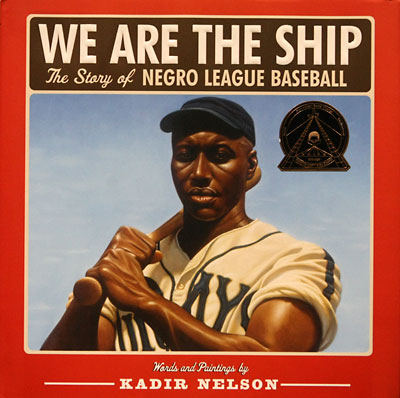
We Are the Ship: The Story of Negro League Baseball – This is a beautiful book even if there was not a fascinating story associated with it. I told my wife that we now need a coffee table to display such a book upon! It is a book recommended to me by my administrative assistant, and dedicated to a long-time resident of Sarasota, “Buck” O’Neil.
matterhorn.jpg

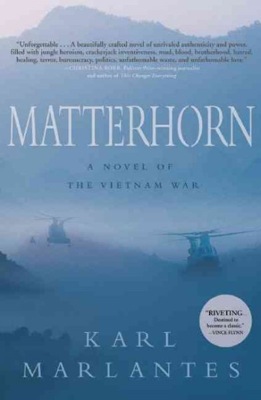
Matterhorn: A Novel of the Vietnam War – I am told that this is one of the best novels about the Vietnam War. I don’t like reading about war, and yet it is something that defines so many of us. This book has appeared on a number of ‘best of 2010’ lists.
Physics.jpg

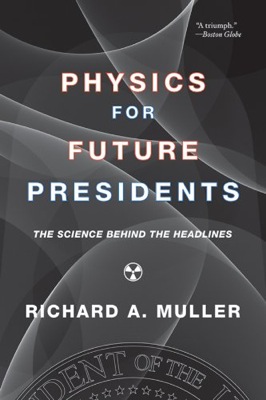
Physics for Future Presidents: The Science Behind the Headlines – I may from this book gain only enough knowledge to make myself dangerous. But so many political and ethical questions today are based upon the claims of ‘science’ that I thought it would be helpful to have some introduction by which I could at least come to understand the terms used in the debates.
Open.jpeg

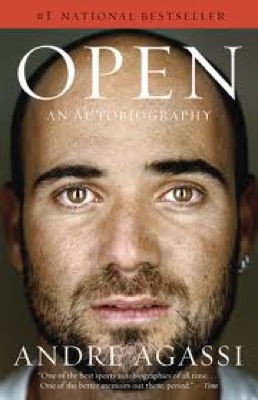
Open: An Autobiography – This is reputed to be one of the best sport memoirs ever in terms of its honesty. Agassi was one of the world’s greatest tennis players, one who hated tennis. That in itself draws me in.

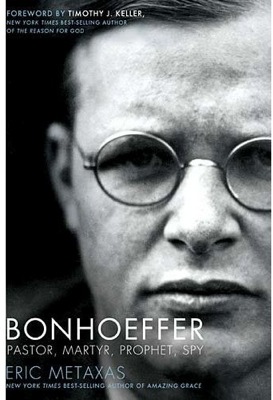
bonhoeffer-by-eric-metaxas.jpg

Bonhoeffer: Pastor, Martyr, Prophet, Spy – I’m almost fearful of this book. Bonhoeffer was everything the subtitle says, and I’m only comfortable with the first.

Expect to see comments on some if not all of these books in the weeks… no, months… ahead!

Page 54 of 142

Powered by WordPress & Theme by Anders Norén