Randy Greenwald

Concerning Life as It Is Supposed to Be

More on Fishing

This has become fun.

One of the peculiar aspects to the disciples’ fishing trip in John 21 is that after having fished all night, some stranger on the shore says, “Try the other side” and they do it. I would have been, I think, too proud and incensed and might have shouted back, “What kind of an idiot do you think I am?”

But I’m not a fisherman, and so I love Donald Carson’s comments on this. Thought others might smile at this as well:

If the disciples are not expecting Jesus to appear, and do not recognize the man on the shore, it is hard to see how Jesus’ exhortation to throw the net on the starboard side greatly differs from advice contemporary sports fishermen have to endure (and occasionally appreciate): ‘Try casting over there. You often catch them over there!’ (If there are some contemporary sports fishermen who have not yet experienced this delight, I recommend they take my children with them on their next trip.) (671)

A Biblical Apologetic for Fishing

Christian fisher-persons looking for yet another route by which they might justify their obsession might find an ally in the Reverend Bruce Milne, who penned a commentary on the gospel of John for the The Bible Speaks Today series.

In commenting on their Galilean fishing trip recorded in John 21, he notes that the disciples of Jesus have taken it on the chin over the centuries for their decision to go fishing so soon after the resurrected Jesus had commissioned them to be sent as he had been sent (John 20:21).

Milne is sympathetic, which causes me to picture him with his own pole in his hand:

“It has also to be said that in terms of their psychological and emotional well-being a fishing expedition back in the old familiar surroundings of the Sea of Galilee was therapeutically ideal. The last few days had been an emotional roller-coaster. In a matter of a week they had been lifted up to the giddy heights of Palm Sunday, sent spiraling down into the utter depths of despair on Good Friday, and then been swept up again to the heavens by the glory of the resurrection. A good night’s fishing was probably just what a doctor would have ordered.” (310)

There you go. Biblical support for therapeutic fishing.

Starbucks Miles?

Given the promise of a dollar off my next visit, I agreed to complete a short, online, Starbucks “Customer Experience Survey”. I had to chuckle when I came to this screen:

StarbucksSurvey

I visit my local Starbucks “occasionally”. So, I sent it to a friend who “occasionally” is there as well and asked her how she thought I should answer the question. Her suggested answers were worth repeating, and will be appreciated by others who “occasionally” frequent their local Starbucks.

A. Lost track

B. You should know because my card is registered.

C. Lets just say I could circle the globe with my ” Starbucks Miles”

D. People thought they were on “Cheers” because everyone called out my name when I entered.

E. Check your manual. My picture is on the front.

Thanks, Holly!

A Plea for Gutsy Editors

After wading through all 1,074 pages of Stephen King’s Under the Dome
some time ago, I began to wonder if perhaps King was SO big that there no editor with the guts or authority to urge him to tighten up his work.

Monday morning I finished Larry Crabb’s Shattered Dreams, a book with some startling and challenging and helpful observations – repeated about 18 times each. Perhaps he, too, needs the love and attention of a firm and gifted editor who is unwilling to be cowed by his reputation and tell him to his face when he is being repetitive without mercy.

Malo

Baseball, it is said, is a game built on failure. A superb hitter fails twice as often as he succeeds. A hall of fame pitcher will have games in which he inexplicably gives up six runs in a three and one third inning blowout. One can learn perspective from a game built on failure.

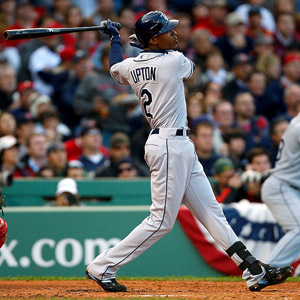
Mlb g upton 300Tampa Bay Rays outfielder B. J. Upton Sunday had a day in which failure outgunned success. He struck out four times. After a walk, he was then picked off first (albeit making it to second anyway). And he missed a spectacular, but catchable catch in the ninth inning.

When asked about his day, his response, as reported in the Tampa Bay Times, was this:

“Describe my day? Malo. If I was fluent in Spanish, that’s exactly what I would say, malo, which means bad,” Upton said. “But, you know what, it’s over with.”

It’s that last line that struck me. That’s perspective.

I, too, had a bad day yesterday. I’m a preacher, and a good portion of each week is invested in preparing and delivering a sermon. It is easy to let a whole lot of my identity get wrapped up in that thirty minutes or so of public attention. And Sunday I felt like I struck out four times, got picked off first, and dropped a catchable fly. In my opinion, the sermon was malo.

Asked later why I thought so, I gave my five irrefutable (!) reasons for my judgment, but I still lacked perspective. I was still mulling over the sermon this morning, unable to say, “But, you know what, it’s over with.” B. J. is ready to move on. I was not.

But perspective is what we need. Most, if not all, preachers are going to have bad days. There will be sermons that just do not soar. There will be days when the heart fails to engage with the words. There will be days when we care far more about what this person or that thinks. And such days bother us when we forget that God can take the well meant words of a bumbling preacher and change the world. He can draw his straight lines with our crooked sticks.

In the end, I realize, what suffers most in a sermon that just does not make the cut is my pride. When I care more for the ‘Great sermon, Randy’ than I do for the ‘Well done, good and faithful servant’ I will not be able to let go of the remorse when a sermon is malo. The problem, always, is in my heart.

So, thanks, B. J. We both had a bad day. “But you know what, it’s over with.” I am still loved by God who has prepared work for me to do, and he has given me another week in which to do it.

Thanks for the good reminder. (But please, stop striking out.)

The Gamemaker

The Hunger Games trilogy dips in and out of ‘arenas’ in which deadly games are played. These are not arenas as we would picture them, but large modeled environments in which arbitrarily selected youth fight to the death in contests controlled and manipulated by remote ‘gamemakers’. The games are continuously filmed and broadcast as each contestant, one by one, is killed, until only one victor is left.

The chief gamemaker in the games is a producer who manipulates the environments and situations faced by the contestants in order to provide maximum entertainment for the audience. The games are brutal, and the gamemakers are heartless.

The movie version of The Hunger Games had at the end of April grossed nearly $375,000,000 in the USA alone. Less viewed (in the same period grossing 1/10 of that of The Hunger Games) is a film called The Cabin in the Woods. (Before seeing this one, the closest I had ever come to watching a film listed as ‘horror’ was Zombieland, and that hardly counts.)

The Cabin In The Woods PosterThis movie concerns five college students who head to an isolated cabin for a weekend getaway. They have no idea how isolated it really is. As evening sets on their perfect getaway, strange events begin to suggest that all is not as was advertised. One learns that they, too, have entered unawares into an arena of sorts where remote ‘puppeteers’ are manipulating their environment in a way designed to lead to the deaths of four of the five, each in a particular order.

Their deaths are intended to fulfill an ancient ritual designed to placate a mysterious deity whose unhappiness could lead to the destruction of the entire world. What was once accomplished by tossing humans into volcanos is given a modern and high tech twist.

The controllers in this movie, like those in The Hunger Games, play god to those in the arena, allowing the illusion of free will while at the same time manipulating events to their own seemingly trivial or arbitrary ends. When the goal of the four deaths is reached, a party complete with dance music and drinks all around erupts in the control room while on the screens the one remaining character engages in a life or death battle with a zombie. It is a surreal image. None of the ‘gods’ in the control room care about the life struggling for survival behind them. They have achieved their goal, the gods are having their fun, and the life of the person under their thumb does not matter.

Whereas The Hunger Games seems only interested in revealing the cruelty of which people are capable, clearly in the absence of the divine, The Cabin in the Woods seems self-consciously bent on suggesting a view of the gods, or God, in which they or He are unconcerned for human pain and suffering.

Is there hope in either vision? The only hope is centered in the strength of the human spirit (mixed with a bit of marijuana in the latter). But The Cabin in the Woods may be suggesting that in the face of an all powerful deity, the human spirit, though noble, is powerless.

The Cabin in the Woods in the end was more brutal, more gory, more over-the-top and even more funny, than The Hunger Games. But it was more thoughtful as well. It left me longing for a God whose power is matched by his love. And perhaps that is what these films always long for. That there is brutality and suffering in the world does not and cannot imply that the God who rules is insensitive and uncaring. Instead of partying while we die, he is the only gamemaker to enter the arena himself to die not as the victor, but as the one who would bring the games to an end.

In the meantime, we are going to go see The Avengers so we can see evil get its butt seriously whooped.

The Power of the Book

There was a time that people died to make accessible a book we take for granted. I’m somewhat ashamed to write that sentence because I’m not sure this knowledge, as profound as it is, will change my behavior. But it should.
William tyndale biography david daniell hardcover cover art
I have been working through David Daniell’s Yale University Press William Tyndale: A Biography. This biography, set in the history of the early 16th century, when Luther was hot, reminded me that it once was a crime to translate and publish the Bible into English. Men gave up their lives to translate, print, and distribute this book which I so take for granted. That I knew this before, I am sure. But I had pushed this uncomfortable knowledge to a dim and infrequently accessed corner of my brain.

Daniell’s biography is thorough and passionate. That it is thorough led me to skim those portions containing detail far beyond my level of interest. But its passion drew me in and kept me.

Daniell is Tyndale’s belated publicist. Tyndale has been given short notice over the years. We know of the King James Bible, the so-called ‘Authorized Version’. And we know of John Wycliffe because of the mission organization that borrowed his name. But Tyndale’s influence runs much more deep and wide than either of these.

Tyndale learned Greek when only a few Englishmen knew it, and Hebrew when almost none did. He translated from those languages, not from the Latin. His gift for written English has rarely been matched. Though the AV, produced 70 years after Tyndale, adopted much of its memorable language from his, in many cases where they differ, Tyndale sounds stunningly more modern. Tyndale would opt for clarity over some artificial notion of literality. The AV reversed this, and revered though it may be, it is revered mostly for phraseology introduced by Tyndale, and forgotten at the level of its own revisions.

Daniell notes:

One key to Tyndale’s genius is that his ear for how people spoke was so good. The English he was using was not the language of the scribe or lawyer or schoolmaster; it really was, at base, the spoken language of the people. In this he was unlike all other Bible translators, in English certainly. To give an example: David, as we saw, was ‘brown with goodly eyes’. The comment speaks down the centuries: the young man was a looker, and one can hear someone saying it. The whole sentence is ‘And he was brown with goodly eyes, and well favored in sight’. By contrast, this is what the Authorised Version has: ‘Now he was ruddy, and withal of a beautiful countenance, and goodly to look to.’ That is the sort of sentence that gets the Bible a bad name. No one, ever, spoke that, or could do, with a straight face. As a sentence, all it can do is live in a big book on a brass lectern and be read out on one of the Sundays after Trinity.

(Daniell’s prose isn’t half bad either, apparently.)

Tyndale, it is famously said, wanted the Bible to be accessible to the ploughboy as well as to the scholar. That, of course, was what the establishment feared. He succeeded. Memorably. And this led to his execution.

Of his legacy, Daniell laments:

We have at this point, however, to utter a cry of grief. It was of a scholar of this towering stature, leading all Europe in his knowledge of Greek, matched now by an equal command of Hebrew, uniquely gifted in tuning the sounds of the English language, who had achieved so much but who still had some of his greatest work to do, who was, soon after this, by a vicious, paltry and mean villain tricked into death. It is as if Shakespeare had been murdered by a real-life jealous Iago half-way through his life, and the great tragedies had never been written.

Daniell makes a convincing case that the comparison with Shakespeare is not inappropriate.

Tyndale died because he believed in the power inherent in the Word of God. God grant me the grace to share even a portion of that passion and conviction.

Resilience

A guy who is 55 does well to read a book titled A Resilient Life and subtitled “You Can Move Ahead No Matter What”, especially, when the blurb at the top of the front cover from the good, but perhaps overly gracious, folks at Publishers Weekly tells me that it is “a classic, riveting read…”.

The book is by Gordon MacDonald, the author of the widely read Ordering Your Private World which was greatly helpful to me when I read it over 25 years ago. But soon after reading that book, I learned that while MacDonald was helping me address the disorder of my private world, his had fallen apart through some very serious sin. I felt betrayed by one whom I had adopted as a mentor for my life.

After a necessarily lengthy absence from the public view, while he mended his own private world, MacDonald’s public writing began to show a great deal of mercy and grace and understanding for those who struggle and fail. Such a spirit is often absent in so much writing aimed at helping Christians live a distinctly Christian life. It was with great expectation then that I picked up a book written from MacDonald’s maturity and aimed at building resilience into life.

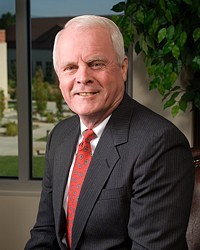
“Resilience” is a good, healthy word, one of a couple which will enter my vocabulary with refreshed meaning after having read this book. It speaks of the ability of a life to ‘spring back’ from set backs, to persist with life, to persevere after a goal. Resilience is a necessary component to a life well lived, and as I begin to ponder (another good word) what it means to finish life well, resilience has to be a part of the discussion.Gordon MacDonald
The book, helpful to one like me who is, shall we say, closer to the end than to the beginning of life, is written in an almost Solomon-esque fashion. These are words of the wise written for the benefit of the young, and therein lies both the book’s greatest strength, and its sadly glaring danger.

The strengths are many and deep. MacDonald challenges us to build character and discipline into life which will enable us to persevere through adversity and to keep our eyes on goals greater than passing fancies. He encourages us to look to mentors, to find coaches, to develop relationships. He pushes us to nurture disciplines (though the disciplines of public worship and sacrament are noticeably downplayed if not absent altogether) and to fix our eyes on great things and worthy goals.

There is so much here that is so important for living life full of joy and ending life full of wisdom. There is so much here to adopt and to adapt for our own lives. And there is so much here that is deadly in the long run if it is divorced from the gospel. And that is my greatest concern.

Other than being better and finishing well, MacDonald gives us little motivation for abiding by his wisdom, and little or no comfort for those who fail or who are otherwise unable to live up to the standards set. One is left with the unspoken logic that when one fails, one’s failures have pushed the prospect of finishing well out of reach. It is a short trip from there to despair.

The motive for keeping the law (which anything like this is) is contained in Romans 12 and 1 John 4, and even Exodus 20. In view of God’s mercy, we offer ourselves (Romans 12). Grace comes first. We love because God first loved us (1 John 4). Grace comes first. God delivered us from bondage (Exodus 20). Grace comes first.

The gospel of God’s gracious love for us in Christ is what picks us up and encourages us to move forward. And this same gospel is what reassures us of our place and our importance and our hope when we fall down. Without a constant reminder of the gospel, law, wisdom, and challenges to discipline will all leave us either despondent or proud.

Discipline comes easy to some, and without the gospel, the disciplined person begins to take note of all that he has done, and his eyes fall off the cross and onto his stellar record book. And to those for whom discipline is a struggle, the challenge to try harder results in either rebellion or despair. And without the constant reminder of the gospel of grace all will tend to look to their performance for their happiness and security, a sad and troublesome place.

I’m not angry about the book’s lack. Just sad. I had hoped for more. This would be a wonderful book to pass on to a young Christian, but not without a deep understanding of grace. Lacking the gospel emphasis means that one reading it himself needs to be surrounded by the gospel and his heart needs to be well-seasoned by grace.

I’m really rather surprised by this lack. MacDonald is honest about his failures. He has no pride, because he understands grace so much better than I. But I finish reading the book less amazed by the grace of Jesus than I am by the grace of his wife. We could have had the latter without the absence of the former. I find that sad.

I will take away many very helpful things from this book. It would even be worth a second read. God has taught MacDonald much, and he conveys it well. I just won’t be giving the book out widely, no matter how ‘riveting’ Publishers Weekly found it to be.

Boycotts and Power

Getting older does give one a sense of historical perspective.

I’m old enough to remember when Christians were supposed to boycott Martin Scorsese’s The Last Temptation of Christ giving it well needed extra publicity but accomplishing little else.

Then there was the angst among those planning denominational meetings when Holiday Inn began allowing the purchase of pornographic movies in units which were to be inhabited by their attendees. Boycott’s were called for, which was tough for the planners to heed.

And I can remember a national assembly of my denomination, the Presbyterian Church in America, meeting in Florida the year the Southern Baptists approved a boycott of Disney. As the PCA debated whether to support that boycott, one beleaguered delegate pleaded that if the assembly were to approve the measure that its effective date be put off a week, as he’d brought his whole family to Florida with the promise of a Disney treat.

I’ve seen boycotts come and go with no positive impact. And so when asked by a member of my church to respond to a current drive to hold Starbucks accountable for it’s position on marriage, I answered very quickly:

I tend to ignore such things for several reasons.

1. If I chose products based upon the political activities of the company, I’d have a pretty narrow range of products available to me. I’m pretty sure Apple would go, as would Disney, and probably the NYTimes, a primary news source for me, down to the products I buy in the grocery.

2. And then I’d have to determine which political causes would be worth opposing. SBUX perhaps for its liberal social views; but then perhaps WalMart for what it does to small town economies. Where would I draw the line? Amazon sells some pretty lousy stuff, as does Books-a-Million. It’s kind of hard to make all one’s economic choices in this way.

3. A strategy is only so good as its prospects for success. If one wants to fight SBUX’s political views, pulling out in protest will gain little. Bearing a case up the chain as a loyal and supportive customer is going to have, relatively, greater impact.

Anyway, I am taking the time to respond only because I, as have you, have seen dozens of these protests come down the pike over the years, and as well intended as they are, they have little success.

I see now that my response was very pragmatic, though I stick by it.

Crossing my desktop this morning, however, was a much more theologically perceptive and reflective response by Russell Moore. His post digs deeper into the reasons why boycotts are not a fit vehicle for the Christian message.

But we don’t persuade our neighbors by mimicking their angry power-protests. We persuade them by holding fast to the gospel, by explaining our increasingly odd view of marriage, and by serving the world and our neighbors around us, as our Lord does, with a towel and a foot-bucket.

We won’t win this argument by bringing corporations to the ground in surrender. We’ll engage this argument, first of all, by prompting our friends and neighbors to wonder why we don’t divorce each other, and why we don’t split up when a spouse loses his job or loses her health. We’ll engage this argument when we have a more exalted, and more mysterious, view of sexuality than those who see human persons as animals or machines. And, most of all, we’ll engage this argument when we proclaim the meaning behind marriage: the covenant union of Christ and his church.

I encourage your reading the whole.

The are occasions to make stands and to suffer the consequences. But an economic boycott aimed at strong-arming a position is not one of them.

Questions from the Sixties

The title does not refer to the famous decade of the 20th Century, but of the advanced decade of a human life. We are considering the kinds of questions that various decades of life force upon us, as suggested by Gordon MacDonald in his book A Resilient Life.

The sixty-year-old then is asking questions which reflect the fact that some whom he loves have died and his accomplishments are fading farther into the background.

When do I stop doing the things that have always defined me?
Why do I feel ignored by a large part of the younger population?
Do I have enough time to do all the things I’ve dreamed about doing?

Life and death issues loom:

Why am I curious about who is listed in the obituaries?
Who will be around me when I die?
Which one of us (if married) will go first?
What is it like to say goodbye?

And again, end of life issues push the buttons of doubt and fear:

Are the things I’ve believed in capable of taking me to the end?
Is there really life after death?
What do I regret?
What have I done that will outlive me?

We invest a great deal of effort in trying to form our messages to be comprehended by youth. We need to take these questions to heart as we seek to speak to those who are older as well.

Page 39 of 142

Powered by WordPress & Theme by Anders Norén