Randy Greenwald

Concerning Life as It Is Supposed to Be

Fruit

A commenter to my post regarding my study leave said that she would pray that my study time would “lead to much future fruit for you and your flock.” I teasingly asked her to define such ‘fruit’ hoping thereby to know someday whether her prayer had been answered.

It was only a tease in a marginal way. In reality, that is the question that any pastor or teacher or parent is constantly asking. How do I know whether what I am doing makes any difference? How do I measure the harvest of my investment of time and energy?

It is very easy to opt for quantifiable measures. Decent Sunday attendance. Increasing FCAT scores. A trophy case full of a child’s accomplishments. But we all know that these metrics ring hollow over time.

By what fruit do we measure success in ministry? My correspondent is right in saying that fruit is produced by God, and is sometimes invisible to the gardener. And yet, at least, if we cannot force it and we cannot even adequately measure it, what is the goal toward which we should point ministry?

These questions support their own industry. Each year leads to a dozen new books on how one should ‘do’ church. One cannot keep up with all that is produced on the subject even if one was inclined to do so. There is really nothing new to be said.

The most profound book on these matters is Richard Lovelace’s Dynamics of Spiritual Life published first in 1979. Six years or so later he published Renewal as a Way of Life which he bills as an expansion and a condensation of the first book. Little more than these need to be within reach when thinking about what ministry is to aim for.

For my purposes here I simply want to note where Lovelace begins with his prescription for the church: Spiritual vitality arises in an environment in which God is being known and loved and in which those who know and love him are given over to Jesus as king. If we are finding ways in which we can move people in this direction, then we can take heart that we are doing well.

The challenge of all this, of course, is heavy upon the pastor, or elder, or teacher, or parent. That is, we can move no people, no church, no classroom, no family in this direction if we ourselves are not seeking to know and love God and seeking his kingdom first above all other things. The question must become a challenge which must lead to repentance and a cry for grace.

I once tried to give succinct expression to what I was seeking to accomplish in ministry, and this was the result:

a community of God’s people
where God’s glory is more important than their own,
where God’s righteous will has a greater attraction upon them than the neon attractiveness of sin,
where building God’s kingdom is a more exciting proposition than erecting personal palaces,
where dependence upon the providence and grace of God is commonplace and the source of uncommon joy.
a community which therefore cannot help but reach out, exercise justice, and love mercy.

That still seems adequate for the present, even if I might tweak the words here or there. It seems to aim at a community where God is known and loved, and his kingdom preeminent.

So, if you pray anything, pray that this will be formed ever more deeply in my heart and then in the heart of those I lead.

STUDY leave

I mentioned on Facebook and Twitter (@rg7878) my gratitude to the leadership of the church I pastor for granting me a week of study leave. That lead to a conversation with my sister last night in which she assumed that I was taking a week off relaxing at home.

Un, no. That’s not quite it.

Pastoral ministry happens in the course of life – through God’s work in my own life and through my day by day interaction and involvement in the lives and struggles and questions of others. Depth in pastoral ministry comes from study and reflection and prayer. I read recently of John Piper challenging pastors to get away and study, and suggesting that most congregations do not really understand the amount of emotional and mental and creative energy it requires to prepare sermons week after week after week. John Stott in his “Reflections of an Octogenarian” challenges pastors to set aside one hour/day, one day/month, and one week/year to isolate oneself for study. Bill Gates used a similar strategy to keep himself sharp when the head of Microsoft.

I like to joke with the seminary students who attend our church (Reformed Theological Seminary is two miles away) when they are complaining about writing a paper that they are pursuing a ‘career’ which will require writing a 4000-5000 word essay WEEKLY, due every Sunday at a particular hour, and there is no possibility for submitting it late. There is never enough time in a week to prepare a good sermon. Some of that preparation has to happen ahead of time. A week for study allows for some of that.

“Study” for the pastor, however, is not merely a book discipline. A congregation has a right to expect that the person who challenges them regarding the things of God is himself actively pursuing and nurturing a vital relationship with Him. That can get lost in the busy moment by moment pressure of ministry. A study leave provides some extended time to address one’s walk with God.

All of this is an argument for the idea of the pastoral sabbatical so eloquently plead by Eugene Petersonand others. But at the least it is an argument for pastors occasionally getting away from the routine to invest time in these valuable activities which are sometimes otherwise squeezed out or simply impossible.


So, no, Jeanne, I’m not spending the week at home. Rather, I’m holed up in a conference room at the hospitable Canterbury Retreat and Conference Center in Oviedo, Florida. I can invest three, six, nine hours of uninterrupted time on a single project if need be (yesterday, it was long range sermon planning). I have stripped my calendar of appointments and meetings, and I have someone else preaching for me on Sunday. This allows me to invest time in other things.

Still on the agenda are books to be read, worship services to be pondered, and even some software to learn to use better and more efficiently. And if I use the time correctly, there will be significant time spent talking to God and staring off into space thinking, reflecting, and dreaming.

So, if you will, pray that God would bless this week and give me the uninterrupted time I need.

===

“Most of our people have no idea what two or three new messages a week cost us in terms of intellectual and spiritual drain. Not to mention the depletions of family pain, church decisions, and imponderable theological and moral dilemmas. I, for one, am not a self-replenishing spring. My bucket leaks, even when it is not pouring. My spirit does not revive on the run. Without time of unhurried reading and reflection, beyond the press of sermon preparation, my soul shrinks, and the specter of ministerial death rises. Few things frighten me more than the beginnings of barrenness that come from frenzied activity with little spiritual food and meditation.” (from Brothers, We Are Not Professionals by John Piper)

Honorees Updated

I know how you feel, Ralph:

MGG 2012 07 20

Via: http://www.grimmy.com/images/MGG_Archive/MGG_2012/MGG-2012-07-20.gif

Eleven Updated

I meant to add yesterday the name of the store which was carrying this cultural and technological wonder. It is Broadway Music Academy in Oviedo.

I’m hoping today to walk into Goodwill or some other surprising place and find a 21″ model of Stonehenge. Anything can happen.

Eleven

Those of us willing to admit that we have seen and even enjoyed the “mockumentary” This is Spinal Tap® will affectionately recall the following bit of dialogue:

If you don’t have the 52 seconds to watch, you can read the dialogue here, from IMDB.com:

Nigel Tufnel: The numbers all go to eleven. Look, right across the board, eleven, eleven, eleven and…
Marty DiBergi: Oh, I see. And most amps go up to ten?
Nigel Tufnel: Exactly.
Marty DiBergi: Does that mean it’s louder? Is it any louder?
Nigel Tufnel: Well, it’s one louder, isn’t it? It’s not ten. You see, most blokes, you know, will be playing at ten. You’re on ten here, all the way up, all the way up, all the way up, you’re on ten on your guitar. Where can you go from there? Where?
Marty DiBergi: I don’t know.
Nigel Tufnel: Nowhere. Exactly. What we do is, if we need that extra push over the cliff, you know what we do?
Marty DiBergi: Put it up to eleven.
Nigel Tufnel: Eleven. Exactly. One louder.
Marty DiBergi: Why don’t you just make ten louder and make ten be the top number and make that a little louder?
Nigel Tufnel: [pause] These go to eleven.

Today, I stopped by a small music store to pick up something and glanced at their selection of guitar amps. I jokingly asked the owner if he had any that went up to eleven.

He said that, in fact, he did. Incredulous, I looked at the one he showed me, and sure enough, he did.

He said, “I’ve thought about charging more for that one.”

“Because it goes louder?” I asked.

“Precisely!”

We shared a laugh. But this is for real:

IMG 2251

Christian Honorees

At this year’s International Christian Retailers Show which is wrapping up this week in Orlando, former Orlando Magic executive Pat Williams was honored among others with the “Champions of the Faith Award”. According to the press release, “Award recipients live their lives dedicated to the principles taught by Jesus Christ in work and also beyond their professions.”

Apart from the fact that I’ve pastored two churches in which most of the people would qualify for such an ‘award’ judged by that criteria, I’m troubled by the very concept of granting such awards. I have in my mind as I type heroes and champions of the faith who have been my mentors and models over the years. And I think that there is not a one who would have consented to receiving such an award. They were certainly never motivated by such a thing.

I’m in no danger of ever being offered an award, but the very idea of it troubles me. It seems to grate against Jesus’ teaching that the greatest in the kingdom is the simple believer who trusts in him. The truly heroic may be the godly mother struggling against all odds and apart from all renown to raise a child in the face of a father’s hostility. She doesn’t want an award – she simply wants to see her child come to love Jesus. Humility and award giving seem to be at such odds with one another.

And if we are to honor those who have been truly honorable, should we not wait until after their work is done? One cannot make the Major League Baseball Hall of Fame until several years after retirement. Even the US Postal Service will not release a stamp in one’s honor until ten years after the honoree is dead. (An exception is made for former presidents for whom stamps are released immediately upon death. But they still have to be dead.) If we had the sense to do this, it could serve to ameliorate the embarrassment of honoring a man or woman only to discover after the fact that he or she was not in all ways honorable. (I’m tempted to call this the “Herman Cain Effect” after many Christians hopped on the ‘Cain for President’ bandwagon only to have to hop off when his indiscretions became public. But candidates for naming rights abound.)

Years ago I attended a conference in which the speakers were something of a Who’s Who in evangelicalism. When each was introduced and after each finished speaking, the crowd wildly cheered. It seemed to be the thing to do. But I remember watching Ravi Zacharias after his message quickly take his seat and hold his head in his hands. Of course, he may have had a terrible headache. I never asked him. I like to think, though, that he was embarrassed by what he considered inappropriate accolades.

My protest is one raised in the desert. Akin to my opposition to red letter Bibles, my thinking on this matter seems to be at such odds with the bulk of evangelical Christianity, and I’m not sure why that is.

Perhaps someone can help me understand.

Serendipity and Biographies of Note

How does one comprehend the serendipitous overlap of various threads of his life? I haven’t a clue. See if you can follow those weaving the portions of my life together.

1. Two years ago, my son announced that he wanted to be the next Einstein. (He is not short on ambitions.)

2. Recently, somewhat in keeping with the above, he has taken a deep interest in particle physics. Quarks, muons, and anti-matter pepper his conversation. It’s all a mystery to me.

3. Steve Jobs died. (The connection here is really tenuous.)

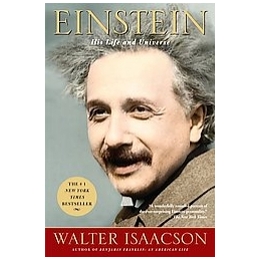
4. Walter Isaacson publishes a wildly popular bio of Jobs. I learn that Isaacson had previously published a well received bio of Albert Einstein. My brain takes note.

5. On Father’s Day, my son gives me, bless his heart, a gift certificate to Amazon. An hour later he has bought for me Isaacson’s Einstein biography. It seemed a perfect way to spend his Father’s Day gift. Einstein His Life and Universe Walter Isaacso

6. A few weeks later, I am a hundred pages in, hanging around 1905 trying to comprehend special relativity, when suddenly particle physics is THE hot topic in the news. My son’s obscure interest is now in the headlines. I resolve to read more physics when I finish with Einstein.

7. Einstein is my fun, home, off-duty reading. Every fall, however, I line up a list of books needing to be read in direct support of my pastoral ministry. History and biography are a part of that reading plan, which dictated that I begin last week Eric Metaxas’ Bonhoeffer: Pastor, Martyr, Prophet, Spy.

8. Dietrich Bonhoeffer was born in 1906, 20-something years Einstein’s junior. Both were German. Both would encounter Germany’s rising anti-semitism. Only one would survive.

9. I found myself, therefore, reading two biographies at the same time dealing with the same period of European history. Unplanned, but intriguing.

10. And I found myself able to compare two biographers. Both biographers are dealing with fascinating men with lives of significant import.

11. I came to Metaxas’ bio with great anticipation since several friends had recommended it highly. My wife started to read it, but couldn’t finish. She wrote that off as a deficiency in her. It isn’t.

12. As a writer, Isaacson shines. His bio, even when dealing with complex scientific theory, flows and when dealing with the life of the man, reads with ease and pleasure.

13. Metaxas on the other hand could have used a good editor to cut detail, to trim (or eliminate) quotes, and to arrest his temptation to be clever, which easily becomes trite. (Someone should have stopped him before he had Bonhoeffer ‘bid adieu’ to Paris, for example.)

14. One gives a good report. The other tells a good story. I’m a sucker for the story every time.

But I’m thankful for the serendipity – I think we call it God’s ‘most holy, wise and powerful preserving and governing all his creatures’ – which has allowed these lines to intersect so fluidly in my life.

+++++

UPDATE: One more serendipitous note – Bonhoeffer grew up in the Grunewald district of Berlin and attended Grunewald High School.

Bearly Alive

The following is a picture of me, after running on a hot, 94 degree Florida afternoon.

Bearlyalive

Or rather it is a picture of an ironically named ‘sun bear’ at a Nebraska zoo.

I feel his pain.

Source: The NY Times

Ruined Books

Each year, our family spends a week camping in the Great Smoky Mountains National Park. Two weeks ago we were at the Elkmont group campsite, 15-20 miles from the Cades Cove group campsite, the site we occupied last year.
Site2012
This morning news reports out of that part of the world are informing us that a severe and sudden storm hit the area last night with wind gusts up to 70 miles per hour. The Cades Cove site was hit hard with many trees toppled, campers stranded, injuries, and two fatalities. It is surreal to read about, and terribly sad for the families of those who died. We are grateful to not have had to brave such a thing.

I was reading about this in the online edition of a small local paper which brings the touches that only a local paper can add. In camping at Cades Cove and at Elkmont, the IGA in Townsend, TN was our source for supplies when needed. The Maryville (TN) Daily Times reported this incidental detail:

The Mary E. Tippitt Memorial Library was having a book sale in the IGA parking lot. The winds blew the tent over and injured Mr. and Mrs. Charles Tippitt who had to be treated at the hospital. The books were also soaked and ruined.

I realized as I read this that I was okay with Mr. and Mrs. Tippitt being injured. I was sad for the lost books.

Time for a priority check.

Thankful for Gospel Preaching

By virtue of his position, a preacher rarely gets to go to other churches. My own peculiarity is that I like familiarity and, honestly, I like the church I pastor, Covenant Presbyterian in Oviedo. So, even when on vacation, I’m likely to be found as a congregant there rather than anywhere else.

Today was the last Sunday of two restful vacation weeks and I uncharacteristically took the opportunity to visit a very popular local congregation. I attended their early service and so was still able to make it to my own church, albeit a few minutes late.

To attend another church is a dangerous thing for a pastor. It can bring out all kinds of unsavory responses – envy and judgmentalism among them. I genuinely try to fight these and to give glory to God for the way in which he is using us all in building his kingdom in this community.

And so I give thanks for this congregation. I really do. I know this church to be composed of men and women far more devoted to Christ than many. I know that God has given them a vision which is expansive and inclusive and worthy of praise.

The problem is that I heard two sermons today – one preached at this church to 4000 congregants and one preached at our church to 110. And only one of them pointed to Christ.

The first was a memorable and convicting message regarding the hardness of the human heart. The application directed us to dig deeply into the scriptures so that our hearts might be more receptive to the things of God.

The second was a memorable and convicting message about the blindness of the human heart. The application directed us to abandon all self-religion and to flee to Jesus the author and finisher of our faith.

The first, you see, identified a problem and then directed us how to fix it. The second identified a problem and and then directed us to the one who could fix it.

The first directed us to effort we must expend to find hope. The second offered us hope to which we could already cling. The first challenged us to make something more of ourselves. The second reminded us that we can make nothing of ourselves apart from Jesus.

The first was a message drawn from a story Jesus told, and that is as far as Jesus made it into the message. The second exposed the darkness of our hearts and pointed us to the Jesus who died for a heart as dark as mine that he might draw me out of that darkness.

The first left me wanting to do more. The second left me grateful for the more that Jesus has already done.

4000 people heard the first message. 110 heard the second.

I have faults that are legion. I have a heart that is corrupt and full of shame. I am so unworthy of the gospel of the grace of Jesus Christ, unworthy to be a recipient of it, and certainly unworthy to be a preacher of it.

But I’m grateful for those God has used to show me how for so many years I was one who preached the first type of message. I know how easy it is to do. And when I do, I grieve. And my prayer will be for me, and for this other church, and others building Christ’s kingdom in this community, that God will no longer let us preach a message of human effort, but will solely lead us to exalt the gospel of the grace of his Son.

Page 38 of 142

Powered by WordPress & Theme by Anders Norén