
Randy Greenwald

Concerning Life as It Is Supposed to Be

Watching and Reading

Art or literature or music or movies are community possessions. They are meant to be experienced and then discussed in community and conversation. Finding those people with whom these can be discussed and experienced can be a difficult thing, especially if ones tastes are as eclectic as mine.

The other day a friend and I were sitting at Starbucks when I flagged down a man who had been seated next to us and was beginning to leave. I had seen him reading there before and so I stopped him and asked what for him would be his ‘go to’ books, books or authors he loved to read and to which he often returns. He pulled up a chair and we talked for 15 minutes or more. It was not even until the end of the conversation when I realized that I did not even know his name.

A few days later he passed my table at Starbucks to ask me about a couple more books, and we found out that after the previous conversation, I had ordered a book he had recommended and he had ordered one I had recommended. This is the way, it seems to me, art of whatever variety is meant to be appreciated.

Notes for those who must know details:

He favors mature, classic authors – George Eliot, Fyodor Dostoevsky. He managed to get Middlemarch back onto my ‘must read’ list.

He mentioned a passing interest in the Kennedy assassination, and so I recommended to him Stephen King’s 11/22/63. He found out I was a Presbyterian pastor (we both had read and loved Gilead by Marilyn Robinson) and he recommended, and I ordered, Amazing Grace by Kathleen Norris.

And, I should add, that the friend with whom I was sitting was a passing acquaintance until the day I saw him at Starbucks reading King’s On Writing. We bonded immediately.

Love and Marriage

“Love” and “marriage” may go together like “baby” and “carriage” but the relationship between the two is obviously a lot more complicated than our 90 minute romantic comedy fairy tales suggest. (I, by the way, like a good romantic comedy.)

Over lunch recently a friend pointed out how his wife and he, after several years of marriage, were working on and addressing issues that they never new existed prior to marriage. It was hard work, but they were getting through them. They are an example of the old maxim that says that no matter how well we know someone, and how much effort we invest in getting to know someone, before marriage, when we marry, we are still marrying someone who is largely a stranger to us. We have a lifetime to get to know each other, and in that lifetime we will learn to love a person we only marginally knew before. And that takes a significantly deep commitment.

Romantic love is a wonderfully warm and endearing thing, but it is no guide to deep and lasting relationship in marriage. We have to learn to love, and learning to love means sacrificing ourselves for the sake of another. Since that is something most of us are loathe to do, marriage vows are imminently wise, and deeply helpful when taken seriously. Without the commitment to love someone, we might not actually come to love that person in the way that they need to be loved.

I’ve always been touched by the wonderful segment, called ‘Bastille‘ in the movie Paris, je t’aime. Thought the overall story is sad, the confession that ‘by acting like a man in love, he became a man in love again’ has always seemed just right to me.

Philip Seymour Hoffman

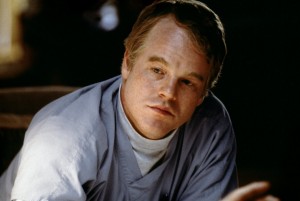
I’ll never quite know why and how it is that a particular actor becomes one whose death I lament – but hearing that Philip Seymour Hoffman died of an overdose of heroin yesterday struck me as very sad. I feel I’ve lost something that was valuable. A face, a voice, a presence that I’ll never experience again.

Hoffman Magnolia 300x201

The best and most reflective tribute I’ve read is this from critic and author Jeffrey Overstreet.

In a way, we mourn the death of actors because we love the characters they played, not because we knew who they were as individuals. And it’s plain to see that Hoffman was fighting a terrible battle behind closed doors, while audiences enjoyed what he could do to bring other personalities to life.

We don’t know them, and what the average observer might not know is that Hoffman was fascinated with the character of Christ, and considered himself a believer. This was sparked by the genuine faith of his sister and the vigor of her evangelical community.

The idea that a young person could be sane, generous, intelligent and Christian held out great appeal for him. So did the palpable sense of community he felt with his sister and her friends.

The whole piece is worth reading, and pondering. Soberly, he concludes:

Moreover, I am inspired to remember that even if all of my worldly dreams come true and I gain riches and fame and respect, I am still vulnerable. I have no place to speak any words of judgment over the circumstances of Hoffman’s death. In my moments of clear-thinking, I know that I have my own addictions. I have my own secrets that exist in direct contradiction to what I profess and what I long to be. By grace, I’ve been spared all kinds of devastating consequences. Lord have mercy on me, a sinner, and upon us all.

Timmy Keller Guys

Eugene Peterson in his wonderful book The Comtemplative Pastor strongly urges pastors to be conversant with poetry. If that is the measure of pastoral success, then I am a hopeless failure, to which the following bears sufficient witness.

(This is offered in fun, with sincere apologies to The Beach Boys and all mentioned herein.)

===

Timmy Keller Guys

Well, emerging guys are hip;
I really dig those styles they wear.
And the southern baptists with the way they talk
they knock me out when I’m by there.

The Pentecostal screamers
can get you wound up oh so tight.
And they let it loose with a holler and a whoop
so we come back another night.

I wish they all could be Timmy Keller,
I wish they all could be Timmy Keller guys.

Reformed boys have the insight
and they cross their T’s just so.
I dig a Genevan gown on a pipe-smokin’ man
in a pulpit of marble stone.

Piper channels Edwards
and Dr. Sproul, he is so sly.
Begg packs ’em in with his Scottish dialect,
And Osteen only has to smile.

I wish they all could be Timmy Keller
I wish they all could be Timmy Keller guys.

Snow and Warmth

Last night I received a text message asking prayer for a woman stranded in her commute by the snow in the Atlanta area. How that situation ended for her is a wonderful story of warmth displayed in surprising ways. Here is the account as her mother shared it:

Thanks to the prayers of many people, [our daughter] made it home safely at 3:30 am (14.5 hours after leaving work). Thanks also to the kindness of the CVS store manager, the pastor and some church members of a small church near the CVS store and a man with a 4-wheel drive. The CVS store manager brought out some lawn chairs and chaise lounges for the some 25 people to sit on and kept his store open all night. Around 9:30 p.m. she moved to the church who had opened up their fellowship hall for food and drink and their sanctuary for people to stretch out on the pews to sleep. And around 2:30 am, the man with the 4-wheel drive, who came to pick up another stranded person, followed her home to make sure she made it safely. At 2:30 am there weren’t many cars driving on the road but many abandoned cars on the side and in the middle of the road.

She will remember Tuesday, January 28, 2014 for a long time because of the snow and ice but mostly how God does answer the prayers of His people

The Unthinkable

I recently ran across a five year old, but still relevant, article on clergy suicide. We wish those two words were never used together, but those who are in ministry understand the reality.

The article (which is now behind a pay wall) observes:

Those who counsel pastors say Christian culture…creates the perfect environment for depression. Pastors suffer in silence, unwilling or unable to seek help or even talk about it. Sometimes they leave the ministry. Occasionally the result is the unthinkable.

When pastors fail to live up to demands imposed by themselves or others, they often “turn their frustration back on themselves,” leading to self-doubt and feelings of failure and hopelessness, said Fred Smoot, executive director of Emory Clergy Care in Duluth, Georgia, which provides pastoral care to 1,200 United Methodist ministers in Georgia.

I know the pressures. I know the culture. And I know the depression. And therefore I know as well how blessed I’ve been to have been befriended by other pastors who understand the pastoral world. To have such friendships is key to survival in ministry.

But I’ve also been blessed with caring congregants. Shortly after the high-profile suicide of a pastor here in Orlando, one member of the church I pastor determined to love me in a very concrete and highly unusual way. She found me at Starbucks and said she wanted to ask me a very hard question. She looked me in the eyes and asked if I’d had thoughts of killing myself.

That question is a bit shocking, and blunt, and necessary. I might have lied to her (I didn’t) but even if I had, the fact that someone loved me enough to ask the question might have been sufficient to draw me out.

Anything I post which calls for caring for pastors is going to come across as self-serving. But knowing the challenges of pastoral ministry, I know how important it is for pastors to be loved in hard ways like this. I know how important it is for people to pray for a pastor’s emotional health. And I know how important it is for pastors to seek out and find friends.

Note: Some time ago, a pastoral acquaintance (‘friend’ would be claiming too much) of mine, Petros Roukas, did take his own life. The sermon at the memorial service was preached by Dr. Bryan Chapell, then of Covenant Seminary. It is a paradigm for how one ought to handle such difficult situations. It’s a wonderful sermon which I commend to all. The text is found here. I can no longer find the audio on-line, but I have posted it in my dropbox, though I cannot guarantee how long it will remain.

Placeholders

There is the story of the baseball umpire who would not stay in place, but wandered all over the field during a game. Before his superiors could correct this behavior, he was struck by a line drive, knocked out cold, and removed from the field on a stretcher. And that marked the Fall of the Roamin’ Umpire.

I’m not an umpire, but I’ve been roamin’ widely through the holiday period. I’m not yet ‘fallen’ but I’ve had to grow silent until such time as a normal rhythm returns.

In the meantime, over the weekend a few posts crossed in front of me capturing two of my passions, movies and the church, which I felt merit passing on.

The first comes from Scot McNight, responding to the all too common “I love Jesus; I have no room for the church” sentiment. He suggests that those espousing such ideas need to hear Bonhoeffer reminding us

that we must, must, must surrender our ideals of the church and learn to live with its brokenness and the brokenness of all those connected to it. The fundamental problem is that the person who thinks this way thinks more highly of himself or herself than of others, sets himself or herself apart, and acts if he or she is superior. There is a communion table at the front of the church for a reason — because that’s what brings us together, not our competence in Christian living.

Well put.

Also concerning the church, or at least Christian culture, is the helpful attempt by Mike Osborne of University Presbyterian Church to correct the strange vocabulary of contemporary Christians.

I continue to believe that one of the strangest things about us Christians is our specialized vocabulary. Surely it accounts for at least some of the disconnect between us and our non-believing neighbors.

He takes on a number of phrases, some of which may be your favorites. Curious what you think.

And finally, on a different note, there is this well written review of the movie Her. I found the trailer for this movie creepy, and its premise disturbing. But the review leads me to want to see it. The reviewer, Lauren Wilford, says the central question the movie confronts is not the technological question, but rather, “What is it like to share your life with someone?”

What unfolds as we realize this is a poignant exploration of the questions that come in the middle of any thoughtful relationship. How do you grow without growing apart? Which differences between people are workable, and which are too fundamental to ignore? How do you reveal yourself to someone without scaring that person? And how do you offer grace in the midst of a love you’re losing, a love you’ve lost?

These seem to be the kinds of questions that are good to talk about.

And, as a side piece of the movie, Scarlett Johansson is making quite an impression as a star in a movie in which you never see her. As the reviewer notes:

Yes, my favorite Scarlett Johansson performance occurs in a film where you never see her body. The implication is not lost on me.

This one will have to go on my list.

Come, Jesus

A prayer, this, linked to Simeon’s prophetic hopes in Luke 2, and written by Charles Wesley. Christmas reminds us that that which brings us sorrow us will come to an end.

Come, thou long-expected Jesus,
born to set thy people free;
from our fears and sins release us;
let us find our rest in thee.

Israel’s strength and consolation,
hope of all the earth thou art,
dear Desire of ev’ry nation,
joy of ev’ry longing heart.

Born thy people to deliver,
born a child and yet a king,
born to reign in us forever,
now thy gracious kingdom bring.

By thine own eternal Spirit
rule in all our hearts alone;
by thine all-sufficient merit,
raise us to thy glorious throne.

Come, Lord Jesus.

Slandering Eeyore

I’ve been accused of ‘channelling’ A. A. Milne’s (or Disney’s) Eeyore. If something can Eeyore color1possibly go wrong, I expect it will. If I get a headache, I expect to die of a tumor. If there is an unusual noise coming form the microwave, I immediately calculate how we are going to afford the new one I know we are going to have to buy. And if things are going well, I worry about when they will fall apart.


I defend my identification by saying that people like Eeyore, or C. S. Lewis’s Puddleglum the marshwiggle (surprise! – my favorite Narnia character) are not pessimistic, just ‘realistic’. They don’t get caught up in unrealistic expectations from a fallen world. But that logic simply covers up my sin.Puddleglum

My love affair with Eeyore is really one of pride.

I, and perhaps Eeyore, are terribly proud and self-protective. If I say that things are going to get worse, and they don’t, everyone is happy, and no one cares what I said. If I say, though, that things are looking up and they go south, I look stupid. So, being negative is positive. See?

But this unfairly slanders Eeyore. I’m the one who is proud. The Eeyore I channel has lost his childlike faith and drinks deeply from a cynical well. I live on the down side of life because, at my most Eeyorish, I have lost hope that there is an up side.

I’m grateful to Paul Miller for shining an honest and penetrating light on my inner Eeyore. In his wonderfully helpful and practical book (A Praying Life) Miller strips my so-called “realism” down to its cynical core. My ‘realism’ is really cynicism which at heart is hopelessness, a hopelessness that suggests that one has lost touch with the reality that he is a son or daughter of a good and kind and gentle God.

Ouch.

When I first read Miller’s reflections on cynicism, I was deeply touched. I am so accustomed to things not working out that when things are going well I wonder where (as he puts it) the cloud is in that silver lining. I have forgotten that I have a compassionate heavenly father. Not even Eeyore or Puddleglum can be accused of that.

This does not mean that I do not still lie awake at night puzzling over problems I cannot fix, or ponder unhappiness at 5:00 AM Monday mornings. But it is good to know what I am doing, and to know why, and to remember that the God I’m having so much trouble trusting is one who did not spare his own Son, and therefore can be trusted to graciously give all things. (Romans 8:32)

Disney, though, is going to sue me before the day is out, I shouldn’t wonder.

The Stories of the Boys of Summer

To my knowledge, I first encountered the writing of sports writer Joe Posnanski when he wrote about the legendary game that in Tampa Bay Rays’ fan-lore is known as ‘Game 162’, the unforgettable night that propelled the Rays into the 2011 postseason. About that night, and about that game, Posnanski wrote a spectacular piece in which he contended that baseball is, indeed, boring.

“I never argue with people who say that baseball is boring, because baseball is boring. And then, suddenly, it isn’t. And that’s what makes it great.”

Evan longoria usp2

As unbelievable as that night was – and I won’t bore you in trying to recount it for you – Posnanski’s writing about it has stuck with me quite as much as the events of which he wrote. To read him is to connect with the history and soul of the game, and that is a gift.

I’ve read occasional things by him over the past couple of years. There is something about baseball that invites thoughtful essays, and Posnanski delivers. This past baseball postseason, Posnanski had some insightful things to say about the over-use and mis-use of baseball statistics in television broadcasts. Stats are a part of the game of baseball, but baseball is bigger than stats. He wants the announcers to tell more of the stories connected with those stats. I found myself resonating with his critique.

Since then, Posnanski has engaged in a project in which he is telling many of those stories that need telling. He has created a list, an obviously idiosyncratic list, as these things always will be, of the 100 best baseball players of all time. What could be academic and encyclopedic is becoming quite the clinic in how to tell a story well. I’ve not been able to read many, as he releases a couple of essays each day and I have other things filling my time. But if the quality remains as it has been, I might find it harder to pull myself away.

I suppose one who is not a fan might not find all the stories compelling. But surely one can read with appreciation about #81 on his list (Joe Jackson), a man who never liked his nickname (‘Shoeless’), and who found money such a great temptation that it led to his permanent banishment from baseball. Or one can enjoy reading about how ‘scrappy and resourceful’ flirted with the edges of ‘honest and legal’ in the career of #83 (Gaylord Perry). Good stuff, this. Check it out.

But first read his essay on Game 162.

But then, every now and again, something happens. Something memorable. Something magnificent. Something staggering. Your child wins the race. Your team rallies in the ninth. You get pulled over for speeding. And in that moment — awesome or lousy — you are living something that you will never forget, something that jumps out of the toneless roar of day-to-day life.

Page 27 of 142

Powered by WordPress & Theme by Anders Norén