
Randy Greenwald

Concerning Life as It Is Supposed to Be

The Ollie McLellan of the Spiritual Disciplines

Resolutions

I am the Michael Jordan of prayer and the Babe Ruth of personal devotions.

And, apparently, I’m the Muhammed Ali of lying.

Truth be told, as far as the spiritual disciplines go, I’m more an Ollie McLellan.

The movie Hoosiers tells the story of a small town Indiana basketball team (fictional Hickory) that makes an unlikely run at the state basketball title. It is the story of a failed coach (Gene Hackman) and of a drunken dad (Dennis Hopper) getting second chances. And in the background, it’s the story of a simple young man whose faithful presence lands him in a place to make an impact.

Hickory’s Ollie McLellan’s one basketball ambition was to never get put into a game. He was happy to practice, happy to cheer from the sidelines, happy to cart supplies, but scared to death of actually playing. In his mind, he was just not cut out of the right cloth to be a real basketball player. And yet in all his glorious weakness he is thrust into a key role in Hickory’s basketball fortunes.

Go watch the movie.

Ollie hoosiers free throw 1

It’s now February and for many of us the passion for our New Year’s resolutions has faded. Whether we resolved to read through the whole Bible or run a marathon or be gentler with our kids, we tried and found, “There is no try. Just do, or do not.” And the “do not” is beginning to look pretty good.

To soften the quitting blow, we decide that we really aren’t cut from the cloth of those who are successful runners, dieters, musicians, or Bible readers. Out the window goes the bathwater and with it the baby that we concluded was not going to thrive in our hands anyhow.

But I want to make a tiny little plea to hold onto the idea of discipline, particularly the spiritual disciplines, even if we don’t show much talent for them. Sometimes being no better than Ollie McLellan can bear marvelous fruit.

The importance of the spiritual disciplines lies not in great achievement. It lies in being faithfully present where God chooses to work. Ollie was faithful and present and it made a difference. We may not be the person who can read the bible in a year, and that’s okay. We may not be the one who can spend an hour a day in prayer, and that’s okay.

We are still hungry and lost and confused and God has been gracious to give us access to himself. A disciplined pursuit of God through the means of his appointment is always to be championed, no matter how small that discipline may appear. To the degree the disciplines have been meaningful to me, my heart longs to see others drawing the same benefit.

I’ll never know the exhilaration of hitting a game winning three pointer, nor will I ever get a plaque in the prayer hall of fame. But that’s okay. Even Ollie, because of his faithful presence, now and then can hit a free throw. And there is joy in that as well.

The Name of the Wind

As a seventh grade English teacher in Grant County, Kentucky years ago, I would, as English teachers are prone to do, ask my students to write stories based on some prompt. The question would always come, “How many pages, Mr. Greenwald?” I was hesitant to give such limits because I wanted stories to be told and not just pages to be filled. But they needed some kind of guide, a limit to aim for, and so I would give it to them with this caution: don’t let the page limit ruin your story. I urged them that if they were to reach the bottom of the second page of a two-page assignment to not begin the third page by saying, “And then, sadly, a brick fell on his head and he died. The end.”

A good story must have a satisfying ending.

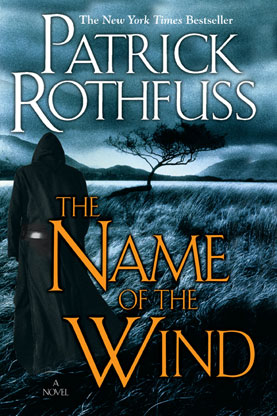
And though that is the only fault I can find with Patrick Rothfuss’s fantasy The Name of the Wind, it is a hard and disappointing one.Name of Wind

Though I’m not usually drawn to the fantasy genre, two of my sons and another friend insisted that this was a book I should read. One son read all 722 pages in just a few days while on a Coast Guard deployment. These are all people of good taste, and it seems, our tastes agree.

Rothfuss is a wonderful storyteller. His hero is an enjoyable character, one we are drawn to and love to cheer. He has placed him into a believable world of which he has given sufficient details that a reader can picture it with clarity. He introduces mystery and intrigue and then, at page 722, seems to have reached his pre-assigned word count and stops. Mysteries are left unsolved; story lines left hanging; conflict left unresolved.

In protest I may just need to leave his thousand page Part 2 unread and his yet to be published Part 3 on Amazon’s virtual shelf. The book would have been so good had there been a well planned and executed ending. But now, I question whether even the second book would resolve the conflict, unhang the story, and solve the mysteries. The world he created is a satisfying place to visit. But I feel like my tour bus was diverted and I was placed on the earliest flight home. I don’t like the disappointment that brings.

Apart from the disappointing last 100 pages or so, The Name of the Wind was a welcome companion over the past few weeks. I’m not going to quibble over the all too perfect characters. Life, as many of us know it, is all too full of insoluble nuance. Every now and then we need stories in which my good guys are good and my bad guys are bad; where all the men are strong, and all the girls good looking.

“That’s why stories appeal to us. They give us the clarity and simplicity our real lives lack.”

Stephen King’s short story The Mist suffered….

[Editor’s note: It appears that before completing this post, Mr. Greenwald suffered a head contusion caused by a piece of falling masonry. Injuries were minor and we are assured he will return to this space soon.]

A Hymn’s Mysterious Ways

It is typical for preachers such as I in an attempt to bring encouragement to people struggling through difficult times to quote from the hymn whose first line is ‘God Moves in a Mysterious Way’. We will often along with that tell something of what we know of the hymn’s author, William Cowper.

William cowper 448
We will tell how he was a pastor and a poet, and friends of the famed John Newton, the author of the hymn ‘Amazing Grace’. And finally we will point out how Cowper dealt with severe affliction, that he struggled with mental health issues and that he was hospitalized numerous times, sometimes after attempts on his own life. Given that context we will then encourage people to reflect on lines from the hymn:

You fearful saints, fresh courage take;
the clouds you so much dread
are big with mercy and shall break
in blessings on your head.

And from this, we hope people will find comfort.

But did Cowper find comfort from these words himself? That he did not is the possibility that hymn scholar Erik Routley in his book I’ll Praise My Maker suggests.

Routley points out that the bulk of Cowper’s hymns show they were written by a man with a passionate and sensitive heart. His words were often personal, flowing from a heart in love with his savior.

Oh! for a closer walk with GOD,
A calm and heav’nly frame;
A light to shine upon the road
That leads me to the Lamb!

But Cowper, like many sensitive souls, struggled to understand God’s providence when it took dark and inexplicable turns. And so, Routley points out, the words from his hymn on that matter,

Judge not the Lord by feeble sense,
But trust him for his grace;
Behind a frowning providence
He hides a smiling face.

are completely true and deeply hopeful. But, coming from the pen of Cowper, they are oddly lacking anything personal or emotional. They lack, that is, Cowper’s heart.

The whole hymn exhorts men to trust in God and not to enquire into His ways, which is well enough so far as it goes….

But what astonishes the careful reader is surely this, that here is a man who had both plumbed the depths of suffering and scaled the heights of faith, who wrote so passionately of his Saviour as he did in “There is a fountain filled with blood”,…yet, when he would advise men upon the inscrutability of God’s Providence, he makes no mention whatever of the Saviour of the world, and does not so much as mention the word “grace”.

How can Cowper, after all his experience and all his exhortation, write a hymn of providence that makes no mention of redemption?…Something is wrong here…. (page 110)

I’m not sure that there is something actually ‘wrong’ here, but something is clearly missing. How can that be explained?

Sometimes we find ourselves in those hard places where we are torn between the pain that hurts so badly and the truth that we are supposed to believe. All that we can really do in the midst of that agony may be to recite what we know to be true even though it seems distant from our hearts. Sometimes all we have strength to do is to sing, or in Cowper’s case write, what we are having trouble believing so that we might come around to the place where in fact we do believe and our hearts can again rejoice.

This is the ‘I believe’ part of the complete confession, ‘I believe; help my unbelief.’ (Mark 9:24) We do believe, but contentment eludes when the horror of what we are experiencing and feeling overcomes us.

Perhaps in his own way, Cowper, struggling with the incomprehensible darkness of mental illness, is showing us a path. In the dark we confess the truth that we know until the light comes to illuminate it to our hearts. Perhaps this hymn itself moves in a mysterious way.

Courage and MLK, Jr.

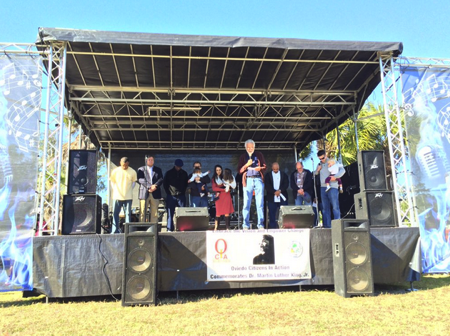
Monday was the annual Martin Luther King, Jr. Day parade here in Oviedo, Florida where I live. And, as I have for the past several years, I joined with several other pastors of various races, denominations, and backgrounds to march under the banner of the Oviedo Christian Ministers Association.

As I stood in the (Florida) cold (it was mid-forties) and waited for my friends to show up, I began to think, as I have in the past. Where would I, a white Presbyterian pastor, have been fifty years ago when such marches were not commemorative but proactive? Would I have been marching for civil rights when it was not safe? Would I have taken such stands that got crosses burned in the yard of a white friend of mine who did?

Or would I have been on the sidelines cheering but unwilling to encounter the risks that stepping into the streets would have entailed? Would I have been among the “Dear Fellow Clergymen” to whom Dr. King addressed his “Letter from Birmingham Jail“? Would I have fallen under Dr. King’s ‘regrettable conclusion’:

I have almost reached the regrettable conclusion that the Negro’s great stumbling block in his stride toward freedom is not the White Citizen’s Counciler or the Ku Klux Klanner, but the white moderate, who is more devoted to “order” than to justice.

This year as I walked with men who have become my friends, and prayed with and for them in front of the gathered city at Round Lake Park, the event was documented by one of my daughters, herself African-American. Just before the march, I was reminded that were it not for the courage of Dr. King, and many others like him, my family as it is and as I treasure it would not exist. I am a debtor to those who had the courage to take a stand.
MLK 2016
A year or two ago, I confessed my self-doubt to one of my African-American pastor friends as we prepared to march. He confessed that he wondered the same thing about himself. That many put their lives and reputations at risk, some to the point of death, is the reason that he and I could have that conversation in the past tense. I am grateful to them all.

Storytellers

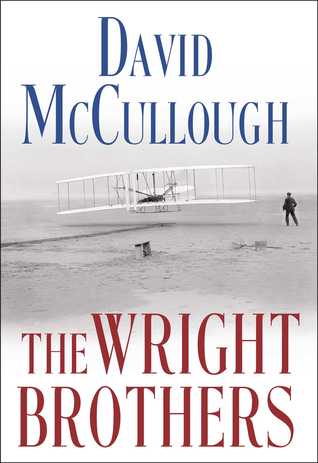
I never had any real interest in the Wright brothers until David McCullough wrote a book about them. His ability to tell a story made ME interested in what interested him. (HBO, by the way, has called him a ‘painter with words’. That may be excessive praise, but the short video they produced about him for their John Adams mini-series is worth watching.)

There are a handful of other writers of non-fiction who have the ability to make me interested in what interests them simply through the power of their storytelling.

Laura Hillenbrand

I’m persuaded that Laura Hillenbrand could compose a telephone book that would be captivating reading. Many have read Unbroken
and found it good. Ms. Hillenbrand’s other book, Seabiscuit is about a racehorse and, we think, we have no interest in racehorses. Think again.

Those who have read her books will find this article by Wil Hylton, The Unbreakable Laura Hillenbrand a wonderful read in its own right as well as a fascinating insight both into her method and why books from her are slow in coming.

Erik Larson

On the first day of a several day stay in downtown Chicago with my wife a few years ago, I bought and began to read Erik Larson’s The Devil in the White City. This book remarkably combines the fascinating story of the 1898 Columbian Exposition in Chicago and the story of a serial murderer haunting the shadows of that event. The book’s subtitle tells it all: “Murder, Magic, and Madness at the Fair That Changed America”. Reading it while in Chicago made it all the better, but wherever I would have read it Mr. Larson would have had my attention.

Other books by Larson are good, though a bit inconsistent in their ability to capture my interest. His latest, Dead Wake
, about the sinking of the luxury cruise liner Lusitania is very good.

David Mariniss

A professor of creative non-fiction at Rollins College recommended to me David Mariniss’ book Rome 1960 about the summer Olympics of 1960. Suddenly reading about Wilma Rudolph and Cassius Clay and the barefoot marathoner from Ethiopia became what I HAD to do.

William Manchester

This list would not be complete without mentioning William Manchester. His biographies of Douglas MacArthur, American Caesar and of Winston Churchill, The Last Lion are so, so good and worthy of multiple readings.

The Churchill biography illustrates the power a gifted storyteller brings to the page. Manchester was able to complete the first two volumes of this three volume work telling Churchill’s story up to WWII. Subsequent to the publication of these, Manchester suffered a debilitating stroke which left him unable to finish the third planned volume. He passed his research on to a trusted friend who completed the work. The third volume lacks in the sparkle and narrative power of the first two. The storyteller had been replaced with a reporter.

Stephen Ambrose

Ambrose was once a prolific and always captivating author on the lives of the ordinary soldier of World War II. Band of Brothers is well known both as a book and as an excellent mini-series. Citizen Soldiers is an excellent reflection on how the demands of the war elicited uncommon leadership from common men and women. And Ambrose’s account of the explorations of Lewis and Clark, Undaunted Courage
explores similar themes in a different era. All are worth reading.

Sadly, in the last year of his life, charges of plagiarism tarnished his reputation. In defense, he admitted that he did not apply all the standards of an academic publication to his work, but leaned heavily on this assertion: “I tell stories.”

That is the gift of each of these. They tell stories – and I listen.

Those Ads

My blogging platform of choice is WordPress. The ‘price’ I pay for using the ‘free’ version of WordPress is that occasional advertisements get placed in my posts.

WordPressAds

WordPress says that this is done ‘sparingly’, but I still wish they did not do it at all. Of course, WordPress has employees who, like the rest of us, like to pay their mortgages on time. So, I get it. I still prefer the ads would go away.

This could happen if I upgraded the site from it’s current ‘free’ to ‘premium’ status. That way the nice folks at WordPress can afford toothpaste without cluttering Somber and Dull with ads for the same. As a bonus, it would make me happy for a number of other reasons.

And yet, the cost to do this, on top of the other costs associated with this site, is more than I can justify. Which brings me to the pitch:

Perhaps there are some of you who might like to climb on board and help this site stay clean, neat, afloat, and ad free. To that end, I’ve opened a PayPal.me site for those who would like to contribute to Somber and Dull. If you follow that link and make a contribution, I can get closer to the $99 needed to subscribe to their service. That would encourage me, the ads would go away, and WordPress employees would still be able to buy their kids’ birthday presents. That’s good all the way around.

Contributions small and large can be made by clicking here. All will go to the support of this site. Amounts received in excess of $99 (a guy can dream, right?) will be used to offset other site related expenses, current and future.

And I just realized what I’ve done. I’ve placed an ad hoping to get rid of ads. I love irony.

A Heart of Wisdom

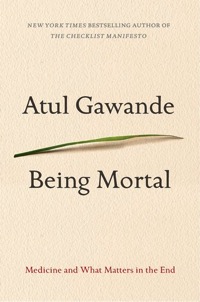
It’s not because I’m teetering on the brink of antiquity that I’ve picked up Atul Gawande’s Being Mortal: Medicine and What Matters in the End to read. Rather, I chose it because it was recommended by a medical-student-to-be and because it deals with a subject my profession brings before me with some regularity. Death comes to the archbishop, priest, and parishoner alike. And it will come to me no matter how hard I try to ignore it. Gawande reminds us with relentless detail just how mortal we are.
“…at the age of thirty the brain is a three-pound organ that barely fits inside the skull; by our seventies, gray-matter loss leaves almost an inch of spare room.”

That’s harsh.20696006

We run out of pigment in our scalp (thus re-coloring our hair). Our arteries grow hard and our teeth grow soft. The amount of light reaching the retina of a sixty-year old is 1/3 of that of a twenty-year old. And on he goes. We don’t die as much as we just wear out and run down.

I’m wearing out, and as hard as it is to be reminded of this it is good he has done so. That is, in fact, his point. The things we hide are the things with which we do not rightly deal. We ignore death. We push it aside, and sanitize it in hospitals and nursing homes. We pretend we can escape it, we act as if we can cheat it. But it comes to those we love and it comes to us. So there is wisdom in being forced to face it.

Someone once told me that I would not qualify as “old” until my children were closer to 50 than I am. That threshold is looming, as, perhaps, is “nature’s final victory” (per a surgeon Gawande quotes) And so we pray

Teach us to number our days
that we may get a heart of wisdom. (Psalm 90:12)

A Writer of Wrights

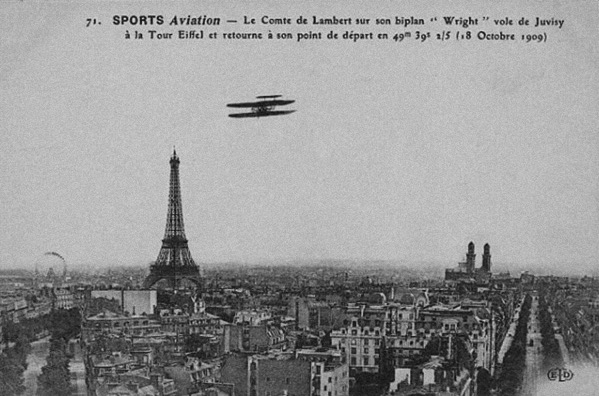
On Monday, October 18, 1909 witnesses gasped to see high in the sky over Paris, France, higher than the Eiffel Tower (then the tallest man-made structure on Earth) something never before seen over a major world city: an airplane. This one was a Wright brothers bi-plane piloted by a Wright friend and student, the Comte de Lambert. One witness was the American Pulitzer Prize winning novelist Edith Wharton who recorded her impressions.
HighFlight ComptedeLambert8

It is not her impressions that interest me, nor the flight itself, as remarkable as that must have been. What interests me is that in his recent book The Wright Brothers, David McCullough refers to Ms. Wharton blandly as ‘the American writer Edith Wharton’. This may have been for McCullough nothing more than an incidental word choice. But I like to think that it arose from something deeper: from McCullough’s assessment of his vocation. He wants to be known simply as this: as a writer, a person who tells stories with words. The Presidential Medal of Freedom which McCullough was awarded calls him “…one of our nations most distinguished and honored historians…”. Though no doubt true, he is first and foremost, in his mind, simply a writer.

I grew up in southwest Ohio, forty minutes or so from Dayton. When I was young I spent many enjoyable hours strolling through the magnificent Air Force Museum on the Wright-Patterson Air Force Base. Nevertheless, I had no particular TheWrightBrosinterest in the sons of Dayton for whom the air force base was named. With the release of David McCullough’s book The Wright Brothers, I have become interested. A good storyteller does that. He compels one to become interested in what interests him.

The basic narrative of the brothers Wilbur and Orville was taught to most school children of my era. These two from Dayton designed and built the first ever airplane, testing and flying it, for some reason never then explained, off the sand dunes of Kitty Hawk, NC. McCullough fills in the rather monstrous gaps in that narrative.

In a 1909 interview with a New York newspaper, Wilbur, reflecting perhaps on his life, said

“A man who works for the immediate present and its immediate rewards is nothing but a fool.”

Ignoring “the immediate present and its immediate rewards”, the brothers attacked the problem of flight like none before them. Further, the design and building of a flying machine was only part of the challenge before them. They also had to learn how to pilot one, knowing that any error along the way could (and almost did) kill them. They worked obsessively, mostly in obscurity, often under great pressure, and sometimes in the face of mockery.

And yet they were not indifferent to immediate rewards. They attracted notoriety, and became acquainted with a wide span of celebrity, nobility, and royalty. But they never let their own celebrity lull them into complacency or rashness. They did not fly to impress, but to succeed. That that they did.

Living until age 77, Orville survived to see both the good and the potential for destruction their invention brought to the world. Wilbur, on the other hand, died of typhoid fever in 1912.

In all the years they had been working together Wilbur and Orville had never once flown together, so if something were to go wrong and one of them should be killed, the other would live to carry on with the work. But on this day at Huffman Prairie, where they had developed the first practical flying machine ever, the two of them, seated side by side, took off into the air with Orville at the controls.

To many then and later, it seemed their way of saying they had accomplished all they had set out to do and so at last saw no reason to postpone any longer enjoying together the thill of flight.” (page 253)

The quality of a story is often found in what is withheld. A good writer does not obscure his story under a weight of detail but keeps his focus and lets the story unfold. I would like to know more about why the brothers were so fastidious about not working on Sunday, and others might want to know greater details about their legal battles. If we all got our wishes, the book would double in size and be half as interesting.

David McCullough’s degree from Yale is in English literature. Whether he qualifies as a historian, I’ll leave to others to decide. Clearly, he is a writer, one for whom I continue to be grateful.


[Footnote point of regional pride: Why does North Carolina gets the cool ‘First in Flight’ license plates? All they provided was isolation, sand, and a prevailing wind for the boys from Ohio to ply their magic!]

Things Given, Things Taken Away

David Brooks in a NY Times column late last year made mention of a man he’s come to know from Nairobi’s famous Kibera slum. Kennedy Odede is a survivor of terrible deprivation who now is joyfully doing notable good works there.

Odebe’s story is one of poverty and loss and abuse and gangs and crime, a list of things that singularly would have overwhelmed and destroyed many. But Odede says this:

While I didn’t have food, couldn’t go to school, or when I was the victim or witness of violence, I tried to appreciate things like the sunrise — something that everyone in the world shares and can find joy in no matter if you are rich or poor. Seeing the sunrise was always healing for me, it was a new day, and it was a beauty to behold.

Sometime after reading that I was running as the sun came up and realized that even how we look at something as commonplace as the rising of the sun (or other ordinary events) is really a product of our faith. If one’s faith excludes God, then one can only look at the sun as the product of the regularity of natural forces. It cannot be seen as a gift, for there is no giver. It is the fortuitous product of those natural forces which in other combinations produce death and disease, mudslides and hurricanes, earthquakes and fires. The sun becomes a symbol of hope only through eyes that are informed by faith.

Christians are just as likely as any to see the sunrise, or other events, no differently than the naturalist or atheist sees them: as, perhaps, solely the product of natural forces or as the fruit of our own hard work, forgetting that all good gifts, whether great or small, come from the hand of God.

We can only be moved to gratitude if we acknowledge a giver. But the thing about a give is that he who gives has the power to take away what he has given. If the food on my table is the product of my hard work, and God only the symbolic source, then my thanks to him is tokenism. If on the other hand I know that the food I cherish is something that he could, if he chose to do so, withhold, only then do I genuinely see it as a gift for which I am grateful.

If what we have is only the necessary outcome of natural events, there is no one to thank, no one to credit, and therefore no one to hope in for anything future. We can only thank someone, only be moved to worship someone, whom we know can also take it away what he freely gives.

My point here is not to answer all the questions that swirl around those times of God’s absence and the pain of loss and suffering. Faith is challenged in many complicated ways and I don’t have answers. My point is rather for us to realize that the more we deprive God of control of our lives and of the natural world, the less hope we will have in him. The ‘smaller’ our God, the less power the rising sun will have to stir our hope for the day that comes.

The LORD gave, and the LORD has taken away; blessed be the name of the LORD. (Job 1:21)

Reboot

“How many 13 year-old girls does it take to screw in a lightbulb?”

That was the question that I used to ask one of my daughters when she was 13. I’ll let you think about the answer.

Recently a few members of my family were sitting in the backyard enjoying each others company, laughing, telling stories, roasting marshmallows. For some reason, I started asking Siri, Apple’s iPhone answer lady, questions, including this one: “How many Presbyterians does it take to screw in a lightbulb?”

“One thousand.” Siri promptly replied. “One to screw in the lightbulb and 999 to blog about it”

Perhaps we’d had too much beer; perhaps we were just drunk on the refreshment of being with each other. Whatever it might have been, we thought that was just about the funniest thing. Typing it now, it seems a bit dull. Nevertheless, it serves as a good foil for this post.

There have been a few who have wondered where I’ve gone. My last serious post to this blog was in May, 2015, and prior to that, posts have been spotty.

My answer is that I’ve been screwing in lightbulbs and leaving the blogging about it to others. At least that is what I like to think.Coming soon

There are those who have though continued to encourage me to write, and to write for this blog. I’ve certainly continued to generate ideas and consider issues I’d like to write about. That what I’ve written in the past has been to some degree helpful to some people does suggest that a blog is perhaps useful work. And yet it often asks for time that I do not think I have.

But the urging is having its effect. So with quite a bit of trepidation, I am rebooting the Somber and Dull blog. My goal at the outset will be no more than one post every week or two. Several are in an active queue; several hundred sit sketched and neglected. Time has been budgeted for developing a few of those, and so we will see where this goes.

I will try to be faithful to this. You will encourage that faithfulness by your comments and by directing others to read with you. I’ll do my best to make it worth your while.

And I’ll still screw in lightbulbs, just not as easily as my then 13 year-old daughter, who could do it all by herself:

“Just one. She holds the bulb and the world revolves around her.”

Page 22 of 142

Powered by WordPress & Theme by Anders Norén