
Thanks to the inability of the Michigan State Spartans men’s basketball team to catch a pass, to make a basket, and to retrieve a rebound, and thanks to the inability of the North Carolina Tar Heels to miss a bucket in the first half of last night’s NCAA final game, I got an hour and a half of sleep last night that I was not expecting. Ah, sweet rest.
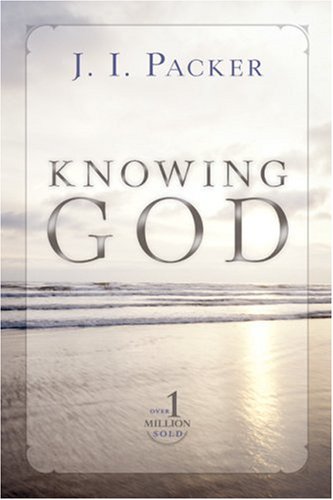
I’ve been re-reading J. I. Packer’s chapter on the doctrine of adoption in his masterpiece Knowing God. There Packer reminds us that one way of understanding the sermon on the mount is to see that is paternal in orientation. It is God the Father teaching his children how to live. To read the sermon in that way is to open up a richness that we miss if we read it as simply a legal charter.
Packer notes what this means for Christian prayer.
“The Father is always accessible to His children, and is never too preoccupied to listen to what they have to say. This is the basis of Christian prayer. Two things follow, according the the sermon. First, prayer must not be thought of in impersonal or mechanical terms, as a technique for putting pressure on someone who otherwise might disregard you…. Second, prayer may be free and bold. We need not hesitate to imitate the sublime ‘cheek’ of the child who is not afraid to ask his parents for anything, because he knows he can count completely on their love….” (page 192 in my 1973 edition)
If you have not read the book, do so. If you’ve not read the chapter in a long time, return to it.

In a scene from the movie Wit, Emma Thompson is playing a college student studying the holy sonnets of the poet John Donne. Her professor returns the paper saying that it is far below her potential. Thompson replies that she will return to the library to make improvements. The professor says no, don’t go to the library, but go to your friends. The implicit message is that to understand these densely packed and deeply spiritual poems, she would have to live and confront life and not books.
She goes, nevertheless, to the library.
But Fate (God? the movie is ambiguous about this) pursues her, draws her kicking and screaming into life through the process of dying, and she finds herself humanized not by her academic pursuits, but by a faithful nurse and her old professor and a children’s tale of God’s unrelenting pursuit.
This movie, a showcase for one of my favorite actresses, brings together themes of life and death, it examines the ways in which we both humanize and objectify human beings, and it juxtaposes the esoteric poetry of John Donne and the simple warmth of The Runaway Bunny, all in what is a captivating and entertaining two hour film. Anything that can do all of that and still keep its audience deserves to be seen.
I cannot imagine what it would be like to watch this if someone I knew had died from cancer, so one needs to know one’s emotional limits. But with that caveat, I cannot recommend this film highly enough.
After the film, I was compelled to call my daughter, a hospice nurse, to express my admiration for what she does. So, take note of any nurse you know. The movie will have you bowing at her (or his) feet.
One thing you can trust SomberandDull to never do is to send hapless readers to Oprah’s web site. Nosirree. Not us.
Okay, just between you and me, this quiz is quite a challenge for those of us who THINK we know our movies and books.
I surprised myself with six out of ten. How’d you do?

Joy is spoken of all over the Bible and is something sought by so many, but we rightly question what it really is.
Michigan State won a spot in the Final Four and the team (and some of us watching) experienced a certain euphoria as a result. But was it joy? In a sense, of course. But not in the deeply satisfying and full way that seems to be the fruit of life lived in the presence of God. That has to be something deeper, something richer, something stronger. Life needs to be punctuated with moments of victory and accomplishment and happiness, but the joy we seek is something other.
And it seems to me that it can only be had by first losing everything.
Three years ago, I was minding my own business leading a small group Bible study in my home, when I was lured outside on a ruse only to find thirty or forty people, some from 500 miles away, standing in my front yard singing ‘Happy Birthday’. I was stunned, and of course, deeply moved. Why? Because it was a kindness that I in no way expected and most certainly did not deserve.
The roots of real joy are illustrated by this. Real joy comes to those who receive what they do not expect and believe they do not deserve.
The prodigal son is stunned to receive what he does not expect and believes he does not deserve – his father’s favor and full reception. The immoral woman affectionately pours her tears over Jesus’ feet because she has received from him what she could never have imagined receiving and the right to which she had never possessed – his love and acceptance and forgiveness.
The son and the woman experience deep gospel truths: that all they have that matters they did not deserve and therefore could not have expected. Their wonder feeds their joy.
Real joy eludes us, on the other hand, because we really cannot sustain belief in the gospel. Forgetting ourselves, we allow ourselves to think that there really is some good reason for God to think highly of us, and so his favor ceases to be surprising and undeserved. And when it is that, the joy is gone.
Real joy can only come when we lose everything, every vestige of spiritual merit and expectation that we possess. And losing that can be very, very painful. We need to lose our self righteousness, the things upon which we depend. We need to lose the expectation that our success earns us favor, or our riches, or our character, or our looks, or our timeliness, or our propriety, or our ethnicity, or our hard work, or our exemplary parenting. We need to be stripped of everything in order to know that we are both deeply abhorrent to God and even more deeply loved.
When we lose everything we are in a position to marvel that we have been given everything. And knowing that we have been given everything by One who will not ever take it away is the place of real joy.
The cross is therefore our joy. To see the sin in our lives is to be shocked that the holy God would act to save us. To see our sin is to know that all that we have been given is clearly undeserved. and the more clearly we see these things, the more deep will run the channels of joy in our life.
[My thanks to Bill Kimrey, whose hand-carved celtic cross is pictured here.]
On Tuesday my associate Geoff and I were eating sandwiches at a local Italian restaurant. Into the restaurant walked, or I should say limped, my friend James Roberts, an African American pastor and dear brother of mine.
I asked James why he was limping. He told me that he had hurt his hamstring. I asked him how in the world he did that, joking that he shouldn’t play so hard.
The explanation involved wearing the wrong shoes, but the key line was that he made a move while preaching on Sunday and felt it go.
As I laughed, I told James that no white preacher I knew, no white Presbyterian at least, ever ran the risk of pulling a hamstring while preaching!
Here are two ways to obey the fifth commandment, for those who think it might be somewhat complicated:
1) though you may not have watched a college basketball game from beginning to end in three years, sit down on the couch with your father and watch, and sincerely cheer, HIS team in their NCAA quarterfinal game.
2) though you may live 1300 miles away and be at work at the time of the game, grab a break and CALL your father to share in his enjoyment of a fifteen point lead during the fourth quarter.
I’m feeling particularly honored.
Thanks, guys.

In my original NCAA Men’s Basketball Tournament bracket, filled in two weeks ago, I had selected an eclectic Final Four. As it turned out, I only got one of the four correct, but I don’t care. I chose MSU to make it, and after a dominant performance on Sunday, they did. I am of the unswerving faithful (BA, 1978)!
I thought I’d be content with their making it to the Final Four. I’m not. I want them to make it to the final game to redeem their earlier lopsided loss to North Carolina.
Age makes one read things differently.
This morning I was reading the very familiar passage regarding the woman caught in adultery from John 8 and noticed something I had never seen before.
7 And as they continued to ask him, he stood up and said to them, “Let him who is without sin among you be the first to throw a stone at her.” 8 And once more he bent down and wrote on the ground. 9 But when they heard it, they went away one by one, beginning with the older ones, and Jesus was left alone with the woman standing before him.
Why was it the older ones who seemingly were the most reticent to take action against the woman? Had age given them a more realistic perspective on their own sin? I wonder.
Among men I know, those who are older tend to be more mellow in their assessment of right and wrong. Things which once were clearly black and white tend to fade to gray with advancing years. And clearly, the older I get the more I understand about the fundamental corruption of my own heart.
I can’t say what was going on in the hearts of these men, or why John chose to note the age progression. But doesn’t it seem curious?
In a comment to yesterday’s post, Staci encouraged everyone to listen to Tim Keller’s sermon on “The True Elder Brother.”
I add my encouragement to that commendation!
For those interested, I’d recommend listening to ALL the sermons on this page.
Wonderful, wonderful stuff.