Randy Greenwald

Concerning Life as It Is Supposed to Be

A Small Word of Dissent

Often those who write about Christianity in the popular or academic media uncritically embrace certain popular assumptions about Christianity which they then use to support whatever argument they are building without due consideration given to whether the assumptions are actually true.

I don’t blame the authors, really. Christianity itself has allowed so many contradictory points of view to fly under its banner that it can be very difficult for anyone to define actually what it is.

There are times when those of us whose roots are planted in what we might call a more ‘historic’ expression of Christianity, that is, one which finds its voice in expressions such as the Nicene or Apostles’ creed, or in the writings of Augustine and Anselm (and, we dare say, Moses and Paul) need to speak up, if only to make a peep, in critique of these popular assumptions.

In the April, 2009 issue of The Atlantic Monthly, there is an article by Robert Wright in which he makes the case that the mainstream teachings of major religions are predisposed to support globalization. Now, I am really not all that fired up about his thesis. Frankly, I made it about ten paragraphs in on my first read and abandoned the project. In the first place, globalization is not a particular interest of mine. Secondly, I really did not find his thesis all that compelling or interesting. But mainly, I jumped ship because he was building his case on a platform of these faulty, though popular, assumptions about Christianity. With such a weak foundation, I had no heart to visit the house he was building on top.

But are these assumptions faulty? It has occurred to me that it would be a worthwhile challenge to issue a word or two of dissent regarding some of the positions which Mr. Wright confidently assumes.

In so doing, I’m not really attacking Mr. Wright in this. Again, I don’t fault him for repeating positions which are being espoused by people who identify themselves as Christians. However, when the author attributes a point of view to ‘many Christians’, it is easy for a reader to accept that as being the view of ‘most’ or ‘all’ Christians, or even to assume that this is what is embraced by the ‘really smart’ Christians, as opposed to the ‘rabble’ who, perhaps, still believe the Bible.

I hope to dig into the meat of this next week. If you’d like to get a head start on this you can access the article here.
Vitamins and Pizza

I’m told now that caffeine can help prevent Alzheimer’s disease.

I also understand that chocolate is good for you.

Vitamins, on the other hand, don’t live up to the hype.

So, eat a balanced diet, exercise, enjoy your coffee and Hershey bar, and skip the bottles of vitamins.

Who says all news is bad news?

I’m still waiting for the study showing the health benefits of pizza. I’m sure it’s out there; I’ve just not run across it. Yet.

Pervasive and Enduring Pop Culture

Pop culture influences permeate me.

I cannot listen to a particular Chopin prelude without wanting to sing “Could It Be Magic”, an old Barry Manilow hit.

If someone writes me a letter beginning with the line ‘Please allow me to introduce myself…’ I will toss it in the trash. Not only is it probably a form letter, but it brings a less than positive Rolling Stones song to mind.

So today, as I was writing my sermon for Sunday, I wrote the line ‘You must remember this’ and immediately realized that I’d have to rewrite the line.

Movies as Escape


In the highly ritualized existence of the Greenwald household, everyone knows that Saturday night is pizza and movie night. For years, we have made pizza and watched movies on Saturday nights. It’s just what we do.

Sometimes we watch serious movies, sometimes animated movies, sometimes obscure movies, and sometimes classic movies. Come over some Saturday. You never know what you might find us watching.

A few week’s ago, we were picking a movie for our Saturday night watching, and I had considered something serious. But then I reflected on all that we had been through that long week. What we wanted, what we really needed was, well, ABBA!

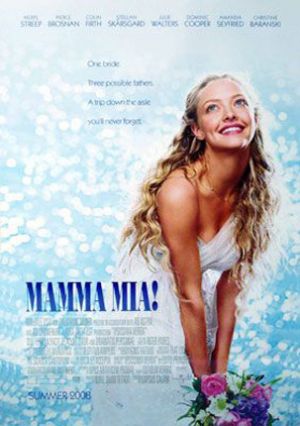
My wife and daughter and I had watched Mama Mia! a few weeks earlier, somewhat hesitantly, and had so much fun that we had to share it with our Saturday night crew.

Yes, I know there are some offensive themes in the movie. Yes, I know that the decision made by the lead character in the last scene is foolish and contrary to everything we believe about the beauty and sanctity of marriage. I know those things. But I, we, are suckers for the music which the story was concocted to showcase. It was fun, and that was its primary justification.

Sometimes movies do not need to make us think. Sometimes we need not justify them on any other terms than the sheer enjoyment of them. And for this one, the enjoyment meter was ticking away near the top.

It was our great escape. And that was good.

God’s Inscrutable Providence

A great story here about my dear friend Dave Finnegan.

Of volcanoes and other providences

But it’s a bigger story, really, about how frustrated we become when OUR plans seem to fail, having no idea of the greater good God is doing for us by denying our desires.

Thanks, Chris, for sharing that.

Movies as Experience

Many are familiar with Emily Dickinson’s poem

There is no frigate like a book
To take us lands away,
Nor any coursers like a page
Of prancing poetry.

This traverse may the poorest take
Without oppress of toll;
How frugal is the chariot
That bears a human soul!

Ms. Dickinson, of course, lived in a mono-media culture in which other than personal conversation books alone could effect the experience of being carried away into another time or place.

As much as I love books, movies have a unique power to do the same thing for us.

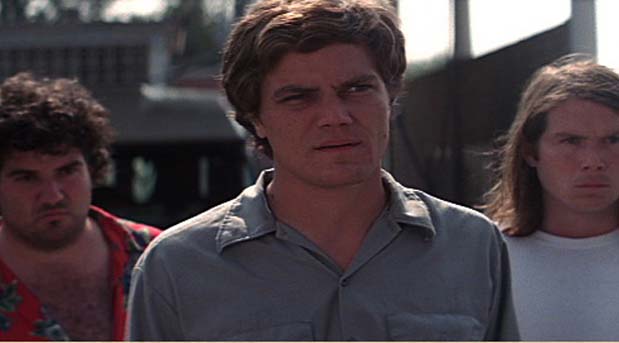
A couple of weeks ago, Barb and I watched a relatively unknown film of a year or two ago called Shotgun Stories. It is the story of three brothers abandoned by their father at a young age. The father, whom we never meet, converts to Christianity, remarries, and has four more sons with his new wife. But he never returns to make anything right with his first sons. As a consequence, the two sets of sons grow up with great resentment against one another, which eventually erupts into a full scale war of strike and counter-strike. One longs in this for something to enter the scene to break the cycle of vengeance.

The film is well-paced and reflective, to some excruciatingly slow. It takes us to the stark and barren landscape – ‘lands away’ to most of us – of rural Arkansas, suggestive of the souls of the characters, superbly played by a cast of little known actors.

The film ended leaving Barb and I wondering if the solutions offered were right. But the characters and the imagery of the film was not something I can not shake. It was a movie that did not so much entertain me as took me into the lives of its characters and let me experience life as them.

Good movies do that. And this was a good one.

Smelly Habits

I have a sniffing habit. On my desk in my study is a knot which came from a pine board I was working with in my garage. Every now and then I pick it up and smell it. I don’t know why. I’m sure there is some deep, Freudian longing making me do this. But I do it because I love the smell, and the smell is magnified when I work with pine in my garage. Heavenly.

I have a three car garage. One bay has been set up as a woodworking shop in which I build things. Another bay is partitioned off as a commercial kitchen in which I bake things. (In the third, occasionally, we actually park a car.)

Together my two avocations give me arguably the best smelling garage in Florida, if not the world. I don’t know who could honestly compete.

How to Ruin a Movie


Here is how to ruin a movie:

Step 1) Read the book first.

Step 2) Watch the movie adaptation of the book.

Step 3) Compare them.

Pretty easy.

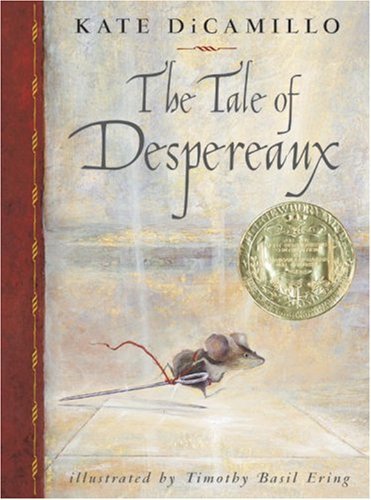
For my birthday, my sweet and unselfish eight year-old son Colin gave me the movie version of Kate Dicamillo’s book The Tale of Despereaux. Then, every thirty minutes or so after I unwrapped it, he asked if we could watch it. I think he just wanted to make sure I really enjoyed my birthday. Right?

So, we watched it, and I think I would have liked it a ton better if I had not read the book. When we finished, Colin said that they changed a lot of things. He was right. What I don’t understand is why they did. It is such a sweet and sorrowful and redeeming book, I can’t understand why they had to recast the story so greatly in order to make it a movie.

Today I unburied an article someone had printed out for me months ago, but which I had set aside to read only after I’d seen the movie myself. This article, which you can read here, helps me to see some of the virtues of the movie which I missed because I was too busy grousing about the changes.

That said, and knowing the risks, if you have not yet seen the movie, read the book first.

Clippy and Lauren


This post has little to do with anything, other than the fact that when I was a PC and used MS Word, I was a certified ‘Clippy Hater’. For those of you who remember him (the annoying paper clip who would show up to offer helpful advice), you will enjoy this post.

By the way, if you’ve not seen the Windows ad running on TV featuring a young woman named Lauren who is ‘not cool enough to be an Apple person’, it is rather good.

Video: Laptop Hunters $1000 – Lauren Gets an HP Pavilion

Of course it was spoofed here.

The funny thing is that today at Starbucks, I ran into a young woman named Lauren who was asking me about my Mac, and was quite interested.

I think she IS cool enough.

More on Knowing God

I could speak forever on the book I mentioned yesterday, Knowing God by J. I. Packer. Yesterday’s post, however, sparked a couple thoughts I wanted to mention here.

First, once I read a prominent exponent of a theological point of view known as ‘dispensationalism’ trying to defend his conviction that the Sermon on the Mount was not written for the church. In his defense of his position he claimed that grace was nowhere to be found in the sermon. I’m struck with how seeing God’s revelation as the father of his adopted children spills the color of grace all over the sermon. How could anyone be blind to that.

Secondly, I had a very ineffective training in Christian counseling in seminary. The professor was often late for class and had little to say for those who would be pastors. It has made life in ministry a bit difficult. The one thing I do remember him saying is that he would often give to those he counseled the assignment of reading Packer’s chapter on adoption. He felt, rightly, that the foundation stones of mental health are found in this doctrine.

Thirdly, regarding the book as a whole, were you to ask me what was the most significant book that I have ever read, I would answer Knowing God. Just in case you should ask….

Page 101 of 142

Powered by WordPress & Theme by Anders Norén