Concerning Life as It Is Supposed to Be

Category: Books Page 16 of 19

Happy Calvinists

If I had time, I would reflect on and interact with Amy Bloom’s distillation of the keys to happiness:

The Fundamentally Sound, Sure-Fire Top Five Components of Happiness: (1) Be in possession of the basics — food, shelter, good health, safety. (2) Get enough sleep. (3) Have relationships that matter to you. (4) Take compassionate care of others and of yourself. (5) Have work or an interest that engages you.

But what fascinated me in her survey of current writing on the idea of happiness was this paragraph:

It is true that ever since Americans began turning away from Calvinism (and who could blame them: long winters, smallpox and eternal hellfire?), the country has been a breeding ground for good news, for the selling of paths to contentment. The quick-witted and genteel opportunism of Mary Baker Eddy and the medicine-free healing mantras of Christian Science begat Norman Vincent Peale’s “Power of Positive Thinking” and every other “Think Your Way to Wealth and/or Happiness” coach from Father Divine to Suzanne Somers to Deepak Chopra. With questions like “Are you tired of being a victim?” “Do you feel stuck?” “Is something missing?” “Is life passing you by?,” there have been a lot of people giving happiness if not a bad name, then certainly a moist, oily “spray-on tan with a side of cash” kind of name.

If turning away from Calvinism opened the door to all of this, perhaps a return to Calvinism might be a wonderful curative!

Academic Personality

When a scholar reveals personality in his or her writing, I’m hooked.

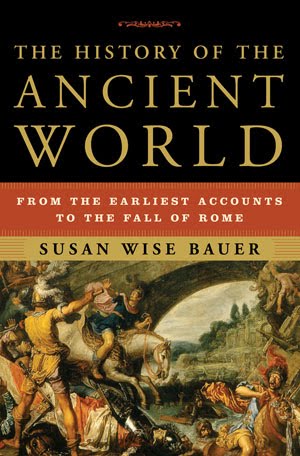
I recently began to read the first volume in an eventual four volume history of the world by The College of William and Mary historian Susan Wise Bauer. This first volume bears the weighty title The History of the Ancient World: From the Earliest Accounts to the Fall of Rome.

With a title like that, readers would be forgiven if they expected heavy going. To my delight, I find that Dr. Bauer is not afraid to add a bit of relish to the expected weight of knowledge and authority.

At one point, she references the frequent incestuous marriages of the Egyptian rulers of the 4th dynasty. It’s a fact that she could let pass, but she doesn’t. She comments:

“The alert reader is probably wondering, at this point, why all these people didn’t have three heads.”

Such comments make me smile. More importantly, they keep me reading.

I’ve been as well happy to learn that Dr. Bauer lives in the same world I live in. I like to see this from my teachers. So, at one point she is speaking of a mysterious civilization which had a propensity for order. In concluding her description of this civilization, she says

The spread of Harappan civilization was not exactly the ancient equivalent of an invasion by the Borg.

Realizing that not all her readers will catch the cultural allusion of such a reference, she footnotes it, beginning thus:

For readers who may be too young, or too literate, to recognize the reference….

Too literate?! A poke at those of us too erudite to enjoy a bit of Star Trek now and then.

Is such writing faddish? Is it looked down upon by proper scholars? I don’t know.

What I know is that if I’m going to enjoy history, I will read it when written by someone who is enjoying it herself. I will delight in what she delights in.

There is a lesson here for all who teach.

So, will I keep reading? With writing like this, what can I say? Resistance is futile.

Mystery Revealed

The mystery has been solved. Though I think Elsa would really like All over but the Shoutin’, a book I attributed to her recommendation, it was in fact my good friend Jeff MacFarlane who suggested I look it up. I’m glad he did.

Jeff is the GM of a local Christian radio station, The Joy FM, and is, according to another friend who just found out that I know Jeff, famous.

Jeff denies the fame, but famous or not, his friendship has been a rich blessing to me over the years. Besides our shared love for Christ, for barbecue, for music, and for baseball, Jeff has been responsible for passing a number of good book recommendations my way, including, significantly, A Scandalous Freedom: The Radical Nature of the Gospel and The Five Dysfunctions of a Team.

Thanks, Jeff, for being my friend, and for putting me on to this book!

[It does turn out, though, that Elsa DID make this recommendation at about the same time as Jeff’s, which led me to lump them together: Salvation on Sand Mountain: Snake Handling and Redemption in Southern Appalachia.]

A Portrait of Jesus


The other book I mentioned in Sunday’s sermon is one which I picked up in college, but did not read until 2001. My copy has the provocative title I Came to Set the Earth on Fire: A Portrait of Jesus. I love that title.

When the first disciples made the choice to follow Jesus, it was a choice to follow JESUS. It was not a choice to adopt some theological propositions arranged in an orderly philosophical viewpoint, though Christianity does provide all that. They made the decision to follow Jesus because they saw Jesus as someone worth following.

I love the title of this book because it strikes at the placid lilly white image many have of Jesus. The book fulfills the promise of the title. It is engaging but not polemic. It respects the questions and doubts of the unbeliever, but presents Jesus in a way that if he did not exist, we would wish he had. It is a gospel for the modern era.

If I could, I’d put this book in the hands of every seeker and every Christian puzzling over his relationship with Christ. But I won’t give you mine. It’s too valuable to me.

I believe the content of the book is still available in this edition: Jesus the Radical: A Portrait of the Man they Crucified. This retains the content, but not at a price that makes it affordable for general passing around. But I can commend it to you.

* * * * *

After reading this book nearly ten years ago, I looked far and wide for copies of it to give away. The original publisher suggested I write to the author, Dr. R. T. France who, I think, was in Australia or England at the time. I wrote, never really expecting to hear back.

Apparently, though, Dr. France is cut from the cloth of a gentleman scholar. He takes seriously correspondence from an anonymous American pastor of no renown. A number of weeks after writing him, I received a handwritten letter from him.

“It is nice to hear of someone still appreciating my little Jesus book after so long,” he told me, and explained the publishing history of it. He wanted to call it Jesus the Radical, which is the title under which it has since been republished.

He then signed it “Dick France” as if we’d known each other all our lives. His personal attention to my request made me appreciate his work all the more. If I were a younger man I’d be on the next plane to study under him.

* * * * *

Perhaps there are better sources out there these days to introduce people to the Jesus of the Bible. I’ve not seen anything as well written and as concise as this to present us with a living portrait of this Man worth following.

This Is Gonna Bother Me

In this post I thank Elsa for recommending the book All over but the Shoutin’.

However, as it turns out, Elsa claims it was not she who recommended the book, as she has never read it. However, I can find no record on the blog or in any email communication of who might have recommended this.

Now I’m really, really puzzled.

Whoever you are, you also recommended Salvation on Sand Mountain: Snake Handling and Redemption in Southern Appalachia, a fairly odd and unique recommendation in itself.

I’d appreciate it if you would step forward and identify yourself. Before I completely lose it!

Until you do, this is really going to bother me.

What Was That Book?

For those of you who attend Hope Presbyterian Church, you heard me reference a book about a man’s rural Alabama upbringing. If you are clever, and like to follow the clues of a mystery, I gave you sufficient hints to track down the book I referenced.

But I can save you the trouble.

A number of months ago, a friend (thanks, Elsa!) highly recommended All over but the Shoutin’by Rick Bragg. Though I can’t recall the occasion for her recommendation, it probably was in response to my just having read The Color of Water by James McBride. Both books are tributes to mothers raising sons alone.

I read many well written books. This one, however, is beautifully written, a tale told with an honesty and passion that is gripping. I’m sure that before I finish it, I will have much more to say about it.

And oh, yes, there was another book I mentioned this morning. I have more to say about that one, and hope to have something posted on that soon.

The Woman Doth Claim Too Much, Methinks

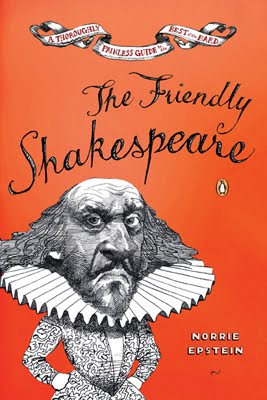
Norrie Epstein’s The Friendly Shakespeare is really a wonderful book. Instead of watching SportsCenter today over lunch, which I usually do when eating at home, I continued my perusal of this fascinating and fun resource. It is, as the subtitle tells us, “A Thoroughly Painless Guide to the Best of the Bard.”

I was fascinated to read in this a list of expressions and phrases which we use all the time that apparently trace their first usage to one of Shakespeare’s plays. Things such as ‘household words’ (Henry V) and ‘bated breath’ (The Merchant of Venice) and ‘dead as a doornail’ (Henry VI, part 2) all were first used by Shakespeare, according the author.

I say ‘apparently’ because my confidence in Ms. Epstein was shaken by her claim that ‘the apple of her eye’ (Love’s Labour’s Lost) belonged on the list. The Bible attributes this to an older poet, a man named Moses, perhaps 3000 years before Shakespeare strutted and fretted upon his stage:

“He found him in a desert land, and in the howling waste of the wilderness; he encircled him, he cared for him, he kept him as the apple of his eye.” (Deuteronomy 32:10)

Admittedly, there is a change of pronoun. But certainly he cannot be given credit for the image, can he?

Three other times, this expression, “apple of ___ eye” is used in these Scriptures. Shakespeare certainly knew where the image originated. I hope that someone has told Ms. Epstein.

Makes me a bit tenuous on the rest of her list, but not the rest of her book. As I said, it is not only a fascinating resource, but full of fun and delight as well.

An Important Book


The frequency and intensity of conflicts over worship wear us down and threaten to steal our joy. When men attempt to write on the subject, often their works carry a sharp polemic edge which is quickly dulled by the perceived need of addressing the controversies which swirl about.

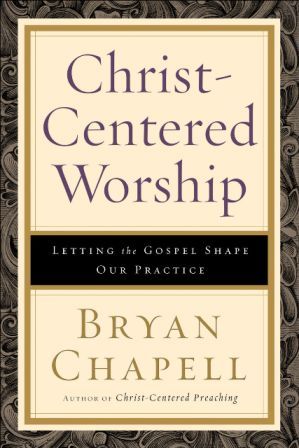
Bryan Chapell is the president of Covenant Theological Seminary in St. Louis, Missouri whose book Christ-Centered Worship avoids those pitfalls. He pushes hard to get to the heart of what worship is all about, and then from that vantage point begins to address secondary matters as their priority demands. This is a very important and a very wise book.

Some readers will be too quickly put off with the ‘textbookish’ feel of the early chapters. That would be a mistake. His argument needs careful attention.

He first walks us through an evaluation of the history of Christian worship. He does so to show that cutting across generations, denominations, and theologies, Christian worship has always been structured around a re-presenting of the gospel. God is revealed and praised; his people humbled, confess, and receive assurance; a redeemed people are instructed in his word and fed on his grace; and they are dismissed into the world refreshed and renewed in the gospel.

Worship has maintained its commonality throughout history because it is responding in every context to the same gospel. The heart of Dr. Chapell’s argument is then to show that this gospel is the biblical theme behind all worship in the whole Bible. Those who scan the Bible for precise liturgical forms err. What the Bible reveals is a gospel orientation to God which dictates every response to him. The gospel is the heart of worship.

If we are persuaded that it is the gospel that guides our liturgical construction, it is simply, then, another step for us to begin to face the difficult cultural and stylistic questions with the same gospel-centered thinking. Though Dr. Chapell’s position on certain issues is not disguised, what matters to him is that we begin to ask ourselves ‘gospel’ type questions in evaluating issues, and not simply questions of preference.

His approach cuts a sharp path to the heart of many questions. His challenge should shake us all up, no matter where in the discussions we find ourselves. Years of arguing can tend to polarize even the best of men. Chapell’s gospel-centered methodology should draw us all back to the table with repentance and humility.

Bryan Chapell is not only “an ‘ell of a chap” (sorry – that is the only way I’ve been able to remember how to spell his hame) but he is an imminently wise writer.

I long for the day when the polemics of worship will cease, when writers empty the vitriol from their pens and speakers lose the sarcasm in their speech and we can center our discussions of worship on the degree to which the gospel is re-presented, grasped, and understood. This book is a huge step in that direction.

Of Books, Stolen and Otherwise

As I’ve mentioned before, my daughter-in-law works at a used book store in Mentor, Ohio. It’s a good thing that that is so far away. The last time there we walked out with something like three-feet of books. If we lived closer, we’d have to buy a bigger house.

One day, she was explaining to me how to interpret the printing history from the bibliographic info inside a book. She told me that she has fantasized about buying, for example, the first printing of the first Harry Potter book before it, and its author, had become famous.

I now know that if she had picked up such a book, one of only 500 printed, it would be worth more than $30,000 today.

I learned this, of course, in a book.

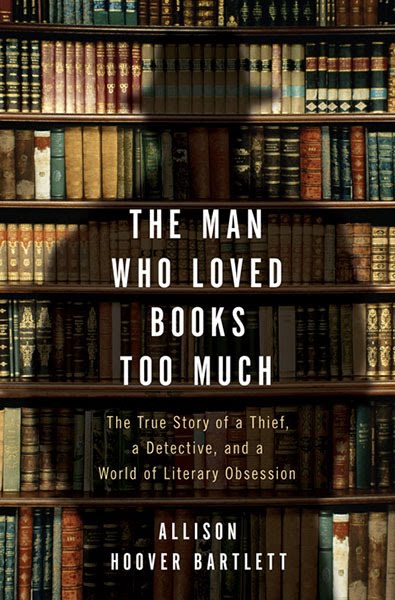
Journalist Alison Hoover Bartlett has written a fascinating little book called The Man Who Loved Books Too Much.Tidbits such as this are found throughout the book.

It’s probably safe to say that a guy who walks into a used book store and comes out with 36-inches of books may love books too much. But I buy them with at least the intention of reading them. Bartlett’s book is about people who collect, not read, them.

In particular, it is about one collector, John Gilkey, who, since he can’t particularly afford the books he wants, finds, er, more creative ways to acquire them. The book’s subtitle is “The True Story of a Thief, a Detective, and a World of Literary Obsession”.

Barb and I first heard about this book, and the strange world, people, and events it chronicles, from an NPR interview with the author. If you have a spare seven or eight minutes, I’d encourage you to listen.

Though the book is a story of thievery and detective work, the question that animates it is this: What drives people to collect? Whether it is rare books, stamps, coins, or Beanie Babies, what fuels this desire? Is it a desire for order? Does it fill up emptiness in our lives? Or is it, as Freud suggested, driven by an obsession with conquest?

That idea of conquest links this book with another I’ve been reading.

A refrain that Bartlett would hear often among rare book dealers was this: that all rare books are stolen books. Books of great antiquity all have histories, and for many of them, these histories include military conquest, plunder, pillage, and other kinds of thievery.

Susan Wise Bauer points out in her surprisingly entertaining book The History of the Ancient World that Assyrian king Ashurbanipal, whose kingdom centered in Ninevah was eviscerated by the Old Testament prophet Nahum, was the first person in history known to amass a library, 22,000 volumes at his death.

Was he a literary man? Was he concerned for the preservation of culture? Or was he, like John Gilkey, 2700 years later, simply obsessed with possession? For what Ashurbanipal could acquire with armies and swords, John Gilkey had to use stolen credit card numbers. They were both men who loved books too much.

—–

UPDATE: The NPR story above is not the one we heard first. Here is a longer and more in-depth interview with the author of the book:

/**/

UPDATE 2: And here is the actual interview that Barb and I first heard, with one of my favorite interviewers.

Applied Piper (or Sproul, Packer, Keller, Tozer, et. al.)


———-

Crazy Love: Overwhelmed by a Relentless God by Francis Chan (2008, David C. Cook Publishing)

———-

I really tried to dislike this book. I really did.

First, the young man who mentioned it to me had not cared a whole lot for it. I felt that if a hip young guy couldn’t wrap his heart around Francis Chan’s hip style, then there was no way that an older Christian like myself could.

Secondly, the style issue center’s on Chan’s desire to write like he speaks. This should not surprise me, as he has gained his reputation as a passionate and engaging preacher. But I expect books to have a certain style and flavor, and speech another. I find their combination unsettling.

Thirdly, he seems to forget that this is, indeed, a BOOK. His frequent suggestions that I check out this or that on various web sites irritated me no end. If he was speaking, he could put what he wants on slides and let everyone see. But don’t expect me to stop reading to watch an online video. I’m not programmed that way.

And fourthly, he expresses his examples of faithful Christianity disproportionately through stories of missionaries, when I want to know how a radical Christian artist or teacher or business professional might live. I don’t believe it is God’s will for all of us to respond to Christ by moving to Africa (or in with our parents, for that matter, which is what one of his examples does).

Please believe me when I say that I tried very hard to dislike this book.

But I find myself wanting to buy it and pass it around which, if you’ve read the book yourself, you will know is not quite the response that Chan has in mind. Rather, he writes the book to challenge Christians to examine whether they are really living their own lives out of love for Christ.

He assumes that most of us are not, and he spends 175 pages calling our bluff when we try to claim that we are. And that is hard to take.

A few pages in, Chan reflects on what he sees in the church and says this:

“The core problem… is that we’re lukewarm, halfhearted, or stagnant Christians…because we have an inaccurate view of God.” (22)

Where have we heard that before?

In varying ways, J. I. Packer has made this case in Knowing God. A. W. Tozer points in this direction in his book The Knowledge of the Holy. And John Piper is forthright about it in Desiring God.

What Chan does is to urge Christians to climb aboard the roller coaster of Christian obedience guided and directed by the God whom these men revealed. He is pushing the application which should naturally follow upon coming to know the Savior revealed in these books.

His pushing can be disconcerting. His chapter exposing ‘lukewarm’ Christian living is painfully searching. His chapter on obsession with God is rightfully challenging.

He forces us to examine our lives in light of the question, “What would our lives look like if we truly and really loved Jesus?” What really matters to us? What are our true heart affections? Tough questions, to be sure, but questions which must be asked.

I am a bit fearful that there may not be enough grace in the book. The book is not devoid of grace, so I do not fault him. But do I read it one way as one familiar with (and humbled by) grace and another read it with more fear and guilt?

My sense is that this is a book needed by Christians who understand grace. My failings are laid bare in his bold pronouncements. Because I am weak and because I change slowly, without an understanding of grace, Chan’s challenges might lead me to despair, or to a guilt induced ‘obedience’ that misses somehow the love for Christ which is the proper motivation for all things. A knowledge of grace does not blunt the sharpness of Chan’s challenge, but it perhaps gives us ears to hear.

Tim Keller reminds us of how great the father’s love for us is in his marvelous little book The Prodigal God. It is a great reminder of the depth of God’s love and grace.

Chan’s book is the book to challenge the one who knows that his father has welcomed him home. Am I really living my life as one who knows he is THIS loved by God?

To be honest, as a BOOK I don’t really like Crazy Love. I’d rather read Packer or Piper or Tozer or Keller. Those are much better books, much more reflective, better written, and well worth multiple readings.

But I know that I NEED this book, one which has taken their message, distilled it, applied it, and thrust it in my face as an inescapable challenge.

Page 16 of 19

Powered by WordPress & Theme by Anders Norén