Randy Greenwald

Concerning Life as It Is Supposed to Be

Mortimer in Baseball-land


A few posts ago, I expressed surprise to see that on the reading list of Rays player Ben “Zorilla” Zobrist was Mortimer Adler’s book How to Read a Book. I was surprised because I so rarely run into anyone who has any other response to such a book other than to laugh at a book on how to read. It seems so oxymoronic.

When I taught English, I would assign the book and enforce its ‘rules’, much to the chagrin of my students. It became a past time to groan and complain about HTRAB, just as, I can imagine, piano students groan and complain about scales. When, however, budding pianists practice their scales, they become, in the end, more competent pianists. And when readers learn the skills involved in reading a book for understanding, they can begin to enjoy and profit so much more from from what they read. (Hopefully, the end result would be a greater desire to read, though I think that desire is born elsewhere.)

So, I was surprised to see a reference to Adler’s book in an interview of a professional athlete. That shows my bias about the intellectual interests of pro athletes. I would love to know how Zobrist was introduced to the book.

It is not only I who commend this book to others. It has long been my contention that if we would simply learn how to read, we would become more careful readers of the Bible, and less prone to being led astray by those who want to use the book to sway us. It is gratifying to find scholars who agree.

In their book How to Read the Bible for All it’s Worth, Douglas Stuart and Gordon Fee give the following suggestions for learning to do exegesis (biblical interpretation):

“How, then, do we learn to do good exegesis…?

“At its highest level, of course, exegesis requires knowledge of many things we do not necessarily expect the readers of this book to know: the biblical languages; the Jewish, Semitic, and Hellenistic backgrounds; how to determine the original text when the manuscripts have variant readings; the use of all kinds of primary sources and tools. But you can learn to do good exegesis even if you do not have access to all of these skills and tools. To do so, however, you must learn first what you can do with your own skills, and second you must learn to use the work of others.

“The key to good exegess, and therefore to a more intelligent reading of the Bible, is to learn to read the text carefully and to ask the right questions of the text. One of the best things one could do in this regard would be to read Mortimer J. Adler’s How to Read a Book (1940, rev. ed. With Charles Van Doren, New York: Simon and Schuster, 1972). Our experience over many years in college and seminary teaching is that many people simply do not know how to read well. To read or study the Bible intelligently demands careful reading, and that includes learning to ask the right questions of the text.”

It is a good thing that Barb and I are having no more children. I wonder what she would think of the name “Mortimer”?


Why I Don’t Have an iPhone. Yet.


Yes, apart from the fact that most of the family is with Verizon, and the cost is way out of our budget, there is this.

So Many Books

I am, as I’ve reported, lumbering along through Anna Karenina, a 935 page book published 132 years ago. (Status: 37.6% complete. Update coming at 40%.) This will of course reduce the total number of different books I might read this year, but who’s counting?

Someone is.

I am cheered to find out from those who do the counting that the sheer volume of books out there waiting to be read is slightly smaller this year. According to the Books-in-print people, the total number of new books and editions published in 2008 fell, making the stack of stuff to read 3% shorter than that published in 2007.

That isn’t, though, very comforting when one stares at the real numbers. This from the press release:

New Providence, NJ – May 19, 2009 – Bowker, the global leader in bibliographic information management solutions, today released statistics on U.S. book publishing for 2008, compiled from its Books In Print® database. Based on preliminary figures from U.S. publishers, Bowker is projecting that U.S. title output in 2008 decreased by 3.2%, with 275,232 new titles and editions, down from the 284,370 that were published in 2007.

Did you get that? More than 275 thousand new books rolled off US presses in 2008, everyone of them expecting to be read by someone.

I don’t know about you, but I can’t wrap my mind around such numbers, especially when I must choose the books worth reading, and line them up against my available time.

I wonder if we will continue reading into eternity? I’ll need to if I chose to tackle any more Russian novels (or Stephen King for that matter).

The article does go on to say that the volume of religion books published dropped 11% from 2007. That is probably a good thing.

—-

(By the way, my neighbor reports that her novel manuscript is complete and in the hands of a ‘superstar’ editing agency. She is a serious writer who has studied the craft and worked hard at it. I’m cheering for her.)

Salad Art

Our church has attracted a number of artists.

My daughter’s boyfriend pointed out recently works of art being created right under my nose, by my very own wife.


Pretty impressive (and not even her best).

Obedient, too. Calvin Seerveld in a rare book called Rainbows for the Fallen World (rare everywhere, but still available in Canada here) argues the importance of what he calls the believer’s aesthetic obedience – that we are all as disciples of Christ called to make our world beautiful.

It’s a great concept illustrated in Barb’s temporary creations.

Mine, I fear, lack her aesthetic touch.

UPDATE: The book is available for $25US and postpaid, apparently, to the US here. The Calvin College says this about the book: “A must read for anyone interested in aesthetics.”

The Fruit of a Pastor’s Scholarly Heart


It is probably a bad idea to recommend a book that you have never seen much less read.

In most cases, no doubt, it is. But not in this one.

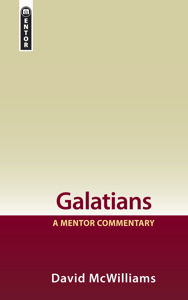
Dr. David McWilliams is the pastor of Covenant Presbyterian Church in Lakeland, Florida, and a dear friend of mine. That in and of itself does not guarantee literary quality, of course. But I know David to be a careful scholar with a deep pastoral concern for God’s people. When one brings those two qualities together with a good mix of communicative competence, the result is worth embracing.

As a friend I know that David is familiar in his personal experience with the issues confronted by Paul in Galatians. Like us all, he has confronted the struggles of living joyously free in Christ without falling over the edge into legalism. This produces a pastoral tenderness in all David’s exposition. I’m sure it will be reflected here.

Thanks, David, for your labor, and Covenant Presbyterian, for granting your pastor the freedom to use his rich gifts for the blessing of the church.

The book can be found here or here.

“Flood in Aisle 32”

I’ve been using the same mechanic off and on for over twenty years. One of the benefits of his shop is that it is 100 yards from a Books-a-Million, 200 yards from a Starbucks, and about 500 yards from Panera Bread.

Location, location, location!

So, since we are enjoying a steady downpour today – a rarity here – I chose the BAM while the mystery leak is investigated on my Ford.

If you run a bookstore, there are many problems you will face, not the least of which is, of course, on-line competition.

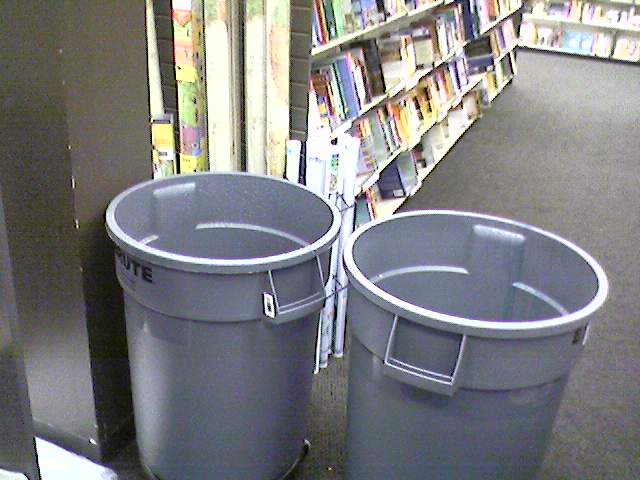
What you don’t want to face is a leaky roof, a fate this store has apparently not avoided!

Baseball Excitement

To some, baseball comes off as ponderous and dull. Not to me. Tension hangs on every pitch, anticipation is a constant, the unexpected becomes expected.

But I have to agree with Tom Jones of the St. Pete Times when he speaks of his love of the triple – arguably, apart from the extremely rare inside the park home run, the most exciting play in baseball.

Arrogance, Suffering and Redemption. For Kids


How dark should our children’s tales be? When ‘Ring Around the Rosy’ is understood as a metaphor for the black plague, and ‘we all fall down’ understood as death, well, I suppose that at least in some eras darkness was a part of a child’s apprehension of the world.

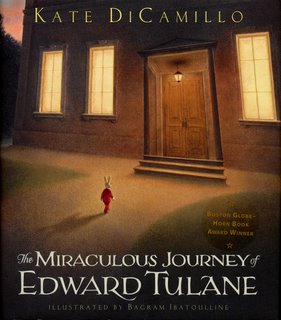
Last Christmas I was purchasing Kate Dicamillo’s The Tale of Despereaux from a local bookseller who encouraged me to get as well her later book The Miraculous Journey of Edward Tulane. Based upon her recommendation, I bought it as well. However, like many a book, it sat unread (and therefore unloved) on our shelf for the past six months.

What a loss.

My son and I Sunday night finished reading it and I must say that I am in awe of the depth and beauty and honest realism of this book. Rare is the children’s book that I would easily read again. This is one of them.

On the one hand, this is a story about a china doll rabbit who gets lost and is found by various people. On the other hand it is a story which reveals the courage and pain that must accompany true love. Along the way one meets homeless men, an abusive father, a faltering girl, and a sad and sacrificial boy. A pretty grim landscape for a children’s book. But a landscape with a tender beauty which exposes sadness in a way that reaches the child’s heart as well as that of the parent. This landscape serves as a perfect backdrop for the redemption which is hard and long in coming.

It’s probably not cool for a dad to have tears in his eyes at the end of a book when reading it to his son, but so be it.

The only thing more certain to cause tears is for me to discover that Hollywood had gotten hold of the book. Sigh.

Love, Rain On Me!

Always one to be ahead of the technological curve, I just uploaded my first ever video to YouTube. I then deleted it and uploaded a substitute. Watch it quick before I change my mind again!

For those of you who want to know why we love camping, and why we believe that ‘Shared Calamity’ makes for close families, you will enjoy this video. The final shot is of our youngest camper, Isai, age of four weeks, completely undeterred by the rain! (And yes, I know the song is ‘Reign O’er Me’, not ‘Rain On Me’, but it seemed appropriate nonetheless!)

Zorilla


I wrote earlier of my admiration for Ben Zobrist. If you are hard core, you will enjoy reading this blog post based upon an interview with Zobrist.

Zobrist has had a phenomenal season, and is being mentioned for All Star status. All of this could go to one’s head and, if not careful, play havoc with his Christian testimony.

Hasn’t happened. The author of the post says this:

“The guy makes Tim Tebow look like a criminal.”

If you understand the allusion, you will see that this is high praise.

Page 94 of 142

Powered by WordPress & Theme by Anders Norén