Randy Greenwald

Concerning Life as It Is Supposed to Be

A Sucker for Little Square Puns

When I was in high school, my friend Dave and I wiled away the hours by making puns and putting them in fictitious dictionaries.

Wasted youth, I know.

I’m afraid that in some ways, apples and trees stay pretty close together. My post yesterday about Krystal coming to town spawned this dialog between me (R) and my sons Seth (S) and Matthew (M).

My apologies to all who know them, especially their long-suffering wives. And deepest sympathy to the poor woman who has lived with me for thirty plus years.

S: While the image was loading I wondered why. Then it became Krystal clear.

R: I was pretty steamed that it wasn’t a White Castle.

S: You sure are in a pickle, aren’t you?

R: Yes… but I’ve mustard up the resolve to confront the reality.

S: Good thing it was only a tiny little problem.

R: It’s all squared away now.

M: Holy cow, you guys have really ground this one to death.

R: So, what’s your beef?

M: I’m trying to ketchup with you guys but my brain is already fried. I’m going to have to chew on that for a while.

S: Sounds like we’ve got a whole bag full of problems!

There are only three people in the world who find any of this funny.

To Get Better

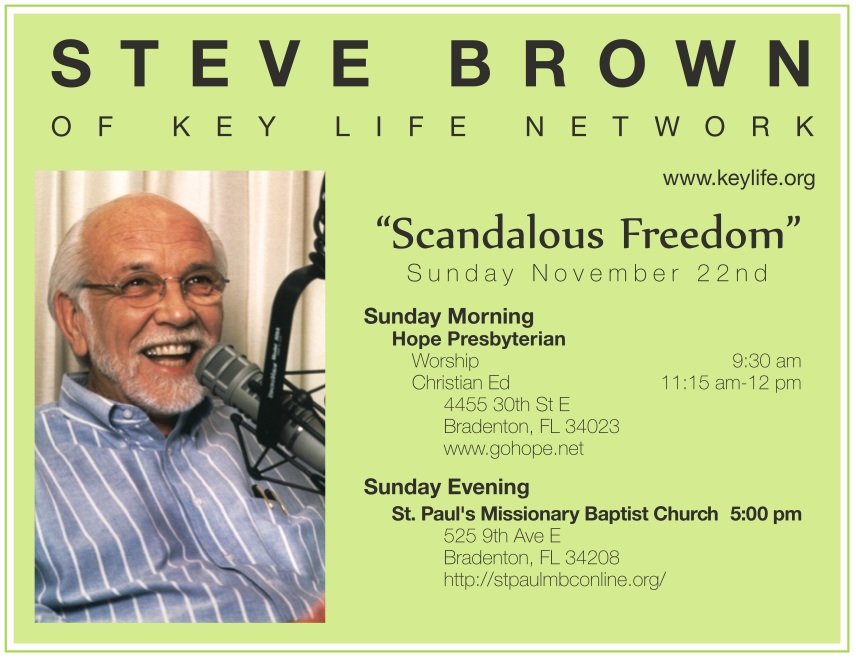
Here is the article I wrote for the Bradenton Herald Saturday in anticipation of the Steve Brown speaking engagement this Sunday.


If you are in the area, be sure to join us.

A Sucker for Little Square Hamburgers

Oh, rats. There goes my cholesterol!


Having grown up in Cincinnati, I’m actually a White Castle fan myself. But when in the South, one takes what one can get!

A Most Unusual Book

On November 4, 2009, a very, very unusual thing occurred in the Greenwald household. I turned off a World Series game in progress, choosing rather to return to a book I had begun a few days earlier. An unusual act for an unusual book.

For months, a friend had been assuring me that I would absolutely love a book called The Elegance of the Hedgehog. I trust her judgment, but still. “The Elegance of the Hedgehog”? What kind of a book is that?
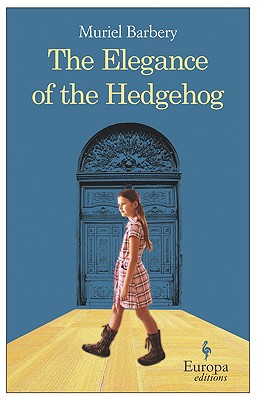
I’m still not sure I can tell you.

TEotH, as I shall call it, is a book that blends the stories of two disparate characters living in a wealthy Paris condominium. Renée, the concierge (the caretaker) lives in the building, but possesses a social status that falls way below that of the very wealthy residents. She is 54, widowed, stout, and insecure. Paloma is the twelve year-old daughter of one of the wealthy residents, who already knows how she intends to die. What they share in common is an innate intelligence and perception which they hide from everyone else.

The author, Muriel Barbery, tells the story in the first person through the eyes of both characters. We come to know each remarkably well, and the worlds they inhabit. Increasingly, those worlds begin to overlap more and more and in the end, each has a profound impact upon the other, and upon the reader as well.

* * * * *

Years ago when I saw the movie Mr. Holland’s Opus I wiped the tears from my eyes knowing that my emotions had been manipulated. I did not care because the movie made me happy. Most of the time when a popular creative work evokes tears, those tears have been manipulated. Sentimental strings have been pulled and the aimed for response predictable. The creator knows that, for example, if he includes a scene of reconciliation between a guy and his dad, tears will flow, because most guys long for that reconciliation. The tears have nothing really to do with the story or the characters in the story, but with the emotional realities of the audience.

I had a deeply emotional response to this book, but it was not manipulated. It was because I had come to KNOW these characters and to care for them. When the book ended, I was parting with people who had become real for me. That is a remarkable accomplishment for a book.

* * * * *

TEotH is part novel, part diary, part social commentary, and part philosophical treatise. As a consequence, it might be slow going at first. Reflections on Karl Marx do not usually draw in quickly those of us used to the immediate hooks of something like a Tom Clancy thriller. Readers who stay with her will be rewarded. Through these seemingly random reflections we come to know a couple of strikingly real and interesting people. And if we listen carefully, we might come to be more perceptive observers of ourselves and our own worlds.

I should add, those of you who are fans of Anna Karenina
will find a home here. Among the many references to that novel, we find that one character has a cat named ‘Leo’ and another has two, one named ‘Kitty’ and the other ‘Levin’.

* * * * *

Part of what makes this book remarkable is the fact that it is a French novel translated into English. So much of the humor of the book hinges on observations about the use and misuse of grammar and language. A joke is made that turns on a character mistaking ‘habeus corpus’ with ‘baby porpoise’. Another hinges on a misplaced comma. How the translator (Alison Anderson) brings these references from one language to another is part of the wonder of the book.

(Here is the translator’s reflections on the book one year after its English publication.)

* * * * *

The popularity of some books result from the author’s reputation. The latest Stephen King novel was the number one seller at Amazon.com a week before it was released.

A French novel in English translation by a relatively unknown author with a strange title must owe its popularity to the passion of friends insisting that friends read it. Such passion says as much about the readers as it does the book.

When I last checked, over a year after its publication it was still the 46th best selling item on Amazon.com. It has been 42 weeks on the NY Times best seller list. There is a passion for this book, though I cannot say what it is about our culture that this book has invoked.

All I know is that here I am, telling my friends to read the book. It invoked a passion in me. So, turn off the TV and read.

Honey, Why Is that Man Standing in His Driveway in His Pajamas?

As our 18 year old daughter was leaving Sunday evening to go watch a movie with friends, she said, “Did you know there is a shower tonight?” Since our middle daughter was at that time attending a baby shower, we were a bit puzzled by what daughter number three was saying, but finally she clarified. She said that after the movie, she and her friends were going to go outside to watch the meteor shower.

That was Sunday evening.

Early Monday morning, about 2:00 AM (November 16) I awoke restlessly and could not go back to sleep. When this happens, I see no sense in staying in bed. I get up and do stuff, and eventually I fall back asleep.

As I lay there, I remembered what my daughter had said about the meteor shower, and so I got up and stumbled out to the driveway and looked skyward. And looked. And looked.

There I was, in my pajamas, looking at a clear, beautiful, starlit night, at 3:00 in the morning.

Nothing. No shooting stars. No falling stars. No movie stars. No nothing.

“That meteor shower was over-hyped,” I thought, and I went back inside.

Tonight at dinner, we were talking and my daughter piped up, “Ha! We had the wrong night on the meteor shower! It’s not until tonight!”

Funny.

I’ll probably get up tonight, too. I’m on a mission now.

“Perfection”: Testament to a Lost Form


To use “Stephen King” and “short” in the same sentence, when short has reference to a literary work, can seem incongruous. I was enticed by a $9 prepublication offer on Amazon.com to order his recent novel Under the Dome whose 1074 pages showed up on my doorstep on Wednesday (and weighs in at close to four pounds). Short, it isn’t.

King, however, is a student of the short story (and a practitioner of the craft), as he revealed in an essay for the NY Times Review of Books published two years ago entitled “What Ails the Short Story”. (Residents of Sarasota and Bradenton take note that when he says, “I want to begin by telling you about a typical short-story-hunting expedition at my favorite Sarasota mega-bookstore” King is, as a resident of Casey Key, referring to the Barnes and Noble on S. Tamiami Trail.)

I thought of this essay this afternoon after I finished reading a story and was reminded what a unique art form it is. I do not understand enough to explain how a short story differs from a novel; I am just clear that it does.

The story I read was called “Perfection”. It appears in a collection of short stories called The Pacific and Other Stories by Mark Helprin.

This is a story about a young Hasidic Jew who in 1956 determines to bring order and justice to a world in which he had witnessed the death of his parents in a German concentration camp. The way to do this is to join the NY Yankees and with the likes of Yogi Berra and Mickey Mantle looking on drive 2000 balls on 2000 pitches out of Yankee Stadium.

I know. It’s crazy. But somehow the story works. The border between reality and fantasy is blurred, and one is drawn into a world where such things are possible. It works like a short story should. It is sparse and compact and full of sentences and words that have to be pondered, much like poetry.

This is perhaps why the form has lost some of its favor. It requires time, reflection, consideration. King refers to the books at the front of the mega-store, including his own, as mostly ‘disposable’. The well composed short story cannot be so cast aside. It worms your way into your soul and forces reflection. I, at least, need more of this in my literary diet.

<<>>

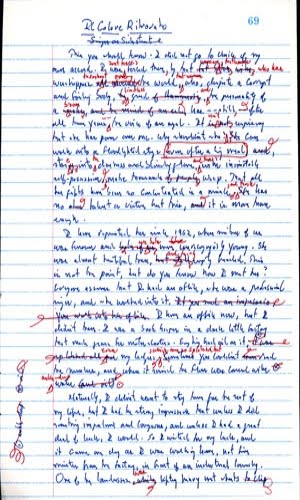
The picture here is taken from Helprin’s web site and is an image of the first draft of one of his stories. Handwritten. So quaint.

Another Life Mystery

The attached picture is found under the illustration on the outside of a box for a small refrigerator. If you can’t read the print, click on the picture and it will enlarge.


I am not going to say that this is senseless. I’m sure that there was a good reason for putting the warning there. But like this previous post, for the life of me I can’t figure out what ELSE a picture would be used for besides illustration. Anyone got any theories?

When Lying Is Acceptable

For the Glory of God

From O. Hallesby, Prayer:

Do not forget…that prayer is ordained for the purpose of glorifying the name of God. Therefore, whether you pray for big things or for little things, say to God, “If it will not glorify Thy name, then let me remain in my predicament. And give me power to glorify Thy name in the situation in which I find myself.”

Some may think that this will weaken the power and the intensity of our prayers. But this is due to a misunderstanding of prayer as a whole. To pray is to let Jesus come in to our need. And only by praying in this way will we succeed in opening our hearts to Jesus. This will give Him the opportunity to exercise His power on our behalf, not only as He wills but also when he wills.

Boldness vs. Accommodation?

This is a highly relevant reflection from Sean Michael Lucas on the use of words.

It’s really about our attitude toward others. Dr. Lucas lifted this from this post by Tim Keller.

Dr. Keller in turn picked it up from an older guy named John Calvin. I am constantly amazed by the relevance of Calvin to contemporary ministry and life. So helpful.

Keller references positively a new bio of Calvin by Bruce Gordon called Calvin. Mine’s on order. (I’m captivated by the highly creative title.)

Page 81 of 142

Powered by WordPress & Theme by Anders Norén