Randy Greenwald

Concerning Life as It Is Supposed to Be

This Is Gonna Bother Me

In this post I thank Elsa for recommending the book All over but the Shoutin’.

However, as it turns out, Elsa claims it was not she who recommended the book, as she has never read it. However, I can find no record on the blog or in any email communication of who might have recommended this.

Now I’m really, really puzzled.

Whoever you are, you also recommended Salvation on Sand Mountain: Snake Handling and Redemption in Southern Appalachia, a fairly odd and unique recommendation in itself.

I’d appreciate it if you would step forward and identify yourself. Before I completely lose it!

Until you do, this is really going to bother me.

These Inward Trials

Good reflection by Geoff Henderson and John Newton.

O-Positive Reflections

I gave blood today, and was reminded that I am, by disposition, O-positive! So, seeing that my blood says I’m a hopeful type of guy, I should follow up the last post with this further observation from The Return of the King. Legolas and Gimli are beginning to see signs that they may be too late to be of much use to Minas Tirith. But Legolas suddenly perks up.

“Up with your beard, Durin’s son!” he said. “For thus is it spoken: Oft hope is born, when all is forlorn.

Legolas must be O-positive as well. Or Elf-positive, I suppose.

Midst Toil and Tribulation, She Ever Shall Prevail

Here is a quote from Tolkien’s The Return of the King.

While Sauron’s forces assail the outer walls of Minas Tirith, Gandalf is summoned address the madness of Denethor. Confronted with his madness, some of his guards have sought to intercept his descent into madness while others in seeming loyalty oppose them. Each slay the other, prompting Gandalf’s despairing observation:

“Work of the Enemy!” said Gandalf. “Such deeds he loves; friend at war with friend; loyalty divided in confusion of hearts.”

Those who love Christ’s church are all too familiar with the war that rages among those who should be friends.

Pray for Christ’s church. As you do, acknowledge that her continued existence is due to our Father’s mercy and is ultimately unhindered by our Enemy’s schemes.

What Was That Book?

For those of you who attend Hope Presbyterian Church, you heard me reference a book about a man’s rural Alabama upbringing. If you are clever, and like to follow the clues of a mystery, I gave you sufficient hints to track down the book I referenced.

But I can save you the trouble.

A number of months ago, a friend (thanks, Elsa!) highly recommended All over but the Shoutin’by Rick Bragg. Though I can’t recall the occasion for her recommendation, it probably was in response to my just having read The Color of Water by James McBride. Both books are tributes to mothers raising sons alone.

I read many well written books. This one, however, is beautifully written, a tale told with an honesty and passion that is gripping. I’m sure that before I finish it, I will have much more to say about it.

And oh, yes, there was another book I mentioned this morning. I have more to say about that one, and hope to have something posted on that soon.

A Justification for Horror Films

A friend was standing with some other women a few years ago when a car blaring rap music drove by. One of the women in the group made a disparaging remark about the music, and asked my friend if she agreed. My friend responded very wisely:

“I don’t particularly like it, but I really can’t judge it because I don’t understand it.”

She expressed a very healthy and discerning view of cultural products. To critique, we need to at least try to understand. Before we understand, all we can express is taste.

* * * * *

So, what about horror films. In general, I have no ‘taste’ for them. Perhaps that is because with today’s digital technology, so little is left to the imagination and such strong images of evil can therefore be displayed on screen. Perhaps I don’t like being shocked or scared.

Or perhaps I like living in my idealistic little bubble where I’m not reminded of the reality and presence of evil in the real world. Horror images bother me, but so do thoughts of genocide, abortion, or insane asylums. You don’t have to make things up to disturb me. Show them on screen, and I’ll close my eyes.

I could translate my distaste for horror films into a settled judgment against them, as some easily do. But perhaps that is because I have not understood them.

In an intriguing assessment of the horror (and ‘thriller’) movie genre, screenwriter Brian Godawa (To End All Wars) defends them as having genuinely biblical roots. (“The book of Daniel reads like God’s own horror film festival,” he says.)

More pointedly, he probes the worldview of the best horror films. He notes that it is the horror genre which really throws light upon the ill-logic of human rationality freed from its supernatural moorings. This is the genre which exposes a deeply rooted human fear that is not assuaged by rational arguments. It shows what happens when human passion is unchecked by moral boundaries. It forces us to stare into the void and the abyss and to see the emptiness there.

Though I’m not likely to add Blair Witch Project or Paranormal Activity to my Netflix queue, I find his defense compelling. It does not change my taste, but it helps form my judgment.

No doubt the genre is abused, and no doubt many who flock to these films do so only to be shocked, appalled, and perhaps desensitized. And yes, even a good thing taken in excess becomes a bad thing.

But Godawa has helped me to understand, and understanding plants the seed of appreciation. Perhaps that which may be produced out of rage or hate or loss or fear, even this, can serve the purposes of God.

(Someday I will explain why I think a thoughtful and well executed horror film may do less damage to the viewer than any episode of VeggieTales. But that’s for another day.)

I’m Not a Geek

I’m not a geek. Or a nerd. (I’ve tried to discover from my daughters what the difference is. I’m still not sure.)

I played a friend a couple games of chess the other day, and we attempted to assure each other as we sat at Lov-a-Da Coffee that though we were playing chess, in a cafe, with a chess clock, in the middle of the day, and taking it quite seriously, we were not nerds.

Or geeks.

Or whatever.

We figured that a chess geek would be a guy who studied chess strategy and played on-line and stuff. We were not guilty of THOSE infractions. And only a true geek would read a book about chess.
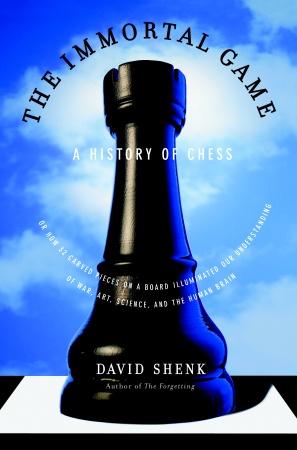
Well, a year or so ago I read a book called The Immortal Game: A History of Chess
by David Shenk. (I’m a sucker for sub-titles, which often give more insight into what a book is about than the title itself. This one is “Or how 32 carved pieces on a board illuminated our understanding of war, art, science, and the human brain.” How can one resist THAT?)

Anyway, I loved every page of it. I even re-created what this book claims is the greatest chess game ever played. In that, I was pushing geekdom.

This is a book about the origins of chess (shrouded in mystery, but very ancient), the mathematics of chess (10 to the 120th power or, 100,000,000,000,000,000,000,000,000,000,000,000,000,000,000,000,000,000,000,000,000,000,000,000,000,000,000,000,000,000,000,000,000,000,000,000,000,000,000,000,000 possible games), and, most interestingly, the people of chess.

One example of the latter will suffice:

The artist Marcel Duchamp stunned and changed the art world in the early 20th century by, among other things, displaying and signing and calling it art, a urinal. He mounted a postcard image of the Mona Lisa altered with a mustache and goatee. He grew famous doing it.

But after age 30, he produced almost no art. Chess had become his obsession.

How great an obsession?

Even true love could not moderate his fixation. In 1927 Duchamp married Lydia Sarazin-lavassor, a young heiress. On their honeymoon he spent the entire week studying chess problems. Infuriated, his bride plotted her revenge. When Duchamp finally drifted off to sleep late one night, Lydia glued all of the pieces to the board.

They were divorced three months later.

That, my non-geek friend and I assured one another, was not us.

We played another game.

Evangelistic Worship

Fifteen years ago, I would have chafed at the title of this post. Worship is not evangelistic; it is for Christians.

But that was then. That which once chafed I now embrace.

To practice public worship in a way comprehensible to the non-Christian and at the same time in a way that honors the Christian need to exalt his God is not only possible, but essential.

Tim Keller demonstrates and defends this in his helpful article “Evangelistic Worship”.

Bryan Chapell’s Christ-Centered Worship makes a similar case, a part of which is this:
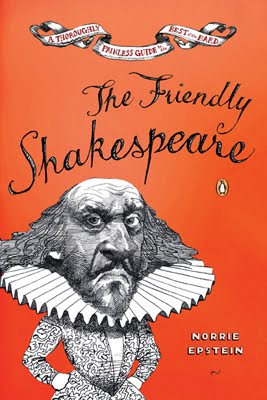
“Healthy worship is one of the church’s most effective evangelism tools; thus, we cannot forget the unbeliever even as we focus on enabling believers rightly to honor their God.”

Not only is the content of worship an important apologetic to the non-Christian, but so is the joy, engagement, and passion of the believer in worship. If the Christian is engaged and invigorated by the worship, if the Christian finds it full of richness and meaning, and if the Christian is renewed at a deep level by the worship, that will be an attraction to the non-Christian who sees that.

If the Christian is significantly and sincerely touched by worship, he will long to bring others into that experience. One cannot expect a congregation to invite those they know to a service of worship they find empty of meaning. To seek to enrich worship for the Christian, even this has an evangelistic component.

Worship cannot help but be evangelistic.

The Woman Doth Claim Too Much, Methinks

Norrie Epstein’s The Friendly Shakespeare is really a wonderful book. Instead of watching SportsCenter today over lunch, which I usually do when eating at home, I continued my perusal of this fascinating and fun resource. It is, as the subtitle tells us, “A Thoroughly Painless Guide to the Best of the Bard.”
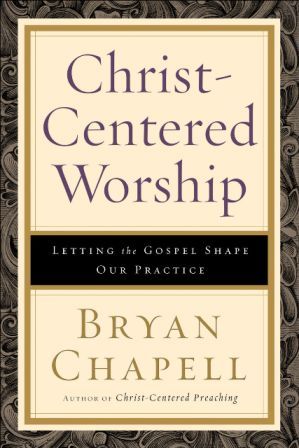
I was fascinated to read in this a list of expressions and phrases which we use all the time that apparently trace their first usage to one of Shakespeare’s plays. Things such as ‘household words’ (Henry V) and ‘bated breath’ (The Merchant of Venice) and ‘dead as a doornail’ (Henry VI, part 2) all were first used by Shakespeare, according the author.

I say ‘apparently’ because my confidence in Ms. Epstein was shaken by her claim that ‘the apple of her eye’ (Love’s Labour’s Lost) belonged on the list. The Bible attributes this to an older poet, a man named Moses, perhaps 3000 years before Shakespeare strutted and fretted upon his stage:

“He found him in a desert land, and in the howling waste of the wilderness; he encircled him, he cared for him, he kept him as the apple of his eye.” (Deuteronomy 32:10)

Admittedly, there is a change of pronoun. But certainly he cannot be given credit for the image, can he?

Three other times, this expression, “apple of ___ eye” is used in these Scriptures. Shakespeare certainly knew where the image originated. I hope that someone has told Ms. Epstein.

Makes me a bit tenuous on the rest of her list, but not the rest of her book. As I said, it is not only a fascinating resource, but full of fun and delight as well.

An Important Book


The frequency and intensity of conflicts over worship wear us down and threaten to steal our joy. When men attempt to write on the subject, often their works carry a sharp polemic edge which is quickly dulled by the perceived need of addressing the controversies which swirl about.

Bryan Chapell is the president of Covenant Theological Seminary in St. Louis, Missouri whose book Christ-Centered Worship avoids those pitfalls. He pushes hard to get to the heart of what worship is all about, and then from that vantage point begins to address secondary matters as their priority demands. This is a very important and a very wise book.

Some readers will be too quickly put off with the ‘textbookish’ feel of the early chapters. That would be a mistake. His argument needs careful attention.

He first walks us through an evaluation of the history of Christian worship. He does so to show that cutting across generations, denominations, and theologies, Christian worship has always been structured around a re-presenting of the gospel. God is revealed and praised; his people humbled, confess, and receive assurance; a redeemed people are instructed in his word and fed on his grace; and they are dismissed into the world refreshed and renewed in the gospel.

Worship has maintained its commonality throughout history because it is responding in every context to the same gospel. The heart of Dr. Chapell’s argument is then to show that this gospel is the biblical theme behind all worship in the whole Bible. Those who scan the Bible for precise liturgical forms err. What the Bible reveals is a gospel orientation to God which dictates every response to him. The gospel is the heart of worship.

If we are persuaded that it is the gospel that guides our liturgical construction, it is simply, then, another step for us to begin to face the difficult cultural and stylistic questions with the same gospel-centered thinking. Though Dr. Chapell’s position on certain issues is not disguised, what matters to him is that we begin to ask ourselves ‘gospel’ type questions in evaluating issues, and not simply questions of preference.

His approach cuts a sharp path to the heart of many questions. His challenge should shake us all up, no matter where in the discussions we find ourselves. Years of arguing can tend to polarize even the best of men. Chapell’s gospel-centered methodology should draw us all back to the table with repentance and humility.

Bryan Chapell is not only “an ‘ell of a chap” (sorry – that is the only way I’ve been able to remember how to spell his hame) but he is an imminently wise writer.

I long for the day when the polemics of worship will cease, when writers empty the vitriol from their pens and speakers lose the sarcasm in their speech and we can center our discussions of worship on the degree to which the gospel is re-presented, grasped, and understood. This book is a huge step in that direction.

Page 76 of 142

Powered by WordPress & Theme by Anders Norén