Randy Greenwald

Concerning Life as It Is Supposed to Be

Poor Randy’s Almanac #4

Hope does not exist in that place where we think we can see all the possible outcomes and through some algorithmic magic determine that the worst ones are unlikely.

Rather,

Hope exists in that place where we know that the One writing our story will write the very best outcome.

What Is That Text About?

Let’s start with a familiar story:

There was once a young Shepherd Boy who tended his sheep at the foot of a mountain near a dark forest. It was rather lonely for him all day, so he thought upon a plan by which he could get a little company and some excitement. He rushed down towards the village calling out “Wolf, Wolf,” and the villagers came out to meet him, and some of them stopped with him for a considerable time. This pleased the boy so much that a few days afterwards he tried the same trick, and again the villagers came to his help. But shortly after this a Wolf actually did come out from the forest, and began to worry the sheep, and the boy of course cried out “Wolf, Wolf,” still louder than before. But this time the villagers, who had been fooled twice before, thought the boy was again deceiving them, and nobody stirred to come to his help. So the Wolf made a good meal off the boy’s flock, and when the boy complained, the wise man of the village said: “A liar will not be believed, even when he speaks the truth.”

Thus Aesop delivered to us a cautionary fable encouraging truth telling. At least that is how we will read this if we are careful and notice particularly the wise man’s concluding sentence.

If we are NOT careful, however, we might write an entire essay on the struggles of loneliness in agrarian society. Preachers might take such a text and preach a sermon on how economic ruin can come to a community if it marginalizes any of its members in the way this poor shepherd boy had been marginalized. And they might conclude with a stirring challenge to look around and find those marginalized people and reach out to them before they revert to antisocial behavior to gain attention and acceptance.

Not a bad challenge, for sure, but it is NOT what the fable is about. And the preacher, in fact any interpreter of language, has as his first task to understand what a text is about. That may seem obvious, of course, but what is obvious is not always practiced.

When I finished preaching on 2 Samuel 6 on Sunday, two comments following reminded me of the importance of getting the text right. In this passage, David determines to bring the Ark of the Covenant into his newly minted capital city of Jerusalem. The first attempt is met with a troubling death, but eventually the Ark is brought successfully into the city. This is to David’s delight, as he is pictured dancing at the head of the procession. His behavior elicits the disdain of his wife Michal.

One person commented that when she had heard the passage preached before, its focus was upon whether dance should form a part of Christian worship and liturgy. I think it is safe to say that this text is NOT about dance. Yes, David is said to have danced. That is a fact of the text, but it is not what the text is about. To attempt to make it so is to distort the text.

Another, though, said that my treatment of the text went in what he considered to be a unique direction. And that comment concerns me. I never want to come to a text with the intent of taking it in a unique way. I cannot consider that I am the first to have opened a text. I hope that my preaching exposes to the hearer the fundamental intention and application of the text, which would have been seen and preached by others before me. When someone finds my treatment ‘unique’ I’m always concerned that I have imported too much of my own interpretive spin into the text and perhaps have missed myself what it was intended to be about.

It is also possible that I have gotten the text ‘right’ and have helped this person and others in the way they see such texts. I’ll trust that this indeed is the case. But I never want to let the prior concern grow silent. It keeps me from too many flights of interpretive fancy.

This is a great concern of mine because I have this notion that the Bible is disrespected by so many not because the intellectual arguments against it have been so great, but that the Christian misuse of the Bible has been so widespread. If we are not careful, we can make the Bible say just about whatever we want it to say. But when we can make the Bible say anything we want, then it really says nothing at all.

By extending the authority of the Bible beyond where it intends to go, we run the risk of undermining its authority where it does speak authoritatively. If, for example, there are Christians arguing with great passion that the Bible teaches a capitalistic economic system, and other Christians arguing with equal passion that the Bible envisions an economic environment of communal ownership, there will be a large number of those looking in from the outside who will have a hard time believing that the Bible speaks with authority on things of greater import, such as the deity or resurrection of Christ. Our carelessness undermines our testimony.

I once had a couple of people ask me to preach on things the Bible “clearly” taught, such as an alleged prohibition against women working outside the home or its supposed ban on contraception. I have opinions on those matters which are biblically informed and which I’m happy to discuss. But I pray I never confuse in the pulpit my biblical opinions with the true direction of the the message of Scripture. I hope only to preach what a text is about that we might come to know the mind of its Author.

[I will, of course, get it wrong. Soon the sermon on 2 Samuel 6 will be posted here. There you can judge how close I came.]
Presidents and Kingdoms

At the outset of one of the best expositions of the Bible’s teaching on the centrality of the Kingdom of God (which all Christians are to ‘seek first‘), Richard Lovelace in his wonderfully helpful and concise Renewal as a Way of Life: A Guidebook for Spiritual Growth has a healthy reminder for us during a presidential season.
One of the ruling passions of humanity is the search for a righteous government. The poor and the disadvantaged contend against “the system” with the conviction that another economic order will make the world livable. Every four years the American people elect a new president with the hope that somehow this will make things better. Economic downturns, crop failures, moral declines and worsening international conditions are all blamed on presidents — who in most cases have little control over events. In the hearts of the people is a groping, inarticulate conviction that if the right ruler would only come along, the world would be healed of all its wounds. Creation is headless and desperately searching for its head. (pages 40, 41)

The search is a proper one. To see the solution that Lovelace proposes, you should read the book, or at least its second chapter. His direction is wonderfully captured in this brief revelation:

Every time we come across the phrase “Jesus Christ,” instead of hearing “Jesus, the king who was promised to Israel,” all we hear is “Jesus” followed by a meaningless syllable. For most, probably, the phrase means “Jesus, who saves me from my sins.” This is certainly true, but it falls far short of saying “Jesus, the ruler of a whole new order of life, who has delivered me so that I can be a part of it.” (page 47)

Books in the Queue

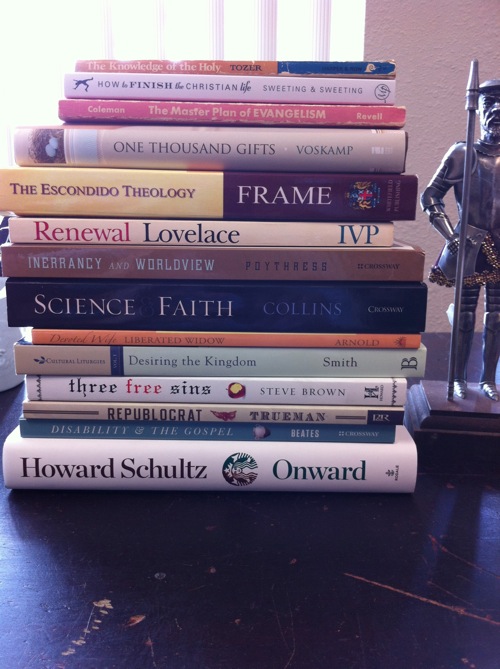
It’s that time again when I scan my shelves and wish lists for books crying out to be read. I’ve culled the pile to a manageable 3000 pages. Here’s what’s in the queue for my ‘pastoral reading’. There are reasons for each of these, some of them fairly idiosyncratic. If something I ought to read is missing, then by all means let me know. As well, if there is something here you think I could just as well avoid.

Books2Read

Milestones

There are huge milestones in life, of which we are all aware. Perhaps I have missed a few, but these come to mind:

At age 35, one may become president of the United States, not before.
At 25, one may rent a car.
At 21, of course, one may buy an alcoholic beverage.
At 18, all kinds of major (!) transitions occur: voting and enlisting come to mind.
And at 16 one may drive without accompaniment.

But it wasn’t until last night when I was getting some medicine for my sick newly minted 12 year-old that I realized all the changes that happen at 12.

At 12, one gets adult dosages, pays adult movie ticket prices, loses access to the child’s menu, and graduates to the front seat.

Huge day for a special boy in our family!

Real Missionaries

It must be hard to be a missionary and to have to write reports home detailing your life and ministry. I’m sure all want to be honest, but many must find it hard to be honest when those to whom they are writing control the dollars which enable them to stay where they are. So, rare is the prayer letter which says “the strain of ministry here has put a great strain on our family” or “we find that after four years here, we have not seen any conversions” or “sometimes I feel like quitting”. Such things are often felt, but rarely written. I understand.

But that can give us a false image of the brokenness that can often be a part of cross-cultural ministry. When a missionary is able to crack a window on his or her broken heart, it not only helps us appreciate what they confront, which can inform our prayers, but it as well can encourage us in our own brokeness.

For a number of years we have been friends with a couple who have been serving in a difficult, predominantly Muslim, part of the world. They find themselves now in a situation which demands that they leave that place which has become their home. They may never be able to go back. And so it is with a profound sense of sadness and grief that they face this move.

Perhaps reading the wife’s reflections on their impending move will give you a greater appreciation for the missionaries you know and the struggles that the tenderness of their hearts cause them to face.

This is a long quote, but worth reading and pondering. It is quoted with permission.

But the harder thing is that we’re telling our friends. And this is the point where I always get emotional. I can talk about the facts of the move ok, but when I start to talk about our friends, I break down. From the first, we have always been here in _____ for the people. Simply put, we love them. God called us to this amazing country to share His love with such wonderful, warm, giving people, all of them made in His image, and He has blessed us with a lot of really special relationships. So, it is really hard to give them up. We’ve learned that, while sure there are sacrifices made in coming to the field, the real sacrifice is when God takes you off that field. When you decide to come, you are making the choice to serve God in the way He has called. And, you still have connections that withstand the distance, especially as you are able to phone, email, and visit home occasionally. But when you have to leave and you don’t know that you will ever be able to visit and many of your friends don’t have email and it is really hard to type Arabic with English letters anyway… 🙁 We have to remind ourselves that these precious people will remain in our hearts, even if we aren’t able to stay in touch. That they are a blessing we would never have experienced if we hadn’t come here – and oh, how much richer our lives are because of them! And, I realize that I can trust God to leave them in His hands. Even though many of them have no other believer in their lives, that is not an obstacle for God. We are not their Savior, Jesus is. So, I have to give them over to Him, one by one, in my prayers. Often repeatedly.

And here’s where another big reason I haven’t written comes into play. I haven’t wanted to talk about it. I’ve been mourning, but I’ve realized that I’ve also been really rebellious in my attitude. It took me a while to dissect it, but I found that the emotions I’m feeling were really familiar. I was experiencing the same sense of loss, of betrayal, of things happening beyond my control that have a huge impact on my life as I did when my parents divorced when I was in high school. And that discovery make me understand that I was handling things in the same way that I did when I was 16 – basically feeling bitter and unhappy and passively rebellious.

Soooo. Well, I’ve been praying about it. And God reminded me that I once told Him that I wanted Him to control my life and, as a result, He started changing things up in really startling ways. I had certainly never expected to be a worker overseas and yet that was what God had in store for me. Such a blessing it turned out to be! And now He is changing things up again because He is still the One in control. That comforted me to be reminded of that. Another thing He has reminded me is that I am called to be thankful, to bless the Lord in all circumstances. And I’ve begun doing that again. Two years ago, when we were ordered out of the country, praising God even in the midst of my tears was my immediate reaction and I had so much peace about it all. It’s so crazy that I didn’t start there again this time, but I was too busy being upset about it all… Anyway, I’m not saying that I’m done mourning because I’m sure that will continue, but I am asking the Holy Spirit to change my heart – not that I would ever stop loving our friends here, but that I would rejoice despite our departure.

Advice on Preaching

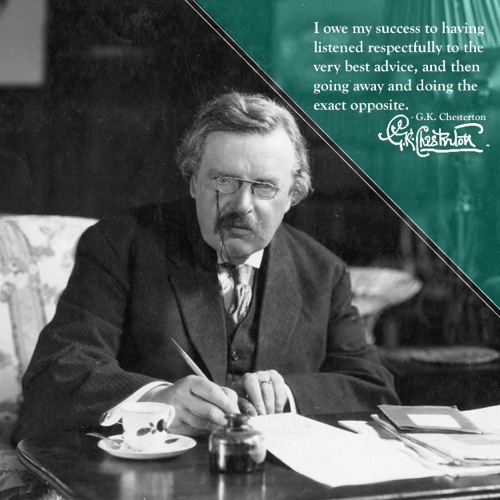
This collected wisdom on writing by famous authors is applicable, with minor adjustments, to all communication, including preaching. Enjoy!

Chesterton

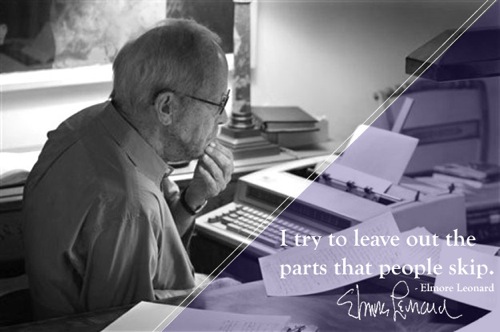
Leonard

Follow the link and read them all.

H/T http://bookriot.com

The Odd Life of Timothy Green

HedgesI’m a huge fan of the movies of Peter Hedges (About a Boy, What’s Eating Gilbert Grape, Pieces of April, Dan in Real Life). I’m not sure what I’ll think of his new offering. Reviewers don’t quite know what to do with it. But this interview hints at why his films are so meaningful. Families and stories about families, and ordinary people capable of extraordinary moments. Good stuff.

The Silence of Larry

Larry Crabb’s The Silence of Adam was a mid-90s contribution to the then urgent debate about what makes a man. I confess that I engaged the book with some fear wondering if I would pass the test of masculinity.

But then again, over the years I’ve grown more ambivalent on this subject. Certainly there are differences between men and women, but those who claim the ability definitively to draw the distinction are often claiming more than they can support.

I appreciate deeply the context that Crabb builds for the reader. The world is a confusing place and often the choices facing men (and women) are not between the clearly right and the clearly wrong, but between confusing and conflicting paths all of which seem to be open to them. He does a great job in disarming what he calls ‘recipe’ theology, the idea that there are five easy steps to the solution to any problem. Recipes are worked out in the light, he says. But we live our lives in the clouds of mystery and darkness and chaos.

The key to manliness, Crabb helpfully suggests, is godliness. I cheer him here. To be a man, we are to come to love God and to live out his reality before our families and others around us. The greatest impact we can have is to live as a child of God and guide others in doing the same. Life is not something we can control – but we do have a heavenly Father whom we can come to know in the midst of those uncontrollable realities.

All of this is good. But apart from the tedious insistence that each chapter be begun with some story of some anonymous man making a mess out of his life, I have only one criticism. I wish it were a minor one, but it is not. Christ is absent. Larry is silent on the gospel.

Oh, he mentions following Jesus, and even speaks of the cross as an example of Jesus’ willingness to take action that needs taking. But in this way the cross becomes a path to follow, not a hope to embrace. I have no question that Crabb believes the gospel, but nowhere in all the calls to manliness or godliness does the book take the reader to the cross.

We are failures as men, as fathers, as sons, as elders. And the only place where in my failure I can find renewal is to look to the cross and see there that my heavenly Father acted on my behalf through his Son even when I could not act. And even now, when I fail, that failure does not lessen his affection for me or diminish the value of his act.

There is nothing that can make me want to be godly than to see that I have been loved with an undeserved and deep, unfathomable love. Nor is there anything that can encourage me to persevere through my inevitable weakness and failure than to call to mind the death and resurrection of Jesus, who persevered on my behalf. And to know that, I need to be reminded to look to the cross.

All of this is missing. What is ironic about this lack is the message that Crabb says he received from a sorrow-filled 84 year old man:

“God has given me something far better than the relief of my pain. Dr. Crabb, he has given me a glimpse of CHRIST. And it’s worth it all. Whenever you preach, make much of Christ.”

Somehow, this book fails at this very point. Without the gospel, without the central role of Christ in the living of life, the book is weakened beyond usefulness. And that makes me sad.

If however, we IMPORT Christ into the pages of the book, much is illuminated. One could do far worse as a man than to become a student of theology – of that rich, life changing study of God that J. I. Packer reminds us humbles and deepens us. To know and to love and to pursue God is at the very core of what it means to be a man. I’m grateful for the reminder of such a message.

The Diminishment of Life?

I began preaching this morning a series on the book of 2 Samuel. In the first chapter of that book (which could just as easily be understood as the 32nd chapter of 1 Samuel, so tied together are they) the not-yet-king David hears word that the recently-deceased king Saul and his three sons had died in the midst of Israel’s crushing defeat at the hands of the Philistines. David does not celebrate this news, even though Saul had become an enemy, but mourns it, for there was much to mourn.

But he does not merely mourn. He leads those around him in an act of public lamentation that all might grasp the depth of what has happened. He is not an opportunist but a leader after God’s own heart. His grief is genuine, and his instincts are wise. To enable the public grieving, David composes a poem of lament which is preserved for us at the end of 2 Samuel 1.

Walter Brueggemann, in pondering this act, so unprecedented in modern society, reflects on our own temptation to devalue the power and significance of words to public life. There is something lost, he feels, in the temptation to silence all serious speech and to elevate calculation and technique.

I am persuaded that he is saying something important here, but its full importance seems just out of reach for me. I share his words here with an invitation for others to use the comments section to flesh out the significance, or irrelevance, of his reflections.

Interpretive words cannot catch the power, anguish, and pathos present in the poem of verses 19-27 [of 2 Samuel 1]. We may however identify three guides to its interpretation. First, words matter. Sound religion is so often a matter of finding the right words, words that will let us genuinely experience, process, and embrace the edges of our life. The cruciality of words needs to be at the center of the church’s life, for we live in a culture that grows mute by our commitment to technique. The dominant ideology of our culture wants to silence all serious speech, cover over all serious loss, and deny all real grief. Such a silencing is accomplished through the reduction of life to technique that promises satiation. But such a muteness will leave us numb, unable to hope or to care. Against such an ideological urging, speech like this poem is a bold, daring, subversive alternative. It is an assertion and enactment of the conviction that our humanness may not and must not be silenced. When there are no longer real words, but only cliches and slogans, life is that much more diminished. (Walter Brueggemann, First and Second Samuel, page 217)

Page 36 of 142

Powered by WordPress & Theme by Anders Norén