


Two odd posts have appeared on the fallow, neglected ground of Somber and Dull over the past couple of weeks. Posts that seem to have caused a bit of consternation.
Typical of the responses I’ve gotten is this one from a dear friend:
I must be doing something wrong. When I click on the “3” nothing happens. If I click on the URL below your signature, it takes me to the blog post, but nothing happens when I click on the “3”. Usually I can figure these things out but I’m not having much luck and I’d really like to see what you’re up to. 🙂 In a word….. HELP!!!
It’s gratifying that there is interest, and somewhat unsettling that this has been the cause of distress! So, a couple of thoughts here to help ease the angst:
- Please don’t try to find any content in these posts beyond the graphics.
- Notice that what posted last week was titled ‘4’ and that what was posted this week was titled ‘3’. If you spot any progression, take note of it. Extrapolation is welcome.
- Enjoy, if you can, puzzling out the significance of the graphics posted under each head.
 But don’t lose sleep over it. It will all become clear soon enough.


I asked my wife Sunday afternoon if she felt that I had ‘yelled’ too much in Sunday’s sermon. I don’t yell, exactly. But I can allow a strained elevation of my voice to be sustained for a significant period of time that can seem, to me, like yelling.
I felt I had done that Sunday. She told me that I had not yelled and that, in fact, I came across as more reserved than the previous Sunday. So, I concluded, as I do with such information (I’m an Olympic caliber conclusion-jumper) that I had yelled THAT week.
Perhaps I did, perhaps I did not. But I did come perilously close to scolding. Much of those sermons was spent challenging the congregation, and myself, to examine some elements of our discipleship and to call us to a purer devotion to Jesus. That is necessary and it is good. But alone, it is empty and vain.
As a reminder of that, these words from a former professor of preaching which I read this morning, ring so very true.
I know I need to be scolded. I need to be corrected. I need to be instructed and exhorted. I need to be called to repentance. But I also need for you the preacher to take me by the hand and let me walk off the size of my inheritance as a child of God. I need every now and then to run my fingers through the unsearchable riches of the treasure of God’s grace, to sing the doxology, and go home.
If preachers could do that better, I’m convinced we would need to do far less scolding.
[from Fred B. Craddock, Craddock on the Craft of Preaching, page 115]
As a follow up to this week’s post about use and non-use of pen(cil)s and paper, I should say that I am a convert to the yellow pad. Postman’s debate on the matter may have been inconclusive, but I’m somehow now drawn away from my white pad to the yellow pad either because the yellow is easier on the eyes or somehow “cooler”.
Either way, I carry two with me. The larger one I use for composing longish things when I don’t want to or can’t use the computer and a smaller one for taking notes from books I’m reading or jotting down to-do items from meetings.
And, of course, I have dubbed my large yellow pad my ‘yPad’ and my smaller one my ‘yPad mini’. Seems appropriate.
In a recent tweet, Erik Larson, author of the acclaimed The Devil in the White City and the recently released and nearly as good Dead Wake (on which I’ll have more to say in time) paid tribute to his yellow writing pad and his well-sharpened pencils. I pictured him sitting at a cluttered desk with a pad open before him and a ready stack of pencils, and it encouraged me to step away from my computer and to attempt to write using a yellow pad and a pen.
I find that doing so does effect the way I write. When writing on paper my posture is more alert. I write more slowly, perhaps but not necessarily more thoughtfully. It is not as easy to correct a word or a sentence or to re-order paragraphs and so I think I’m a bit more careful.
Knowing that I will edit the whole as I bring it to final form on a computer may counteract these advantages, and yet being forced to rewrite the whole as I type is a good discipline in itself. I find it humorous if not disconcerting that when I begin to write with pen and paper after not having done so for a time, I cannot control the impulse to look at the top right-hand corner of my pad to see what time it is. Perhaps to quell such impulses as that makes the occasional yellow-pad writing worthwhile.
So, occasionally I’ll revert to the pad. But I’m guessing this is true of Larson as well. He has mentioned elsewhere other tools without which he could not write: his laptop and a stack of Double Stuf Oreo cookies.
I’m reminded of the comments of Neil Postman (in Building a Bridge to the 18th Century) regarding the perceived advantages of technology in writing.
I will use technology when I judge it to be in my favor to do so. I resist being used by it. In some cases I may have a moral objection. But in most instances, my objection is practical, and reason tells me to measure the results from that point of view. Reason also advises me to urge others to do the same. An example: when I began teaching at NYU, the available instruments of thought and teaching were primitive. Faculty and students could talk, could read, and could write. Their writing was don the way I am writing this chapter—with a pen and pad. Some used a typewriter, but it was not required. Conversations were almost always about ideas, rarely about the technologies used to communicate. After all, what can you say about a pen except that you’ve run our of ink? I do remember a conversation about whether a yellow pad was better than a white pad. But it didn’t last very long, and was inconclusive. (pages 55, 56)
It’s ironic then that I’ve consumed more than 500 words talking about the technologies of writing and not writing about things that matter. I’m guilty of his observations. Postman’s final judgment is that the net gain of our technologies of communication is “about zero, with maybe a two- or three-yard loss.” He’s probably correct.
Sticking with the football metaphor, I have no illusion that throwing the exact same football as Peyton Manning will qualify me to run an NFL offense. But as one who wants to write but rarely does, the tools that help accomplished writers intrigue me.
Therefore, I’m buying some Oreos. Today.
Enoch walked with God, and he was not, for God took him. (Genesis 5:24)
In the genealogies of Genesis 5, this line regarding Enoch stands out because it does not say that Enoch died, as it does of all the others listed, but that he simply ‘was not’. For reasons we cannot know, his transition was different. The writer of Hebrews says that he did not ‘see death’. He simply was no more because God took him. Enoch’s uniqueness lies in his not tasting death. All who walk in faith and then leave this life do so because ‘God took him’.
God took my friend Dave yesterday. Dave did, in fact, see death, but it was, as far as we know at this point, quick and without terror. He was recovering at home following successful by-pass surgery when God, through a means not yet known, took him.
❦
Dave pastored a church in my denomination. His church was located five miles from the one I pastored and as for a time, while his church was in its early days, we shared a building, we had much more contact than many pastors might. As different as we were, we became friends. It was a friendship that for me was essential for my persevering as a pastor.
A few months ago I was asked to serve on a panel discussing how pastors stay mentally and spiritually healthy. My primary contribution to that panel was first to say that I’m not sure that I am healthy. But I went on to say that if perseverance is any indication of health, I owe that to a small group of friends who have both believed in me and have loved me with all my faults. Foremost, a pastor needs other pastors before whom all facades are removed and complete honesty can prevail. Few pastors have this. Dave became that for me.
Fred B. Craddock was a man who for many years trained pastors. He made sure that he got to students early in their seminary education to tell them this:
You very likely…will experience lapses in your own personal faith. Do not panic. In the interim between the lapse of faith and the return of faith…let the church believe for you until your own faith returns. (Craddock on the Craft of Preaching, page 8)
Dave believed for me and I for him during those lapses over 20 years of ministry. One cannot measure the gift that was. It is rare. And one cannot imagine that being gone.
❦
To share the depth of the loss is not possible now. Memories clamor for attention. Shock and sorrow mingle, and if in me, how much more in his lovely and now bereaved family.
I cannot understand why God would choose now to take him. And yet to know that it is God who took him provides a measure of comfort. His passing is not a random loss. Dave walked with God and then, inexplicably but certainly, God took him. God, who gave his own son. God, who raised Jesus from the dead. God, who loves with an everlasting love. God took him. Blessed be the name of the Lord.
❦
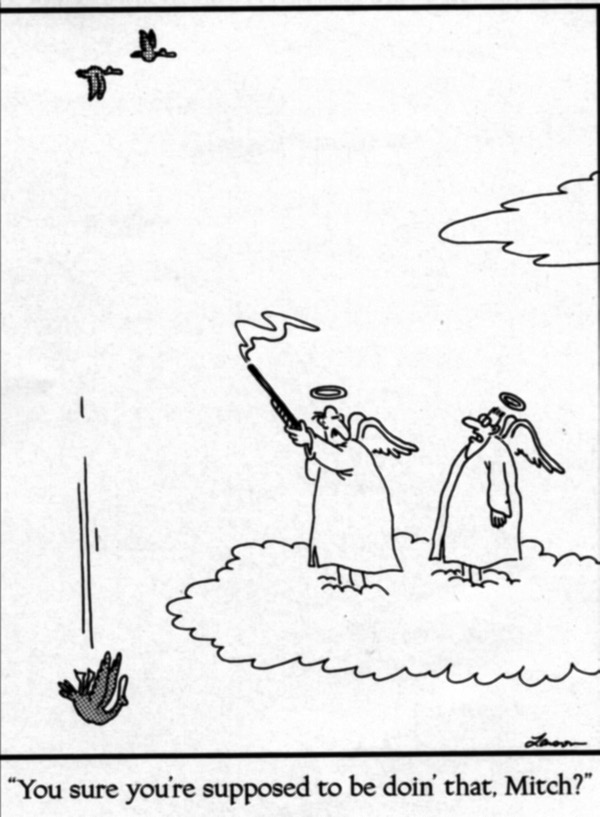
Of course, God knew full well what he was getting in taking Dave. If you knew and loved Dave, simply replace the name ‘Mitch’ with ‘Dave’ below and smile with me. We’ll miss him.
Yesterday, Easter Sunday, Christian preachers around the world struggled to present to their congregations, and to their own hearts, the glory of Christ in his resurrection from the dead. Many no doubt walked away from that effort burdened with a sense of inadequacy. This is to be understood, for the topic we tackle is one which cannot be adequately treated. All efforts fall short. We who see that glory imperfectly will sense that our efforts to reveal it perfectly are doomed from the start.
In such a state, we share worthy company. The Puritan scholar John Owen wrote a treatise titled “Meditations and Discourses on the Glory of Christ” which is rich with reflective wisdom on the subject. But even Owen confesses his inadequacy.
For who can declare this glory of Christ? who can speak of these things as he ought? I am so far from designing to set forth the whole of it, that I am deeply sensible how little a portion I can comprehend of the least part of it. Nor can I attain unto any satisfaction in these Meditations, but what issues in an humble admiration. [Chapter XI]
We are all inadequate. And yet we persevere to that which the resurrection so fundamentally promises: we will see him, and see him as he is. Owen grows warm to this, as should we:
How excellent, how glorious will it be, when with these eyes of ours, gloriously purified and strengthened beyond those of Stephen, we shall behold Christ himself immediately in the fulness of his glory! He alone perfectly understand the greatness and excellency hereof, who prayed his Father that those who “believe in him may be where he is, so to behold his glory.” [Chapter XII]
We give our best efforts to understand and to preach Christ’s glory but it meets in frustration. Such frustration must be tempered by the realization that by these weak efforts, men, women, and children are, by grace working through the word we preach, preserved and kept for that day in which we all shall see His glory face to face.