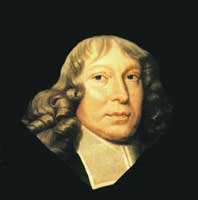
“It is my aim and hearty desire that my furnace, which is of the Lord’s kindling, may sparkle fire upon the standers-by, to the warming of their hearts with God’s love.”
— Samuel Rutherford

“It is my aim and hearty desire that my furnace, which is of the Lord’s kindling, may sparkle fire upon the standers-by, to the warming of their hearts with God’s love.”
— Samuel Rutherford

Below is the text for this Saturday’s article in the Bradenton Herald. Apart from the headlines, they are pretty good at keeping our comments intact. But some of you do not have access to this newspaper, so I am posting the article here. I hope all you hockey fans can forgive me…
———-
When there is a fight, people gather. I don’t know why. It’s just a fact of life. It’s why hockey is so popular.
There is a fight that has caught my attention.
In one corner is Michael Gerson, evangelical Christian, Wheaton College grad, former ghost writer for Chuck Colson, and until very recently a senior speechwriter for President George W. Bush.
In the other corner is Matthew Scully, author, and longtime colleague of Gerson in the Bush speechwriting office.
Until I came upon this fight, I’d never heard of either man.
At our first notice of the scuffle, Scully is pounding Gerson senseless. In an article in the Atlantic, Scully pounds Gerson with both fists (and possibly with a kick or two). He accuses Gerson of being exceedingly proud and self-promoting, manipulating affairs to look as if all the great speeches were the product of his own brilliance. What an arrogant glory seeker he seems. We shake our heads in disgust. And he calls himself a Christian, too. What a shame.
But what’s this? Some heavyweights are jumping into the ring. It is becoming a free-for-all. What fun!
Columnist Cal Thomas begins to strike back at Scully. “[This] is not the Mike Gerson I know,” he defiantly asserts. Peter Wehner, who worked with both in the Bush White House, joins in: “I believe Scully’s piece is deeply unfair to Mike and is itself misleading.” He dares to bring facts into the ring. Scully reels.
Timothy Noah, senior writer of Slate, puzzled by the accusation, notes that “…the Atlantic reader sees flashes here and there of an unreliable narrator” And “I have a [hard] time taking seriously [Scully’s] hatchet job on Gerson.”
The tide turns.
Scully is taking a beating. Will he fire off a counter-volley of furious punches? When the bell rings, will Gerson be confirmed as the pious hypocrite? Will Scully lie bleeding on the mat, exposed as an envy driven serpent? We grab our popcorn and wait for round two.
In the meantime, we can learn much for our own fights.
1) Don’t believe everything you read/hear.
Whether it is about prominent news people, outrageous celebrities, or your neighbor next door. Whether it is published in a major media outlet or whispered from one pew to the next, be skeptical of what you read or hear. There is always another side to every story.
2) Be courageous enough to confront those who offend you.
Since, apparently, Scully never spoke to Gerson in a friendly gesture of concern for the behavior he attributes to him, Gerson never had a chance to either defend himself, repent of his wrong, or attempt to change.
We have untrustworthy hearts. We too easily believe wrong of others. We must have the courage to go to them and give them the chance to respond to our concerns. To avoid this is cowardly.
3) Be humble enough to refrain from comment.
When tempted to say something negative about another, don’t. And if it must be said, be certain that you have the facts.
We may not have the public platform of a Matthew Scully on which to air our gripes about others, but we can do just as much damage with our gossip, our unfounded accusations, and our careless words.
We love to watch a fight. That’s why we go to hockey games. But let’s leave them there. Rather, let’s deal with conflict in a fair and biblical way, and stay out of the ring (or off the rink).
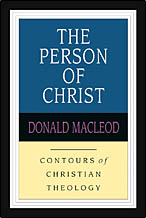 I have always maintained that theology, as it is the study of God, of his person and his ways, should never be dry or impractical. Too often, however, it is.
A glowing exception to this is Donald Macleod’s book The Person of Christ. This book, though academic in nature, cannot help but be devotional throughout because the subject matter draws out the author’s own devotion and wonder.
Here are a couple of quotes from a scholar who sees scholarship as a guide leading us to worship.
“For the Son of God, the incarnation meant a whole new set of relationships: with his father and mother; with his brothers and sisters; with his disciples; with the scribes, the Pharisees and Sadducees; with Roman soldiers and with lepers and prostitutes. It was within these relationships that he lived his incarnate life, experiencing pain, poverty and temptation; witnessing squalor and brutality; hearing obscenities and profanities and the hopeless cry of the oppressed. He lived not in sublime detachment or in ascetic isolation, but ‘with us’, as ‘the fellowman of all men’, crowded, busy, harassed, stressed and molested. No large estate gave him space, no financial capital guaranteed his daily bread, no personal staff protected him from interruptions and no power or influence protected him from injustice. He saved us from alongside us.” (page 180)
“The giving of the son is seen as the outstanding proof of the love of the Father. There was a unique bond between the Father and the Son, arising from the fact that th Son was uniquely lovable and the Father was uniquely affectionate. God could not have made a greater sacrifice. His love is astonishing precisely because at this point he put the world before his Son. The statement, ‘God gave the world for his Son’ would evoke no wonder. The statement, ‘God gave his Son for the world’ borders on the incredible. Conversely, the Son could not have suffered a greater loss. To have ‘lost’ the Father, as he did in the dereliction (Mark 15.34), was the greatest of all possible pains.” (page 73)

In Marjorie Kinnan Rawlings Pulitzer Prize winning novel of 1939, an isolated farmer and his son travel four miles to visit their nearest neighbors, a carousing, irreverent bunch. As they sit down to dinner, the hosts determine that since they have company, they should ask a blessing. Reluctantly, the host father at the table prays:
“Oh Lord, once more Thou hast done see fit to bless our sinnin’ souls and bellies with good rations. Amen.”
Could have been worse (see Talledega Nights). It’s not prayer-book quality, but I like it.

I was asked yesterday, “How did the retreat with the elders go?” A good question, and since I asked for prayer here it is only appropriate that I give a brief report here. The shortest answer is that the time went very well. I never like to do things like this out of my routine. However, this was certainly worth it. Some highlights:
1) Prayer. Friday night was given over to worship and prayer. Geoff led us in a time of Scripture and song after which each elder shared some realities in his own life and then each of us prayed for the elder who had shared. This was a very special time. We were made to realize once again how really human we each are and yet how each of us craves godliness. The end of our time on Saturday was also devoted to prayer as we spent an extended period praying for each of the members of the church by name.
2) Fellowship. After the heaviness of the prayer time, we lightened up by playing a game called Whoonu. Laughs are good for guys who often have to struggle with weighty things and even differences of opinion.
3) Reflection. All Saturday morning, Geoff led us in reflecting on the overall ministry of the church, particularly the way people come to us and the way in which we either are or are not successful in aiding their discipleship. This has us all thinking about how we might better structure ministry to further the tasks God has given us. We have a lot more thinking to do!
4) Food. Dayspring Episcopal Conference center is a gem. It is a first class facility only minutes from Hope Church. It is well designed and beautiful. But their greatest asset is their kitchen. I guarantee you I ate too much.
Our prayers for some time regarding the leadership of Hope Church has been for unity. We are individuals each with strong opinions and strong wills. Only God can mesh us into a unit pulling in the same direction. Weekends like these further our unity, and for that I am grateful to God.

If you would, please pray for the elders of Hope Presbyterian Church as they gather for an overnight retreat at Dayspring Episcopal Conference Center in Ellenton. We are praying that this would be a time of encouragement for us, as well as a time of growing unity of purpose and vision. We hope to spend much time in prayer and in discussion of the strengths and weaknesses of our ministry.
I am increasingly thankful for the elders of this church. They are not men gathered to give unquestioning assent to my plans. They are rather godly men who seek the best for Christ’s church. We are not perfect. We see our weaknesses. But I’m grateful for men who challenge me and upon whom I can lean for encouragement and direction.

I’m swamped this week, so I’ve invited a guest blogger to assist me. His name is John Calvin, and though he’s been dead over 400 years, it seems that his wisdom is still applicable.
“Let all, whether kings or magistrates, or pastors of the Church, know, that whilst they strain every nerve to fulfill their duties, something will always remain which may admit of correction and improvement. Here, too, it is worth while to remark, that no single mortal can be sufficient to do everything, however many and various may be the endowments wherein he excels. For who shall equal Moses, whom we have still seen to be unequal to the burden, when he undertook the whole care of governing the people? Let, then, God’s servants learn to measure carefully their powers, lest they should wear out, by ambitiously embracing too many occupations. For this propensity to engage in too many things is a very common malady, and numbers are so carried away by it as not to be easily restrained. In order, therefore, that every one should confine himself within his own bounds, let us learn that in the human race God has so arranged our condition, that individuals are only endued with a certain measure of gifts, on which the distribution of offices depends. For as one ray of the sun does not illuminate the world, but all combine their operations as it were in one; so God, that He may retain men by a sacred and indissoluble bond in mutual society and good-will, unites one to another by variously dispensing His gifts, and not raising up any out of measure by His entire perfection.”
John Calvin, Commentaries on the Last Four Books of Moses, Volume 1 (Calvin Translation Society Edition), pages 303-304 (on Exodus 18:13ff)
This convicts me every time I read it!

In our community group meeting last night, we were discussing things we ‘desire’ in preparation for our study of Galatians 5.
One member said that she wanted some day to see a glacier. Another said she hoped to see whales in the wild. We laughed as we realized that if we planned it right, the two of them could in some places stand on a glacier and watch the whales.
Then another member of the group said that she dreamed someday of seeing the ‘Great Whale of China’. She turned red, and the rest of us laughed ourselves silly… we, uh, wailed with laughter.
Such times are precious. I’m grateful for Christian friends and for the fellowship of laughter. We had a good study of Scripture and a good time in prayer, and a good laugh. What more could one ask for?
And I pray that some day she will be able to see the Great Whale of China.
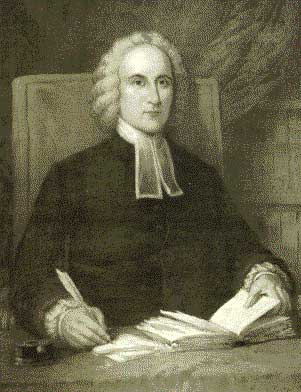
Continuing our look at the signs of true grace as outlined by Jonathan Edwards in his book The Religious Affections.
The second sign of grace he says is this: that true affections will be in response to the excellency of divine things in themselves.
The affections of love and joy and gratitude we have toward God, if truly a work of grace within us, will be stimulated by the excellency of God himself, and not by what God does for us. That is, a natural man might hear that God has done beneficial things for him, and be moved to give thanks to God because of the love he has for himself. He loves himself and God has served the man’s foundational motive by loving the thing the man loves. But this is no grace.
Rather, our love for God is a fruit of what we see in God in himself. He is altogether lovely and beautiful in himself and in his displayed works. We love him, we thank him, we rejoice in him because of who he is and not just because of the benefit we receive from him.
It is true that what we see of him is seen in his disposition of love and favor toward us. But the spiritual person responds to the character and person of God revealed in that disposition, and not simply in the benefit received.
The beauty of God is worth our praise whether it benefits us or not. Of course, we will know no greater happiness other than beholding and enjoying the beauty we find in Him, so that the praise of God always benefits us. But the foundation of that praise must be the person and work of God, and not our self love.
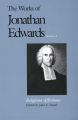
Perhaps it is time to update you on my slow, slow progress through Jonathan Edwards’ Religious Affections. Progress has been slow because I only read it for an hour or so each Monday, and I have lost several Mondays to time off and the press of other things.
However, I am into the meat of the book, that portion where Edwards aims to lay forth and defend the eleven signs by which the presence of a true work of the Holy Spirit can be judged. I have worked my way through the first two of these eleven.
The first sign he identifies is this: that true grace is a spiritual work.
This is his foundational observation which I perceive underlies many of his other signs. His point is that a true work of grace is one which is clearly and thoroughly accomplished by the Spirit of God coming to dwell in us and to effect change that could be accomplished through no natural means. Grace is a thoroughly spiritual and internal, not natural and external, reality. The Spirit acts WITHIN us and not merely UPON us. We are changed from the inside out.
A natural man may experience many things which seem to be religious, but they do not arise from the Spirit and are only imitations of the work of the Spirit. True grace produces change that only the Spirit working within us could produce. True grace will manifest itself by inward change, change that natural man could not effect.
I was struck with the importance of knowing this, even if measuring it is a dicey proposition. We live in a day in which the biggest Christian best-seller is a book about a man who supposedly died, went to heaven, and came back to life with the ability to report what he had seen. I’ve had people build their spiritual confidence upon such things as voices and wonders, taking those things to be certain evidences of the gracious work of God. And yet Balaam saw wonders and Saul saw Samuel raised and these things were no signs of true grace in the men themselves.
Under true grace, the Spirit will work within us and not merely upon us.
We’ll consider the second sign of grace tomorrow….
Powered by WordPress & Theme by Anders Norén