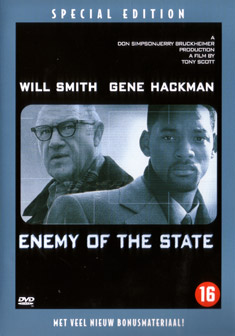
Over the past few weeks Barb and I have watched a couple of movies which raise a curious question for me. Why do we (speaking generally) find watching evil portrayed before us so entertaining?
The two movies are very highly rated crime dramas, Goodfellas and The Professional.
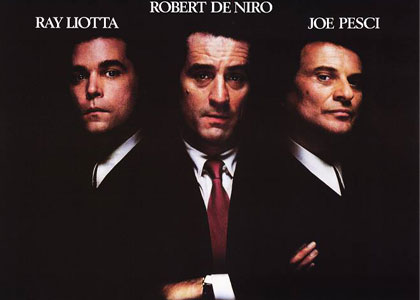 Goodfellas is the story of a man who as a young boy finds his sense of community and purpose in the mob. This is his story, and it is a sad story, and it is a story told with much violence and disregard for human life. But given that one of the purposes of a film is to entertain, why do we find such a film entertaining?
Whereas Goodfellas is a far more ‘mainstream’ and predictable mob movie, Leon: The Professional is not. It is an offbeat and odd story about a sensitive, emotionally stunted hit man played perfectly by Jean Reno. His predictable life is turned on its head when he takes in a emotionally starved, recently orphaned (her whole family murdered) girl played with freaky skill by an 11-year old Natalie Portman.
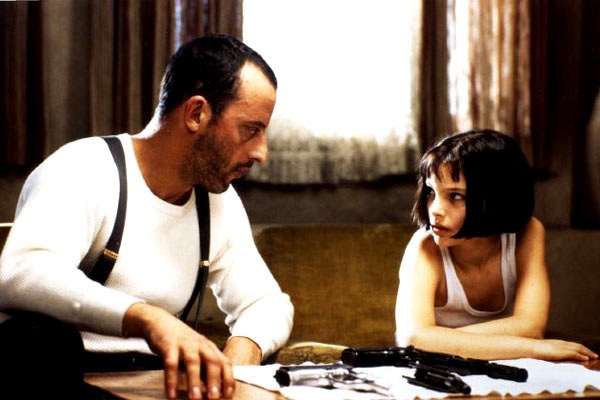 This may sound like I’m recommending the movie. I’m not. Parts of it are very, very disconcerting as our hit man agrees to train his orphan in his trade, and the orphan begins to see the hit man as more than a big brother. This was a far more original and engaging story. But the same question comes to mind: why do we find watching evil entertaining?
In both cases, and in many like it, the ‘heroes’ are not the traditional ‘good guys’, but rather men who make their living destroying the lives of others. These men are conflicted – they struggle with the nature of their living, but their lives are evil. And we will spend two hours watching.
My question is not whether we should be watching these films. That would be a worthy conversation, no doubt. My question is why do so many (apparently) find such films entertaining?
UPDATE: I am reading about Old Testament narrative in preparation for an upcoming sermon series, and found this quote somehow applicable to the above question:
“A story invites the reader to surrender his or her own thought system and to enter the world of another and to be carried along by the flow of this other world. Through this the reader becomes an insider, a part of the world of the narrative….
“We can see parallels in modern cinema, which entices the audience to identify with a different world and a different worldview in an entertaining and subtle way. Moviemakers are thoroughly aware of a story’s power to draw the audience in to adopt an alien perspective and value system.” (Bruce K. Waltke, An Old Testament Theology, pages 104-105)