
So, I’m seriously curious: what do you all think of this ‘dude’?
When my friend expressed such enthusiasm for The Sopranos, I determined that I needed to see what the fuss was all about. I’d heard about the series for so long, that my interest was already piqued. So, my wife and I began to watch the first series.
I’m not prepared to comment beyond this: How is it that a man so evil – he takes time out from taking his high school daughter to visit colleges in order to murder someone – can be so human? Tony Soprano is presented as a compelling human figure who struggles in his marriage, who loves his kids, and who loves ducks and flowers. The other side of him is a man who thinks nothing of having men killed, or doing it himself, if not beating them to a pulp.
Can both an outward humanity mask an inner evil? Can Evil have a smiling face?
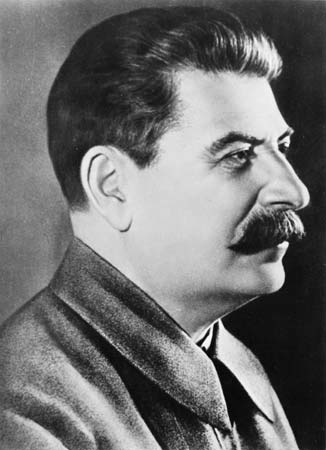 I was questioning the reality of that, wondering if what Tony Soprano was would ever exist in reality, when I came in my reading of Truman to the Potsdam conference in 1945 between Harry Truman (good guy), Winston Churchill (good guy), and Joseph Stalin (not good guy). Stalin was the head of a police state which, when the dust settled, was ultimately responsible with the deaths of more people, way more people, than Hitler’s six million Jews. And yet, people liked him.
Truman upon meeting him liked him. McCullough says, “Stalin nearly always made a good impression on foreigners.” One of Truman’s associates said, “He is a very likable person.” An American ambassador to Russia at the time said that “Stalin was uncommonly wise and gentle. ‘A child would like to sit on his lap and a dog would sidle up to him.'” (page 418)
So, perhaps Tony Soprano is not such an aberration as I might have wanted to make him.
Some time ago I posted a question regarding why in American culture we have such a deep fascination with movies about crime. We pay large amounts of money to see people commit heinous crimes and enact horrible acts of violence. You can see that here: Vicarious and Conflicted Evil: a Question
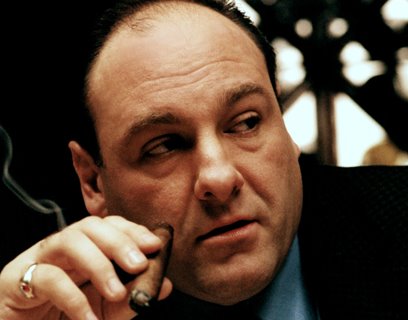
A friend responded to this post with some thoughts about his or her (not telling) conflicted fascination with HBO’s long running crime drama The Sopranos. I recently revisited our correspondence, and found that I wanted to share a bit of it.
My friend noted this:
“Why did we find them so compelling? Because repeatedly, each episode would pull us ‘in’ to having compassion for Tony Soprano, the evil guy. We always wanted him to come out on top. Internally, I was always pulling for him to escape being caught by the FBI. And it felt sooooooo weird. Why were we wanting the bad guy to win? Why? I guess it is because when I look at the evil that exists in my own heart, I want that same compassion, even though I don’t deserve it.”
What this reveals is the power of a story well told, no matter WHAT the subject matter. It draws you in. I was struck by this while reading some time later in a book on the Old Testament:
“A story invites the reader to surrender his or her own thought system and to enter the world of another and to be carried along by the flow of this other world. Through this the reader becomes an insider, a part of the world of the narrative….
“We can see parallels in modern cinema, which entices the audience to identify with a different world and a different worldview in an entertaining and subtle way. Moviemakers are thoroughly aware of a story’s power to draw the audience in to adopt an alien perspective and value system.”
(Bruce K. Waltke, An Old Testament Theology, pages 104-105)
How should this (if it is true) effect how we deal with modern cinema/television?
A regret: that I do not read poetry or the best fiction of modern writers.
A further regret: that though I’ve been aware of John Updike, I’ve not read a thing of his. And now he has died.
This poem, “Seven Stanzas at Easter”, appears to have been posted by permission, so I don’t want to copy and paste it here. But make the effort to go to it and read it.
Thanks, Andrea, for the link.
 Subtropical Florida, where we are ‘cursed’ to live, is awash in lizards. These small guys are everywhere in the yard, on the trees, in the bushes, one currently confined to my son’s terrarium (“Where are you going, Colin?” “Outside to catch some bugs for my lizard.”), and even in the house.
Once, when I was new to Florida, a lizard in the house scurried into our refrigerator as I held open the door. I thought, “Well, all the worse for him, I suppose” and I left him there somewhere under the crisper figuring in a very short time he could do no harm.
Later, I told Barb, and she was beside herself that I had left the creature there. So, I did the good husband thing. I dismantled the fridge, found the now stiff (and being a northerner assumed dead) lizard, and tossed him in the trash. Job done. Until, of course, his cold blood warmed up, he unstiffened, and escaped from the trash.
That was a long time ago. I’ve learned now throw stiff lizards outside. Or give them to Colin.
What’s that story got to do with anything?
I love the honesty of those who read this blog, like that of this person, who responded privately (which is an option open to you all) to my summary last week of the steps we can take in the process of sanctification.
I said:
Within a framework of God’s gracious changing of us are five concrete things we can be about. These are the things God wants us to do. Through these things HE works HIS change in us…. They are:
1. Know who you are
2. Seek the work of God’s grace to change you
3. Put yourself in the way of grace
4. Mortify sin
5. Rejoice in the gospel
To this he responded honestly:
I especially suck at number 4.
I love that honesty. Truth be told, I suck at number 4 as well.
But such honesty, of course, is lacking in those who really do ‘suck at number 4’.
That’s the thing. Honesty and clarity is a gift that God gives us to help us grow. If I cannot see the lizard in the refrigerator, I am not grieved by it. And if I’m not grieved by it, I won’t have the honesty to admit it is there. And if I lack that honesty, I’ll protect it there, and won’t do anything to extract it.
It’s the same with sin, isn’t it?
The Pharisee in Luke 18 could not, or would not, see his sin and so he was not bothered by it. The honesty and clarity that God gave the tax collector was painful. He was miserable because, of course, he ‘sucked at number 4’.
Clarity causes misery. But even that misery is evidence of God being at work.
Eventually, under God’s tutelage, we will less and less be comfortable with various lizards and we will extract them. Some we will throw in the trash, and they’ll come back to grieve us again. But some, in time, with God’s help, we’ll throw outside. (Or, turn over to the torturer with his terrarium.)
We now know when life begins. It begins when the child in the womb beats the abortionist’s poisons and emerges from the womb to take a full breath of air.
Many are troubled by this story, both those favoring and opposing abortion. The doctor is in trouble for a) not showing up at his clinic on time and b) not insuring that there would be qualified personnel to care for this patient in his absence.
But the irony is that had he showed up on time and killed the child in the womb, no one would have known and in some circles he would have been praised for his act.
But since the child was able to grab that fateful breath of air, suddenly he was human, and disposing of him as bio-waste, perfectly acceptable seconds earlier, became morally questionable.
There is a darkness that clouds the reasoning of men and women in our day. On the one hand we preach the gospel and pray to see that darkness lifted. But this child is a martyr, with one cry, one gasp of air, he has injected the debate with some clarity before his untimely death.
May his testimony and that of millions like him help lift this terrible darkness, that his death not be in vain.

David McCullough writes about President Harry Truman with an obvious affection for the man, just as he did with John Adams. It is clear that what impresses McCullough is character, and he rarely misses an opportunity to point out in both men incidents which display admirable character.

The secret service agent attached to him in Germany during the Potsdam Conference recounts an incident in which an Army public relations officer who had his hand in the Berlin black market approached Truman and told him that he could get him anything he wanted. He only had to say the word. “Anything, you know, like women.”
“Listen, son, I married my sweetheart, ” Truman said. “She doesn’t run around on me, and I don’t run around on her. I want that understood. Don’t ever mention that kind of stuff to me again.” (page 435)
Sadly such evidence of faithfulness seems surprising to our jaded ears.
—–
By the way, I’m on page 467. 425 more to go. I’m halfway home.

When we want to know something, we ask an expert.
It is useful to be reminded that experts are sometimes wrong.
Leo Szilard was the University of Chicago physicist who had helped persuade FDR to initiate the efforts which would lead to the development of the first atomic bomb. He later came to question the wisdom of using the weapon whose development he had initiated.
In his efforts to prevent the use of the bomb, he spoke with J. Robert Oppenheimer, the man directing the work on the project at Los Alamos, NM. We would consider at this point Oppenheimer to be an expert, not on the morality of the bomb’s use, but on its viability and capacities.
Szilard quotes Oppenheimer as saying at this time, two months before the weapon was actually used with devastating effect, “The atomic bomb is s***…a weapon which has no military significance. It will make a big bang—a very big bang—but it is not a weapon that is useful in war.”
Experts are, as I said, sometimes very wrong.
How NOT to watch a Super Bowl:
1. Watch three quarters cheering for Arizona.
2. Decide at beginning of fourth quarter with the score 20 – 7 that AZ has no chance, turn off TV and read a book.
3. Turn TV back on after a while to see what the score is. Discover that AZ is now UP by 3, and you missed ten remarkable minutes of football, just in time to see Pittsburgh begin a drive resulting in an eventual game winning touchdown.
That is how NOT to watch a Super Bowl.
It IS how I watched it, I fear.
For a completely different angle on watching a televised football game, read this. Fascinating. (Written, by the way, by the author of Blackhawk Down, a man with obviously diverse interests.)