
Randy Greenwald

Concerning Life as It Is Supposed to Be

Cool Hand Luke

“What we’ve got here is failure to communicate.”

That quote was ranked as #11 on the American Film Institute’s list of the most famous movie quotes of the first 100 years of filmmaking. (This is three spots behind “May the Force be with you” and two spots ahead of “Love means never having to say you’re sorry”.)

It comes from the 1967 movie Cool Hand Luke and is spoken to Paul Newman by the warden of the prison in which he is incarcerated. Later in the film, Newman himself mocks the line back to his warden.

As Barb and I watched this movie last week it soon became clear that though that line was exchanged between two characters in the film, the real object of the line is God.

Newman’s ‘Luke’ is a man imprisoned for two years for a drunken act of vandalism. His imprisonment however is a symbol of the senseless and capricious life he has been forced to live under the oversight of a supposedly benevolent deity. Luke has been dealt a whole lot of nothing, and with that hand, he tries to win. But he can’t. So he battles through life with increasing bitterness.

Toward the end of the film, Luke enters a church and shouts to God for some explanation, some intervention, some communication. But the heavens are silent; they fail to communicate. There is no one to respond, and so he turns to face his fate utterly alone.

The movie raises hard questions. Good films do. If there is a God, why does life seem so senseless? This movie does not hesitate to give an answer: life is senseless because there is no God. Even the cross is senseless in a senseless world, and it does not escape being mocked in this film.

But the problem, of course, is not a failure to communicate. It is a failure to listen. The answer to Luke’s question is not easy, but it is there. God speaks; we are too stubborn to listen.

Ironically, it was the next morning that I read the following in John Calvin’s Institutes of the Christian Religion.

Calvin, one clearly acquainted with suffering, would counsel Cool Hand Luke to cool it.

“…When dense clouds darken the sky, and a violent tempest arises, because a gloomy mist is cast over our eyes, thunder strikes our ears and all our senses are benumbed with fright, everything seems to us to be confused and mixed up; but all the while a constant quiet and serenity ever remain in heaven. So must we infer that, while the disturbances in the world deprive us of judgment, God out of the pure light of his justice and wisdom tempers and directs these very movements in the best-conceived order to a right end. And surely on this point it is sheer folly that many dare with greater license to call God’s works to account, and to examine his secret plans, and to pass as rash a sentence on matters unknown as they would on the deeds of mortal men. For what is more absurd than to use this moderation toward our equals, that we prefer to suspend judgment rather than be charged with rashness; yet haughtily revile the hidden judgments of God, which we ought to hold in reverence?” (I.17.1)
Hustling Toward Dessert


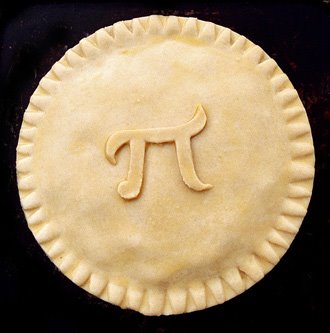
When there is promise of a great piece of pie or shortcake or the like following dinner, one might be tempted to hustle the main course, or even shortchange it, in order to get to the prize at the end. Don’t even the bumper stickers tell us, “Life is short; eat dessert first”?

I’m reading, as some of you know, John Stott’s classic exposition of the atonement The Cross of Christ. Of it’s four sections, the last is called “Living Under the Cross”. I have my eyes on that section, I long to get there and read this godly scholar’s reflections about life lived in the shadow of the cross.

But one ought not hustle dessert. The main course sets the context for the end. As Stott leads me through the biblical texts expounding the atonement, and brings solid support to our understanding of things like propitiation and justification, we are made ready to comprehend the concrete application which follows.

My metaphor may break down here, but in this I think dessert sticks better once the main course has been digested.

The dessert like application of biblical truth should never be detached from the meaty comprehension of the truth itself. Neither should the truth be spread across the table without some pie at last to set off the sweetness of the meal.

Our Priorities

This post from Scott Myrhe in Uganda does challenge our national priorities. A sample here:

I am sitting among 273 delegates from 19 countries at the first Uganda
Action for Nutrition Congress, in Kampala. The first speaker,
professor Tola Atinmo from the Federation of African Nutrition
Societies noted that the US President Obama just signed a 787 BILLION
dollar bail-out for the US economy . . . and asked when he could
obtain a mere 10 billion dollars to bail-out the malnourished in
Africa.

I encourage the reading of the whole post. All is not completely hopeless.

Perhaps, of course, our president and our congress believe that American prosperity will trickle down to those living on $1/day in the continent of Africa. Yes, that must be it.

AKUS?

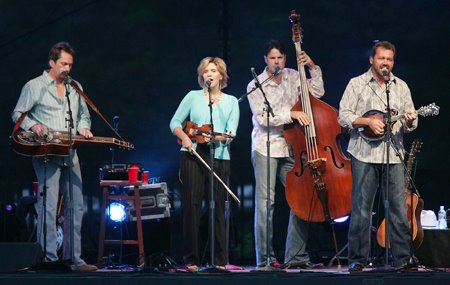
I noted this week that Alison Krauss and Robert Plant were planning a follow-up to their Grammy dominating collaboration. As a fan, I find that wonderful. But here is my question: does anyone know if she and Union Station will ever put together another studio album? Are they history? Has AK grown too big for her roots with the Soggy Bottom Boys?

No Buts About It

I love when people agree with me. In my fantasy world, everyone agrees with me. In the real world, of course, I sometimes get in fights with myself.

So, it is especially gratifying when someone agrees with me.

But beware the ‘buts’.

A friend wrote a wonderfully thoughtful and reflective response to an earlier post in this series.

Happily, she had some nice things to say by way of agreement.

“I understand and believe that the Lord (initially) has sought US and it’s only by the work of the Holy Spirit that we are initially made aware of our sinful state….

“ I DO believe and agree with you concerning the Lord constantly loving us, despite our sin and our continual downfalls….

Of course, each of these statements are followed with the inevitable ‘but’. She asks,

“If sanctification is a continual process throughout our earthly lives, do you think that that is IT, no more “shake-ups” allowed? I DO believe and agree with you concerning the Lord constantly loving us, despite our sin and our continual downfalls, but doesn’t the Lord also hold back his blessings (for a time) when we grieve him?”

Great question. Really. Because she identifies something very important.

The role WE play in sanctification has been our focus. We are to put ourselves in the way of grace. We are to mortify sin. We are to know who we are. And so forth. The underlying premise of this series is that God is the author of change in our lives. We have a role, but the power is in Him. Had he left it up to us, we would never change.

The beauty of the love of our Father is that he does not leave us alone. He will not let us fail. He pursues us and disciplines us and works his grace in our lives, often through the difficult circumstances of our lives. Gratefully, he does not protect me from the painful consequences of my sinful choices. He lets me now and then put my hand on the hot stove so that I might learn that the stove is hot. The process is painful, but the lesson is lasting.

Christians love to quote Romans 8:28 to themselves and to others when difficulties arise. We are somehow comforted to know that God is at work in even the difficult details of our lives. And that text assures us that God works for our GOOD.

Have you ever asked what the good is toward which God is working all things? Let Paul himself tell us:

“For those whom he foreknew he also predestined to be conformed to the image of his Son, in order that he might be the firstborn among many brothers.” (Romans 8:29)

God works events in our lives to move us to greater conformity to the image of his Son. God may let us do foolish things; he may prevent us from doing them. But either way he is working toward our growth in likeness to Jesus.

There can be no greater kindness than that. I believe that and I am comforted by that, even though I may HATE the circumstances themselves.

This has been the consistent testimony of all the saints before us, including this one.

“For the moment all discipline seems painful rather than pleasant, but later it yields the peaceful fruit of righteousness to those who have been trained by it.”(Hebrews 12:11)

—————

O Love that will not let me go,
I rest my weary soul in thee;
I give thee back the life I owe,
That in thine ocean depths its flow
May richer, fuller be.

O light that followest all my way,
I yield my flickering torch to thee;
My heart restores its borrowed ray,
That in thy sunshine’s blaze its day
May brighter, fairer be.

O Joy that seekest me through pain,
I cannot close my heart to thee;
I trace the rainbow through the rain,
And feel the promise is not vain,
That morn shall tearless be.

O Cross that liftest up my head,
I dare not ask to fly from thee;
I lay in dust life’s glory dead,
And from the ground there blossoms red
Life that shall endless be.

(George Matheson)

I hate the pain. I flee from the pain. I want nothing to do with the pain. But I am perfected by the pain.

No buts about it. We agree.

Chilling

This post makes reference to the Buffalo plane crash and one of its victims Alison Des Forges. It alludes to an article several years ago dealing with the Rwandan genocide. Take time to read the two paragraphs from the article. Those two paragraphs have haunted me ever since I read them.

Imagine that through just such a communication, you knew that someone was going to die imminently and you could do nothing to save them.

Imagine then those dying around us for whom we have the message of life.

Lent

At the church I pastor, the elders are calling the congregation to a special commitment to prayer during the forty days leading up to Easter, the period some traditions have celebrated as Lent.

My friend Mike Osborne has an excellent post on how Lent, and particularly the ancient practice of fasting during Lent, can be used for growth in our love for Christ. There is much wisdom here. I encourage your reading of this and your consideration of the suggestions he makes.

It reminds me of Lauren Winner in Girl Meets God being challenged by a pastor to give up reading for Lent. Ouch. Yes, even good things can compete against Christ for our affections.

Literary References

Here is your assignment.

Some of these references are pretty obscure; some are obvious. The question is – will you post your score in the comments below?

I’ll be honest – I scored 8/10. How’d you do?

Burn after Watching

Matthew, I should have trusted your warning.

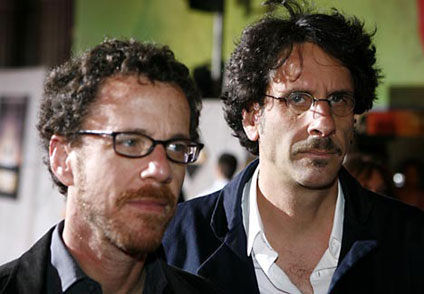
Shortly after the most recent Coen brothers movie, Burn After Reading, was released, my son Matthew saw it, and reported to me that it had been a waste of time. The movie, he reported, was largely senseless.

Matthew’s opinions normally are quite similar to my own, so we let this movie drop from the radar screen. Recently, some new friends reported to me that they had watched it and loved it. That recommendation together with the lure of the stellar cast (I’m a big fan of Frances McDormand and Richard Jenkins) drew us in.

As usual, the Coens craft a bizarre story and tell it in a unique way. But this one seemed to go absolutely no where.

When I began teaching junior high English I would ask students to write a story and when they asked how long it would be, I’d give a limit, say, one page. Some students would being a really good story, but seeing that they were near their one page goal, kill off their hero at the end of the page. They had done their duty.

That is what this movie left me feeling. It began well, interesting characters in interesting situations. But the brothers got to their two-hour ‘page’ limit. They were done. Goodbye.

So, if any of you saw it, what am I missing?

Sermon Remix

[I’m sitting in my van in front of the UPS Store. It is currently 7:54 AM. The UPS web site said that this store opens at 8:00. The sign on the door says 8:30. I may have a few extra minutes on my hand. A good time to return to the blog. Sorry for my absence (or you’re welcome… depending on your perspective).]

I just scanned snippets of a few reviews of the soon to be released, much hyped, new U2 album. It got me wondering about the life cycle of the eleven songs on an album like this. I’m sure they evolved something like this. They were written, rehearsed, revised, rehearsed again, revised again, and after several cycles, eventually recorded. Of course, in the recording of them, there could be dozens of takes, and dozens of variations tried on each take, all recorded and stored so that the engineers and producers could then mix them, edit them, re-record portions, massage them, listen to them, and try again.

After two years of work, the eleven songs are blended together as one fifty-four minute unit, packaged, and sold, to thunderous accolades and immense financial profit, and to the deep satisfaction of all the artists involved.

I mentally began comparing that to what one might imagine to be the life cycle of a sermon. It evolves something like this. Beginning on a Tuesday, generally, it is researched, written, revised, sometimes rehearsed, revised again, and then, Sunday, six days after its genesis, preached as a thirty-odd minute finished product. On Monday it is revisited and often regretted as, suddenly, new insights and necessary revisions are too late realized.

One reviewer of the U2 album identifies two ‘duds’ out of the eleven songs, which, he says, is “not a bad strike rate by anybody’s standards.”

I hope pastors are allowed an occasional dud or two as well, given the vastly different environment in which their art is practiced.

Page 105 of 142

Powered by WordPress & Theme by Anders Norén