Concerning Life as It Is Supposed to Be

Category: Uncategorized Page 64 of 71

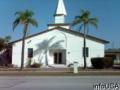
St. Paul MB Church


Our thanks to the brothers and sisters of the St. Paul Missionary Baptist Church for their warm hospitality and deep enthusiasm for the goodness of God. Barb and Colin and I were privileged to worship with this congregation this morning, making Barb and I, as far as I could tell, the only white people in the building. Pastor James Roberts, a dear friend of mine, has a wonderful ministry there. The congregation, as always, accepted us graciously and with joy.

For those of you who do not know, Hope Church and St. Paul Church often have joint services on Thanksgiving Day. It is pretty certain that we will be the guests of St. Paul this Thanksgiving.

(If you want to hear a sample of last year’s service, click here. You will hear a portion of Pastor James’ message.)

We are grateful to God for his kindness in allowing us to be with these brothers and sisters this morning.

Evangelism and the Roll

Some of you know that I am moonlighting at a side business/hobby. I bake cinnamon rolls for local coffee shops and diners. As well, I sell them directly to the public. For more information on that side of things, you can visit here. (I am persuaded that I put the ‘moon’ in moonlighting. To do this I get up at 3:30 AM!)


I don’t mention that for the sake of self promotion. Rather, it struck me this morning one of the reasons I like doing this so much. It is not hard to be an evangelist for a cinnamon roll.

Classic example happened yesterday.

I had delivered some rolls, and was visiting with my printer and his father at their printshop. (I pay for occasional light print jobs with cinnamon rolls!) As we were talking, the father said, “You know where you ought to take some rolls — Dianne’s Cafe.” Dianne’s is a diner near my house.

Now, I had some rolls in the car, but I was thinking of taking them elsewhere. I decided to act on his instinct and so I headed for Dianne’s. I met the owner, exchanged about three sentences, showed him the rolls, and he immediately ordered two trays for today.

When I took the rolls to Dianne’s this morning, the waitress held them up, and showed them off to the whole restaurant. I left with a great sense of satisfaction.

How did this happen? The owner was looking for something like this. He saw the need, and immediately knew that these rolls met his need. He was ready to buy.

I suspect that there are those for whom sharing Christ pretty much follows the same pattern, but I am not one of those.

I know there are huge differences between the call of the gospel and the appeal of a cinnamon roll. For one thing, the gospel demands the commitment of one’s whole life. Dianne’s Cafe has only committed $18 and could back out of the deal tomorrow. I know that.

But this reveals a stark problem in me. When I unwrap a pack of cinnamon rolls, I expect people to love them. I expect people to respond positively. I am shocked when they are not wowed. In contrast, I expect people to have no interest at all in the gospel.

The problem is that I have lost confidence in the attractive power of the gospel. I rarely ‘unwrap’ it to people, because I expect them to have no interest. I am shamed to confess that.

The reality is that there must be many people out there hungry for the acceptance and freedom and security and stability that comes through Christ who simply need a faithful Christian man or woman to unwrap him for them. Pray that we would come into contact with such people and have the confidence to show Christ to them.

Comments on Commitment

I don’t know how many of you ever get to the point of reading the comments to my posts, but Fiona (not the princess…), Lori Deitz’s dear friend, and a friend now of ours as well, has posted comments to my post on commitment that are worth reading.

She is very wise. Making a commitment is one thing; being fully engaged in loving the ones to whom you are committed is quite another.

I think she should write a book. Read what she says here.

No Community without Commitment


Pastoring a church confronts one with this question: what is the nature of community? If the church is to be a community described by a variety of metaphors in the Bible (body, family, etc.) what is the nature of that community?

Someone recently told me that there is no real community without commitment. If that is indeed the case, and I am inclined to think it is, then in an age like our own in which commitment is often a foreign thing, real community is rare. People leave churches for other churches. Commitment is broken and community is shattered. It happens all the time. There is no real community without commitment.

But such a statement only removes the question one step further: what then is the nature of the commitment which makes for community? Commitment is the foundation stone of a marriage. I’m inclined to think, however, that the level of commitment to a church is a step below that of marriage. But what does commitment mean for a church? I’m very interested in hearing what those reading this think about that.

One of the books mentioned in my recent appeal for books on race and reconciliation was one call God’s Neighborhood by Scott Roley. In the forward, written by Michael Card, Card speaks of an attempt at community that he, Roley, and others made over a decade ago. The commitment they made to each other included this:

“We pledged to each other that we weren’t going anywhere. We were going to resist the temptation to move away if better opportunities presented themselves to any one of us. Later we promised that even if we disagreed with one another, we would not break fellowship. over the years we have disagreed a lot, sometimes along racial lines, more often between political positions. But the fact that we are all still here… shows that our mutual promise held firm.”

Is this what it takes to establish, build, and maintain community? Is such a commitment — to not separate even in the face of deep disagreement — even possible? Is it what Biblical community consists of?

I’m very interested in people’s reflection on this question, for is not the church to be something more, something deeper, something greater than a Sunday morning club for religious people? I think so.

Techno Lust


When the iPod first came out, I could not see why there was so much hoopla. Who needs a device to carry around 10000 songs? I certainly didn’t.

But then someone pointed out my drawer full of cassette tapes of sermons and conferences. Messages of great value that I never listen too because a) I no longer have a tape player and b) I cannot keep organized a hundred cds and tapes to access what I want when I want it.

The solution was the ipod. A hundred sermons or lectures and I’ve only used a third of my 4 gig Nano’s storage space. I do not play CDs anymore. It is just far too easy to carry one small unit with my hundreds of songs on it.

Geeky cool, of course. But useful as well.

Technology, however, can change us. We would be foolish to think it does not. We are a different world after the advent of the printing press; we are a different world because of television.


A Christian should not, it seems to me, be enslaved to technology, and a Christian should think carefully about the technology he embraces. Neil Postman, not Christian but Jewish I think, has written in provocative ways about the impact of technology, as a prophet trying to hold back the storm. In Amusing Ourselves to Death he chronicles the impact of television upon the way we think, and in Technopoly he expands his view to the impact of all kinds of technological ‘advance’.

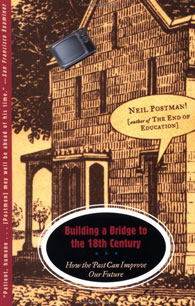
My favorite statement from Postman on the subject comes from his very interesting book, Building a Bridge to the 18th Century. The book is challenging and useful in many ways, but this quote not only makes me smile, but drives me always to ask the question, “Do I really need this new technology?” It is more lengthy than I usually use, but I think you will enjoy it.

“I find it useful to ask of any technology that is marketed as indispensable, What problem does it solve for me? Will its advantages outweigh its disadvantages? Will it alter my habits and language, and if so, for better or for worse? My answers may not be yours, almost certainly are not yours. I write my books with pen and paper, because I have always done it that way and enjoy doing so. I do not have a computer. The Internet strikes me as a mere distraction. I do not have voice mail or call-waiting, both of which I regard as uncivil. I have access to a fax machine, but try to control my use of it. Snail mail is quite adequate for most of my correspondence, and I do not like the sense of urgency that faxes inevitably suggest. My car has cruise control, but I have never used it since I do not find keeping my foot on the gas pedal a problem.

“You get the idea. I will use technology when I judge it to be in my favor to do so. I resist being used by it. In some cases I may have a moral objection. But in most instances, my objection is practical, and reason tells me to measure the results from that point of view. Reason also advises me to urge others to do the same. An example: When I began teaching at NYU [New York University], the available instruments of thought and teaching were primitive. Faculty and students could talk, could read, and could write. Their writing was done the way I am writing this chapter–with a pen and pad. Some used a typewriter, but it was not required. Conversations were almost always about ideas, rarely about the technologies used to communicate. After all, what can you say about a pen except that you’ve run out of ink? I do remember a conversation about whether a yellow pad was better than a white pad. but it didn’t last very long, and was inconclusive. No one had heard of word processors, e-mail, the Internet, or voice mail. Occasionally, a teacher would show a movie, but you needed a technician to run the projector and the film always broke.

“NYU now has much of the equipment included in the phrase ‘high tech.’ And so, an eighteenth-century dinosaur is entitled to ask, Are things better? I cannot make any judgments on the transformations, if any, technology has brought to the hard sciences. I am told they are impressive, but I know nothing about this. As for the social sciences, humanities, and social studies, here is what I have observed: The books professors write aren’t any better than they used to be; their ideas are slightly less interesting; their conversations definitely less engaging; their teaching about the same. As for students, their writing is worse, and editing is an alien concept to them. Their talking is about the same, with perhaps a slight decline in grammatical propriety. I am told that they have more access to information, but if you ask them in what year American independence was proclaimed, most of them do not know, and surprisingly few can tell you which planet is the third from the sun. All in all, the advance in thought and teaching is about zero, with maybe a two- or three-yard loss.” [pages 55-56]

Good thoughts. But I’m sticking by my iPod.

Thanks for Help!

As I hoped and somewhat feared, you all have responded with a ton of resources with which to consider the issues of race and Christianity. I now have leads on more resources then I’ll EVER be able to consume or pursue. But we at least have a place to begin. Please pray for us as we begin to put this project together.

Peculiar “Vacation”


The pastor is on vacation for the net two weeks. But a peculiar vacation this is.

I am on vacation… but I am going no where. This puzzles us. How does a pastor take a vacation? The problem is that our life as a family is tied up with the church of which we are a part. That is a good thing. But the church of which we are a part is also the work from which I need a clear break. How do I take a vacation from the work, and not extricate the family from our church?

An example of the types of dilemna: Do we go to our small group meeting? Sure… these are the people we love, and love to be with. But, no! This takes me back into the context of the ministry from which I need emotional and mental rest. Such things are not well defined. If someone ends up in the hospital, do I visit them? If a friend from the church wants to meet, do I? Or do I say, “No, I’m not going to meet/visit with you. You are work to me?” Hardly.

If, as in the past, we were leaving town for vacation, these questions are easily answered. I’m not here and so the break is clear. There is puzzlement.

Staying and not going is hard because Barb receives no break. This is no vacation for her, something which she needs but which sadly this year I cannot provide her.

All that said, during this peculiar vacation we hope to wander locally and enjoy some low key time together. Occasionally, I suppose, I shall post. But if I don’t, readers will understand. I hope.

Guess Who’s Coming to Lunch: a request for resources

In 2006, two men in Hope Church sponsored, and Hope’s associate pastor Geoff and I taught, a series of lunch sessions on the subject of work for downtown area business people. The idea was to bring Christians and non-Christians together in a non-threatening environment where a relevant topic could be taught and discussed from a Christian world view. The lunches were billed as “Food for Thought”.

These meetings were not an overwhelming success, but the response was positive enough to warrant continuing the idea. So, for four Thursday lunches in October we will hold “Food for Thought II”. Then venue will change, the cost of the food will fall, but the purpose will be the same: to bring a Christian world view to an issue of relevance.

We have settled upon a general topic for these sessions, the topic of race.

Though we who are white like to think that we have put behind us our racial biases and those who are black like to think they have risen above resentment and anger, these reactions to race still plague us. We would like to consider the depth of the current problem together with some Biblical and practical means of moving beyond our pasts and bringing healing first at the relational level, and then (perhaps) at the social, economic, and political level.

Here is the problem: Geoff and I are clearly white. We have never had to sit in the back of a bus and we have never been looked at with suspicion because of our pigmentation. We are thrilled that Pastor James Roberts of St. Paul Missionary Baptist Church has enthusiastically agreed to help us with this. Pastor Roberts knows what it is like to be on the receiving end of racial prejudice, and he has a heart for bridging the divide that still exists between white and black.

But we would like further resources. If any of you know of books, articles, messages, whatever, which address the subjects of race and racism in a helpful way, especially from a Christian perspective, we would appreciate your alerting us to those resources.

We don’t know if we are being foolish or brave (the differences are slight) in taking this on. What we do sense is that God is in it and is leading us. We have no idea what He plans to do with this. Please give us your ideas, resources, and your prayers.

America’s Next Great Reality TV Show

Every month or two, I write a column for the religion pages of the local newspaper. Geoff and I see this both as free advertising as well as an opportunity to share some thoughts creatively with both people who read the religion pages. (Actually, we think readership is much better than that. Perhaps as many as a DOZEN on any given Saturday.)

Honestly, we appreciate the opportunity. The editor who oversees this is becoming a friend of mine, and I like that.

For this week’s article, I wanted to move away from the heavy and the serious and be a bit more light-hearted. The result was the column pasted below.

But here is the thing: I don’t have to submit this until tomorrow (Wednesday, July 11). Until then, I am posting this here in order to get input and help! Any suggestions any of you want to make before this article goes to press? I’d love to hear them.

—–

America’s Next Great Reality TV Show

I heard today that in anticipation of a writers’ strike TV producers are ordering up a new batch of reality shows which do not depend as heavily or at all upon writers.

Here is the chance the church has been waiting for. I propose we push for a new reality series, “America’s Next Great Missionary.” Why not? It could have all the elements of “Survivor,” “American Idol,” and “Fear Factor” all mixed into one.
The show would begin with auditions set in major venues around the country: Wheaton, Illinois; Colorado Springs, Colorado, and, of course, Orlando, Florida. The hosts, who have yet to be named, will sit behind tables and review video of the Next Great Missionary aspirants working their way through a tough series of challenges under the watch of hidden cameras.

After completing this round of tests, each candidate must stand before the hosts and listen to an honest assessment – spoken in love, of course – and a judgment that will advance or eliminate them. They can expect to hear responses like this:

“Whoa, Alice, you did well on the ‘share-the-gospel-on-an-airplane-ride’ challenge and we were impressed with how quickly you put together the ‘how-to-appeal-for-money-without-seeming-to-do-so’ event. But we are going to have to send you away. Your iPod and your tattoo just don’t pass the muster of missionary standards. And those shorts? Way too short. You can never wear those and be a missionary.”

or this:

“Jack, Jack, Jack. What kind of awful attempt was that in the ‘witness-to-the-native’ test? My boy, you spent 45 minutes talking to that guy at Starbucks and you never ONCE mentioned Jesus? All you did was ask him questions about what HE believed. You are definitely going home. We don’t care that you ate more locusts than anyone else.”

Eventually, twelve clean cut promising candidates will be chosen and brought to Los Angeles for the final taping and selection process. They will be given tasks to perform as teams and they will be interviewed and observed individually. People from around the country will be able to call in and vote for their favorite candidates.

Team tasks will include developing campaigns to reach entire cities for Jesus. If, for example, in this competition one ditches the idea of a billboard campaign in favor of blending works of mercy among the poor with gospel proclamation, the worldwide television audience could show how foolish this is by voting them off the show.

The interviews will focus upon why the candidates believe themselves qualified for the crown of America’s Next Great Missionary. As well, they will be asked where they think their formidable missionary gifts would best be used. A number of candidates can be expected to stumble at this point, giving vague answers like “wherever God would through His church send me” or by mentioning fields and peoples no one has ever heard of. Such answers reveal a sad lack of conviction and fund raising savvy, all of which must be a part of any missionary’s tool bag.

Finally, the field will be narrowed to two candidates who will compete in a final showdown. Each will be required to put together a fund raising appeal. Viewers will call in support, and the one generating the greatest donations will be declared America’s Next Great Missionary – and sent to the field.

We think we have a winning show here. Not buying it? Well, then, let me tell you about “America’s Funniest Preacher Goofs….”
Evaluating Religious Experience


I have not had much time for reading the past few weeks, so progress in The Religious Affections has been halted. I was able to pick it up again today and to plow through part 2 of the book.

In part 1, he defends the case that true religion, that is, saving faith, is rightly accompanied by emotional responses, by affections. In part 2, he seeks to reveal those affections which seem to accompany religious experience but which neither prove or disprove the presence of real conversion.

This is his concern — to demonstrate what are real evidences of true conversion and to distinguish them from the false or spurious. There are spiritual actions or reactions which may or may not evidence true faith. We can greatly err if we rest our hope of eternity upon some evidence which may just as easily arise from the work of the enemy as from God.

As a pastor I have such great trouble in convincing people that some experience they have had may or may not be a sign from God that I often just give up. Edwards is diligent to assess experience by Scripture, and this is a helpful discipline.

“That only is to be trusted to, as a certain evidence of grace, which Satan cannot do, and which it is impossible should be brought to pass by any power short of divine.” [page 159]

In part 3 he will reflect upon what then are the true signs of a real conversion experience. The early reports are that Edwards is so stringent in his assessment of spiritual life that he creates despair in true believers. The other day when I told a friend that I was reading this book, he said with a smile, “So, are you still a Christisn?”

So far, I am, and I will be when I am through. Part 3 is the largest portion of the book, so being ‘through’ will come some time from now.

Page 64 of 71

Powered by WordPress & Theme by Anders Norén