Concerning Life as It Is Supposed to Be

Category: Uncategorized Page 63 of 71

Retreat!


If you would, please pray for the elders of Hope Presbyterian Church as they gather for an overnight retreat at Dayspring Episcopal Conference Center in Ellenton. We are praying that this would be a time of encouragement for us, as well as a time of growing unity of purpose and vision. We hope to spend much time in prayer and in discussion of the strengths and weaknesses of our ministry.

I am increasingly thankful for the elders of this church. They are not men gathered to give unquestioning assent to my plans. They are rather godly men who seek the best for Christ’s church. We are not perfect. We see our weaknesses. But I’m grateful for men who challenge me and upon whom I can lean for encouragement and direction.

Too Many Occupations


I’m swamped this week, so I’ve invited a guest blogger to assist me. His name is John Calvin, and though he’s been dead over 400 years, it seems that his wisdom is still applicable.

“Let all, whether kings or magistrates, or pastors of the Church, know, that whilst they strain every nerve to fulfill their duties, something will always remain which may admit of correction and improvement. Here, too, it is worth while to remark, that no single mortal can be sufficient to do everything, however many and various may be the endowments wherein he excels. For who shall equal Moses, whom we have still seen to be unequal to the burden, when he undertook the whole care of governing the people? Let, then, God’s servants learn to measure carefully their powers, lest they should wear out, by ambitiously embracing too many occupations. For this propensity to engage in too many things is a very common malady, and numbers are so carried away by it as not to be easily restrained. In order, therefore, that every one should confine himself within his own bounds, let us learn that in the human race God has so arranged our condition, that individuals are only endued with a certain measure of gifts, on which the distribution of offices depends. For as one ray of the sun does not illuminate the world, but all combine their operations as it were in one; so God, that He may retain men by a sacred and indissoluble bond in mutual society and good-will, unites one to another by variously dispensing His gifts, and not raising up any out of measure by His entire perfection.”

John Calvin, Commentaries on the Last Four Books of Moses, Volume 1 (Calvin Translation Society Edition), pages 303-304 (on Exodus 18:13ff)

This convicts me every time I read it!

Whale of a Good Time


In our community group meeting last night, we were discussing things we ‘desire’ in preparation for our study of Galatians 5.

One member said that she wanted some day to see a glacier. Another said she hoped to see whales in the wild. We laughed as we realized that if we planned it right, the two of them could in some places stand on a glacier and watch the whales.

Then another member of the group said that she dreamed someday of seeing the ‘Great Whale of China’. She turned red, and the rest of us laughed ourselves silly… we, uh, wailed with laughter.

Such times are precious. I’m grateful for Christian friends and for the fellowship of laughter. We had a good study of Scripture and a good time in prayer, and a good laugh. What more could one ask for?

And I pray that some day she will be able to see the Great Whale of China.

The Religious Affections: An Update, part 2


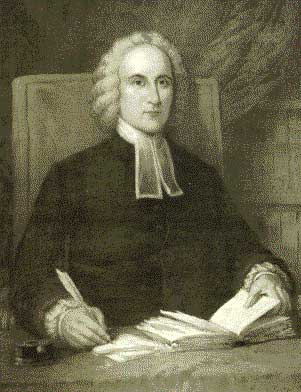
Continuing our look at the signs of true grace as outlined by Jonathan Edwards in his book The Religious Affections.

The second sign of grace he says is this: that true affections will be in response to the excellency of divine things in themselves.

The affections of love and joy and gratitude we have toward God, if truly a work of grace within us, will be stimulated by the excellency of God himself, and not by what God does for us. That is, a natural man might hear that God has done beneficial things for him, and be moved to give thanks to God because of the love he has for himself. He loves himself and God has served the man’s foundational motive by loving the thing the man loves. But this is no grace.

Rather, our love for God is a fruit of what we see in God in himself. He is altogether lovely and beautiful in himself and in his displayed works. We love him, we thank him, we rejoice in him because of who he is and not just because of the benefit we receive from him.

It is true that what we see of him is seen in his disposition of love and favor toward us. But the spiritual person responds to the character and person of God revealed in that disposition, and not simply in the benefit received.

The beauty of God is worth our praise whether it benefits us or not. Of course, we will know no greater happiness other than beholding and enjoying the beauty we find in Him, so that the praise of God always benefits us. But the foundation of that praise must be the person and work of God, and not our self love.

The Religious Affections: An Update


Perhaps it is time to update you on my slow, slow progress through Jonathan Edwards’ Religious Affections. Progress has been slow because I only read it for an hour or so each Monday, and I have lost several Mondays to time off and the press of other things.

However, I am into the meat of the book, that portion where Edwards aims to lay forth and defend the eleven signs by which the presence of a true work of the Holy Spirit can be judged. I have worked my way through the first two of these eleven.

The first sign he identifies is this: that true grace is a spiritual work.

This is his foundational observation which I perceive underlies many of his other signs. His point is that a true work of grace is one which is clearly and thoroughly accomplished by the Spirit of God coming to dwell in us and to effect change that could be accomplished through no natural means. Grace is a thoroughly spiritual and internal, not natural and external, reality. The Spirit acts WITHIN us and not merely UPON us. We are changed from the inside out.

A natural man may experience many things which seem to be religious, but they do not arise from the Spirit and are only imitations of the work of the Spirit. True grace produces change that only the Spirit working within us could produce. True grace will manifest itself by inward change, change that natural man could not effect.

I was struck with the importance of knowing this, even if measuring it is a dicey proposition. We live in a day in which the biggest Christian best-seller is a book about a man who supposedly died, went to heaven, and came back to life with the ability to report what he had seen. I’ve had people build their spiritual confidence upon such things as voices and wonders, taking those things to be certain evidences of the gracious work of God. And yet Balaam saw wonders and Saul saw Samuel raised and these things were no signs of true grace in the men themselves.

Under true grace, the Spirit will work within us and not merely upon us.

We’ll consider the second sign of grace tomorrow….

Fun with Words


I use a lot of words in the course of a week, and though I am no master, I love the intricacies, fluidity, and humor of the English language. To feed that, I subscribe to a free weekly e-newsletter called World Wide Words. The author, Michael Quinion, is a well informed British man whose newsletter is often informative and usually entertaining. I attach a couple of examples from the most recent release.

By the way, I’m attracted to the offbeat and lighthearted entries, but don’t judge the author by my preferences. As a contributor to the Oxford English Dictionary, he comes with some solid credentials.

Mostly Dead? Merely Dead? Really, Most Sincerely Dead?

Dave Hay read in his local newspaper, the Houston Chronicle, about John Wayne’s 100th birthday party. His granddaughter, Anita LaCava Swift, was quoted as saying, “It’s always an amazing thing for our family whenever we are out among his fans because he’s almost been dead for 30 years.”

Amazing isn’t quite the word.

No sex please, I’m a vegan.

The story broke in the Christchurch News at the end of July and has been picked up all over the world. Annie Potts, co-director of the Centre of Human and Animal Studies at Canterbury University in New Zealand, conducted research into the experiences of cruelty-free ethical consumers, who included vegetarians, pescetarians (who eat fish) and vegans (who consume no products of animal origin). Dr Potts found that some of the vegans she interviewed, mainly women, refuse to have sexual contact with meat-eaters because their bodies are made up of the dead animals they’ve eaten. She has coined the word vegansexual to describe this group. I suppose that makes the meat-eaters among us carnisexuals.

I didn’t make this up.

To Die Is Gain?

Geoff and I attended a funeral on Saturday that none in attendance is likely to forget.

Midway through the service, as people were giving thanks to God for their memories of the godly 95 year old woman whom God had ‘taken home’, the woman’s son-in-law, a 61 year old man, suffered a severe heart attack. His wife and daughters were frantic, and most of us too dumbfounded to know what to do.

That is when the miraculous began to break in upon the normal.


Someone shouted, “Call 9-1-1.” Within three seconds, two fully equipped EMTs in blue uniforms were on the scene working on this man, keeping him alive until an ambulance could be brought to take him to the hospital. Later that day he received four stints and was said to be doing well. The doctor who did the surgery said that they often lose people in the hospital to such heart attacks.

So how was he kept alive in this case?

A member of the family was a fireman. After the service started, two friends of this fireman decided to stop by, even though they were late, to pay their respects and offer condolences to their friend. Two minutes after they arrived, they were needed.

Also present in the service was a cardiologist and a cardiac nurse. I’m still amazed.

God, it seemed, wanted this guy to live. Why then the heart attack in the first place? I can’t probe the mystery of God’s providence, but I wonder if at some level He wanted us to reflect upon the ambivalence we have regarding life and death.

At funerals we love to talk about the glories of heaven and the wonder of being with our savior. In the midst of the expression of such sentiments, a man literally tries to leave this earth and go to that place of which we had been speaking so fondly. In response, we pray that he not go and we apply all the skills and expertise in the world to keep him here.

I prayed for him to stay, and I celebrate his recovery, and I praise the expertise of those who saved him. But in my heart of hearts do I REALLY believe what Paul says that ‘to die is gain’? I wonder.


Finished It


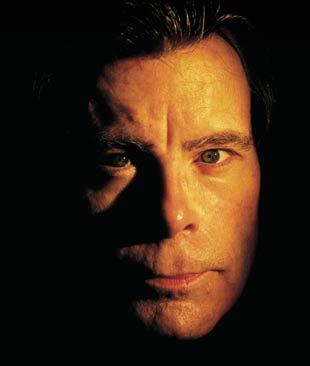
Speaking of things that scare us, last night I finished my second Stephen King novel of the year, It. It is well over 1000 pages and has taken me some time to finish. I read such things at night after I go to bed, and since I’ve been getting up at 3:30, I don’t have the energy to read long. So, the pace has been slow.

People warned me about this book, that there were scenes in it they still cannot shake from their memory, and that they had to read it with all the lights on in the house. Though there was a scene or two that I found particularly troubling, and though it is true I may never quite look at storm sewer drains and clowns in the same way ever again, I did not find the supernatural horror all that harrowing.

Once again what I found troubling was the craziness and cruelty of people. It’s the evil that people are capable of that arouses in me the real anxiety. I know that the thing known as It in the novel is fanciful (though one might argue what it represents). But I know as well that the abuse, the loneliness, the cruelty of one group of people to others, these things are real.

In the end It is vanquished. But people are still around. The ordinary horrors still exist. When will they be vanquished?

This, I think, is the justification of the horror genre. Not only can it force us to explore and probe and ponder both supernatural and ordinary evil, but the story always makes us long for a Deliverer. And to long for a Deliverer is a good thing. And to discover, even in story form, that the Deliverer triumphs, this, too, is good.

Sermon Prep


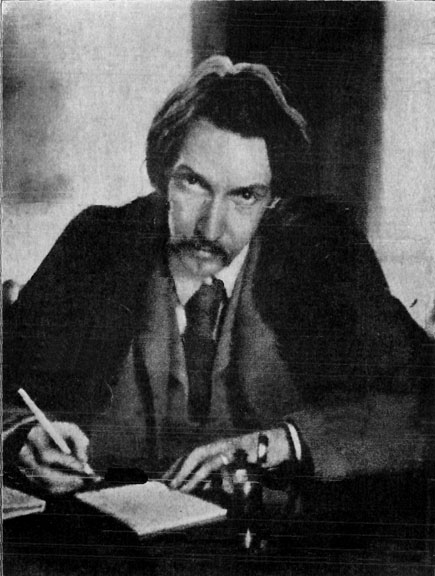
I have an unusual suggestion for those of you who will either be present for or listen to the sermon I will preach at HPC on August 19, God willing. I will be preaching on the last half of Romans 7 (verses 13-25) and so it would make sense to read those verses at some point, of course. But in addition, I would suggest that over the next ten days you set aside some time to read Robert Louis Stevenson’s Dr. Jekyll and Mr. Hyde. You may or may not have this sitting on a shelf somewhere, but the chances are whether you have read it or not, you know what it is about.

Or think you do. Hollywood movie posters aside, this is not the kind of horror tale that one expects. I’m learning that the things that really scare us are the things that are real. This is a story about something real.

If you would like to read it, you need not buy it. The text is in the public domain and you can download it by clicking here. It is relatively short and should not take you more than two or three hours to read. Enjoy!

Commitment a Two-way Street


The interchange on commitment a couple weeks ago generated some good comments, not all of which made it to the blog. One comment which came directly to me is worth being thrown into the ring for consideration. In responding to my post and to the comments to it, this correspondent says

I agree with every thing, pretty much, so far. But I get the impression that the thrust of the articles has only to do with member’s commitments to their churches and not the commitment that the rulers of those churches have to them…. I believe that commitment runs both ways.

This is a valid point which is worthy of reflection. I am curious what others of you think.

Page 63 of 71

Powered by WordPress & Theme by Anders Norén