Concerning Life as It Is Supposed to Be

Month: January 2017

Who Is My Neighbor? The Movies…

Film is story, and story is powerful.
Film can be used as a tool of propaganda, as can any media, but as art it can illuminate. It can help us see what we would not otherwise see and sense what we might never otherwise experience. It can in a powerful way put our feet firmly in another’s shoes and help us see life through their eyes.

Over the past few days I’ve been trying to bring some focus to my own thoughts regarding the immigration and refugee responses being determined by my country. Perhaps they will soon come to a shape that I can share with grace. In the meantime, though, I would like to suggest some movies that might help us feel the issues more powerfully than argument ever could.
Film is never objective and neither are the suggestions below. Good movies can, without undo pontification, inform our empathic impulses in helpful and profound ways. These are movies that succeed in that. These are good movies touching upon current themes and encouraging sympathy and openness.

Regardless of one’s take on the issues before us, these are movies worth watching. They are well made, thoughtfully produced, and the themes are handled artistically without a heavy hand. I invite you to disengage from Facebook and Twitter for a couple of hours and enjoy one or two. I’d be interested (I think!) in what you think.

🎞

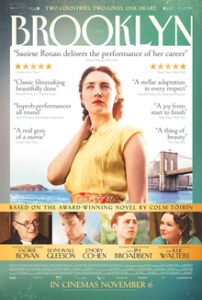
Brooklyn – This is a sweet and delightful film chronicling an early 20th Century immigrant’s experience. The immigrant is Irish and so the story feels distant and far removed from the current debate. But perhaps it is not.

🎞

The Lost Boys of Sudan – This and the next two deal with immigrants from Africa. This documentary touches upon the tens of thousands of children orphaned and forced to flee their home and enter East African refugee camps. The movie follows the story of a few who are granted resettlement in the United States.
The Good Lie – Reese Witherspoon stars in this drama touching upon the same issue – resettled Sudanese refugees. The refugee and the communities into which they are settled are both severely stressed by the process.

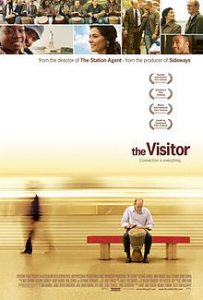
The Visitor – A touching story of a lonely widower whose broken heart is given a start toward healing by an encounter with undocumented African immigrants. It’s worth watching if only to see the Walking Dead’s Michonne play a sweet and defenseless character who decapitates no one.

🎞
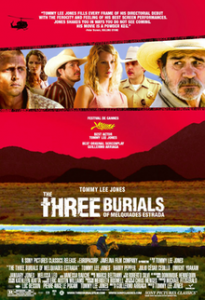
The Three Burials of Melquiades Estrada – This is an odd movie of friendship across borders, directed by and starring Tommy Lee Jones (and filmed on his ranch). With this one we enter the realm of immigration from Mexico. Viewers should know that this film earns its ‘R’ rating from a scene or two of sex.

Under the Same Moon – Perhaps it is sappy and sentimental, but given the family disruption and constant fear, this movie of a boy who crosses the border in search of his mother who crossed years earlier prompts the question of what would motivate one to make such drastic moves.

🎞

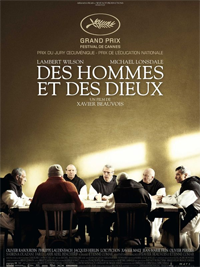
Of Gods and Men – Finally, not related to immigration per se, this story of a difficult choice foisted upon the monks of a Trappist monastery in Algeria revisits the question once asked of Jesus, as do all these movies, really: “Who is my neighbor?” And that is the fundamental question really, isn’t it?
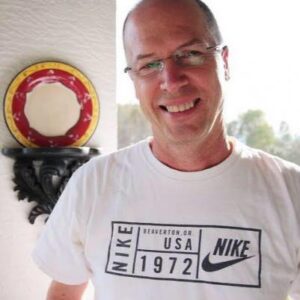
Bookish Habits #2: Rev. Mike Osborne

[For an explanation of this series, see the post The (Book) Lives of the (Not So) Rich and (Marginally) Famous. I will be asking the same questions of all I interview, with a few followup questions as needed.]

I have asked several pastor friends of mine about their reading habits, and their answers have varied widely. When asked about books he had read for fun in the past year, one pastor responded, “Only two I can think of.” Some of us do better than that.

The answers to my survey questions below come from a good friend of mine, the Reverend Mike Osborne, associate pastor of University Presbyterian Church in Orlando. Mike is a (rather proud) graduate of Clemson University and of Covenant Theological Seminary. He has been a pastor since the mid-80s and he himself has written a wonderful book on persevering in ministry, Surviving Ministry, which I reviewed here. Mike is a perceptive and wise pastor and friend who blogs occasionally at SurvingMinistry.com.
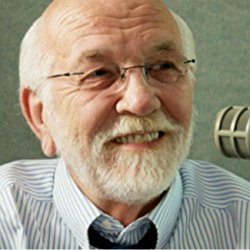
Randy: In the past year, approximately how many books did you read for ‘enjoyment’?

Mike: 10 plus parts of 4 or 5.

That’s tough for me. I’m obsessive enough that once I start a book, I feel morally obligated to finish it. Why do you stop?

Sometimes the book doesn’t hold my interest. Some books say everything they need to say in the first few chapters and the rest is either obvious or redundant. And, of course, sometimes the problem is not the book but my lack of discipline. Unlike you, I do not feel morally obligated to finish a book.

In that, you are a better man than I!

Another thing… If I see a book in a bookstore I might be captured by its cover or subject, but then after I’ve bought the book and started into it, I find I’m actually not all that interested in the content. It was flirtation rather than true commitment. Like when I was last in Chicago, having just seen the Cubs play, I was browsing in a used bookstore and found a book on baseball history. I thought how great the book would be. When I got home and the baseball thrill was gone, I had more objectivity and found the book to be not well written. So I stopped.

Even pastors flirt and can’t commit, I see. I just gave up on a book, but it took me 400 pages to do so. What motivates you to read books merely for pleasure?

The need to relax, to think about things other than ministry, to learn about history and popular culture, to grow more well-rounded.

How do you choose what books you will read?

I get interested in one thing or another at random times. I may watch a TV show that sparks my interest, let’s say, one set in WWII. I may get on a kick to read biographies from a certain time period or about a certain songwriter. As soon as a new book by Erik Larson comes out, I’ll get it and read it no matter what it’s about.

On Larson, we are agreed! What book or books are you reading now?

Jonathan Gould, Can’t Buy Me Love (Beatles bio)

Amity Shlaes, Coolidge

Don Carson, Praying with Paul

R. C. Sproul and Stephen J. Nichols, The Legacy of Luther

What three or four books do you find you most often recommend to others?

Within my ministry interest –

Richard Lovelace, Dynamics of Spiritual Life

John bunyan, Pilgrim’s Progress

C. S. Lewis, The Weight of Glory

Outside of ministry –

Anything by Erik Larson

C. S. Lewis, The Chronicles of Narnia

Ron Chernow, Hamilton

Do you ever recommend fiction to people? If so, what?

I’ve read so little fiction that my answer would probably be no. I recommended Kite Runner some time ago. And Stephen King’s 11/22/63.

Two interviews, two recommendations of 11/22/63. I sense a pattern. Finally, you are a great fan of Erik Larson. Which of his is your favorite?

Devil in the White City

Mine, too. Thanks!

Bookish Habits #1: Dr. Roy Starling

[For an explanation of this series, see the post The (Book) Lives of the (Not So) Rich and (Marginally) Famous. I will be asking the same questions of all I interview, with a few followup questions as needed.]

Roy Starling recently retired as a teacher of English at Oviedo High School in Oviedo, Florida. Prior to that he was a professor of literature at Rollins College in Winter Park, Florida. He has a PhD in literature from Florida State University. Though I never sat in his classroom, he has several attributes that  tell me he was a wonderful teacher: a love of his subject, a passion for his students, and a good sense of humor. I’ve observed all this in him over the years I’ve known him. Roy is a wonderful writer who blogs at StarkNotes.

Randy: In the past year, approximately how many books did you read for ‘enjoyment’?

Roy: 20+

What motivates you to read such books?

Pleasure, but not what is mistakenly referred to as guilty pleasure.

What is the difference between ‘pleasure’ and ‘guilty’ pleasure?

It might’ve been Stephen King who said it’s time for us to retire the ‘guilty’ in front of pleasure. If you’re reading and it’s pleasurable, why would you feel guilty? Infinite Jest gave me pleasure. Duma Key is giving me pleasure, but not the same kind. But it sure isn’t guilty. I haven’t done anything wrong. Also books not considered a part of the literary canon by academics would supposedly evoke guilt from a lit professor.

Language used well gives pleasure, end of story, turn out the lights, don’t let the screen door, etc.

How do you choose what books you will read?

Hearsay, plus knowledge of an author, plus a decent possibility that the book will be complex, True, aesthetically appealing, and thought provoking.

Exception: Stephen King for the pure pleasure of reading as a worthwhile pastime, and hence not guilty.

What book or books are you reading now?

Donald Barthelme’s short stories

Stephen King, Cell

Joyce Carol Oates, Little Bird of Heaven

What three or four books do you find you most often recommend to others?

To readers:

Tim O’Brien, The Things They Carried

Herman Melville, Moby Dick

Kate Atkinson, Life After Life or A God in Ruins

Don DeLillo,  White Noise

Fyodor Dostoevsky, The Brothers Karamazov

David Guterson, Our Lady of the Forest

For non-readers (who are probably only going to read my recs):

Stephen King, 11/22/63 or Misery

The (Book) Lives of the (Not So) Rich and (Marginally) Famous

I’m preparing this post on a Thursday night. Tomorrow morning I will meet my friend, Dr. Rook, at our local Starbucks. He will be sitting at the same table he always sits at. He, like me, is a man of routine. He will be drinking his morning coffee and he will have a stack of books in front of him. One of them will be a novel by Philip Dick and another will be something on Zen Buddhism, unless he has left that for the time being to return to exploring the biblical book of Job. I know this because we talk about these things. When we meet, I will ask him about his books, and he will ask me about how I’m doing with the Joyce Carol Oates book I’ve been laboring through. I will tell him that contrary to my tendency to dutifully plow to the end of any book I start, I’m abandoning her after giving her 400 pages of my time. We’ll talk about other things, of course, but since books are a part of our lives, we’ll talk books.

And that is as it should be. Reading, though a solitary endeavor, is still a communal affair. Books are meant to be talked about, and some of that conversation has been going on here in the comments to the recent posts. I have decided to extend that conversation.

Over the next few weeks, perhaps longer, I am going to share with the readers of this blog interviews that I’ve conducted with a number of people known to me and known to be readers. Some of these will be people others know well, and some not. But as I’ve conducted these interview and gotten a variety of replies, I believe all will find these of interest.

I’ll begin shortly by sharing the responses of my friend Dr. Rook. Though he has taught literature at both the high school and college level, his reading habits and recommendations don’t read like a syllabus at all. As well, I look forward to introducing you to the reading recommendations of a fellow pastor and those of a home school mom / part-time engineer, both of whom read surprisingly and widely.

Steve Brown

Eventually we will hear from those who write books as well as read them. Steve Brown, former pastor, current author, and founder and director of the radio and on-line ministry of Key Life will reveal what’s on his night stand.

Wesley Hill

We will get a chance to look over the shoulder of Biblical studies professor and acclaimed author Wesley Hill. There will be others to surprise us along the way.

I hope there will be encouragement here, as well as fun. We never read alone.

Of Serendipitous Plans and Obscure Napkins

My wife and I were having lunch with a young woman a few months ago when she reported having purchased some books from the local “friends of the library” sale. Among the titles she listed for us, one caused her to stumble because it seemed so odd to her, almost embarrassing. She is fascinated with Rome and so seeing a book titled Rome, 1960, she grabbed it, having no idea what was in it.

I knew what was in it. Cassius Clay (aka Muhammed Ali) was in it. Wilma Rudoph was in it. A barefoot Ethiopian shocking the world was in it, as well as Americans tempting Russians to defect. Racism, sacrifice, triumph, and disappointment were in it. Two years before I had asked a friend who teaches sports writing at Rollins College in Orlando for an example of really good sports writing. This book by David Maraniss was his answer, a fascinating story of the 1960 summer Olympics, “The Olympics,” the subtitle tells us, “That Changed the World.” She had snagged a gem.

Choosing a book can have that kind of serendipitous air about it just like taking unplanned walks in the woods will sometimes bring us to places more surprising than we would find on a systematic tour. And yet sometimes without a plan, we just never get to see that Grand Canyon we’ve heard so much about.

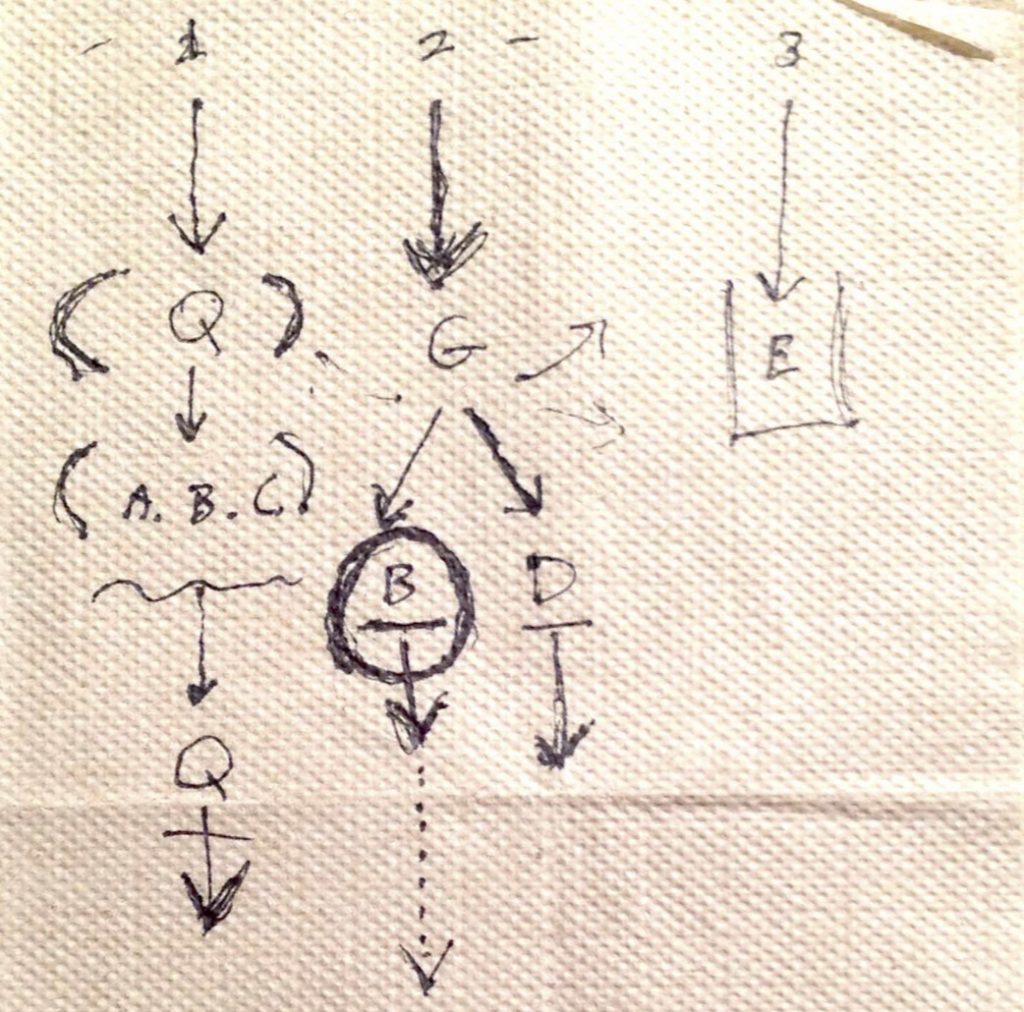
My reading is a combination of the planned and the serendipitous. I outlined my plan with a friend over lunch once. It looks like this:

Translation available upon request. Please allow six weeks for delivery.

I’m clearly in need of therapy.

It struck me long ago that without a plan in my movie watching, then what I watch is dictated by Hollywood marketing or Netflix algorithms and I miss the gems which might otherwise enrich me. The same logic applies to reading.Enjoy the bestsellers and and blockbusters. But set aside some time to find out what all the fuss is surrounding books (and movies) that you have heard about and never tasted.

Plan to read Anna Karenina even though it’s been a long time since it’s been a best seller. Or maybe it’s time to read To Kill a Mockingbird to see what all the fuss was/is about. And Crime and Punishment really isn’t that long. Give it a shot. Don’t shy away from having a plan, even if that plan is simply to read one classic each year.

Part of my plan is to read ONE Patrick O’brian Aubrey/Maturin novel each year. The logic in this, besides their being so good and a wonderful treat, is that there are over twenty and so I’ll have to live to be at least 80 to finish. Friends are telling me to step up the pace and read one after the other. I think they want me to die young.

But don’t be ruled by your plan. Occasionally, just take a walk in the woods and see what you can find.

And walk with friends. Reading is never a solitary endeavor. Some of the best books I’ve read (like Rome, 1960) have come from the recommendations of others.

Ultimately, reading is one area of our lives where we are permitted to follow our hearts. And that’s not a bad thing.

You are finally out of school

Too Many Books!

[Before Christmas we began a conversation about reading for pleasure. The previous two posts can be accessed here and here.]

The journey from the parking lot at the local mall to the Apple Computer store inside runs through the Barnes and Noble bookstore, a not unpleasant feature for sure. After walking through it the other day, I stood at the far end and looked back across that space and thought, very profoundly, “That’s a lot of books.”

I think even Solomon, who was more aware than most (“Of making many books there is no end….” / Ecclesiastes 12:12), would at the sight have run to a safe corner and melted into an overstimulated lump.

I can’t pick a Christmas tree from the mere forty or so on the lot. How daunting picking one book to read can be. The “Books in Print” people catalogue over 20 million books worldwide and the International Publishers Association tell us that over 300,000 annually are added domestically to that list. You might need to hurry to catch up. Or join Solomon in the corner over there.

And yet, if want you to pick one, how can you?

You could ask me, but I’m reticent to do so. I can tell you what I like, but that might not correspond to your passions and may do little to rekindle your wonder. More importantly, I think many of us have lost the ability to feel curiosity and have forgotten how to feed it. I want us to again experience the magic of our desires fixing upon a book that shows itself worthy of our attention.

A recently minted college graduate asked me recently what to read. As we discussed it, I suggested he answer that question by asking himself some questions first. Perhaps thinking about these will help others navigate the myriad choices before us.

  1. What questions do you want to have answered?
  2. What concerns would you like to think more deeply about?
  3. What things interest you that you’d like to explore?
  4. What books/authors have you always wanted to read (or types of books) but have never had time to do so?
  5. What genre of books would you like to explore that perhaps you’ve not explored before?
  6. What people would you like to be better able to communicate with or understand?

Perhaps you’ve heard a lot about this Tolkien fellow (question 4) and have always wanted to check him out. Or maybe mushrooms fascinate you (question 3). Out of 20 million books in print, surely there is a good one on mushrooms. Or maybe you have a Muslim neighbor and want to enter into his experience (question 6). Surely there is good book that will help you do so. (NOT a “How to Share Jesus” book, but one that helps you understand his or her life.)

Of course, I’d be happy to offer a suggestion or two. But my goal is not to get you to like the things I like. My goal is to rekindle the curiosity that possibly our education has dimmed.

Breaking Good?

BREAKING NEWS: Bad stuff happened in 2016.

Among the many things I might say, that sentence is one which could probably get the most universal affirmation. Bad stuff has happened. The year that is past seemed to feed us an over-the-top diet of death and violence and loss and disappointment. I have seen many online express a longing for this year to be gone, a longing I sincerely get.

But, of course, we all know deep down that there is an artificiality to that longing. January 1 is an artificial marker in the temporal sand that could just as easily be drawn in mid March or late August. The rising of the sun on 1/1/2017 simply marks a time when we can turn our backs on what has passed and renew our hope for what might yet come, something which we could do any day if we chose.

At the same time, without disavowing the hard losses of 2016 it is important, it seems to me, to consider that the only thing we note in history is loss. We grieved his death this year, but no one but his immediate family took any notice of the birth of Alan Rickman. Even they, unless they were possessed of a prescience of which I’m unaware, did not look at him and say, “He will make such an endearing Professor Snape some day.” And I’m guessing there were no newspaper articles celebrating the birth of David Bowie and the gifts he would bring to the world. There were probably only a few that paid any attention when Prince was given his first guitar. Only a few are present at a birth, or at the beginning of any other path of greatness. And that makes me wonder how many paths to greatness were begun in the year past?

Perhaps fifty years from now, people will look back upon 2016 with different eyes and see that that was the year that the world was given an insightful novelist that everyone adores, or a gifted politician who brought an unprecedented unity to the world’s divisions. Perhaps 2016 was the year when a 15 year old girl is inspired by a science teacher whose name is known to few to pursue medical research, a girl who fifty years later is renowned as the single most influential person to arise in the fight against debilitating cancers. Who knows what might have invisibly happened this year that has set the world on a path of life and healing.

I’m a pessimistic sort. My muse is Eeyore and my bosom pal is Lewis’ Puddleglum. But weak as I am, I know that it is not a string of days we call a year holding the world together. Rather it is a God, whose ways we often don’t understand and frequently dispute. But his purposes for this world are ultimately good, and that knowledge enables me in the midst of the darkness to believe that something better will come.

Something better may, in fact, already be here. We just don’t know it yet.

Happy New Year.

Powered by WordPress & Theme by Anders Norén