
Concerning Life as It Is Supposed to Be

Month: January 2011

Andre’s Ghost

One of the comments attached to my post on Andre Agassi’s book Open noted that the book must have been ghost written. I assume that with nearly all memoirs, that is a given. In this case, Agassi makes every effort to communicate his great respect for and dependence upon the man who formed his story into captivatingly readable prose.

On the publisher’s web page there is, nestled among accolades from sources such as the New York Times and Time Magazine this snippet from Entertainment Weekly:

“Not only has Agassi bared his soul like few professional athletes ever have, he’s done it with a flair and force that most professional writers can’t even pull off.”

I get the impression that this reviewer somehow really believed that Agassi wrote this. But he is right: most professional writers can’t pull it off, and so Agassi turned to a Pulitzer Prize-winning professional writer. It is only fitting that the story of one of the best in one field should be written by one of the best in another.

There is a context in which ghostwriting can be a dishonest act (and it’s prevalence in Christian publishing is a dirty little secret). But this is not one of those cases. The ghost is not invisible. In his acknowledgements, after four paragraphs describing the extent of their collaboration, Agassi says this:

I asked J.R. many times to put his name on this book. He felt, however, that only one name belonged on the cover. Though proud of the work we did together, he said he couldn’t see signing his name to another man’s life. These are your stories, he said, your people, your battles. It was the kind of generosity I first saw on display in his memoir. I knew not to argue. Stubbornness is another quality we share. But I insisted on using this space to describe the extent of J.R.’s role and to publicly thank him.

Such humility and honesty I find refreshing. These qualities do not live in the acknowledgements alone, and this is what gives the book value and makes it a worthy and enjoyable read.

Even if there are no hills in Bradenton.
Golden Voice

While complaining on Facebook about losing my voice this week, a friend sent me a link to this story. I had not seen this and was amazed not only by this guy’s voice, but the glimpse it gives into a side of homelessness we can too easily overlook – people with abilities who really do want to work.

Let’s hope that this story ends well and that Mr. Williams and the Cavs have a long and mutually beneficial relationship!

The Hills of Bradenton

It is not often that my life intersects those of famous athletes. Living for 25 years in Bradenton, Florida did up the odds of that happening, but only incidentally, in that many do make their homes in the Sarasota/Bradenton area.

So among other lines of interest, I began Andre Agassi’s memoir Open, interested in reading about his time spent at the Nick Bollettieri Tennis Academy in Bradenton. Bollettieri’s academy, now IMG, has received renown over the years as the training ground for tennis greats Agassi, Jim Courier, Monica Seles, and Maria Sharapova, among others. Agassi arrived in Bradenton about the same time as I, he a 14 year old tennis phenom, and me a rookie pastor.

His recollections of the place, however, are vastly different than my own. Those who know Bradenton will immediately see what I mean from this quote:

Every day at the Bollettieri Academy starts with the stench. The surrounding hills are home to several orange-processing plants, which give off a toxic smell of burned orange peels. It’s the first thing that hits me when when I open my eyes, a reminder that this is real, I’m not back in Vegas. I’m not in my deuce-court bed, dreaming. I’ve never cared much for orange juice, but after the Bollettieri Academy, I’ll never be able to look at a gallon of Minute Maid again.

I’ll give the guy some slack due to the fact that he hated tennis and doubly hated his time at Bollettieri’s, and therefore has no fond memories of Bradenton. And I’ll factor in that he was an angry teenager at the time. But at the same time I chuckle to read in the acknowledgments that the text was meticulously fact-checked. Clearly, they missed a few.

Yes, there is an occasional, not daily, smell from the single, not several, orange processing plant, Tropicana, not Minute Maid. That smell, from the process by which orange peel is turned into feed for livestock, is endearing to some of us, as it identifies the town’s heritage and heart. But to others, it is annoying, and so I can accept Agassi’s negative recollection.

But hills? Hills? Really? Hills?

I know it is a minor and silly detail, but how can one spend more than a day in Bradenton, Florida, elevation 5 feet, where the highest landmark may be an interstate overpass, and speak of hills? One has to travel an hour or two away from Bradenton to find anything remotely resembling a hill. The predominant geography of Bradenton is flatness and water.

I trust the recollections from the rest of his life are more accurate.

My Christmas Stash

When I was a child, the primary conversation held with friends each year after Christmas centered around what we got. If you are reading this, I have to consider you friends. Therefore, I imagine you asking me what I got, and I’m more than happy to share with you.

Among other items, from camping pots to caramel popcorn, the book-lover in me has ruled this a successful Christmas. The following have fallen solidly in my queue.

we_are_the_ship-winner.jpg

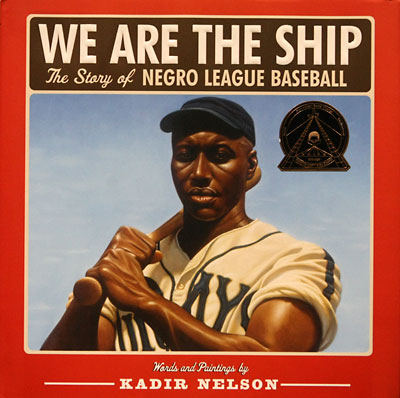
We Are the Ship: The Story of Negro League Baseball – This is a beautiful book even if there was not a fascinating story associated with it. I told my wife that we now need a coffee table to display such a book upon! It is a book recommended to me by my administrative assistant, and dedicated to a long-time resident of Sarasota, “Buck” O’Neil.
matterhorn.jpg

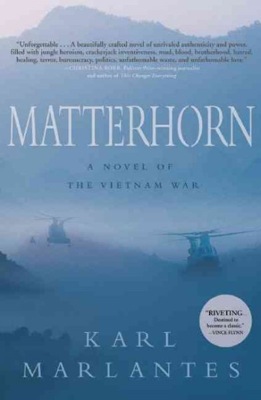
Matterhorn: A Novel of the Vietnam War – I am told that this is one of the best novels about the Vietnam War. I don’t like reading about war, and yet it is something that defines so many of us. This book has appeared on a number of ‘best of 2010’ lists.
Physics.jpg

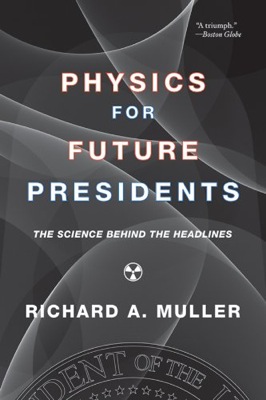
Physics for Future Presidents: The Science Behind the Headlines – I may from this book gain only enough knowledge to make myself dangerous. But so many political and ethical questions today are based upon the claims of ‘science’ that I thought it would be helpful to have some introduction by which I could at least come to understand the terms used in the debates.
Open.jpeg

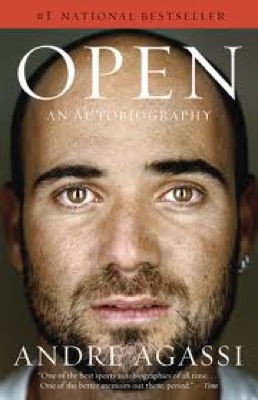
Open: An Autobiography – This is reputed to be one of the best sport memoirs ever in terms of its honesty. Agassi was one of the world’s greatest tennis players, one who hated tennis. That in itself draws me in.

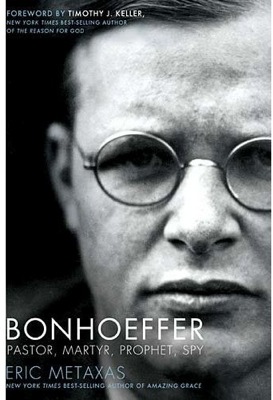
bonhoeffer-by-eric-metaxas.jpg

Bonhoeffer: Pastor, Martyr, Prophet, Spy – I’m almost fearful of this book. Bonhoeffer was everything the subtitle says, and I’m only comfortable with the first.

Expect to see comments on some if not all of these books in the weeks… no, months… ahead!

The Extraordinary Privilege of the Ordinary

This past Sunday morning, I went to church.

That in itself is not so unusual. After all, I am a pastor, and going to church is my job. What was unusual is that I went to church as an ordinary guy. Not as pastor, but as worshiper. And I was reminded of how great a privilege and how important a component of life is worship.

Sunday for a pastor is normally a work day. My mind is filled from the moment I rise – usually very early – with thoughts about the details of the service and particularly the sermon I’m to preach. Right or wrong, this preoccupation rarely disappears even after worship has begun. And though I benefit from worship and truly do celebrate the Lord’s kindness in the communion we share, there is still a distraction that comes from having such a public role to play.

But this past Sunday was different. It was ordinary. I was on vacation and had no responsibilities. In fact, I could have stayed home. I could have judged that I ‘needed a break’, or that I was tired, or any one of the myriad of reasons that I have heard as a pastor over the years for placing a low priority on public worship.

But I went, with no responsibilities, and I was blessed.

We showed up later than planned because we went together as a family. My visiting son and his wife have an infant son whose presence slowed us down. But that was okay. We arrived as worship was beginning and we took our seats as would anyone else. We listened, we spoke, we sang, we prayed.

When the time came for the sermon to be preached, I reached for my note pad. The one preaching in my place was my intern and I knew he would be interested in my critical reflections upon his preaching. I started to take notes to share with him, and then stopped. More than he needed my reflections, I needed to be fed God’s Word. I needed to be preached to, and he did such a solid job of that that it was a blessing just to listen.

And then I had the rare experience (for me) of being served communion. I am normally the one serving. The sacrament served to remind me of my place in the people of God and the privilege that is. It was such a warm and encouraging reminder.

I left having been blessed by the ordinary service of God’s ordinary people in the ordinary rhythm of the church.

And I left wondering why anyone would ever voluntarily pass on the extraordinary privilege of gathering for worship with God’s people. It is not something that we merely should do. It is something that we are regularly privileged to do.

Perhaps it is only we who rarely have that privilege who can see that so well.

Reflecting on the Incarnation

I read this morning this thoughtful and reflective sermon by B. B. Warfield, Imitating the Incarnation. I rarely find it easy to read sermons. This one is different. Not only does it heighten our awe for the Christ who became man, but it challenges our thinking about the goal of Christian living. Very warm, pastoral, and moving, this.

Warfield is preaching on Philippians 2:5-8.

“The one subject of the whole passage is Christ’s marvelous self-sacrifice. Its one exhortation is, ‘Let it be this mind that is also in you.’ As we read through the passage we may, by contact with the full mind and heart of the apostle, learn much more than this. But let us not fail to grasp this, his chief message to us here,—that Christ Jesus, though He was God, yet cared less for His equality with God, cared less for Himself and His own things, than He did for us, and therefore gave Himself for us.”

From this, Warfield concludes

1) that we have a God who is capable of self-sacrifice for us.

2) a life of self-sacrificing unselfishness is the most divinely beautiful life that man can lead

3) that it is difficult to set a limit to the self-sacrifice which the example of Christ calls upon us to be ready to undergo for the good of our brethren.

This is worthy of multiple reads and deep reflection.

Page 2 of 2

Powered by WordPress & Theme by Anders Norén