Concerning Life as It Is Supposed to Be

Month: March 2018

Sabbatical: A History

On August 1, 2006 I ordered Eugene Peterson’s book The Contemplative Pastor. Reading it was a balm to this pastor’s soul. Peterson rails against the idea that a pastor is called to ‘run’ a church. He believes that the adjective ‘busy’ modifying ‘pastor’ should grate against our ears with the dissonance of ‘adulterous’ attached to ‘husband.’ He invites pastors, who have been culturally set up to rise and fall with the numerical success of their congregations, to return to their calling to shepherd, to pray, and to preach.
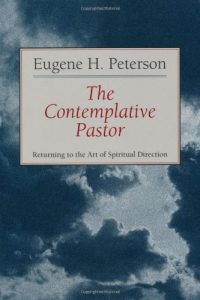
In this book he told the story of his sabbatical. For a year, he and his wife disappeared to a cabin in the woods and emerged refreshed and energized.

“I returned with more energy than I can remember having since I was fifteen years old…. The experience of my maturity was now coupled with the energy of my youth…. The sabbatical had done its work.” (page 150)

At the point I read this book I had been in ministry and at the same church for a month shy of 21 years. Vacations had come and gone. The church had graciously given me study leave and the opportunity to attend occasional conferences. But I had never experienced the kind of rest and renewal Peterson spoke of.

And I was ready.

When I broached the subject with my elders, they were supportive. We began to develop a sabbatical policy that would apply not only to the pastor but in a modified but meaningful sense to ruling elders as well.

And then, sadly, dynamics in the church began to unravel. Stress points to which I was blind, or which I did not want to see, became fissures and the fissures became chasms. Sabbatical was put on hold and then in 2010 it became necessary for me to leave that church for another.

The church to which I came longed for stability and a building to call it’s own, hopes which God over the next few years granted. In June of 2016, I raised the subject with these elders that I had had to abandon in 2010. They were receptive and eventually adopted a policy governing sabbatical leave for pastors and elders. In October of that year I spoke of this for the first time to the congregation and recruited a committee to help in the planning of a pastoral sabbatical. The fruit of their work has already been felt and will be experienced in earnest on April 9 when my sabbatical begins.

And it was all set in motion by a book purchased nearly 12 years ago.

Why Sabbatical?

[These thoughts explaining the rationale for a sabbatical first appeared on Covenant Presbyterian Church’s sabbatical oriented blog, Covenant Pastoral Sabbatical. There are other good articles on that site related to this theme.]

Talk of my taking a sabbatical spawns the question (thought, though rarely spoken), “Why are we giving Randy a 13 week vacation?”

It’s a great question. ‘Sabbatical’ can easily look like ‘vacation.’ After all, I will stop coming to church. I will stop preaching, stop planning and moderating meetings, stop visiting the sick, stop mentoring or discipling others. I will stop doing my job, and that looks like a vacation.

But sabbatical is more than stopping. It is a period of intentional rest, renewal, and re-imagining.

As a time of rest the sabbatical most resembles a vacation. Rest for people in ministry is essential but hard to find. Jesus commanded his disciples to ‘come away and rest’ (Mark 6:31) because ministry depletes the minister. Ministry demands an intentional period of disengagement so that strength for the work can be renewed. The minister’s body needs rest and renewal, but so does his soul. Over time, though the pastor fights to retain his passion for Christ, the demands of ministry can deplete it. This leaves some ministering weakly on the fumes of their prior devotion. Churches end up with pastors merely going through the motions of ministry.

A sabbatical, as a part of a pastor’s regular routine of spiritual health, can renew the depth and vitality of his walk with Christ, restoring his ability to give needed spiritual care to his congregation.

Such intentional rest and renewal can also refresh a pastor’s vision. Men and women from all professions report that disengagement from their regular responsibilities allows them to imagine a future they might have been unable to see before. A properly planned sabbatical (and much planning is being given) can give a renewed enthusiasm for the vision God has for the church.

The sabbath year in the Old Testament law required that farmers let a field lie fallow for a season. Obedience to this was an act of faith by the farmer and an act of renewal for the field. During that year nutrients drained by prior use would be restored to the soil. Similarly, a pastoral sabbatical is a congregation’s act of faith, hoping for the restoration of their pastor’s depleted spiritual resources.

What Is a Sabbatical?

The story is told of a pastor who bought himself a nice, but modest houseboat and docked it on a small lake near his town. He named his boat ‘Sabbatical.’ This way when the urge to fish overwhelmed his sense of responsibility, his secretary could answer all calls by saying, “He can’t come to the phone. He’s on Sabbatical.”

And if that seems shady, to many so does the pastor who persuades his congregation to give him thirteen weeks away from his duties and responsibilities. But that is what I have done.

Sabbaticals are a common feature of academia. It is understood that professors are occasionally given time away from their teaching responsibilities to do research, to study, or to polish off their latest books. What is less well known that some of the most successful and innovative companies (as diverse as McDonalds and Apple according to a report published online by the University of Illinois, a report that no longer seems to be posted) have policies of giving members of their teams sabbaticals. These times have no particular goal or purpose beyond allowing their people to rest, to refresh, and to renew. Sabbaticals like this have been shown to be hedges against burnout and long range stimulation to engagement and creativity.

The idea of sabbatical is very much rooted in the biblical idea of sabbath.

Sabbatical for a pastor is a time for him (or her) to disengage from the regular duties of  ministry. For a time, preaching, visiting, planning, and putting out fires are laid aside that he might find rest and renewal. He is to let go of the control he once owned and to entrust the care of the church to God and to the leaders whom God has raised up. It is a time for him to rest physically and emotionally and to embrace the revelation that the church does not need him to prosper.

The length of time away varies from church to church. Three months is often recommended, but I’ve heard of durations as short as a few weeks to as long as a year. Depending on their stage in life, some pastors leave their towns and live elsewhere for a time. Some travel. Some garden, paint, read, learn an instrument, or rebuild engines. Some, I’m sure, buy houseboats and fish. All detach from the 24/7 nature of their calling so that when they return to that calling they can do so from a position of renewed vigor.

If the sabbatical is done well they return to churches who have learned something of themselves. Pastors are by no means superfluous to the prosperity of churches. But neither are they essential. And churches who learn that they have gifts sufficient to carry on genuine ministry on their own are churches ready to form a healthier bond with their pastor when he returns. In the end, this benefits all.

Being Particularly Mortal

Let me introduce you to Atul Gawande, the author of the insightful and life affirming book about dying Being Mortal.

Not Randy

He is, in addition to being a National Book Award finalist and a staff writer for the New Yorker, a surgeon in Boston and a professor at Harvard Medical School. He is the director of a company promoting innovation in health systems and chairman of a NGO seeking to make surgery safer worldwide. He also is married with three children.

Typing that paragraph exhausts me.

Unlike Dr. Gawande, or so I must assume, I have only 24 hours in a day. I tend to sleep away six or seven of those. That only leaves me about seventeen, some of which I like to spend eating and taking care of personal hygiene. With what is left I do what I can do. I find I am more like Woody Allen in his comparison with Spielberg and Scorsese:

“‘I’m lazy and an imperfectionist,’ he explained in a 2015 NPR interview. ‘Steven Spielberg and Martin Scorsese will work on the details until midnight and sweat it out, whereas for me, come 6 o’clock, I want to go home, I want to have dinner, I want to watch the ballgame. Filmmaking is not [the] end-all be-all of my existence.’”

[from “The Remarkable Laziness of Woody Allen”, Atlantic Monthly, 8/10/2017, page 35]

All of which explains, if not excuses, why this space has been bewilderingly empty these past months. Though there are things I want to say, I’ve not had the time or space in my schedule to say it. I’ve not been teaching at Harvard or improving global healthcare, but I have been pastoring a church, caring for a family, doing some other writing, and watching Netflix.

I’ve also been preparing to take a sabbatical.This is a curious and misunderstood thing, so I want to spend some time explaining, if not defending it. This will hijack this site for a few months, I fear. However, there are those for whom this will matter. And I’m hoping that some will pass this on to their pastors to encourage them to consider a similar path.

But I move too fast here. Some of you are wondering what a sabbatical is, why it is necessary, and what it means in my own life. To that we will  turn.

But not until I eat breakfast, something Dr. Gawande must squeeze in between his latest surgery and editing his next book.

Powered by WordPress & Theme by Anders Norén