Concerning Life as It Is Supposed to Be

Month: November 2008 Page 1 of 4

Rovings 12-1-2008

I’m sure you won’t believe me here, but there really is a WRPSS, the World Rock-Paper-Scissors Society. There is strategy (!) as well as tournaments paying real money. Amazing. Is there also a World Punch Buggy tournament?

Did YOU know what country rules Greenland? You lose if you said Iceland.

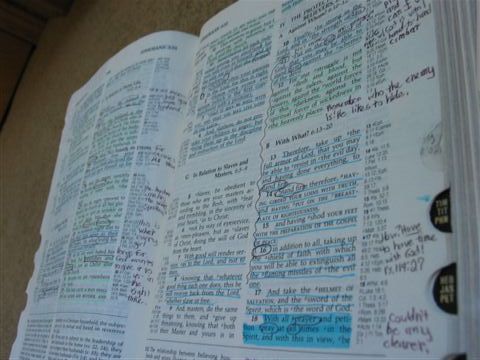
Scouring the web, Snowbot discovered this post which appeared a full week ahead of my call for a ‘Holiness Bible’. I did not copy. Honest. You can tell I’m honest, by the way. Just look at my Bible.

Finally, if you want Christmas presents not made in China, visit Nigel and Cheyenne’s studio this Friday and Saturday. Good stuff! (For those who do not know, Nigel and Cheyenne are accomplished potters (Nigel just returned from presenting a guest lecture at the University of Florida who do first class work. They also happen to attend Hope Church.)

The New World

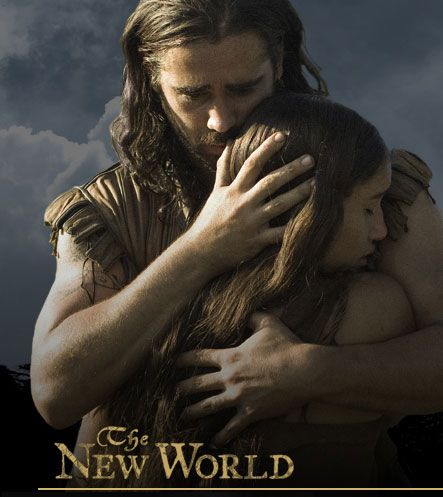
In this post on the Image Blog, Jeffrey Overstreet gushes (again) about the movie The New World: Here is a portion:

“That’s why I often revisit Terrence Malick’s masterpiece—The New World. The film has become like a liturgy for me. And this new Extended Cut, just released on DVD, could not have come at a better time. I’m exhausted by recent election coverage, campaign promises, and idealism that is as unrealistic as it is inspiring. I need to regain my perspective.

“Watching The New World again, I’m amazed at how Malick has improved upon an already brilliant tapestry, weaving in more than twenty new minutes that greatly enhance its poetry. No film that I can name is more attentive to the influence of natural beauty upon human beings. And no film more clearly illustrates what Psalm 19 has always claimed: That creation “pours forth speech” day by day. While friends complain that the film was already too long, I’ve caught Malick’s fever. As he meditates on the reflective qualities of still waters, they restore my soul.”

I once had this movie at home in my hand ready to watch, and several of my children told me to not waste my time with what they judged to be the most boring and unbearably long film in the history of the motion picture. And now it’s out in an extended cut.

I’m curious: have any of you seen it? If so, do you see any qualities in it that would make it worth a two and one-half hour investment of time?

War: What Is It Good For?

I joked on Tuesday about marketing a Bible that would provide all the appearance of holiness with none of the work. What made that funny (to me anyway, and to the two of you who called me ‘brilliant’) was the supposition that holiness requires real work.

This is the point of confusion for many of us. We believe that sanctification is a work of grace in which we cannot boast. We believe that the development of a beautiful Christlike character in us is something for which God should receive all the glory, for it is impossible for us. We believe all of this, and yet we at the same time say that there is hard work involved. How can that be?

We have been trying to sketch an answer to that question. It is important to stress that though God is the author of our sanctification, it requires real blood and sweat on our part.

So far, we have suggested that our actions fall out along three lines. You can see how each of these was developed by clicking on the links.

1. Know who you are

2. Seek the work of God’s grace to change you

3. Put yourself in the way of grace
We turn our attention to the fourth action, the mortification of sin. By far, I think this is the most foreign to us, and the most difficult.

I went to college at Michigan State University, a beautiful campus in the middle of a very, very, very flat part of Michigan. While there, for a PE credit, I took skiing. Our ski ‘mountain’ was, I think, a reclaimed landfill. Nothing to boast about. Fortunately, for someone as unfit for skis as I, the bottom of the hill was close to the top of the hill.

To ski beyond the beginners’ ‘snowplow’, I found out, required perfecting several movements, several very foreign movements, all at once. I think our growth in Christlikeness must be seen in the same way. There is not one magic key. As much as I think points 1 through 3 are ESSENTIAL to our growth, we cannot really separate them from the fourth and still hope to get to the bottom of the slope intact. We must be addressing our desire for change on all fronts at once. And the mortification of sin is no doubt the hardest of the lot.

4. Mortify sin

How often in addressing change in the Christian does Paul tell his readers to ‘put to death’ sin? It is a key part of the Bible’s teaching. In Romans 8, he puts it this way:

For if you live according to the flesh you will die, but if by the Spirit you put to death the deeds of the body, you will live. (Romans 8.13)

We are to put sin to death. We are to inflict a mortal wound in those deeds of the flesh which are contrary to the desires of the Spirit. If there is a sin which haunts us, we are to slay it. This is violent language because it is a violent work we need to perform.

But danger lurks.

If we are content with mere externals, some may find that by the flesh they can conquer the flesh. If my definition of sin terminates on some act that is not really a great problem for me, I might very easily remove it from my experience and take all the credit for it. Pride ensues, and holiness remains an illusion. I have not mortified sin; I’ve simply modified behavior.

To mortify sin is to identify the sin that clings to us and consumes us and to see to its death in us. I have yet to meet a person who really struggles with anger or worry or pride, really struggles with it, who can simply say, “I won’t worry any more” or “I won’t lose my temper any more.” How does one do that? How do we slay worry or fear?

The only way I know is to starve it. Siege warfare is not quick and it is not pretty, but it the best analogy for what we are discussing here. We must identify the sin, determine what feeds it, and cut off its supply lines. When it overcomes us, we repudiate it, repent of it, and cry out for grace, but we never stop the siege.

Take anger, for example. We tolerate anger for a variety of reasons. Normally it is because something we treasure very highly is threatened by another – our reputation, our sense of control, our possessions, our status, or whatever. When someone strips that treasured thing from us, we lash out in such a way as to get revenge, to hurt the one who denied us what we so treasured. We need to no longer treasure the thing we seek to protect.

Thus, our lust for, say, a sense of control, is what feeds our anger. To starve that, to slay it, will mean replacing our demand for control for a contentment with Christ alone. As our satisfaction in Christ grows greater, our need to feel in control will grow weaker. Our sin will be starved, and grow weaker, and approach death.

In the midst of this process we will repeatedly fail. In each time of failure, we must confess our sin, confess it to those whom we have offended, confess it to God, and repent of it. And when we fail again, we must do the same. We must never lose heart and never give up.

I was an angry man, and I threw things. I still fight that. It is not as visible as it once was, for my propensity to anger easily has diminished (though not disappeared). One day, years ago, my oldest daughter was standing near me at the kitchen sink and I had a dishcloth in my hand. Something she said or did angered me. I stood there with the dishcloth in my hand, and I started to laugh. Almost in tears I looked at her, the provocation no longer important, and pointed out to her that I did not throw the washcloth! I was so happy to see change that I had not accomplished. The urge to throw it simply did not come as it once would have done. The inner sin had been starved away. It was not that I at that moment noted the law (that anger is sin) but the urge to act out anger simply did not happen. Real change had occurred.

I hated my sin. I confessed my sin. I prayed for the sin to be removed. I repented of my sin when it came. But when it did not come, I realized that the change was not the fruit of my strength in law keeping. The change was the fruit of the Spirit’s gracious work in me.

I long to keep the law, which is good, and I therefore attempt to cut the heart out of those things which feed my disobedience. This requires some care, some introspection, perhaps in some cases some counsel. But it is good, and it may take a lifetime.

But God will honor our warfare and work change in us.

The Lord Gives…


Job acknowledges the sovereignty of God in all situations. “The Lord gives and the Lord takes away,” he says. He does not try to protect God or to defend God or to strip God of his rights as creator. He simply acknowledges the fact that the Lord gives and the Lord takes away.

This past year has seen its share of his taking away. I’ve experienced that in our church, and I’ve seen it in the lives of a number of friends.

But it has as well been a rich, rich year of his giving. How so?

* In the past year, God has given to my oldest daughter a wise, godly, loving husband. Since her preteen years, she has longed to be a wife and mother, and the first half of that desire has been met by a man perfect for her. And then, the second half, that of being a mother, is, shall we say, incubating.

* My middle son was previously married and divorced, and has a son. He could not imagine any woman being interested in him after that. However, I got to watch late this spring as he stood before a young woman, with a tear on his cheek, and heard her pledge her troth to him. And what a woman God has brought him. Bright, sensitive, joyful, one who loves God and loves him. We could not be more blessed.

* Then there is the woman whom God gave five years ago to my oldest son. None of us Greenwald men are easy to love, but this woman is such a perfect fit for Seth. She laughs with him, and when necessary, laughs at him. They rejoice in the same things and pursue together the heart of God. She and my wife have so much in common that as they prepare to move, I’m wondering if Barb’s sorrow is more for losing Amy than for losing Seth.

* In the past year, a dear friend surprised Barb and I with a gift of a trip to Chicago. We would never have conceived such a trip nor planned for it. It was given to us, and it was such a delight to spend time together in such a neat place.

* While in Chicago, we celebrated thirty years of marriage. What a beautiful woman God has given me, one whose beauty deepens with age. And Barb has such patience (I think long-suffering is the right concept) to endure a life with me for all these years. I’m having to repent daily of my failings as a husband. But she soldiers on loving me.

* We were awed during that trip that God has also given us two maturing and responsible daughters. Twice in the past year they have been left at home to care for the household, to be the people in charge, and to do so without our guidance and intervention. And during our absence, we had no worries at all about their behavior or responsibility. What a blessing they are to us.

* In the past year, all three of my youngest children stood, at different times, before the congregation of Hope Church and professed their faith in Jesus Christ. How deeply we celebrate that. But are they fully perfected saints? Of course not. But their desire to take this stand before God’s people reveals where they want their heart and life to be. They profess faith in Jesus not because Barb and I are something special; they have done so because God has been faithful to his covenant and has drawn them.

* And then there were the Rays…

A blog is such a self-indulgent thing, and so I could keep going well beyond the limits of anyone’s patience, but I’ll end here.

The Lord does at times take away.

But he always gives.

Blessed be the name of the Lord.

—-

Note on the picture: I KNOW that is a chicken and not a turkey. I figured everyone else in the world would be putting a turkey picture on their Thanksgiving posts. I just wanted to be different.

Rovings 11-26-2008

I normally post these tidbits on Sunday, but this has been an atypical week and so this is as soon as I could get to it. Some interesting stuff here:

On Singleness. Those of us who are not single would benefit from reading this honest post by someone who is. A quote to whet your appetite:

That’s the trick about marriage as a goal. It’s not like learning to dance, or committing to losing weight. It doesn’t take will power to find a mate. It takes a mate. It takes a miracle. Oh, that I could just go to the store and pick one up!

The rest of us have so much to learn.

Where have stories gone?
Seems an odd project for MIT.

While we are referencing the NY Times, some other tidbits:
The current economic downturn may open up opportunities for ministry, if we understand the importance of community. What do you think?

Stats can be misleading, but it turns out that TV watchers are less happy. Hmmm.

We all hate phone menus. This is why. (Thanks, Gail, for this one.)


And this, from James Fallows. This is why I like this guy’s blog. He’s liberal and progressive and articulate, so he makes me think. But his interests vary widely, and I like that. Read his post on Why didn’t I know this before? (Math dept: Benford’s law). Fascinating.

And finally, if you want to be challenged in prayer, and you’ve not already seen Geoff’s post, read this.

The Holiness Bible


Every now and then marketers in the Bible racket comes up with a Bible to fit the latest fad. On top of Women’s bibles in pink, Men’s bibles in camo, Youth Bibles with rock themes, and so on comes the new Green bible, which highlights biblical passages which encourage care for the environment.

I’m not sure how well the green Bible will sell. I’m actually surprised it will sell at all. I myself have had a great idea for a specialty bible. I call it the “Holiness” bible, though friends think it should be called something else.

What I propose is a bible prepared for sale along the lines of distressed furniture or pre-faded jeans. These would be leather bound and large. The binding would be scuffed and worn, the pages wrinkled and a few torn. Page after page would have underlining, highlighting, and hand written comments in the margin. For extra authenticity, the markings would fade out around Leviticus, pick up again through Psalms and Proverbs, and puddle extensively in the New Testament.

So you see, with such a bible one could give the impression of holiness with none of the real work.

Is there a market for such a thing? Why, there could be a whole industry spawned by guys looking to impress good looking Christian girls. And we pastors – who wants to show up at a bedside and read a psalm from our iPhone when we could assure our parishioners of our deep passion for the word by reading to them from such an obviously well worn ‘sword’. It could be a boon for unbelievers wanting to visit a local church but not wanting to be pegged as ‘the non-Christian’. I tell you, this is marketing genius.

Are you listening Crossway? Zondervan? Nelson?

The Wright Insight


Those who know something about current debates in evangelical and reformed theology will find a measure of pleasing irony in the following quotes from Anglican Bishop N. T. Wright. Those who are unfamiliar with the debates can read these words for the profit in them. For these are great and wise words.

[Caveat: Do not presume to make a judgment regarding my opinion on the matters of debate. I simply find the observations made here to be so true and so well said that I wanted them to be heard more broadly. No doubt the one making these observations is making them from the crucible of experience.]

“…There is an ever-present danger of false teaching in the church. Coupled with this there is, of course, an ever-present danger that people will imagine false teaching where there is none, or will label as ‘false teaching’ something which just happens not to coincide with the particular way they are used to hearing things said.

“But noting the dangers of wrong analysis doesn’t mean there isn’t after all such a thing as false teaching. There is, and it matters.

“The trouble is, of course, that false teachers seldom give themselves away easily. What they say sounds clear, convincing and attractive – as does a great deal of good and wholesome teaching. Many Christians, for good reasons, like to believe what they are taught and to take it on board with humility and trust, and so are easy prey for those who have subtly different ideas and a clever way of putting them across. But Paul sees that the church is caught in the crossfire of spiritual warfare. It isn’t a matter of simply getting one’s doctrine correct out of a sense of intellectual pride. There is a battle raging for the redemption and renewal fo the the world and of individual people, and the church is up against the powers of darkness. …What they need is both the assurance that victory will be theirs and the promise and prayer of fresh grace to be with them in every need.”

N. T. Wright, Romans for Everyman, Volume 2, pages 136-137

It Doesn’t Make Any Sense at All

While discussing the fascination many have with entertainment that exposes the worst of humanity, I was sent this quote in which the creator of The Sopranos, the massively successful and critically acclaimed HBO drama, reflects on the evil of the main character Tony Soprano.

“He is a sociopath. No doubt about it. But, a lot of people said, ‘You know, we thought that maybe there was a chance that Tony Soprano would turn his life around and in the end there would be some morality to it. And that in the end he would transcend his evilness.’ And this, to me, is amazing because you wonder, ‘Do people pay attention to the story?’ In Season One, the guy’s mother tried to murder him. So, he, of all people, is supposed to rise above that and be happier than he was before that happened? It doesn’t make any sense at all. He never got over that.”

(The full article is here.)

That is an interesting observation which gets at the heart of our question (introduced here and here): is change possible, and if so, what can a Christian do to facilitate change in his life?

I don’t want to minimize the significance of what this man says about his creation, Tony Soprano. The depth of his past defines the nature of his present. That is true of all of us. Our past certainly makes us who we are. Transcending that past is not something that is easy, and in some cases, it is never complete.

Tony Soprano’s creator says that it does not make any sense that someone would change. I’m grateful that OUR creator says that we can. He is the one who changes us.

But if he changes us, what can we do? We have said that there are several things necessary.

1. Know who you are

2. Seek the work of God’s grace to change you

3. Put yourself in the way of grace

4. Mortify sin

5. Rejoice in the gospel

We’ve discussed the first two. What is this third idea?

3. Put yourself in the way of grace

This has been the most helpful thing to me. I know that it is God who changes me, and I know that it is his grace to do so. I am not changed by upping my church attendance, praying more, or reading my bible more frequently. We sometimes act as if God must reward us for these things, and fall into the trap where we think, implicitly, that God must give us the gift of change because we have done good stuff. That turns the good stuff into an economic transaction, which God despises and rejects.

But are these things valuable? Yes.

God does dispense his grace ordinarily in specific contexts. Paul, for instance, tells us that faith (which is what we need in this battle) comes by hearing the word of God. So the one who is drinking deeply of the Scriptures (and I think primarily Paul means the scriptures preached) is going to be more open to the ministry of the Holy Spirit than the one who neglects with regularity this means of grace.

We long for the grace which changes us, but grace is freely dispensed. It is ordinarily dispensed as God chooses through those things to which he attaches it – his word, prayer, the sacraments, the fellowship of the church. The more we avail ourselves of these things, the more we place ourselves in the position where God is likely to act. He is not bound by this, and we obligate him to nothing. But this being where he shows himself active, then it behooves us to go where he is active.

Those seeking healing in the gospels knew instinctively to go where Jesus was. They still needed his grace to be healed. But by placing themselves where he acted, they opened themselves more fully to his intervention. The same is true for we who want healing in our struggle with sin. We need to go where Jesus is.

I am not saying that the path to holiness is to ‘read your bible and pray’. That can be law. If I think that there is a connection, a reward, for these activities, then it is law. If I think that God is attending to my hours invested and rewarding me accordingly, that is wrong.

Rather, the means of grace are just that. Not works, not magic formulae, but places where, as one author puts it, the distance between God and his people is ‘thin’. They are places where God’s Spirit works upon our Spirit and makes us more sensitive to him, more desirous of him, and, I have to think, more able to resist sin. The whole complex of worship, scripture, sacrament, fellowship (Heb 10.25 does have a sanctification context) and the like are places where God feeds our faith and grows us up in him.

Well, I could go on about this. It is too easy to see the means of grace and spiritual disciplines as works of the law, when they are not that at all. They are places where we go to meet Jesus. And they are places where we can hope, and pray, that he will meet us and slowly and significantly weaken the grip of sin on our lives.

Meeting Jesus often enough, we may find that even those long icy fingers of our past may begin to loose their grip on our heart.

Are you listening, Tony?

Stories of Family and Friendship

In contrast to the movies which immerse us into a violent world, an immersion we somehow vicariously, but safely, enjoy, there are other films which seem to celebrate the pleasures of friendship and family, and do so without overly sentimentalizing either.


Two men who seem to do this consistently are Tom McCarthy and Peter Hedges. Hedges wrote the screenplay for What’s Eating Gilbert Grape and About a Boy and wrote and directed Pieces of April, and the recent Dan in Real Life. McCarthy has but two movies to his credit (though he has acted in many): The Station Agent and The Visitor. All of these movies are worth watching.


The question here is not whether we should or should not watch these, the question is not whether we should or should not enjoy what we see in them. The question is this: what do these movies, all exploring the lives of men or women in some measure alienated from family and friendship, tell us about the world in which we live and the longings that are found there?

Pieces of April is worthy of note here because it focuses upon a prodigal daughter reaching out to her estranged and highly dysfunctional family through her preparation of a Thanksgiving dinner. Watch it this week. You will be touched, not only by the urge toward family reconciliation, but as well by the beautiful picture of community which is displayed. Dan in Real Life is a rare film that sets the struggles of its main character in the context of a healthy, functioning, strong family, and it is that family that surrounds the character in his point of need.

The Station Agent is an odd little film (oddly, Patricia Clarkson is in both this movie and Pieces of April) about several rather odd characters who find friendship, and through friendship find themselves reconciled with their lives and with others around them.

The Visitor is the most recent of these films, and is a bit heavy in its full frontal (and tilted) consideration of America’s immigration dilemma. It, like the others, takes a man who is by life battered and bored and reintegrates him into real life through friendship.

None of these movies were box office smashes, but all are wonderful stories. And each reminds me why I enjoy watching movies.

But if they at all reveal a cultural longing for relationship and reconciliation, we can perhaps judge that the efforts the church makes to both exist as a real community and to as well facilitate community where we live are well worth the effort, though immediate measurable results are not visible.

I’d love to hear what others think.

—–

[Note 1: Both Pieces of April and The Station Agent have some scenes of drug use. As well, Pieces of April includes some unsettling pictures of, well, suffice it to say that a character is suffering from breast cancer. Further be warned that Pieces of April requires watching within reach of a box of Kleenex. You have been warned.]

[Note 2: Before you conclude that my movie watching habits have been rescued, redeemed, and focused in a more wholesome direction, you should know that next in our queue is Hellboy II. And of course, before you think me lost forever in the other direction, you should watch and ponder Hellboy I, a film in which the main character is thrown a cross necklace which burns the mark of the cross into his hand. The one who throws it to him says as the camera focuses upon the mark of the cross, “Remember who you are. This was given to you by your father.” Based upon the strength of that image and reminder Hellboy regains the capacity to do the right thing. Very interesting.]

Where Have All the Editors Gone? – the Egg on Your Face Edition

Early this morning was posted on this blog a piece about sloppy mistakes in pop culture. I pointed out obvious errors in the movie My Life Without Me and in the book State of Fear by Michael Crichton. The problem is, I did not submit this post to an editor before posting it. My wife (and editor) called me having great fun at my expense, pointing out that I had listed the author of the book as Tom Clancy. She thought for a moment that I had done it on purpose as a little tongue in cheek bit of irony. No. If you could have seen beyond the egg on my face you would have seen the red face of embarrassment.

Ah, humility. How often have I tasted thee!

But, in retrospect, Barb demonstrates to me the value of a good editor. She keeps me from embarrassing myself. I have returned and fixed the post before many of you saw it. But, of those of you who did see it, how many CAUGHT the mistake? If you saw it, keep in mind that I put it there on purpose, as a test. Yep. That was why.

Page 1 of 4

Powered by WordPress & Theme by Anders Norén