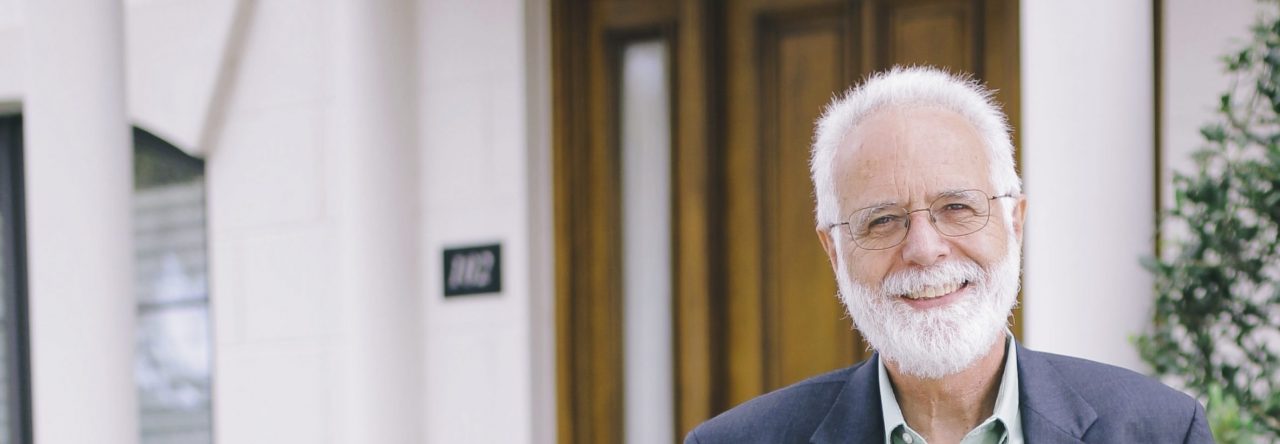
Randy Greenwald

Concerning Life as It Is Supposed to Be

In Praise of Laptopistan

I read with amusement and identification this article about the laptop/coffee shop culture. I find that I am not alone in finding that I work more productively in a public environment. The author notes this.

At home, the slightest change in light is enough of an excuse to get up, walk around, clip my nails or head into the kitchen. Though home offices seem like the perfect work environment, their unrestricted silence, uninterrupted solitude and creature comforts breed distraction. In Laptopistan, I focused with intense precision, sitting motionless for hours at a time…..
Laptopistan provides structure, and freelancers, like children, secretly crave structure. You come to work, for two or four or eight hours, and you take comfort in the knowledge that everyone else is there to work as well. There’s a silent social pressure to it all….
Back home in Toronto, with my ergonomically correct chair, spacious desk and dedicated Internet connection, I pulled up my notes from the journey to Laptopistan and tried to write. Within 10 minutes, I was lost in Facebook and watching old “Soul Train” clips on YouTube.
So I unplugged my laptop, traded my sweat pants for jeans and walked two blocks to the nearest coffee shop. There was some country music playing at a comfortable volume, and the familiar sight of cords along the floor. I took a seat between a guy working on an identical MacBook Pro and a woman drawing in a journal, and I worked like I was back in Atlas: productively, contentedly, fueled by a steady diet of Earl Grey tea, an economically acceptable quantity of cookies, and that social pressure I was craving.

There are aspects here that some may not really understand. It is easier for some of us to be focused when the environment in which we work is stripped of the familiar. I prosper under the general background hum/white noise of the coffee shop environment.

However, Laptopistan as described in this article and found in Brooklyn and Toronto does not exist in my suburban Florida context. I am working this morning from the closest Laptopistani imitation, a local Starbucks. I have been reading theology since 8:15 A.M. with a focus that would not happen elsewhere. But I’m not sitting where I started. Shortly after claiming the warm seat by the window, a woman came and sat near, a woman in high heel black boots soon joined by others in identical attire, some kind of high heel black boot beauty cult. It wasn’t their public meeting that was the great distraction. It was the woman’s strong, penetrating voice which insisted that it be listened to.

Nevertheless, I still gravitate to places like this, but not only for the focus they afford. I come here to write sermons. It helps me as I write to look around me and see people instead of empty space and books, as I would see in my study. It helps for me to see ordinary, lost and searching people. It helps me to see them and ask, “Am what I am thinking of saying going to make any sense to them at all?”

Those I see here may never hear the sermon revisions they inspire. Nevertheless, I think I’m a better preacher because of them.

How Pleasant

Though our whole family could NOT be together for Thanksgiving, I know that they would have LIKED to have been. And so one of the things I’m thankful for is that I have children who like being with one another. My wife and I have six children, three children-in-law, and three grandsons. And they all love to be together.

And that is one of the greatest happinesses in my life.

Yes, they irritate each other. They know and tolerate each other’s foibles. They sometimes have to put up with one another. But all in all they like each other and have a great time when they are together.

That is a good thing, and it brings happiness to my heart.

And that makes me wonder: when God’s people dwell in unity, whose heart is made happy?

Behold, how good and pleasant it is
when brothers dwell in unity! (Psalm 133:1)

The Day After

Some people blog for a living.

I blog between the cracks.

So my timing is often off.

Like now.

I want to wish all a happy Thanksgiving Day. I can be cynical about a lot of things (like politics) but NOT Thanksgiving Day. It is good to take some time to celebrate the good things we have and to be thankful for them.

Many in the world are thankful, but are ambiguous about the one to whom they are thankful. They are happy for their life situation without having any to whom to credit for their happiness. There is an impulse to give thanks, but no ability to fill out the contours of the object of their gratitude.

That is the goal of the Christian preacher and the Christian church: to point people to the one to whom they are thankful; to pull back the curtain and urge them to see the one from whom all good things come.

Of all that I have read in the past few days regarding the giving of thanks, the wisest comes from someone who gives no hint as to whether she has a person to whom she is directing her thanks or not. Nevertheless, her thanksgiving is full of great wisdom.

If your life is in an uncertain place, if you are on an adventure, if you long to live more adventurously but are fearful, there is wisdom here.

A sampling:

1. Be thankful for the fact that you are not bored….
2. Be thankful for the limitless possibilities an uncharted path holds….
3. Be thankful for…all the help you get from those who support you….
4. Be thankful for the opportunity (read: necessity) the path you’re on gives you to be creative….
5. Be thankful for all you do have….
6. Be thankful for the moments of joy….
7. Be thankful for the gift of passion….
8. Be thankful for being alive….

I encourage you to read the whole. Even a day late.

History of the Whole World

In the early 1990s, I had the privilege of driving Dr. James Montgomery Boice, then pastor of Philadalphia’s Tenth Presbyterian Church, from Bradenton, Florida, after a speaking engagement at our church, to the train station in Tampa, where he was to catch a train (he was weary of flying) back to Philadelphia.

On that ride, Dr. Boice revealed to me that he was then beginning to read again Will and Ariel Durant’s 11-volume history The Story of Civilization. I was impressed by his desire to be well rounded and in his curiosity in all things.

So when I heard of Susan Wise Bauer’s similar but more compact four-volume history, I decided to jump in. (I have finished The History of the Ancient World and am in the middle of The History of the Medieval World.)

I’m glad that I have done so, and from the vantage point of 1400 pages in, I feel that I’m in a position of making an observation or two.

First, I’m impressed. Knowing something of how hard it is to write, and how difficult it can be to sustain one’s productive interest in a project of this magnitude over a prolonged period of time, I cannot imagine how tough it is for her to keep at this project for so long. Add to this the fact that she is not an historian, but a professor of English, I am more amazed at her ability to grasp and wrestle to the ground such massive amounts of information.

Secondly, she tells this story with as much passion and interest and personality as she can muster. The narrative is punctuated with wry observations about the myriad characters involved. She is able, for example, to see through and expose with a wink a king’s supposed ‘holy’ purpose when it is clearly a raw grab for power.

Thirdly, her purpose is incredibly noble. She is not trying to write a typical Euro-centric ‘world’ history, but a true history of the whole world, giving the stories of China and India and Japan and the Islamic states, and one imagines in the future, those of Africa and South and North America, equal coverage.

The problem I find is that the task is just so monumental that I’m sure that it is impossible to do.

Compressing such massive amounts of information into a mere four volumes of 900-1000 pages each results in a narrative that moves from one battle to another, one political play for power to another military victory, from one region to another. Sprinkled within are occasional glimpses of life, and now and again the pace slows to give the back story to contemporary events (such as the intriguing explication of the different claims of Sunni and Shia Muslims). But overall, something of the human in the story is lost.

I’m thinking that part of the problem is my own. My knowledge of, say, the ninth century, is so insipid that the parade of names and places leaves me as dazed as a first reading of the prophecy of Isaiah must to the person new to the Bible.

But I can’t help but think that the issue is bigger than that. That it is impossible when one moves further and further away and condenses an era into fewer and fewer pages to write much more than about tectonic shifts in power. Lost is the detail that makes the living of life human.

I have calculated that if one were to shrink the earth to the size of a bowling ball, that the resulting sphere would be, if possible, smoother than a bowling ball. That is, all the detail and contrast which make the earth wonderful to observe would be gone. All that would be left to describe would be surface detail. For the most part, that is how I feel in reading these books. They are well done. But the scope is too large.

Somewhere, a family this morning is sitting down to a breakfast of waffles and sausage, perhaps celebrating the return of a son or daughter from military service or mourning the loss of a family patriarch. Elsewhere, a young man is plotting the means of telling his girl of his undying love and desire to marry her. And still elsewhere, a child is going to sleep hungry, struggling with his family to find the food to eat in an impoverished land.

All over this drama goes on and has gone on, but none of it is visible to the writer of a general history. And the further we are removed from these stories, the more sterile a history MUST become. When one pulls back further and further, one is left with little but battles and wars and usurpations and power struggles. And no matter how well that history is written – and this one is written well – the end result can be tedious.

Perhaps I’m not James Montgomery Boice after all.

Parade of Celebrity

I am a fan of the English Standard Translation of the Bible. Sit me down for a time and I will try to tell you why. I think there are good reasons to like it, but I’m always interested in understanding other’s reasoning for preferring it, and so I watched this video.

Interestingly, none of the speakers here really attempts to say anything more beyond it is readable and trustworthy. The real intention of the video, clearly, is to fix the celebrity status of each speaker behind the ESV.

So, there is little value to be had from the video’s expressed intention. What was interesting to me was the opportunity to see the faces and voices behind the celebrities I’ve heard about and/or read!

Woman Crushed to Death in Her Sleep

That’s a headline I’m expecting to see soon. under-the-dome.jpg

Barb is reading Stephen King’s Under the Dome, all 1074 hardcover pages of it, lying in bed. Thus far the only affliction she has suffered has been loss of sleep stemming from an inability to turn the light out.

I’ve thought about getting it for my iPhone Kindle app, but I’m afraid that would make my phone too heavy to carry in my pocket.

The Government Must Do Something

This will be my final post stimulated by my recent read of David McCullough’s Mornings on Horseback.

At one point in his career as a New York Assemblyman, Roosevelt was impressed to lead the charge which would have removed the cigar making industry out of the homes in which it had become a massive business. To the conservative outside observer, this seemed like an anti-business, anti-family, government intrusion into the lives of citizens and the rights of business.

So it seemed to TR until Samuel Gompers prevailed upon him to actually tour the homes where this was going on. He found awful conditions, sweat shops, really, where great pressure  and little pay was given for labor that was unregulated and involved even the smallest of children.

The bill would move cigar making out of these homes and into a factory where those who did the labor could be well treated and well paid for what they did, and children enabled to be children. It became for him a matter of social justice. And for this, he was accused of being a socialist.

It’s a standard ad hominem against any act calling for social justice, but it was a necessary step for the government to take. We are often told that the free market will correct such ills, but it doesn’t. The market has a poor track record when it comes to issues of human rights or environmental concern. So it requires the power of those unassociated with dollars to act.

There are times that the government must act. And yet, always? That requires wisdom.

I remember a cartoon contrasting child rearing between now and a long time ago. In the one panel, a child falls from a tree, and the dad says to him, “C’mon. Shake it off. You’ll be alright.” In the other panel, the child falls, and the father says to the panicky mother, “The government should do something to make trees safer.”

And wisdom will always, it seems to me, move forward along two paths, two paths illustrated by the contrasting approaches of Roosevelt’s father and uncle. The uncle called for greater government involvement to solve the ills of the day. His father, in the meantime, established homes for indigent orphan boys, built museums, and helped widowed soldiers.

Both seem to be needed.

Failure Is a Part of Our Stories

“One learns more from failure than from any success.”

Typically those who say this are listened to and quoted because they are speaking from a position of success. People are listening to them because they are assuredly not failures, but those looked up to and respected.

I love irony. And this irony leaves me to take such assertions with a bit of puzzled curiosity.

I conclude that if one learns more from failure than success, then at age 54 I am due to receive my well-earned PhD. at any moment.

But this all begs the question of what passes as success and failure. Herman Melville (ever hear of him?) died in obscurity working for $4/day as a clerk at the New York Custom’s House. Success of failure? Jim Baker at the height of his ministry success couldn’t keep his pants zipped. Success or failure?

Success can be a hard thing to quantify, and yet we all know what it is. Pastors who are NOT pastoring large churches or whose churches are not growing are called ‘faithful’. In my experience, ‘faithful’ is Christian code for ‘struggling’ or ‘unsuccessful’. One rarely hears that platitude applied to those with large, bustling ministries, faithful though their pastors may be.

Such platitudes must be taken for what they are worth. We all have a pretty good idea in our minds what constitutes ‘success’ and ‘failure’ in every field. Though one may learn more from failures, I know of no one craving such an education.

So it is with some interest that I read the literature of failure. I find strange comfort in the honesty which acknowledges that failure is a part of life. It is not a reflection on our character or our status. It is little more than an acknowledgement that we are indeed living.

To know the inevitability of failure is not to be defeatist. It is to acknowledge that in learning to walk every child first falls down, and of those who eventually do master the art, few will run 100 yards in 10 seconds. To know that the falling down and the hitting of limitations is okay and are a rightful part of life is to accept that failure comes to those who dream dreams.

The author of this piece, Lane Wallace, writes a great deal about ‘adventure’ – flying planes, climbing mountains, and the like. But she sees many parallels between the life of the adventurer and the life of the dreamer. The pursuit of dreams is by definition an adventure. It requires a vision, and an ability to change course, to back up, to redirect, to evaluate, and to plot a new course. It is always a risky thing. For those who dream, failure will be a part of our stories. And the simple reality of hearing that expressed does not make me long for success less, but it removes some of the fear of failure.

There is, of course, a gospel context for confronting failure – the knowledge that our acceptance before God is in spite of and unconnected with success or failure in our lives. I don’t discount that.

But I do take comfort in the reminder that failure happens. So, I’ve learned something yet again. Add it to my transcript.

The Kindle App

Tinkers, reviewed here yesterday, was the first book I’ve ever read completely on an electronic reading device.

Shortly after getting my first ‘smart phone’, an iPhone, this summer, I was shown that I could get a Kindle App for use on the iPhone which opened up to me Amazon’s collection of ebooks, a collection both more extensive and less expensive than that available for the the more elegant iBook app pre-installed on the iPhone.

Though I immediately bought Tinkers which had recently been recommended to me, and a couple of others, I have resisted reading in that format.

Now that I’ve done it, a couple of thoughts.

1) The reading experience was good. After a while, I did not miss the smell of pages and the physical feel of the book in my hands. Once the content took over, the delivery system was not missed.

2) I loved being able to read at night without turning on the light. I found that I could hold the phone and ‘turn’ the pages adeptly with one hand even while lying in bed.

3) I find that I can always have a book at hand. The iPhone is light, fits in my pocket, and goes with me everywhere. (I can’t see what the advantage of the Kindle itself would be over the iPhone for delivering this content.) My pride takes a hit, though. If I’m sitting somewhere waiting for someone, and am staring at my phone, I’d rather people know I’m reading a good book rather than playing “Angry Birds”!

4) On the other hand, I tried to mark passages in Tinkers. It was simply not as quick and easy as with a paper book.

5) And the reason that I cannot see myself ever moving to this method other than for the occasional book is the loss of the library. When I’ve read a book that mattered to me, I like to put it on the shelf. There it lives next to other books which have been a part of my life. At will I can pull it down, flip through some pages, find a passage. I can pick it up and hand it to a friend for them to look at. I’m emotionally bonded to the paper and ink in a way that I never will be to the 1s and 0s.

Ebooks are a great tool. I would gladly receive a Kindle gift certificate any day – for, say, Christmas… :-). But I cannot see it ever surpassing the love affair I have with the hold in your hand variety of books.

Anonymity

There is a slight problem with anonymity.

It cannot be thanked.

We received in the mail today a Starbucks gift card simply labeled, ‘Thanks.’

It was in an envelope with no return address, and an Orlando postmark. Barb and I puzzled briefly over the handwriting on the envelope, but that led us nowhere. And so we were stuck.

We were stuck with a gift greatly appreciated and with no way to reciprocate with a bare ‘Thank you.’

There is an outside chance that the sender actually reads this blog. That’s not likely, since I know both of you who actually read this, but still….

I guess I’ll never really understand and fully appreciate this grace thing, this underserved and unreciprocated favor that comes always from God and sometimes from his people.

*Sigh*

Guess I’ll have to go ponder this over a caramel latte at Starbucks. This time, I’ll make it GRANDE!

Page 56 of 142

Powered by WordPress & Theme by Anders Norén