In the year following the attack on the World Trade Centers, my wife and I attended an Alison Krauss and Union Station concert. The final song of the night was intentionally, though obliquely, linked to that still fresh wound. The opening verse of the song, written by banjo/guitar player Ron Block, muses
Why do we suffer, crossing off the years?
There must be a reason for it all.
The reality of human suffering is beyond question. To imply that there is a reason for it comes with its own set of problems. Given the horrific nature of what the TVs and our own lives bring into our experiences, if there is reason, it had better be good.
Rarely, however, do we find the proffered reasons satisfactory. That is no surprise to me. If God is, and if God rules, and if God rules with intention and purpose, how can the terrible evil we see fit into that rule, if indeed he is, as we assume, good?
The option to God’s purpose, we noted in a prior post, is no purpose. For many reasons, I opt for the notion of God having a purpose as being a greater comfort. But that does not mean I understand the purposes of an infinite and all wise God. As AKUS notes:
In all the things that cause me pain You give me eyes to see.
I do believe but help my unbelief.
It should not surprise us if we cannot comprehend the purposes of a sovereign God. But that does not mean that we are given no hints. In a day when the horrors were more likely to be next door than simply on television, Christian thinkers were more earnestly pressed to consider the questions and posit some answers. Thomas Boston writing 300 years ago suggested that the afflictions which befall the Christian may arise from one of seven possible reasons. I list them here not to pretend to be exhaustive, but to give us, as the Scriptures do, a place to rest our weak faith.
1. The trial of one’s state, whether one is in the state of grace or not? whether a sincere Christian or a hypocrite?
2. Excitation to duty, weaning one from this world, and prompting him to look after the happiness of the other world.
3. Conviction of sin.
4. Correction or punishment for sin.
5. Preventing of sin.
6. Discovery [revealing] of latent corruption.
7. The exercise of grace in the children of God.
Standing alone these are little help, and even once explained, they may bring minimal comfort. Ultimately our hope is in the love of God, proven in the cross of Christ, where God himself suffered on our behalf.
Hurtin’ brings my heart to You, crying with my need,
Depending on Your love to carry me.
The love that shed His blood for all the world to see
This must be the reason for it all.
More concisely put is this quote lifted from Twitter, which Tim Keller attributes to a sermon of Jonathan Edwards. Knowing the love and purpose of a good and sovereign heavenly Father, we can know this:
Our bad things will turn out for good. Our good things can never really be lost. And the best things are yet to come. #JEdwardsfirstsermon
— Timothy Keller (@timkellernyc) June 10, 2013
There is, in fact, a reason for it all.
 . Both religion and philosophy, Ferry suggests, are driven by the same engine, the passion to find a way around, through, or beyond the anxiety caused by the reality of death. Both are, that is, seeking a path to salvation.
 he assesses the structure in this way:
 . It was a blessed time, not so much for the book itself, as these things often go, but for the privilege of hanging out with men aiming to do ministry well.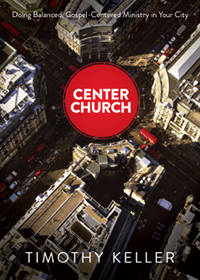
 know that he takes a cautious if not disdainful view of the idea of ‘running’ a church. He acknowledges that the institution needs to be managed – that a certain amount of ‘running’ a church is inevitable and necessary. But if running a church overwhelms the primary pastoral callings then something monumental has been sacrificed. It is easy to allow that to happen.
 We need to hear Keller’s challenge to lead the church well, but not without Peterson’s balancing caution that “nothing in pastoral work is more liable to Pelagian tendencies than the work of giving leadership to the community of faith” (
 , page 211). (I think, by the way, that Keller would probably agree.)