Randy Greenwald

Concerning Life as It Is Supposed to Be

Link Test, Happy Thanksgiving, and Merry Christmas!

This is a test of the link function of this blog. Let’s say, for example, I wanted to share with you all what our joint Thanksgiving service with St. Paul’s Missionary Baptist Church was like, could I do so? I only know one way of finding out. I will add a link to a portion of the sermon preached by Pastor James Roberts. This should give you a feel for how things were moving here at that wonderful service. And if this does not work, well, that’s that, and have a merry Christmas!

Here is the link.

Devotional Resources, 2007

Every year I prepare a set of devotional resources which are (mostly) date specific. These include some Bible reading schedules, but a hodge podge of other things as well. I put these on a CD for people to pick up at HPC. Below I am appending the ‘read me’ file from that CD. Perhaps there will something of interest mentioned which those of you without access to that CD. If so, e-mail me, call me, stop me on the street, or shout my name from the highest mountain, and I’ll see what I can do to meet your request.

* * *

The resources on this disk are intended to help the recipient in the disciplines of Bible reading and prayer. These represent an idiosyncratic collection of resources that reflect my own experience and practice over the years. Each of them has been generally created or preserved in their current form because I (or those I was trying to help) found them helpful. I am sharing them in this format in order that perhaps they might help some others as well.

There are two categories of resources here: those aimed at Bible reading and those aimed at prayer. However, I believe strongly that the two disciplines belong together, and the selections included here will reflect something of that viewpoint.

Most of the resources here bear their own explanations. However, the Bible reading schedules do require some advance explanation.

There are four date specific schedules provided, and one undated schedule. The undated schedule simply provides a convenient way for one to read through the Bible at one’s own pace while preserving a balance between reading from the New Testament and reading from the Old Testament. I have used this schedule to read through the Bible slowly over a period of four or five years.

Most of the date specific schedules are built upon the same model as the undated schedule. There is a move back and forth between the Old Testament and the New Testament that some appreciate. The other distinctive features are the following:

  1. Each schedule is built around a five or six-day week. I find this realistic for most people. All of us will miss a day or two now and then. Therefore, I schedule no readings for Sundays (and with one schedule, Saturdays), preferring to leave that as a make-up day. If one misses several days, then setting aside a portion of time on the Lord’s day to read Scripture would seem to be an appropriate use of the day! If you are disciplined enough to keep up, you can use Sundays for some alternate devotional readings (for which I have suggestions for those who ask!)
  2. I have configured each schedule to begin on January 1, believing that a Monday is a good day for such beginnings.
  3. The basic schedule takes the reader through the whole Bible in one year.
  4. Some find a one year plan to be a bit daunting. They have tried to read the Bible in a year in the past and failed. They therefore find the attempt to be fraught with anxiety. For them I am providing a schedule which takes the reader through the whole Bible in two years. This is much more accessible for some people, and in some respects a more meditative method for reading.
  5. For those who would like to have a ‘big picture’ view of the Bible, I am also providing a schedule which takes the reader through the Old Testament once and the New Testament and Psalms twice in the course of one year. Some of you may recognize the general idea here to be similar to that of Robert Murray M’Cheyne’s well known schedule. However, I have found M’Cheyne’s schedule too disjointed as one must read from four passages in one day. This schedule covers the same territory, but with less jumping around.
  6. The newest edition here is for those who want a careful and slow reading of the New Testament. In God’s providence, there are 260 chapters in the New Testament and 260 weekdays in a year. What about that!

I am presenting these schedules to you in a variety of formats:

  • Each is presented in a Word document which you can simply print out and keep with your Bible.
  • In addition, you will find here an Excel document called BibleSched2007.xls. This contains all four dated schedules in a format that is useable when opened in PocketExcel on a Windows based handheld computer or in Excel on a regular PC. This has not been tested on a PalmOS unit.

New! Audio Resources! I hate to leave empty space on a CD. The print resources here consume only 2.1 MB of a 700 MB CD,. Included, therefore, are a set of sermons from Tim Keller, pastor of Redeemer Presbyterian Church in NYC as well as a set of lectures on outreach from Jerram Barrs of Covenant Seminary. We have found both sets to be of enormous help in our own lives and hope that you will find them helpful as well. If you do not have the ability to listen to .mp3 files away from your computer, burn them to CDs. They are worth it! These messages are, by the way, freely distributable.

I trust that these resources will be used by God in your life to help you come to know Jesus and the height and breadth and depth of his love!

Should you have any questions or suggestions, please contact me and let me know:

Hope Presbyterian Church
4455 30th Street East
Bradenton, FL 34203
941-727-3408
rg7878@gmail.com

Mac Update

It has been nearly three months since I made the switch from a Windows based laptop to a MacBook. From the moment I first laid eyes on the thing, I was in love. Now that I’ve been married to it for three months, am I happy with the relationship? I get asked that regularly. The answer is “Yes.”

Someone asked me if I regretted making the transition. I said, “Absolutely not.” I cannot see turning back. I’ve debated whether Mac owners are members of a fraternity or a cult. I’ve decided it is definitely a cult, and I am now a full initiate.

But is a Mac really ‘all that’? That is a good question. My transition from Windows 98 does not give quite a fair place of judgment. Compared to the instability of Windows 98, my Mac shines. It has crashed but once in the three months, and that was a freak thing after loading a plug-in to help me read a Windows movie file. [Mac cult rule number 38: if you can blame something on Microsoft, do so.] Word for Mac has crashed several times, and Firefox a time or two. However, when they crash, they do not take the entire operating system with it. After the crash, I click a single button and the applications are up and running in a matter of seconds.

The style and the creativity of the Mac is legendary, and mine lives up to the legend. It is probably true that what one can do on a Mac he can also do on a Windows machine, at least the ordinary type things that I am accustomed to doing. But there is a greater element of fun and enjoyment in doing it on the Mac. That Mac programmers have personality is evidenced by the way the OS tells you that you have entered the wrong password. Windows says something like this: “Have you forgotten your password AGAIN? How many times do I have to tell you to store that somewhere where you will not forget it. What kind of an idiot are you anyway?” (At least it FEELS like that.) The Mac requester simply shakes back and forth, as if to shake it’s head, “No.” I laugh instead of get mad.

Earlier this week I was reading James Fallows’ preview of Microsoft’s upcoming release of its new OS ‘Vista’ and it’s latest version MS Office from the latest issue of The Atlantic Monthly. Fallows is a well known journalist who at one time was a part of the team involved in the development of Office 2000. What is telling in the review is his comparisons of the new Vista OS with the existing Mac OS. Consider what these quotes reveal:

“Ninety percent of the sex appeal of Vista is its new ‘Aero’ desktop theme. This offers convenient icon-size gadgets on the desktop—a clock, a calendar—like those of a Mac.”

“It’s overall look is far sleeker than any previous Windows incarnation and, gasp, seems even more modern than the Mac.”

“Many of the changes in Word, Outlook, Excel, and the rest are strictly visual—but if you think that’s a minor factor, you haven’t paid attention to the Mac.”

“OneNote, Microsoft’s new, Mac-like data-management system…”

It doesn’t take long to see who is playing catch-up in this game. I think I’ll stay with the safe, stable, visually appealing, creative Mac.

As a footnote, to those who have asked: I have recently under the urging of a friend, installed onto my Mac Parallels Desktop. This creates on my desktop a window in which I can run Windows XP, and in that environment run my Bible software package that will not run on the Mac. I have, thereby, a Windows computer and a Mac on my lap. I find that I’ve had to give up NOTHING. Pretty cool.

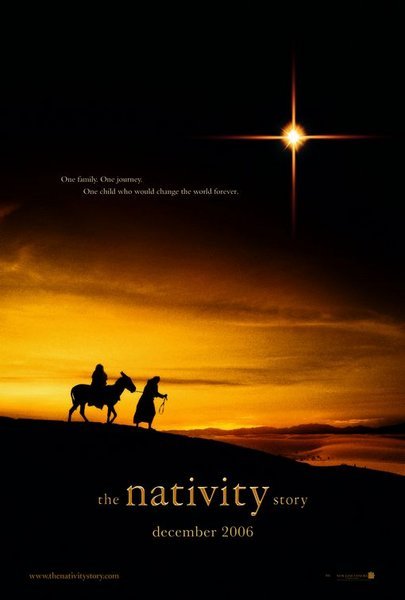
The Nativity Story

My wife and I drug ourselves to the movies Friday night to see The Nativity Story. I say ‘drug’ sincerely. We were not particularly drawn to the concept, we were not attracted by the previews, we have plenty of experience with ‘bad’ religious themed movies, and we already knew how the story ended. What drama is there in that?

The one positive attraction was the fact that the screenwriter’s previous credits were for some films that we have found all pretty entertaining. (Finding Forrester, The Rookie, and Radio. If you’ve seen those films, you know the common theme is sports: basketball, baseball, and football, in that order. Made me wonder what sport Jesus or Joseph would play!)

I felt that I needed to go, and so dragging Barb along, we went.

I actually liked the film. It was not as dull as I expected (that is a backhanded complement – imagine someone telling me, “I liked your sermon; it wasn’t at all as dull as I expected.”) It did a very good job of humanizing Joseph and Mary and the people around them. The drama of a teenage pregnancy and of a murderous tyrant does invite some good content, and we were rewarded. The acting is good, the characters convincing.

The film stumbles when it tries too hard to play into the traditional nativity conventions, however. The ‘wise’ men are comic characters on camels who don’t seem all that wise. The scenes of them, and of Joseph and Mary traveling are drawn out and slow. The gathering around the stable is too sentimental and seems like it belongs on one’s mantel and not on the screen.

But I’m being too harsh. Barb and I left the theater having enjoyed what we saw, even though we knew the ending.

So, if you will see only one movie this Christmas, see… Stranger than Fiction. However, if you squeeze in two, you might consider this one.

Worship and Liberty

Because of some recent questions which have come my way, I have been encouraged to revisit the very important question of the standards which the church uses to guide and regulate what it will and will not do in worship. The regulation of worship is codified in the Westminster Standards by a principle which has been popularly termed “The Regulative Principle of Worship.” This is somewhat a misnomer, as everyone has some principle of regulation. Some principles are much freer than others. Nevertheless, I have come to this question asking this fundamental question: is the Regulative Principle as it is traditionally formulated supported by Scripture? How strong is the case biblically?

I know that as a man ordained in the PCA that I should be able to generate my own defense. I can, and have, but have wondered if my own defense is, uh, defensible. So, I have looked to others to make the case for me.

I have looked at articles by two men seeking a sound biblical defense of the principle that the only worship acceptable to God is that which he commands. Both men argue their case with Scripture and both would be expected to bring the strongest argument possible to the table. I have found neither persuasive. [Perhaps you have an article that you find persuasive? Let me hear from you.]

I find that in both similar logical lapses, confusing the way of approach to God in salvation with an approach to God in worship, taking texts which speak clearly to the former and applying them to the latter. Interestingly, I find the argument that a consistent application of this principle would lead to the exclusive use of unaccompanied metrical psalms. The outcome is a worship that is locked in space and time, to one historic and cultural moment: 17th century Puritan Great Britain. Do we really want to articulate that then in that time alone worship was restored to its pristine perfection?

My discomfort, I confess, arises partly from having worshiped in other countries among other cultures. I cannot conceive that a God who so creatively diversifies the cultures of the world would force all those cultures into one [Western] worship mold. To overcome this objection in my mind will take a strong exegetical case. I have yet to find it.

Secondly, I should note here the sense I perceive in those writing in support of the regulative principle. I sense that they are fearful of God giving liberty to his church in any area, but particularly in the area of worship. The idea of liberty for some of us is a difficult notion, for we fear what people would do with such liberty. Paul’s only concern is that we not use our liberty for licentiousness. But this proves that it is POSSIBLE to so use our liberty.

My sense is that the same liberty may apply in worship. God has given us great liberty in the gospel. Perhaps he gives us great liberty in worship. We resist saying that, fearful of what some might do with such liberty. So, we try to corral and restrain this liberty, perhaps contrary to God’s intention.

I do believe that Scripture must regulate worship. But I also believe that God’s regulation of worship may allow for greater freedom than our Reformed heritage might have imagined. God entrusts his people with greater liberty than we can imagine. There is joy in this realization. I fear liberty, too, but God doesn’t.

The church can be trusted with great liberty. When such liberty is embraced, so great will love for God be that the church will, stumbling here and there, no doubt (as we have seen over the past 40 or so years), learn to worship God with sincere reverence and awe. Does God require more?

A wise reflection born out of repentance

Just over twenty years ago, I picked up a book that seemed to be full of wisdom and insight which promised great help to me in my Christian walk. That book was called Ordering Your Private World and was written by a prominent Boston pastor named Gordon MacDonald. I loved the book, recommended the book, and then was betrayed by the author of the book. Shortly after reading the book, its author was appointed the new president of Inter-Varsity Christian Fellowship. Within weeks of that appointment, he was accused of and confessed to being unfaithful to his wife. I was deeply distressed and angry, and would not look at the book for years.

But, MacDonald himself, disappeared for years. Wisely, he was removed from public ministry and exposure. He and his family were walking a long path of recovery and healing and repentance. Repentance in a leader must be, it seems to me, as notorious as his sin. Twenty years later, the work of God’s grace in Pastor MacDonald’s life seems real. I am ready to listen to him again. I think we all must listen.

Below is a link to a reflection that he wrote for Christianity Today on the Ted Haggard scandal. It is spoken with wisdom and insight that can only come from one who has walked this path before. He knows the dangers of fame and power and he knows the dangers faced by the famous and powerful who fall. His words are worth pondering.

But as well, he makes some observations about the evangelical movement as a whole, and the political associations we make. These words say better than I ever could what I often feel.

This is a long article, and I cannot say how long this link will remain active and functional. I encourage your reading this as soon as you have opportunity.

The Haggard Truth

“Syndication”

The title sounds almost criminal. Arrogant at least. However, the request has been made to configure this to allow an RSS feed (or ATOM, depending on the format you use). This I’ve done. To do so, I have had to open the site to everyone who wants to see it. However, only those can comment who are ‘members’. If you want to comment, let me know.

The church and immigration

Highlands Presbyterian Church in LaFayette, Georgia has had to deal with the issue of immigration in a very direct way. They have attracted a number of Spanish speaking attendees and members, so many so that they translate all sermons into Spanish (on the fly) and make it a habit to sing some Spanish songs in worship. Travis Hutchinson, the pastor, has had to reflect biblically on the issues this raises. Below is an article he shared with me in which he addresses some of these reflections. I would be interested in anyone’s response. It’s pretty long… sorry about that! [BTW, the bill to which he refers, HR 4437 can be followed here.]

Well, at the risk of beating on a dead horse, I’m writing again on the topic of immigration, this time to address a specific piece of legislation, House Resolution 3347. HR 3347 is most likely dead in the water, as it seems the United States Senate will never pass it. So why would I take time in a church newsletter to talk about politics at all, especially a non-issue like a dead bill?

The immigration debate effects people among us and people among whom we minister. We are not a pro-immigration or anti-immigration church, and we are certainly not advocates of illegal immigration. We’re a pro-Gospel and pro-compassion church. As Christians we support laws which promote justice while fulfilling the state’s obligation to protect its citizens. But when it comes to issues of justice the Church must speak when the issues are biblical (abortion, marriage, civil rights, slavery). Now the government is considering forbidding ministry which the Church has practiced for 2000 years, I’d be sinning if I didn’t speak to it.

While much of the Christian right has lined up behind the anti-immigration movement (I’ve been receiving anti-immigrant emails from the American Family Association, slogan: “We’re NOT the Mexican Family Association”), the issues for Christians are not as simple as many political statements. Whenever the Church lines up completely with a political party, either the party or the Church has become an idol. The Church can never line up completely with a political party (and never should try) because the Church has as its calling the advancement of the Kingdom of God. Political parties have as their calling the advancement and improvement of the Kingdom of this world. And “friendship with the world is enmity with God.”

I hope you caught that. The Church and the State both have legitimate obligations. But often those obligations compete. If the State gives up her obligations in order to support the mission of the Church, she is irresponsible, and the Church becomes polluted. If the Church gives up her obligations and becomes a pawn of the State or a Party, then she is a whore. Christians should strive to be good citizens inasmuch as doing so does not compromise the mission of the Gospel. The State should attempt to be friendly to the Church inasmuch as she can do so without becoming the Church.

At no time in my recent memory has a clearer example of this arisen than the recent immigration controversy. I know that some of you might protest that the abortion debate is more weighty, but in the abortion debate the line between the State and the Church is more clear and the State has not attempted to bind the Church to the degree which the House of Representatives has in immigration.

Many consider this a cut-and-dried law-and-order issue. It is against the law for people to enter this country without proper documentation and permission, therefore Christians should support law-keeping and law-enforcement. Likewise, Christians should not support any scheme with encourages law-breaking, dishonors those who kept the law at great effort or expense, or weakens the intent of law. All of these are arguments which Christians have made against amnesty programs and offering guest-worker status to aliens here in the US illegally.

The problem is that Rome was a law-and-order empire. They were all about law-and-order. And if Christianity was simply a law-and-order religion, Christians would never have been persecuted and Jesus would likely have not died on the cross. Rome had a law-and-order religion, Stoicism. One of the greatest Stoic teachers, Marcus Aurelius, was also a persecutor of Christians. John and Peter stood before the Sanhedrin as Peter thundered, “Judge for yourselves whether it is right to obey men rather than God.” Christianity recognizes that there is always a higher law above the laws of men. If you make abortion legal, it is still murder. If you pass “Jim Crow” laws, they are still unjust. Plenty of laws are a stench in God’s nostrils. Christians are not obligated to keep all laws, and some laws they are obligated to actively resist.

Currently we have an immigration problem in our country. At least 12 million people are living in this country illegally. Terrorism is a growing global problem and the government cannot adequately protect its people if it cannot secure its borders. Our country’s population is not growing with the demand for workers, largely because we’ve murdered 40 million children in utero.

According to our current laws, an immigration violator is guilty of violating immigration code but is not a criminal any more than you are a criminal by local standards if you don’t mow your lawn. That is why police departments don’t round up “illegal aliens,” they have no jurisdiction. This means that our immigration laws, which ostensibly exist to control the flow of desperately poor people into the US, have about as much effect as setting a cold glass of water in front of a person dying of thirst, saying, “Don’t drink this,” and walking away. Central Americans know that the US doesn’t really enforce its laws, and know that they are not technically criminals, so they come seeking economic opportunity. They want to eat well, have good health care, and want their kids to have the same opportunities that we do.

One thing that HR 4437 would do is increase security at the borders. There is nothing inherently wrong with this. The government has a responsibility to protect its citizens. Some liberals wail about the idea of a wall, but there’s nothing Scriptural against it. All nations in the ancient world had walls, some around cities, others around whole nations, and the Bible never says a word about it. There is some question about whether or not it would work.

Another part of HR 4437 is the changing of the status of violators. Under HR 4437, they become felons, and not just the violators who enter after the passage of the law, but all who are currently in the United States. The framers of HR 4437 have denied that this is an ex post facto provision (forbidden by the Constitution) saying that there would be a “grace period” wherein people could return to Mexico (or elsewhere) without penalty. The biblically questionable part of this has to do with justice and compassion. These people have built lives here. Consider an analogy. The city you live in has a law that you need a building permit to add on to your house. The permits are expensive and City Hall grants so few that you know it’s not worth it to try. You know that if you get caught, they’ll fine you a small amount and let you go. So you build without the permit. After living in the addition for a few years, the city passes a law making it a felony to build without a permit. The law will effect everyone retroactively. You complain that you’ve already build the edition and the city replies that you have a “30-day grace period” to tear down your addition. Would you think it just? Maybe, but probably not.HR 4437 would also tighten down on employers who hire aliens illegally. The first effect would be to move most of these aliens out of tax-paying work (and yes, most of them currently pay taxes, just with fake Social Security numbers) and into a completely underground economy (even the most ardent anti-immigrant activist admits that the US doesn’t have the infrastructure or money to detain or deport 12 million men, women, and children). While not explicitly an evil move, there is certainly room to question the judgement of such a scheme.

The other consequence is the vast need this would create for legal workers. Since our unemployment is pretty low in most areas (especially in areas with undocumented workers, they go where the jobs are), this law creates an immediate vacuum while the country waits for the legal guest workers to make it through the INS. Conservative columnist Mark Steyn notes that if you wait for the INS to approve Mary Poppins to nanny your newborn, Ms. Poppins might make it over to the US in time for your kid’s college graduation. Will the jobs stay in the US long enough to process the guest workers? This isn’t really a biblical issue, because people in Indonesia need jobs too.

The long and short of it is that strengthening borders, giving or not giving amnesty, building a fence, requiring people to learn English, starting a guest worker program, changing the law for future violators, etc. are all POLICY decisions. These kinds of policy decisions can be informed by Scripture, but the Bible doesn’t speak to them directly. Christians can fall on different places in the debate. But HR 4437 steps into an area where no Christian should waver, the role of the Church in showing hospitality to the alien and stranger.

HR 4437 would make it a felony for any people to feed, clothe, educate, treat, transport or house any person in the United States illegally. It would be a felony to buy a little Guatemalan girl an ice cream cone. I’m not kidding. ESL programs would be illegal if they did not confirm immigration status. Even providing medical help would be felonious. There is no provision exempting people who do so as charity (the bill explicitly makes this kind of charity illegal). There is no provision exempting churches or religious workers. The Federal Department of Homeland Security would be responsible for rounding up Christians who defy this law. This is all under section 202 (a) of HR 4437. You might ask, How could they do this? The authors, many self-identified Christians, say that if you help a felon commit a felony, you are a felon. Christians shouldn’t help people break laws. The problem is that violating immigration law (which Christian missionaries do routinely) is not the moral equivalent of bank robbery. And while Christians don’t have an obligation in most instances to assist people in crossing borders (and probably shouldn’t, in most instances), Christians do have an obligation to show all aliens and strangers kindness and charity and hospitality, regardless of their status with the United States government. The Roman Catholic Cardinal of Los Angeles has publicly stated that he has pre-emptively ordered his thousands of priests to disobey this resolution, should it become law.

You don’t have to be a right-wing nut to believe the United States should do something about her borders. You are not violating Scripture to promote stronger laws and better enforcement. You are not a racist to think that immigrants should learn English and United States history. But if you forbid Christians to do what God commands, you are committing an act of evil.


Page 142 of 142

Powered by WordPress & Theme by Anders Norén