 Deserved or not, to some the word ‘Calvinist’ conveys the imagery of stubborn, graceless, coldly logical Christians who expect everyone but themselves and a select few others to be in hell. That’s a shame, because by that characterization, many, including John Calvin, would make rather poor Calvinists!
John Calvin was a man of deep scholarship and deeper piety. He understood joy and he understood suffering. He had a deep passion for the glory of God and a deep compassion for the plight of men. He was one who knew what it meant to be a Christian, what it meant to live as a Christian, and had that rare giftedness which enabled him to convey with clarity what he knew.
Calvin’s Institutes of the Christian Religion has been enshrined in two lists:
1) as one the Great Books of western civilization and
2) as one of the books which, therefore, almost no one reads.
That is a great loss. I read the institutes a number of years ago, and found the experience deeply, deeply rewarding. Calvin’s insights into the Christian life still resonate with me, and I have returned to him often and recommended passages to others.
A friend has put me on to an organization which is encouraging others to join with them in reading through Calvin in 2009. You can get the details here. Even if you do not commit to read through this in a year, if you request one, the folks at this site will send you a reading schedule which has broken down Calvin’s massive book into bitesized portions. That would be worth having, even if you read the book at a slower pace.
Now, what about violins?
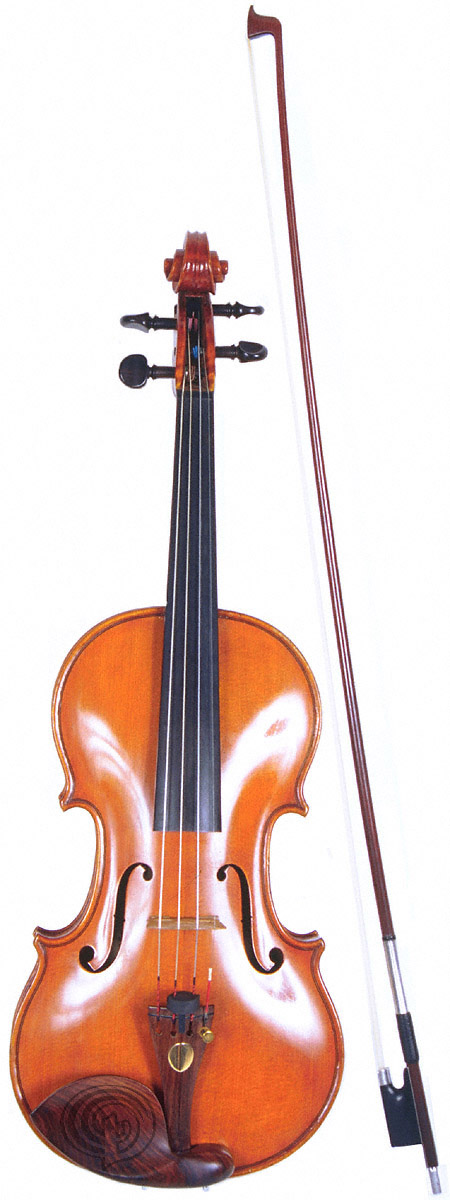
When a child begins to learn a musical instrument, many parents make what is to me a grave mistake. They provide their child with an inferior (i.e. ‘cheap’) instrument. While this makes good economic sense, the child, unskilled to begin with, will meet early frustration because he just won’t be able to make the instrument sound good. I think that a good instrument, more costly at the outset, will pay rich rewards as it will be that much easier to learn, easier to play, and more likely to keep the child’s interest.
If you decide to read Calvin, you have the same options before you. You can lay hands on an inexpensive translation (Beveridge) and think that you have stumbled upon a bargain. But the translation is old, tedious, and dry, and you will bog down quickly. Your reading will not sing.
I would suggest that instead you take on this noble task with a worthy instrument. Spend the money and buy the Ford Lewis Battles translation. It is modern, well annotated, and well bound. It stands a much greater chance of keeping your interest.