Concerning Life as It Is Supposed to Be

Category: Uncategorized Page 70 of 71

The Great Reading Group Adventure


My friend Randy Lovelace is a pastor in the Redeemer network in New Jersey near Manhattan. He has made a number of contacts in the community through reviving an old passion of his, cycling, and joining a cycling club. A great idea which would serve us all well, if we pursue the right passion in the right venue.

Most of my passions are rather solitary. I mean, you can ride a bike in a pack; reading on the other hand is not much of a group activity. However, at the Braden River branch library a couple weeks ago I noticed that they had an ongoing book discussion group. So, I checked out the current selection and dove in. The book was about a sixty year old suburban mother whose daughter announced her engagement and whose sister left her husband on the same day. Two hundred pages of suburban life, some of it redeeming, but all of it out of my interest zone.

But that was alright. Then I went, with some trepidation, the the discussion group. As I drove to the meeting, I told Hannah, my daughter, “I hope this isn’t just a group of three single women.” It wasn’t. It was a group of six single women. They were all very nice, but I did not fit in – at several levels.

The experience has me curious: what does bring people out of their houses for serious interaction? Most people will generally not attend random library book groups just as they will not attend random church events. I inquired about a group at Books-a-Million. They tell me they used to have such groups, but discontinued them since no more than three would actually show up.

I’m back to square one. It seems clear what God is telling me. If I want a group of thoughtful non-Christian people, I will need to invite them myself. I have some ideas. I’m interested in yours.

Hoops Presbyterian Church, II


With the University of North Carolina losing its quarterfinal game against Georgetown, Geoff’s last chance of winning this year’s bracket challenge evaporated. Geoff had chosen UNC to win the tournament. As things now stand, I could lose all my games, and still come out on top by 13 points. I’ve selected a UF – OSU final, with OSU taking the title from the Gators. We’ll see.

Someone asked what we have riding on this. To my knowledge, nothing ‘cept bragging rights. Maybe we need a trophy of some kind that will live in the triumphant pastor’s study for the year until the next tournament. We’ll work on that.

Hoops Presbyterian Church


For the second year in a row, Geoff and I are engaging in a little March Madness. Last year we pitted my luck against his knowledge, completing contrary NCAA Men’s basketball tournament bracket. He blew me away with a sound and solid victory. However, I’ve got him on the run this year. In the first round, I chose 30 of the first 32 winners (Duke and Texas Tech failed me) and 12 of the next 16. Our scoring assigns higher values to the later rounds (the final is worth 32). So though I’m winning by 17 points at present, there is plenty of time for Geoff to prevail.

As long as I’m winning, I’ll be sure to keep you posted.

Geoff, by the way, has chosen North Carolina to win the championship. I’m pulling for a Florida/Ohio State rematch with Ohio State getting its revenge.

What do you all think?

Confessions of a Hopeless Culture


Yesterday I preached on hope. As I prepared the message, I wondered about how hopeless the average person in our culture feels these days.

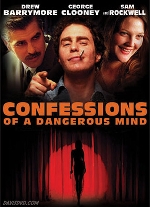
On Friday night, Barb and I watched a recommended film Confessions of a Dangerous mind. It is about Chuck Barris, the creator and producer of such stellar TV accomplishments as The Dating Game, The Newlywed Game, and The Gong Show. He was a pioneer and ahead of his time, and he was nuts. He was persuaded that he was also a CIA hit-man. Hmmm.

The film ends with the real Chuck Barris speaking to the camera, presumably speaking his own words. Here is the script, from the screenwriter’s web site.

The actual Barris is being interviewed.

ACTUAL BARRIS

Y’know, I came up with a new game show idea recently. It’s called The Old Game. You got three old guys with loaded guns on stage. They look back at their lives, see who they were, what they accomplished, how close they came to realizing their dreams. The winner is the one who doesn’t blow his brains out. He gets a refrigerator.

The camera holds on Barris’s face as he puffs a cigar.

BLACK.

THE END

If this is a reflection of the hopelessness that some men feel at the end of their lives (and I think it is), then the need for gospel hope is apparent.

The Flirt Commits

A few months ago, I flirted with blogging. The flirt is now ready to commit.

My flirtations gave me a taste of what is involved in this strange new (to me) world. I learned very quickly that a blogger is a writer, and that any writing is a discipline. A blog that is posted once every now and then is of marginal value. I realized that to keep at this would require discipline.

So, after beginning, I pulled back quickly. For the past few months, I have been content to observe the on-line world and, hopefully, to learn some things.

I’ve learned that blogs can be very helpful, if not over-indulged. There are millions of blogs out there. It would be easy to lose oneself in reading much that does not need reading. But I have stumbled across a few blogs that offer insight and often contrary opinion which I find valuable.

The features most appreciated in the blogs I’ve latched on to are relevance, insight, brevity, personality, honesty, and frequency. Whether I can reproduce such qualities in my own has yet to be seen.

The flirt’s commitment at this point is a simple one: to add a post at least weekly between now and the end of May. At that point I will evaluate and make a decision about the future. Of course, some weeks there will be more.

As always, I will be interested in the comments of all who read these posts.

Both of you. ☺

Link Test, Happy Thanksgiving, and Merry Christmas!

This is a test of the link function of this blog. Let’s say, for example, I wanted to share with you all what our joint Thanksgiving service with St. Paul’s Missionary Baptist Church was like, could I do so? I only know one way of finding out. I will add a link to a portion of the sermon preached by Pastor James Roberts. This should give you a feel for how things were moving here at that wonderful service. And if this does not work, well, that’s that, and have a merry Christmas!

Here is the link.

Devotional Resources, 2007

Every year I prepare a set of devotional resources which are (mostly) date specific. These include some Bible reading schedules, but a hodge podge of other things as well. I put these on a CD for people to pick up at HPC. Below I am appending the ‘read me’ file from that CD. Perhaps there will something of interest mentioned which those of you without access to that CD. If so, e-mail me, call me, stop me on the street, or shout my name from the highest mountain, and I’ll see what I can do to meet your request.

* * *

The resources on this disk are intended to help the recipient in the disciplines of Bible reading and prayer. These represent an idiosyncratic collection of resources that reflect my own experience and practice over the years. Each of them has been generally created or preserved in their current form because I (or those I was trying to help) found them helpful. I am sharing them in this format in order that perhaps they might help some others as well.

There are two categories of resources here: those aimed at Bible reading and those aimed at prayer. However, I believe strongly that the two disciplines belong together, and the selections included here will reflect something of that viewpoint.

Most of the resources here bear their own explanations. However, the Bible reading schedules do require some advance explanation.

There are four date specific schedules provided, and one undated schedule. The undated schedule simply provides a convenient way for one to read through the Bible at one’s own pace while preserving a balance between reading from the New Testament and reading from the Old Testament. I have used this schedule to read through the Bible slowly over a period of four or five years.

Most of the date specific schedules are built upon the same model as the undated schedule. There is a move back and forth between the Old Testament and the New Testament that some appreciate. The other distinctive features are the following:

  1. Each schedule is built around a five or six-day week. I find this realistic for most people. All of us will miss a day or two now and then. Therefore, I schedule no readings for Sundays (and with one schedule, Saturdays), preferring to leave that as a make-up day. If one misses several days, then setting aside a portion of time on the Lord’s day to read Scripture would seem to be an appropriate use of the day! If you are disciplined enough to keep up, you can use Sundays for some alternate devotional readings (for which I have suggestions for those who ask!)
  2. I have configured each schedule to begin on January 1, believing that a Monday is a good day for such beginnings.
  3. The basic schedule takes the reader through the whole Bible in one year.
  4. Some find a one year plan to be a bit daunting. They have tried to read the Bible in a year in the past and failed. They therefore find the attempt to be fraught with anxiety. For them I am providing a schedule which takes the reader through the whole Bible in two years. This is much more accessible for some people, and in some respects a more meditative method for reading.
  5. For those who would like to have a ‘big picture’ view of the Bible, I am also providing a schedule which takes the reader through the Old Testament once and the New Testament and Psalms twice in the course of one year. Some of you may recognize the general idea here to be similar to that of Robert Murray M’Cheyne’s well known schedule. However, I have found M’Cheyne’s schedule too disjointed as one must read from four passages in one day. This schedule covers the same territory, but with less jumping around.
  6. The newest edition here is for those who want a careful and slow reading of the New Testament. In God’s providence, there are 260 chapters in the New Testament and 260 weekdays in a year. What about that!

I am presenting these schedules to you in a variety of formats:

  • Each is presented in a Word document which you can simply print out and keep with your Bible.
  • In addition, you will find here an Excel document called BibleSched2007.xls. This contains all four dated schedules in a format that is useable when opened in PocketExcel on a Windows based handheld computer or in Excel on a regular PC. This has not been tested on a PalmOS unit.

New! Audio Resources! I hate to leave empty space on a CD. The print resources here consume only 2.1 MB of a 700 MB CD,. Included, therefore, are a set of sermons from Tim Keller, pastor of Redeemer Presbyterian Church in NYC as well as a set of lectures on outreach from Jerram Barrs of Covenant Seminary. We have found both sets to be of enormous help in our own lives and hope that you will find them helpful as well. If you do not have the ability to listen to .mp3 files away from your computer, burn them to CDs. They are worth it! These messages are, by the way, freely distributable.

I trust that these resources will be used by God in your life to help you come to know Jesus and the height and breadth and depth of his love!

Should you have any questions or suggestions, please contact me and let me know:

Hope Presbyterian Church
4455 30th Street East
Bradenton, FL 34203
941-727-3408
rg7878@gmail.com

Mac Update

It has been nearly three months since I made the switch from a Windows based laptop to a MacBook. From the moment I first laid eyes on the thing, I was in love. Now that I’ve been married to it for three months, am I happy with the relationship? I get asked that regularly. The answer is “Yes.”

Someone asked me if I regretted making the transition. I said, “Absolutely not.” I cannot see turning back. I’ve debated whether Mac owners are members of a fraternity or a cult. I’ve decided it is definitely a cult, and I am now a full initiate.

But is a Mac really ‘all that’? That is a good question. My transition from Windows 98 does not give quite a fair place of judgment. Compared to the instability of Windows 98, my Mac shines. It has crashed but once in the three months, and that was a freak thing after loading a plug-in to help me read a Windows movie file. [Mac cult rule number 38: if you can blame something on Microsoft, do so.] Word for Mac has crashed several times, and Firefox a time or two. However, when they crash, they do not take the entire operating system with it. After the crash, I click a single button and the applications are up and running in a matter of seconds.

The style and the creativity of the Mac is legendary, and mine lives up to the legend. It is probably true that what one can do on a Mac he can also do on a Windows machine, at least the ordinary type things that I am accustomed to doing. But there is a greater element of fun and enjoyment in doing it on the Mac. That Mac programmers have personality is evidenced by the way the OS tells you that you have entered the wrong password. Windows says something like this: “Have you forgotten your password AGAIN? How many times do I have to tell you to store that somewhere where you will not forget it. What kind of an idiot are you anyway?” (At least it FEELS like that.) The Mac requester simply shakes back and forth, as if to shake it’s head, “No.” I laugh instead of get mad.

Earlier this week I was reading James Fallows’ preview of Microsoft’s upcoming release of its new OS ‘Vista’ and it’s latest version MS Office from the latest issue of The Atlantic Monthly. Fallows is a well known journalist who at one time was a part of the team involved in the development of Office 2000. What is telling in the review is his comparisons of the new Vista OS with the existing Mac OS. Consider what these quotes reveal:

“Ninety percent of the sex appeal of Vista is its new ‘Aero’ desktop theme. This offers convenient icon-size gadgets on the desktop—a clock, a calendar—like those of a Mac.”

“It’s overall look is far sleeker than any previous Windows incarnation and, gasp, seems even more modern than the Mac.”

“Many of the changes in Word, Outlook, Excel, and the rest are strictly visual—but if you think that’s a minor factor, you haven’t paid attention to the Mac.”

“OneNote, Microsoft’s new, Mac-like data-management system…”

It doesn’t take long to see who is playing catch-up in this game. I think I’ll stay with the safe, stable, visually appealing, creative Mac.

As a footnote, to those who have asked: I have recently under the urging of a friend, installed onto my Mac Parallels Desktop. This creates on my desktop a window in which I can run Windows XP, and in that environment run my Bible software package that will not run on the Mac. I have, thereby, a Windows computer and a Mac on my lap. I find that I’ve had to give up NOTHING. Pretty cool.

The Nativity Story

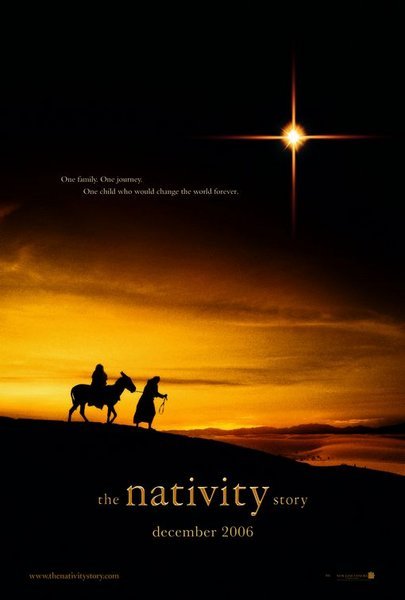
My wife and I drug ourselves to the movies Friday night to see The Nativity Story. I say ‘drug’ sincerely. We were not particularly drawn to the concept, we were not attracted by the previews, we have plenty of experience with ‘bad’ religious themed movies, and we already knew how the story ended. What drama is there in that?

The one positive attraction was the fact that the screenwriter’s previous credits were for some films that we have found all pretty entertaining. (Finding Forrester, The Rookie, and Radio. If you’ve seen those films, you know the common theme is sports: basketball, baseball, and football, in that order. Made me wonder what sport Jesus or Joseph would play!)

I felt that I needed to go, and so dragging Barb along, we went.

I actually liked the film. It was not as dull as I expected (that is a backhanded complement – imagine someone telling me, “I liked your sermon; it wasn’t at all as dull as I expected.”) It did a very good job of humanizing Joseph and Mary and the people around them. The drama of a teenage pregnancy and of a murderous tyrant does invite some good content, and we were rewarded. The acting is good, the characters convincing.

The film stumbles when it tries too hard to play into the traditional nativity conventions, however. The ‘wise’ men are comic characters on camels who don’t seem all that wise. The scenes of them, and of Joseph and Mary traveling are drawn out and slow. The gathering around the stable is too sentimental and seems like it belongs on one’s mantel and not on the screen.

But I’m being too harsh. Barb and I left the theater having enjoyed what we saw, even though we knew the ending.

So, if you will see only one movie this Christmas, see… Stranger than Fiction. However, if you squeeze in two, you might consider this one.

Worship and Liberty

Because of some recent questions which have come my way, I have been encouraged to revisit the very important question of the standards which the church uses to guide and regulate what it will and will not do in worship. The regulation of worship is codified in the Westminster Standards by a principle which has been popularly termed “The Regulative Principle of Worship.” This is somewhat a misnomer, as everyone has some principle of regulation. Some principles are much freer than others. Nevertheless, I have come to this question asking this fundamental question: is the Regulative Principle as it is traditionally formulated supported by Scripture? How strong is the case biblically?

I know that as a man ordained in the PCA that I should be able to generate my own defense. I can, and have, but have wondered if my own defense is, uh, defensible. So, I have looked to others to make the case for me.

I have looked at articles by two men seeking a sound biblical defense of the principle that the only worship acceptable to God is that which he commands. Both men argue their case with Scripture and both would be expected to bring the strongest argument possible to the table. I have found neither persuasive. [Perhaps you have an article that you find persuasive? Let me hear from you.]

I find that in both similar logical lapses, confusing the way of approach to God in salvation with an approach to God in worship, taking texts which speak clearly to the former and applying them to the latter. Interestingly, I find the argument that a consistent application of this principle would lead to the exclusive use of unaccompanied metrical psalms. The outcome is a worship that is locked in space and time, to one historic and cultural moment: 17th century Puritan Great Britain. Do we really want to articulate that then in that time alone worship was restored to its pristine perfection?

My discomfort, I confess, arises partly from having worshiped in other countries among other cultures. I cannot conceive that a God who so creatively diversifies the cultures of the world would force all those cultures into one [Western] worship mold. To overcome this objection in my mind will take a strong exegetical case. I have yet to find it.

Secondly, I should note here the sense I perceive in those writing in support of the regulative principle. I sense that they are fearful of God giving liberty to his church in any area, but particularly in the area of worship. The idea of liberty for some of us is a difficult notion, for we fear what people would do with such liberty. Paul’s only concern is that we not use our liberty for licentiousness. But this proves that it is POSSIBLE to so use our liberty.

My sense is that the same liberty may apply in worship. God has given us great liberty in the gospel. Perhaps he gives us great liberty in worship. We resist saying that, fearful of what some might do with such liberty. So, we try to corral and restrain this liberty, perhaps contrary to God’s intention.

I do believe that Scripture must regulate worship. But I also believe that God’s regulation of worship may allow for greater freedom than our Reformed heritage might have imagined. God entrusts his people with greater liberty than we can imagine. There is joy in this realization. I fear liberty, too, but God doesn’t.

The church can be trusted with great liberty. When such liberty is embraced, so great will love for God be that the church will, stumbling here and there, no doubt (as we have seen over the past 40 or so years), learn to worship God with sincere reverence and awe. Does God require more?


Page 70 of 71

Powered by WordPress & Theme by Anders Norén