Concerning Life as It Is Supposed to Be

Category: Uncategorized Page 68 of 71

For fun…

I thought you might enjoy this from the blog of a college professor…

Best opening line of a paper this semester: “My parents are Christians and I grew up in the convent.” (He meant “Covenant”.)

My nominee for best bumper sticker of the year…

(Seth and I spotted this one on the back of a semi-trailer. We had to get real close in order to read it, of course.)

Does not this fool of an English teacher know how to punctuate?


Discerning readers of nearly anything I write will notice that I have a pronounced preference for putting my punctuation outside of my quotation marks.

My logic in this is that though it is contrary to ordinary American practice, quotation marks should be treated the same way as parentheses. Thus, if the quotation marks enclose an entire sentence (such as in dialog) the punctuation, which belongs to the sentence, should be placed within the quotation marks. If, on the other hand, the quotation marks enclose only a part of the sentence, the marks themselves should be treated as part of the sentence, and the punctuation placed outside the marks.

You don’t care, do you?

I know. It’s pedantic. It is also British. If you would like to know more about this (although you’ve already read more than you ever cared to read) I commend to you the site maintained by Michael Quinion, who is British, and whose weekly newsletter is fascinating. He is an expert on all things English, and quite an entertaining chap to boot.

Click here to go to the site.

Here is an excerpt:

There is a case for consistency within any one publication. But nobody will misunderstand what you write because of where you choose to put your stops relative to quotation marks. A writer who fixes too much attention on the correctness of his punctuation, or a reader who does the same, is missing the point: the job of text is to communicate, not satisfy pedantic rule makers.

Who’s ‘At the table’?


I’m hesitant to direct any to another blog for fear that those thus directed will assume that I am somehow an avid supporter of the author’s every view. So, first, the disclaimer: I’m not.

That said, I read a post this morning that reflects helpfully on a pattern that I see too much in my own life, and which I would like to change. That is, I spend all my time with Christians, and primarily with Christians with whom I am in substantial agreement. According to Scot McKnight, this is not at all a healthy thing.

What happens when we sit at table all the time with those who are just like us? What happens when we are at church, at breakfast and lunch, in committees and at work with folks just like us? Christians and social justice workers and business folks each have this tendency — it is natural and easy for this to happen. But what happens to us when we spend all our time with the same kinds of people?


Read his post here.

Update on RSS


In a previous post, I explained how one could subscribe to the sermons of HPC via podcast or RSS feed. I also mentioned how this could apply to this or any other blog. It is far easier to have the blog posts delivered automatically to one’s computer when they are available than searching for them every day to see if anything new has been posted.

In this vein, I have come across an amusing video which should help. It is called “RSS in Plain English“. Click on it, watch it, enjoy it, and if RSS is new to you, maybe learn something.

Quiet Time


Some recent discussions have reminded me how much confusion there is regarding where to place a spiritual discipline like personal worship or private prayer into a life of grace.

We must distance ourselves from any understanding of spiritual disciplines which turns them into acts which gain us spiritual merit or which in and of themselves mark us as holy. The fruit of the spirit is ‘love, joy, and peace’, not ‘quiet time, prayer, and grape juice’.

One can be humble, gracious, kind, and Spirit-filled, and never have a quiet time. As well, one can be daily in the word at the crack of dawn, and be full of doubt, short-tempered, and irascible. The mere fact that we have a quiet time does not mark us off as spiritual; its absence does not identify us as lost.

God blesses me way beyond what I deserve. It is such a meager understanding of God for me to think that I will be blessed today because I might have had a good quiet time. He blesses me because he chooses to do so.

Spiritual disciplines, whether public (like worship) or private (like a quiet time) do not mark us as Christians. So do they have value?

Of course they do.

I have said it so often that people will tire of it: the spiritual disciplines put us in the way of grace. If I want to be washed, I must stand in the stream. If I want to experience and grow through the work of the Holy Spirit, it is good that I put myself where he has shown himself to work. If the Holy Spirit nurtures faith through the ministry of the scriptures, then it is good that I often put myself where I am exposed to that word.

I hunger for the grace of God. I long to be changed by him. I long to hear the voice of my Savior speaking to me. I don’t know where else to go to hear that or to find him than at those places where he has promised to meet with me and to speak.

I want us to view the disciplines, such as a quiet time, neither as badges of holiness nor duties to endure. I want us to look at them as opportunities. I want us to see them as opportunities to see the window into heaven cracked just a bit so that we might see Jesus. We should hunger for discipline not because it makes us holy, but because there we come to know our savior.

I am very interested in comments on these thoughts.

Scary Books


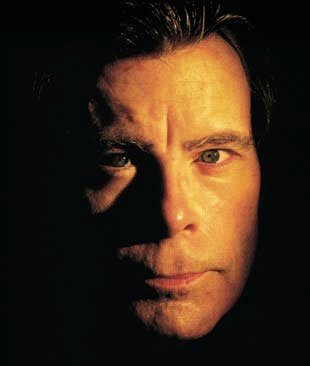
I mentioned earlier that I had recently read Stephen King’s Lisey’s Story. I have never been much into reading thriller or horror novels, or modern novels at all for that matter. But I was interested in this book for at least two reasons. One, I had read King’s On Writing which I found to be a fascinating window into the world of the writer. Secondly, we have met some new friends, Brian and Marni, a young couple down the street. Marni comes from King’s home town and knows him.

So, I read Lisey’s Story and I am now reading It, which Marni, a writer herself, tells me is King’s scariest. In between Barb had me read a Dean Koontz novel The Taking (the back cover blurb says something about Koontz being the master of all our darkest fears).

One day a few weeks ago, I was juggling in my mind all my deepest anxieties and ‘darkest fears’. This wasn’t some kind of spiritual exercise or psychological discipline. I was just worried and fearful. The weight of my anxiety made me want to simply run to my bedroom and take up the book I was reading (the Koontz novel) and read.

That’s when it struck me as odd, this wanting to escape. I was wanting to flee from my own fears by reading of the imaginary fears of others.

I suppose I should find something profound in that. Obviously, my fears are to find their relief in the good and faithful providence of God. And obviously, to find mental relief in a good book is, in moderation, no sin.

But it simply struck me as odd that I would divert myself from my real fears by focusing on fictional fears. To what degree does this explain the phenomenal sales of books such as these? And for how many are such things the only salve for their fears?

Reading for Growth


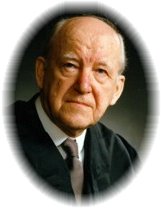
I once read that Martyn Lloyd-Jones would not start preaching through the book of Romans before he first came to understand Romans 6. One presumes, since he produced many volumes of sermons on Romans, that he must have come to understand Romans 6 quite well.

I don’t have the mind of Dr. Lloyd-Jones, and I know that I do not understand this section of Romans as well as I would like. Probably one of the most misunderstood doctrines is the doctrine of sanctification, and yet it is the doctrine that has clear application every day of our lives! It is something we should wrestle, if necessary, to understand.

I encourage all to do some further reading on the subject. Come to understand it as much as possible. Reflect carefully upon your life and practice. We all should long to learn more and more what it means to live our lives by faith in the Son of God who loved us and gave his life for us.

Where to read? Here is a list of books off my shelves to get you started. I am not at all sure if all of these books are still in print! Some, I know, certainly are.

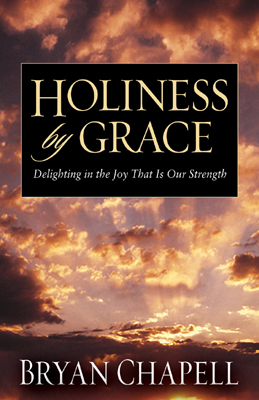
Holiness by Grace by Bryan Chapell — a good, clear, well-illustrated overview of the whole subject.

The Enemy Within by Kris Lundgaard — few reflected more deeply upon the Christian life than the Puritans, and few Puritans grappled with as much insight as John Owen. Lundgaard’s book is a retelling of the insights Owen recorded in his classic On the Mortification of Sin.

True Spirituality by Francis Schaeffer — a classic on the subject. Very helpful in enabling the Christian to set realistic expectations.

Keep in Step with the Spirit by J. I. Packer — Packer, another student of the Puritans, gives a very helpful and practical overview of sanctification in the middle chapters of this book.


The Gospel Mystery of Sanctification
by Walter Marshall — this is a 300 year old classic statement of the subject, modernized for current readers. One friend says that this is the best thing ever written on the subject.

Let me know what you think.

The Father’s Delight


From this morning’s quiet time reading and meditation on Matthew 7:11, I was struck with this:

Our Father delights in giving to his children the good things they seek.

I could clutter this post with a history of my own failure to believe this, or my failure as a father to model this. But if I let the truth stand, and look back upon my life, I have to say without equivocation, “This is true.”

Now, by God’s grace, this truth will inform my present and my future. I am not alone. Our Father delights in giving to his children the good things they seek.

***

(Matthew 7:11 If you then, who are evil, know how to give good gifts to your children, how much more will your Father who is in heaven give good things to those who ask him!)

The Dam Holds


Over the past week I have been swimming upstream with every minute of every day and then some thoroughly booked. No time at all to update this blog.

Friday and Saturday was spent in Tampa at a special meeting of our presbytery.

Saturday night was spent with Matthew, Barb, and Colin, reconnecting with, as one person put it, my ‘inner redneck’, by attending the races at Desoto Speedway near Bradenton (the figure-8 school bus race was a must see). The picture is of me and my sons taking in some race culture.

Sunday, of course, was Sunday, with a large commitment to resting from Saturday.

Monday brought the opportunity of spending time with our longtime friend Bill Mills who was in Tampa teaching a conference. What a blessing he always is to my heart.

Tuesday was consumed with the presbytery examinations committee meeting which I chair. I was hoping to begin today updating my blog, but time has simply not allowed such luxuries.

So let me say at least that I am storing up ideas, and soon, but not immediately, the dam will break. Stay tuned.

Ordinary Evil


What frightens us? For most of us it is not aliens or apocalyptic disasters.

I recently finished reading my first Stephen King novel, Lisey’s Story. King is famous for creating stories of horror, so I was braced for frightening images. What I encountered were people of ordinary evil: a deranged self-appointed hit man who took pleasure in maiming his victims, a father who both loved and terribly abused his children, and, odd to say, a mad-man with a gun on a college campus.

Each character was realistically drawn from the stuff of depraved human nature. There was nothing inconceivable about any of the evil. It is the world we live in; it is the stuff of our very own hearts.

I write this on the morning after a mad-man with a gun took the lives of 30+ on the campus of Virginia Tech University. The evil there displayed was awful and hard to fathom. But it was ordinary evil, the simple stuff of hearts in rebellion against God.

Here at HPC, we are not untouched by this tragedy. A professor of one of our families was among the victims.

I cannot begin to explain why such things happen, and why they happen to others and not to me. I know that such events do not fall outside the providence of God, but I cannot explain how they fall within that providence.

I do know that there is a cloud that hangs over human life, a cloud of ordinary evil. But this we know is a cloud that will be one day lifted. It is a cloud that we can even now see beyond. And it is a cloud whose impact and spread we can have a part in diminishing, as God blesses the testimony of his church.

In such times I cannot be driven or frightened by what I do not understand. I can only persevere in what God has called me to do in this world of evil, to so live and speak that through and beyond the evil his grace and kindness might be seen.

Page 68 of 71

Powered by WordPress & Theme by Anders Norén