Concerning Life as It Is Supposed to Be

Category: Uncategorized Page 48 of 71

Paris, je t’aime


One of my absolute favorite movies which I’ve seen ever, and one which bears watching over and over again is Paris, je t’aime.

Eighteen gifted and experienced filmmakers create 18 shorts all set in differing regions of Paris and all bearing the theme of love. Some are sweet, some are puzzling, but the whole is well worth watching.

The clip I am linking here is a must see. It paints a picture that is a sermon I want to preach to any man or woman who decides that he or she is no longer in love.

Enjoy it, and then rent or buy the whole movie, sit with someone you love, watch it and let me know what you think. You will laugh and you may cry, but every minute will be worth your time.

UPDATE: Just noted – I’ve not seen Prince Caspian, waiting rather to rent it, but those who have will recognize the husband in this piece, Sergio Castellitto, as King Miraz from that film.

Technorati Tags: ,

A Glimpse, and Only a Glimpse


An instructor in seminary told the story of his little boy asking him a question about the Trinity. After he had ‘explained’, the child said, ‘You don’t understand this any better than I do, do you?’

I’ve often thought about that when trying to ‘explain’ the Trinity to my children or to the church. How do you explain the unexplainable?

And so I appreciate the caution and care reflected in John Frame’s The Doctrine of God as he wrestles with this difficult subject.

The emphasis is mine.

“I agree with Anselm that when we use terms like substance and person to refer to God, we do not entirely understand what we are talking about, but we should not embrace total agnosticism on this matter. We should avoid deductions based only on the extrabiblical philophical uses of these terms. Use of the terms is legitimate, but only as markers to be filled witht biblical content. To say that God is three persons does not add anything to what we learn in Scripture about the Father, the Son, and the Spirit. Rather, the term person should include all and only the content of the biblical teachings. Person is simply a label for the ways in which the Father, the Son, and the Spirit are alike, in distinction from the Godhead as a whole.” – page 699

“Again, we must acknowledge our ignorance of the precise distinction between substance and person in God and of the precise interactions between these. God has given us, in Scripture, a glimpse into his inner life, but only a glimpse. The Trinity is not an irrational doctrine, but it is highly mysterious. It is not contradictory, but we do not always see clearly how apparent contradictions can be resuloved.” – page 705

Technorati Tags:

My ‘Post’ Office

So, you wonder where I write up posts for this blog? Where I find my inspiration? The picture tells all.

Here I am getting some advice from an expert.

Why the Rays Won and What the Church Can Learn, Part 5


What Schwarz is attempting to measure and to analyze is church health, the quality of the church’s life and ministry, with the assumption that churches which function at a certain level of quality in his perceived eight areas have a better chance of seeing growth. He contends that a church does not have to excel in these eight areas, but all eight realities need to be in place for a church to grow.

Obviously, to me, there may be other principles he’s overlooked, or he may be focusing on those which are of no consequence. But the idea that church quality is to be assessed based upon more than a spiffy worship service or a proliferation of programs is somewhat refreshing and encouraging.

I appreciate his insistence that we not simply look at how other churches (teams!) operate and assume we can operate the same way that they do – or did. We look at large churches across town or churches with a national reputation – or we look at the church of our childhood or the one in the town we were saved in – and we isolate one thing about that church and figure that if we do that one thing we will grow. That is a fallacy.

His view is much more organic and situation specific. He says we need to look at our setting and evaluate ourselves upon the measure of these eight items. Progress can be made if we simply identify the weak point in our ministry and shore it up, without making any changes anywhere else.

His criteria of essential elements for health and quality are perhaps valid, perhaps not. But they can serve at least as a helpful place to begin, as we look at our own ministries. This analysis can help us perhaps find the area of the greatest need and begin to address it with the goal that our church might function as a greater organic whole, and be more effective in her ministry for the things to which God has called us.

Technorati Tags: ,

Why the Rays Won and What the Church Can Learn, Part 4


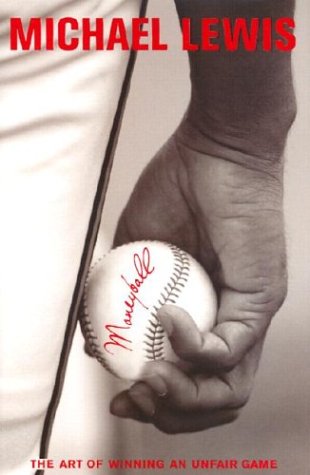
Two books lie behind my recent posts on the Rays and church growth (here, here, and here). They are wildly different. The first is a book on how major league teams in underfunded markets have succeeded called Moneyball, from which I have quoted before.

The second is one called Natural Church Development. The thesis of this book is what tied together for me the similarities between baseball success and church growth.

NCD is a book by a church analyst named Christian Schwarz. I’m not sure how widely the book has been read, but apart from some quibbles, I found the book helpful. Like Moneyball with baseball, this author wants to question commonly received assumptions about what makes churches grow in order to look beneath the surface to see the actual principles at work which contribute to real growth.

The author here is a bit tedious, and one must always be suspect of statistical analysis, upon which he depends heavily. It must be more difficult to statistically analyze, say, dynamic spirituality than it is to measure baseball’s on-base-percentage. And it seems to me that the author’s starting point is not the Bible per se but his own intuition. He seems to me to draw in the Bible and theology almost tangentially, but certainly not as his starting point.

He dispels the common idea that if we just did THIS ONE THING our woes would pass (whether it is change our worship, change our pastor, change our evangelism, or whatever). The church is an organic whole of many functioning parts all of which need to be functioning in some way in order for growth to occur.

The eight principles that must be functioning in any healthy congregation, according to Schwarz, are as follows. I am curious if you would add/subract any.

1. On-base-percentage
2. Walks/hits allowed per inning pitched
3.

oops… wrong list. Ahem:

1. Empowered leadership
2. Gift oriented ministry
3. Passionate spirituality
4. Functional structures
5. Inspiring worship services
6. Holistic small groups
7. Need-oriented evangelism
8. Loving relationships

Technorati Tags: ,

Rays up 2-0

And we were there – again.

To see pictures from our fun at the Trop, check out this album. I’m proud I figured out how to do this! (I think all you need to do is to click on the picture below.)

ALDS – 2008

The Saxophone Kid


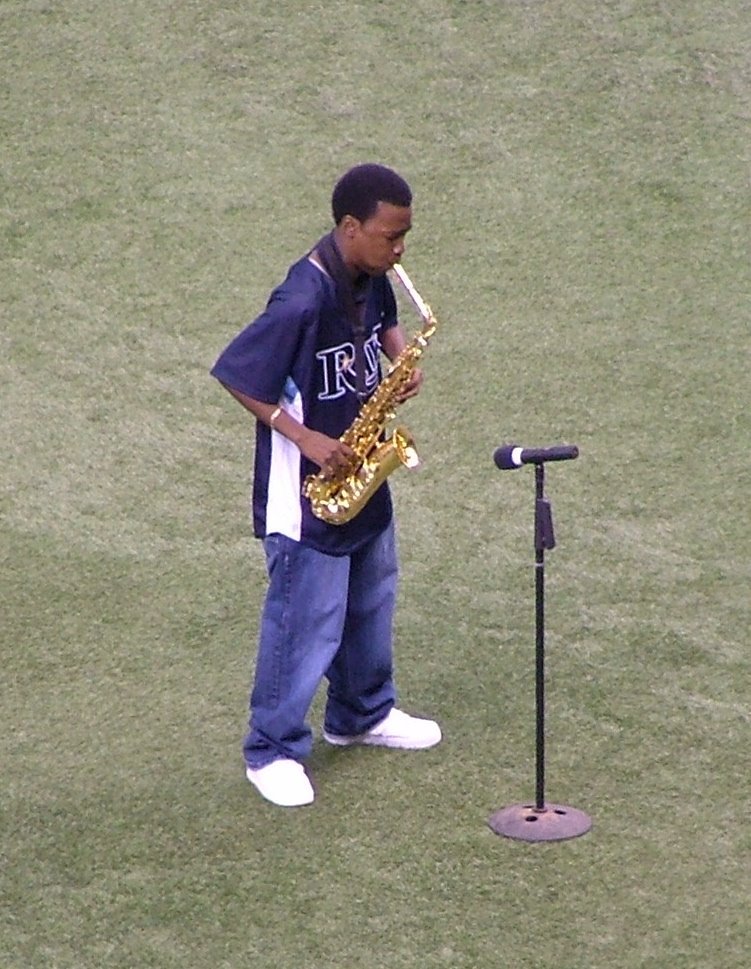
Normally I am impressed by the performance of the national anthem before ball games, but not moved. Yesterday was different. The song was performed by a 17 year old local jazz saxophonist and before it was over, I had chills. This kid was amazing. Here he is doing it at a game earlier in the season.

Apparently I was not the only one moved. Here is what Rays outfielder Carl Crawford had to say about it:

“It didn’t hit us until we actually got out on the field and saw the crowd, heard the screaming and hollering, hit the national anthem. You know the little saxophone kid killed it and that really just put us over the top. So our emotions were flowing everywhere. And now we’re in the dugout and can’t sit down. And it went from there.”

Technorati Tags:

Game One

A quick report is due on the first game of the American League Division Series between the Rays and the White Sox, a game which the Rays fortunately won. Attending was exciting and fun and left me with several enduring impressions.

First, there is a phenomenal camaraderie formed between complete strangers in situations like this. We all acted like we’d known each other since middle school. At one point, I’m high fiving the lady next to me and bumping fists with the guy in front. Our friend Keith is not a touchy feely guy, but the drunk, I mean fan, next to him hugged him after a home run. Pretty interesting.

Secondly, in the needle-in-a-haystack department, we were blessed before the game to have a friend and church member Hannah descend from the seats above us to say “hi”. She had spotted me coming back with two $4 sips of Pepsi, and rushed down to see us. (Weren’t you supposed to be in class, Hannah?) Later, between innings, I ran into a fellow pastor and friend Dave Harding. It is no surprise that I would KNOW two people out of the 35,000 plus in attendance. But that I would see them? That’s odd.

Thirdly, if there was any debate remaining about Evan Longoria deserving rookie of the year, he crushed any doubt with his first two at bats.

I have a fourth impression, but that deserves a post of its own.

Right now, we are celebrating that the Tampa Bay Rays are the only team in major league history to be undefeated in every one of their post season games.

Technorati Tags:

Why the Rays Won and What the Church Can Learn, Part 3


The Rays clearly saw that for an organization to improve, it is not sufficient to further strengthen strengths. It is important rather to know the weaknesses, and astutely allocate resources to address the weaknesses. That is what they did. And they have been remarkably successful

I mentioned earlier that church growth, while clearly a work of God, requires that the leaders, as good farmers, become astute in the factors that produce the best environment for growth. Growth is the work of God, but we are called to understand and address those principles which are characteristic of a healthy body, into which God builds growth.

This is really what the Rays have done, identifying what is necessary for success – pitching, fielding, teamwork, clubhouse chemistry, etc. – and addressing the areas where they were the weakest. When we can see our weaknesses (a painful thing) we are in the best position to grow beyond where we are. Progress in the weakest area may cue significant change in the whole.

In baseball, identifying the attributes which contribute to success is fairly easy. Finding the personnel to improve those areas is not. In the church, identifying the principles which provide the environment for growth is hard, and admitting our weakness in those areas can be tough. But God provides the gifted people through whom to build on the weaknesses.

The good news is that small steps in the weakest area can have a significant impact.

The Rays are not perfect in every area. They still have weak spots and areas for growth. We cannot as a church expect to perfect every aspect of church life. But we can, if we have the heart to do so, compare our ministries to those factors which encourage growth. Small improvement at the point of weakness can significantly improve the whole.

You see then the question around which I am dancing. What factors which must be present for a church to be healthy? If there are, say, ten key factors which every church must evidence, what are they? Knowing what they are can provide the assessment grid with which we can assess the areas in any church which need the greatest attention.

So, what are those factors? I’m all ears.

Technorati Tags: ,

Why the Rays Won and What the Church Can Learn, Part 2


Some of you may be hoping to see the baseball season come to an end so that I will just stop obsessing about it. I can only ask that you bear with me. I confess to the obsessive part of this.

I began yesterday to ponder why the Rays have been successful, suggesting the strange thesis that the church can learn something from them. So first, why the Rays success?

I’m no expert and I’ve not played baseball since little league. But there are some obvious things that can be noted. Clearly they did not improve by following the lead of their rivals, spending bunches of money on big name hitters and pitchers. (Funny to me how in small churches we assume that growth depends upon being able to act like the bigger, wealthier churches. I don’t think that is the case. But I get ahead of myself.)

Rather In looking at the stats, some trends emerge. First, the stats reveal that the change did NOT occur in their offense. Here is how they finished the year statistically in hitting (out of 14 AL teams):

  • Batting average – 13th (remember – this is out of 14 teams!)
  • On base percentage – 8th
  • Runs scored – 8th

Curiously, these statistics are not very different from those posted in 2007. The Rays offense is average, as it was last year. Growth is not dependent upon an organization, like a church, perfecting every aspect of its ministry. The Rays do not excel in hitting, as some churches do not excel in preaching or worship or depth of relationships. But their hitting is not sick either. It is good, just not great.
Where the change for the Rays has occurred is in defense and pitching. Hear is where they finished in 2008.

  • Earned Run Average for entire pitching staff – 2nd
  • Saves, total for the year – 2nd
  • Walks/Hits allowed per inning – 2nd

In each of these categories in 2007 they were 14th. Dead last.

The same trend can be seen in their defensive stats (though I don’t have a clue how these are calculated):

  • Fielding percentage – 6th
  • Defensive efficiency rating – 1st

Again, in 2007, the Rays were 13th in fielding percentage and 14th in defensive efficiency. The improvement is startling.

Even in spite of these particular numbers, in most other statistical categories, they are in the middle of the pack. The important revelation is that they are at the bottom of NO category except losses.

What has made the difference for the Rays is that they looked for those areas where they were weakest, and strengthened those areas. They did not need to become perfect in every area. Their improvement began by their addressing the missing aspects to their team health.

I think it is important to note that their dramatic return, from worst to first, is unusual, and is not something to be expected in any organization. But one could say that had they simply improved their fielding and pitching from 14th to, say, 8th, they could have had a mid pack, perhaps .500 season, and we’d still be happy.

And I think it is reasonable to suggest that an organization, say, a church in seeking to know how it might strengthen its ministry does not need to perfect that which it does well. A small church will not have the resources to do so. But what a church rather needs to do is to examine the neglected areas.

More to come….

Technorati Tags: ,

Page 48 of 71

Powered by WordPress & Theme by Anders Norén