Concerning Life as It Is Supposed to Be

Category: Uncategorized Page 35 of 71

Chilling

This post makes reference to the Buffalo plane crash and one of its victims Alison Des Forges. It alludes to an article several years ago dealing with the Rwandan genocide. Take time to read the two paragraphs from the article. Those two paragraphs have haunted me ever since I read them.

Imagine that through just such a communication, you knew that someone was going to die imminently and you could do nothing to save them.

Imagine then those dying around us for whom we have the message of life.

Lent

At the church I pastor, the elders are calling the congregation to a special commitment to prayer during the forty days leading up to Easter, the period some traditions have celebrated as Lent.

My friend Mike Osborne has an excellent post on how Lent, and particularly the ancient practice of fasting during Lent, can be used for growth in our love for Christ. There is much wisdom here. I encourage your reading of this and your consideration of the suggestions he makes.

It reminds me of Lauren Winner in Girl Meets God being challenged by a pastor to give up reading for Lent. Ouch. Yes, even good things can compete against Christ for our affections.

Literary References

Here is your assignment.

Some of these references are pretty obscure; some are obvious. The question is – will you post your score in the comments below?

I’ll be honest – I scored 8/10. How’d you do?

Burn after Watching

Matthew, I should have trusted your warning.

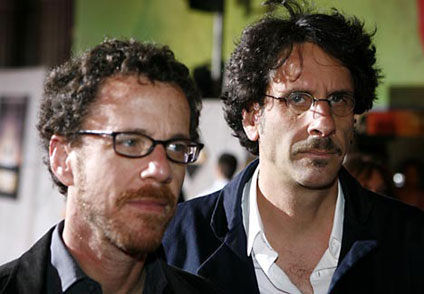
Shortly after the most recent Coen brothers movie, Burn After Reading, was released, my son Matthew saw it, and reported to me that it had been a waste of time. The movie, he reported, was largely senseless.

Matthew’s opinions normally are quite similar to my own, so we let this movie drop from the radar screen. Recently, some new friends reported to me that they had watched it and loved it. That recommendation together with the lure of the stellar cast (I’m a big fan of Frances McDormand and Richard Jenkins) drew us in.

As usual, the Coens craft a bizarre story and tell it in a unique way. But this one seemed to go absolutely no where.

When I began teaching junior high English I would ask students to write a story and when they asked how long it would be, I’d give a limit, say, one page. Some students would being a really good story, but seeing that they were near their one page goal, kill off their hero at the end of the page. They had done their duty.

That is what this movie left me feeling. It began well, interesting characters in interesting situations. But the brothers got to their two-hour ‘page’ limit. They were done. Goodbye.

So, if any of you saw it, what am I missing?

Sermon Remix

[I’m sitting in my van in front of the UPS Store. It is currently 7:54 AM. The UPS web site said that this store opens at 8:00. The sign on the door says 8:30. I may have a few extra minutes on my hand. A good time to return to the blog. Sorry for my absence (or you’re welcome… depending on your perspective).]

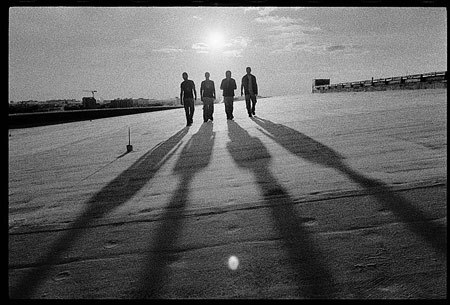
I just scanned snippets of a few reviews of the soon to be released, much hyped, new U2 album. It got me wondering about the life cycle of the eleven songs on an album like this. I’m sure they evolved something like this. They were written, rehearsed, revised, rehearsed again, revised again, and after several cycles, eventually recorded. Of course, in the recording of them, there could be dozens of takes, and dozens of variations tried on each take, all recorded and stored so that the engineers and producers could then mix them, edit them, re-record portions, massage them, listen to them, and try again.

After two years of work, the eleven songs are blended together as one fifty-four minute unit, packaged, and sold, to thunderous accolades and immense financial profit, and to the deep satisfaction of all the artists involved.
I mentally began comparing that to what one might imagine to be the life cycle of a sermon. It evolves something like this. Beginning on a Tuesday, generally, it is researched, written, revised, sometimes rehearsed, revised again, and then, Sunday, six days after its genesis, preached as a thirty-odd minute finished product. On Monday it is revisited and often regretted as, suddenly, new insights and necessary revisions are too late realized.

One reviewer of the U2 album identifies two ‘duds’ out of the eleven songs, which, he says, is “not a bad strike rate by anybody’s standards.”

I hope pastors are allowed an occasional dud or two as well, given the vastly different environment in which their art is practiced.

Pastor Dude

So, I’m seriously curious: what do you all think of this ‘dude’?

Watch the ABC Nightline report here.

Evil with a Smiling Face, Part 2

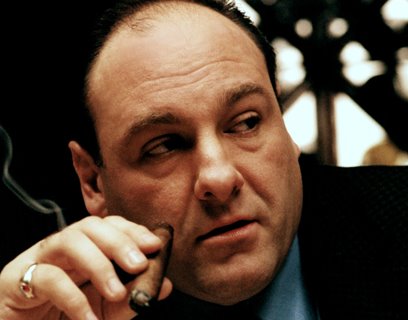
When my friend expressed such enthusiasm for The Sopranos, I determined that I needed to see what the fuss was all about. I’d heard about the series for so long, that my interest was already piqued. So, my wife and I began to watch the first series.

I’m not prepared to comment beyond this: How is it that a man so evil – he takes time out from taking his high school daughter to visit colleges in order to murder someone – can be so human? Tony Soprano is presented as a compelling human figure who struggles in his marriage, who loves his kids, and who loves ducks and flowers. The other side of him is a man who thinks nothing of having men killed, or doing it himself, if not beating them to a pulp.

Can both an outward humanity mask an inner evil? Can Evil have a smiling face?

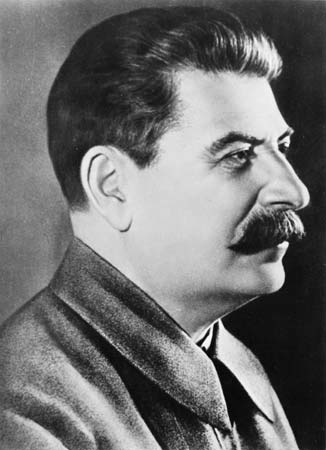
I was questioning the reality of that, wondering if what Tony Soprano was would ever exist in reality, when I came in my reading of Truman to the Potsdam conference in 1945 between Harry Truman (good guy), Winston Churchill (good guy), and Joseph Stalin (not good guy). Stalin was the head of a police state which, when the dust settled, was ultimately responsible with the deaths of more people, way more people, than Hitler’s six million Jews. And yet, people liked him.

Truman upon meeting him liked him. McCullough says, “Stalin nearly always made a good impression on foreigners.” One of Truman’s associates said, “He is a very likable person.” An American ambassador to Russia at the time said that “Stalin was uncommonly wise and gentle. ‘A child would like to sit on his lap and a dog would sidle up to him.'” (page 418)

So, perhaps Tony Soprano is not such an aberration as I might have wanted to make him.

Evil with a Smiling Face, Part 1

Some time ago I posted a question regarding why in American culture we have such a deep fascination with movies about crime. We pay large amounts of money to see people commit heinous crimes and enact horrible acts of violence. You can see that here: Vicarious and Conflicted Evil: a Question


A friend responded to this post with some thoughts about his or her (not telling) conflicted fascination with HBO’s long running crime drama The Sopranos. I recently revisited our correspondence, and found that I wanted to share a bit of it.

My friend noted this:

“Why did we find them so compelling? Because repeatedly, each episode would pull us ‘in’ to having compassion for Tony Soprano, the evil guy. We always wanted him to come out on top. Internally, I was always pulling for him to escape being caught by the FBI. And it felt sooooooo weird. Why were we wanting the bad guy to win? Why? I guess it is because when I look at the evil that exists in my own heart, I want that same compassion, even though I don’t deserve it.”

What this reveals is the power of a story well told, no matter WHAT the subject matter. It draws you in. I was struck by this while reading some time later in a book on the Old Testament:

“A story invites the reader to surrender his or her own thought system and to enter the world of another and to be carried along by the flow of this other world. Through this the reader becomes an insider, a part of the world of the narrative….

“We can see parallels in modern cinema, which entices the audience to identify with a different world and a different worldview in an entertaining and subtle way. Moviemakers are thoroughly aware of a story’s power to draw the audience in to adopt an alien perspective and value system.”

(Bruce K. Waltke, An Old Testament Theology, pages 104-105)

How should this (if it is true) effect how we deal with modern cinema/television?

John Updike

A regret: that I do not read poetry or the best fiction of modern writers.

A further regret: that though I’ve been aware of John Updike, I’ve not read a thing of his. And now he has died.

This poem, “Seven Stanzas at Easter”, appears to have been posted by permission, so I don’t want to copy and paste it here. But make the effort to go to it and read it.

Thanks, Andrea, for the link.

We Now Know

We now know when life begins. It begins when the child in the womb beats the abortionist’s poisons and emerges from the womb to take a full breath of air.

Many are troubled by this story, both those favoring and opposing abortion. The doctor is in trouble for a) not showing up at his clinic on time and b) not insuring that there would be qualified personnel to care for this patient in his absence.

But the irony is that had he showed up on time and killed the child in the womb, no one would have known and in some circles he would have been praised for his act.

But since the child was able to grab that fateful breath of air, suddenly he was human, and disposing of him as bio-waste, perfectly acceptable seconds earlier, became morally questionable.

There is a darkness that clouds the reasoning of men and women in our day. On the one hand we preach the gospel and pray to see that darkness lifted. But this child is a martyr, with one cry, one gasp of air, he has injected the debate with some clarity before his untimely death.

May his testimony and that of millions like him help lift this terrible darkness, that his death not be in vain.

Page 35 of 71

Powered by WordPress & Theme by Anders Norén