Concerning Life as It Is Supposed to Be

Category: Uncategorized Page 28 of 71

Cinnamon Bun Marketing

Yes, I bake and sell cinnamon rolls. That is an avocation. A hobby. And it is something that I do not really have time to market. But oh, the possibilities.

A correspondent told me that she had seen in a magazine that there is something in cinnamon that acts as an aphrodisiac. (I want to ask her why she was reading those kinds of magazines….)

But this got me to wondering, and that led me to the venerable and authoritative WebMD which tells us this:

“You may remember a study a few years back that found men responded more powerfully to the scent of baked cinnamon buns than any perfume.”

So, looking for a romantic evening? Have an anniversary around the corner? You know where to turn.

Perhaps I should offer a special: a tray of fresh cinnamon rolls, flowers, and a chick flick all for one low price!

I’ll have to work on this.

Waiting and Waiting and Waiting

My profile indicates that I am the grandfather of one plus one on the way. Well, that one on the way is getting closer to being here. My wife flew to be with my daughter a couple days ago, and on Sunday we decided that I would go ahead and join her during a narrow window in my schedule. And so we wait.

I will alert you to any further developments. The clock is ticking.

Three Cheers for (Most) Scholars

Edith Hamilton, in her very helpful survey of ancient, primarily Greek and Roman, mythology, Mythology: Timeless Tales of Gods and Heroes, begins by discounting the authority of the Latin poet Ovid as a reliable source for these tales. Her reason is that Ovid was too skeptical of the stories. He was, as it were, an unbeliever, and so his telling of the tales lacks the passion of those who appreciated them for what they were.

I find her skepticism of her source intriguing because we find a similar skepticism on the part of those who evaluate the biblical writers. In Biblical studies, the opposite logic is applied. The less sympathetic an author is to his subject, the more reliable he is assumed to be.

As well, biblical skeptics argue that the more a primary source (the gospels primarily) deviates from what has come to be understood as orthodox and historic Christianity, the more authoritative punch he is assumed to have.

Very curious, both assumptions.

It is assumed that historic Christianity was not the product of Jesus’ teaching, but the product of the pragmatic needs of the early church. Thus in recent years the so-called gospels of Thomas or Judas have become the darlings of the religious press, packaged as the victims of conspiracies by the religious gatekeepers determined to keep their ‘real’ story of Jesus away from public consideration.

A skeptical view of the accuracy of the gospel record underlies the Atlantic Monthly article by Robert Wright entitled “One World, Under God”. (We have been interacting with some assumptions which inform his thinking. We have already addressed these assumptions here, here, and here.)

In building his case, Mr. Wright identifies some of the more commonly held opinions of Jesus: that he preached love and compassion and forgiveness, and so forth. These are all nice, but that was not the ‘real’ Jesus, he contends. He says:

But there’s a funny thing about these admirable utterances: none of them appears in the book of Mark, which was written before the other Gospels and which most New Testament scholars now consider the most reliable (or, as some would put it, the least unreliable) Gospel guide to Jesus’ life.

From this Wright goes on to conclude, at least implicitly, that the ‘later’ gospels (those not named ‘Mark’) were influenced by the need for Christianity to be more global and ethnically inclusive, so that the Jesus emerging from those books was one far more amenable to a wider culture.

There are massive assumptions packaged in this one sentence.

First is his appeal to ‘most scholars’. This sounds very democratic and quite authoritative. Fortunately the truth of an issue is not determined by how many we can find (or assume to find) voting in our favor. Certainly the scholarly credentials of those voting might want to be measured and weighed.

Second, he assumes that distance from a source undercuts its reliability. The assumption that because Matthew, Luke, and John (the latter is a gospel Wright tends to ignore) are written later they are in some way less reliable is an assertion that does not hold up.

It does not seem to matter that someone like Luke is clearly compiling a book based upon research, given with the stated intention of providing an accurate record of what had been reported. Luke is intent on getting to the bottom of what had been passed around. Reliability matters to Luke.

As it does to Mr. Wright as he depends heavily on Luke’s record regarding the Apostle Paul. Mr. Wright quotes freely from the book of Acts and discounts the Gospel of Luke. However, these two books are part 1 and part 2 of the same work, written by the same author with the same intention at the same time. Funny that Luke could be accurate in part 2 (helping Wright’s thesis) and untrustworthy in part 1 (damaging to Wright’s thesis).

Most scholars (ahem) would find this appallingly disingenuous.

It is not wrong to puzzle over the differences between the four gospels. They are each very different. Why is that? At the very least, we can see that their differences were inspired by different audiences and different purposes. But this in no way compromises the integrity of any.

Richard Bauckham, a Scottish scholar (not one of the ‘most’ apparently) has written convincingly that each of the four gospels reflects not the accumulation of the pragmatic myth-making of a developing church but rather the reportage of eyewitness accounts.

C. S. Lewis, while no “fundamentalist” according to his own assertion, was a literary scholar (another not counted among the ‘most’!) who was certain simply from the character of the gospel texts that what was recorded was reportage, not myth or fiction. And as one who had seen his own work (and that of his friends – the ‘ring’ in Tolkien’s work was said to be the atom bomb) reconstructed and interpreted in ways far from his own intention, he suspected that the reason that some (most?) scholars could make wild assertions about Plato or Aristotle or Luke or John was because the principles were dead and could not set the record straight.

To question the integrity of the Biblical texts is popular sport, no doubt. Mr. Wright is not arguing for gospel unreliability. He just assumes it because it suits his purposes. That’s a bad assumption, no matter how many ‘scholars’ he marshals to his support.

Of course, many of us who claim to believe in the integrity of the biblical books choose to ignore their content. Most scholars would say that that’s a very bad idea.


The Road


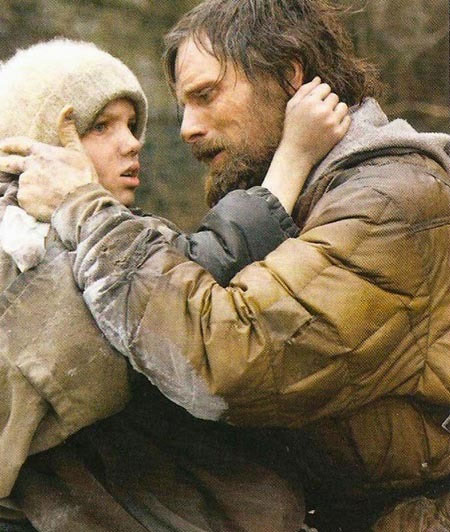
If you have not read Cormac McCarthy’s The Road, do so by October 16th.

If you HAVE read it, this will interest you.

Books Which Have Caught My Eye

First is a book which is, by its title, about preaching.

Why Johnny Can’t Preach

But judging from this review, it may have more to say about how illiterate we have become.

Most of us in the educational world bemoan the inability of many of our students to produce basic outlines, shape rudimentary arguments, or craft reasoned essays. Some of us even go so far as to give students a basic framework in the syllabus for writing the essays for which we look and yet it is shocking how students are unable to follow even such suggestions.

Second, a book which sounds like an excellent resource on decision making.

Just Do Something

I love the title. Here is an excerpt from a review.

Here, then, is how we are to live within God’s will: “So go marry someone, provided you’re equally yoked and you actually like being with each other. Go get a job, provided it’s not wicked. Go live somewhere in something with somebody or nobody. But put aside the passivity and the quest for complete fulfillment and the perfectionism and the preoccupation with the future, and for God’s sake start making some decisions in your life. Don’t wait for the liver-shiver. If you are seeking first the kingdom of God and His righteousness, you will be in God’s will, so just go out and do something.” God’s will for your life is really not as complicated as you may be making it out to be.

Sounds like something worth reading.

Humor Goes a Long Way

Where would you want to shop? At a store which greeted you with a sign saying something like this: “Unaccompanied Children will be asked to leave with their parents” or some other grim warning, or at a store which displayed this sign:


This picture was taken by my son at the store where his wife works. Seeing this, I would chuckle, get the message, and love the store. Winsome humor gets its message across, and wins friends.

David Pogue made the exact point in his post about a customer product manual that sounds as if it were written by fun-loving people and not lawyers.

This reminded me of the manual for my beloved Boston Acoustics Receptor Radio which in the midst of the typical user manual drivel has this to say about connecting the FM antenna wire:

CONNECTING THE FM ANTENNA WIRE
The FM antenna comes pre-attached. If the antenna is disconnected, follow these steps to reconnect it:
1. Push the “F” connector plug on the end of the antenna wire into the receptacle on the Radio.
2. Straighten out the antenna to its full length.
3. Orient the wire for best reception. (
The position for best reception is guaranteed by Murphy’s Law to be wherever it looks the worst, like draped down over the front of the kitchen counter.)

Pogue makes the observation that “…many people suffer from Humor Deficiency Syndrome (HDS), a frightening condition that renders you incapable of detecting when, in fact, somebody is even attempting humor.” This is a condition to which it seems Reformed Christians can be sadly susceptible. John Frame in his massive and erudite volume The Doctrine of God says something which he intends to be humorous, but he felt constrained to footnote in the following way:

I am, of course, here jesting with my readers, and I’ve discovered that in Reformed circles I usually need to explain my jokes. (page 276)

Of course, humor can be used as a brutal weapon and can be introduced into the wrong contexts. So can fire. But I’d hate to live in a world without it.

Of Murderous Sisters and Circadian Rhythms

In the Spring of 1976, I was a naïve and intellectually unprepared sophomore at Michigan State University who was about to be introduced to the most fascinating professor he would ever encounter. Why I was taking this man’s class, I cannot recall, nor can I recall it’s name. What is vivid in my memory, however, is the way in which the graduate assistant introduced the class, the professor himself having been detained. He said that if he were to title the class, he would call it simply “Interesting Things.” It did not take long for me to see the appropriateness of the title.

The class was one on the popular culture of the 19th Century and was taught by Dr. Russel Nye, an unassuming man, short, a tiny bit stout, balding, and with an infectious laugh, a deep love for life, and an insatiable curiosity which loved to find meaning in ordinary things. I was later to find out that he had authored a Pulitzer Prize winning biography of the historian George Bancroft and that he had had a significant role to play in the development of the study of popular culture as an academic discipline.

But I prefer to remember him as the man, then appearing old to me, who stopped me one day in the library to show me a t-shirt he had picked up in Paris. It was apparently popular in Europe at the time to wear t-shirts from American colleges, and this one, he chuckled over, had “Harvard” emblazoned and misspelled on the front.

I’ve often thought of Dr. Nye when I have pondered the fact that truly great men do not need to act to persuade you of their greatness. It is only those who are not great who must labor to do that.

I ended up taking an additional class with Dr. Nye, one on Canadian Literature (the books for which he bought in Canada and smuggled across the border). I eventually had the privilege of doing an independent study with him, comparing the humor of Mark Twain with that of Canadian humorist Stephen Leacock (an early Garrison Keillor).

His curiosity made me curious. What more could one expect of a professor?

+ + + + +

The class informally known as ‘interesting things’ was a study of the impact of the major inventions and trends of the 19th Century upon modern American culture. The photograph, for example, is something we take for granted which when introduced transformed the way we deal with the past. For the first time, it was possible to instantaneously freeze a visual image outside the human memory. The phonograph would do the same thing for sound. The 19th Century as well saw revolutions in medical care and religion. Strange medical approaches arose (phrenology, for one) and at the same time young men and women were dreaming dreams of utopias both on earth and in heaven.

That I write the paragraph above strictly from memory, though the class was over thirty years ago, is a testimony to the interest in sparked it me. The fact that I still possess the notes from that class and could access them even now is testimony of the reverence with which I hold the experience of discovery the class represented for me.

+ + + + +


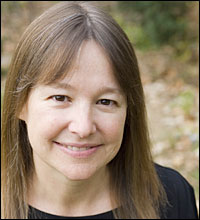
Anne Fadiman is the author of a collection of essays which I just finished, a wonderful volume called At Large and At Small. I am persuaded that if Russel Nye and Anne Fadiman were ever to have met, they would have liked each other instantly. A curious fascination with life would link them.

This book, too, could be titled “Interesting Things”. Curiosity and delight in life oozes from every word she writes and every corner of life she explores.
From her essays, I’ve learned to make ice cream with liquid nitrogen and have considered the violent thrill of lepidoptery. I now know that the ‘Mary’ of Charles and Mary Lamb, authors of the children’s introduction Tales from Shakespeare, wrote her portion while on leave from the insane asylum, where she was tucked away for murdering their mother. I’ve learned the chemical name for caffeine and why it has such enlivening effects on us.

I have also learned quite a bit about Ms. Fadiman. She had an upbringing which encouraged her curiosity and she has a brother who shares it. She, like my wife Barb, is married to a morning person while she is a night owl. She loves her husband but he and she share differing rhythms. And from spending a week with her, I understand why an otherwise proper seminary professor has a crush on her.

Thus is the fun of the familiar essay. And this has been the fun of At Large and At Small, an excerpt of which (together with an interview with the author) can be found here. She messed with my circadian rhythms. Big time. But I enjoyed every minute of it. I’m obviously a sucker for interesting things, compellingly presented.

Where can I get some liquid nitrogen?

“Peel”

I was sitting Tuesday afternoon at a Starbucks answering email and doing some other work and every few seconds someone at a table near me would shout, “Peel.”

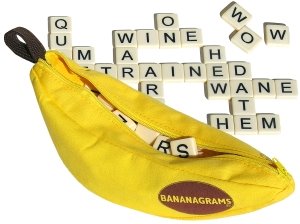
This would be disconcerting to many, I suppose, but to us initiates, it was musical. Bananagrams was in the building.

A year and a half ago, our friend Robin at Funtoysia, a store I should never approach without surrendering my credit card to someone wise and trustworthy, recommended a new game called Bananagrams. Being a sucker for games and trusting her recommendations, I laid down one of my best spent $14.95 ever. This has become a Greenwald family favorite game.

Shortly thereafter, we took it with us on a visit to family in Cincinnati, and for hours on New Year’s Day there was a continuous game being played at my sister’s family room table.

Bananagrams is a word game played with Scrabble-like tiles. The object is to take a set number of tiles and create interlocking words, much like would occur on a Scrabble board, except that every player is creating his own ‘board’. The winner is the one who uses the last available tile. If you can spell, you can play.

It’s most endearing feature is its banana shaped package. It’s pure marketing genius.

We’ve found that it can even be a multilingual game. My son-in-law speaks very little English. So, when he’s played with us, we simply allow him to create his words in Spanish. (I believe, though, that he cheats – using words from two languages at once just is not playing fair.)

Bananagrams is $14.95 wherever you buy it. So I suggest that those in the Bradenton-Sarasota area find their way to Funtoysia and pick it up there. Tell them ‘Randy’ sent you and they’ll, well, they won’t do anything, really. But tell them anyway!

Oh – what does ‘peel’ mean? Buy the game and you’ll find out. Or ask the next guy you see playing it at Starbucks.

+ + + + +

Where did the game originate? Ask CNN.

Embedded video from CNN Video

A Plea for Conversational Critique

Maturity always welcomes reasoned critique. That is why I have such a problem with criticism. I lack the maturity to receive it well. That is my sin.

But there is a helpful method of critique, and a destructive method.

A friend passed on this link to me in response to my recent post about the success of our own art show. I believe that our defense of what we have done is adequate and speaks for itself. We know what our goals and intentions were, and what we aimed at, we reached. We were seeking to love the community in which we have been placed. We are trying to learn what it means to love the sinners around us. This was one means to do so spawned by the community we are in and the people God has put in our church.

The post which my friend passed on was not aimed at us, but took a broad brush mocking stance against all efforts to bring the arts and the church together. The stance itself is puzzling to me, but the tone disappoints me.

I sincerely fail to understand how criticism couched in mocking tones is of benefit to anyone. And yet, there is a strata of gifted reformed leadership whose chosen voice is mockery of which this is but one example.

It is a shame. In Christ’s church we have so much to learn if we would only talk to and listen to one another. Mockery and sarcasm, though warm and funny and reassuring to the insiders only shuts down meaningful conversation and slaughters any hope of real communication and growth in the body.

Are we at HPC beyond critique? Absolutely not. We can learn from the thoughtful insight of others. But not when the critique is hateful. And that is the shame.

Joe Bayly was a gifted writer who during his career was able with a whimsical but pointed humor to cause evangelicals to examine their hearts and practices. There is no better example of this than his Gospel Blimp. His sons, and those of this mold, have all the gifts but that of the disarming whimsy. They see much clearly, much that could be of benefit to others. But, I’m sorry that I am not able and, I admit it, not willing to listen to those who pontificate with such broad condescending and critical strokes.

I hesitate to say this because I see my own sin. There have been occasions when I have, in haste, posted to this blog critical posts which were every bit as condescending and graceless as the worst of others. I know the sin of which I am capable.

Critique is necessary, and sometimes that needs to be firm and direct. Love demands that. But love, it seems to me, while calling forth honesty, eschews mockery.

Notorious

When you put Alfred Hitchcock in place as a movie’s director, and give him Cary Grant and Ingrid Bergman to work with as his leading man and woman, you have a splendid lineup for a smashing good movie.

How, then, could Barb and I be unimpressed. Even after reading on Rotten Tomatoes that it contained one of the most famous kisses in movie history, we were left wondering which kiss that was.

There is a good amount of suspense, and the movie was wonderfully shot. But I guess my expectations were just too high given the power and reputation of the movie’s principles.

Give me Bergman and Bogart next time.

Page 28 of 71

Powered by WordPress & Theme by Anders Norén