Concerning Life as It Is Supposed to Be

Category: Uncategorized Page 18 of 71

He Knows What Lies behind Our Veils

…and he marries us anyway

This article from The Telegraph in London bears a strange resemblance to a certain Jacob and Leah. I’m posting the article here, not knowing how long it will remain on-line at the source.

An Arab ambassador has called off his wedding after discovering his wife-to-be who wears a face-covering veil is bearded and cross-eyed.

The envoy had only met the woman a few times, during which she had hidden her face behind a niqab, the Gulf News reported.

After the marriage contract was signed, the ambassador attempted to kiss his bride-to-be. It was only then that he discovered her facial hair and eyes.

The ambassador told an Islamic Sharia court in the United Arab Emirates he was tricked into the marriage as the woman’s mother had shown his own mother pictures of her sister instead of his bride-to-be.

He sued for the contract to be annulled and also demanded the woman pay him 500,000 dirhams (£85,000) for clothes, jewelry and other gifts he had bought for her.

The court annulled the contract but rejected the ambassador’s demand for compensation.

The report did not identify the ambassador.

A pastor friend I know shared with me that the ‘real him’ is a monster. He is one of the most wonderful men I know, but I see him veiled.

John Murray, the Westminster Seminary theologian reportedly noted that if we could only see into his heart, we would see an awful blackness. People knew him as a godly man. But they viewed him veiled.

I know my heart. I know my sin. I know my weakness. I know what no one else sees. I know what I struggle with and what I am ashamed of. And few others see it, and none see it wholly. I am veiled. And I fear the veil being lifted.

Can you imagine the shame and rejection that this veiled bride must have felt? To be rejected when the veil came off?

We need never experience that. God knows what lies behind the veil. And he loves us anyway.

That is the comfort of the gospel.
The Reward for Righteousness

A friend is struggling with a company that is not profitable. The outlook is bleak, and the worries great. This is a person who has always had life turn sour, who has yet been a wonderful person, full of life and faith and a desire to serve others. It’s sad in substance, and it is sad to watch the struggle of faith this has generated.

I was thinking about this as I read 2 Samuel 11 this morning. It occurred to me that the most righteous person in this story is rewarded with an unjust death. David gets the girl, keeps his power, and lives a long life. Uriah dies.

It’s not fair.

At least we all, and my friend, who struggle can realize at some level that we are not alone. Our struggles are not God’s judgment upon us. Often the most righteous suffer the most. Jesus for example.

But Jesus is more than an example. Jesus is the one we cling to. Jesus is the one who assures us that there is reward. He is the one in whom we know that apart from the injustices of life there is a God in whose hands we securely are placed. He has secured that for us. In union with him, on the other side of suffering, there is glory.

I hope my friend can see that.

It’s a Shame about Tokyo

There has been, observers tell us, a revival of sorts throughout the land. A revival of grace.

I can’t speak for what goes on throughout the land, I can only speak for myself and my own limited circles. In my own life, an appreciation for grace has renewed me, my ministry, my preaching.

This trend is, though, to some, disturbing. It leads, it is said, toward anti-nomianism, that is, toward a disregard for the demands of biblical law. We need to preach the demands of obedience.

On the flip side are those who have been so exhausted by the demands of obedience that they flee any exposition of law. They fear any preaching suggesting that Christians must do anything. To preach the law is to denigrate our freedom in Christ.

And as these two tussle like Godzilla and King Kong, Tokyo gets destroyed. Lost in the smoke and devastation of clashing titans is the grace-filled biblical piety of those who simply love Jesus because he first loved them, and act out of the strength and freedom of that love.

It’s a shame that Tokyo gets squished. I like Tokyo.

In the Papers

Monthly I write a column for the local Bradenton newspaper. Clergy columns tend to be evangelistic because those who write them fail to realize that those who read clergy columns are not generally going to be your unbelieving masses. I approach the column assuming that my readers will mostly be Christians. I write to these Christians knowing that our conversation will be overheard by the occasional non-Christian. This then directs what I say and how I say it.

Clearly that is the case with this month’s article. TulipGirl has sensitized me to a large Christian home-schooling subculture whose faulty hermeneutic in the hands of the wrong people has bred lasting harm. In the hopes that some might be alerted to the dangers I wrote this article.

I know that that will be available on-line for only a short time, so I’m posting it here as originally submitted:

* * * * *

In Memoriam

Last month, seven-year old Lydia Schatz was admitted to a California hospital, her body so beaten that her internal organs had shut down. She died shortly thereafter.

She had been beaten by her Christian, home-schooling parents, by all accounts good people who wanted to do the right thing with their children. Good people who did not stop to think.

They had been told that to be good Christian parents, they should home-school. So, they home-schooled. They were persuaded by the homeschool milieu they inhabited that the Christian child should be perfectly obedient. They were further told that the Christian way to get such perfect obedience was to whip their children with 1/4 inch plumbing supply line. They were told that loving Christian training required spanking children until their crying turns into a ‘wounded, submissive whimper’ or leaves them ‘without breath to complain.’

And now a child is dead.

The quotes above are lifted from a February 22 article in Salon.com and reference the child rearing teaching of Michael and Debi Pearl. The Pearls have mined gold playing upon the fears and desires that many Christian parents have for their children. The war cry is to guard, protect, and isolate our children and to eradicate from them any vestige of sinful rebellion. This plays well among good people who want to do the right thing in raising their children.

Sadly, good desire is wrapped in bad theology and worse practice. Sin can no more be beaten out of a child as it can be beaten out of you and me. The only thing which frees us is the gospel, the fresh wind of grace, the kindness and mercy of God. That is what we must show our children and embrace ourselves.

I know how powerfully fear and control can play in the mis-handling of our children. One need not be a home-schooling Christian to fall prey to such patterns. But when we add to our base emotions an apologetic for beating and call it ‘Christian Parenting’ we have created a harmful brew. Only a few will die outwardly; many will die inwardly.

All because we as Christians stupidly follow without thinking.

I am a conservative Christian. My wife and I homeschool our children. It is easy to form stereotypes when the darker side of this movement is exposed. Please don’t do that.

But my heart breaks for these children, and I am angered by the teaching that encourages it.

It is too late for Lydia. It is too late for many others emerging scarred from such environments. It may not be too late for others. Think. Follow no one blindly. Consider the kindness and grace of God. Love your imperfect children as God loves you.

The 14th Century Perspective

My wife just emailed me to tell me that another severe earthquake has hit Chile. I don’t know what really has been the damage, and my sympathies go out to those who must be suffering greatly

Apart from the tragedy that such things are, I know what someone will soon tell me. Soon, someone will be telling me that this is just another sign of the end of the world and of the eminent return of Jesus.

Maybe it is. But there are two things that lead me to discount such interpretations of current events.

First, when Jesus speaks of natural disasters and rumors of wars in Matthew 24 and in Mark 13, his emphasis seems to me to be that these things are NOT to be taken as signs of his eminent return. His very point seems to be that we cannot accurately read these things as harbingers of the eminent end.

But Secondly, I can’t grasp how we can be saying that things are so bad. Yes, absolutely, if we were in the city center of Port Au Prince or Santiago, we would be overwhelmed with the suffering and the sorrow. I don’t mean to discount that. But what I wonder is by what historical measure can we so assuredly declare, as I’ve heard many do, that things are so bad that Christ must return? The implication of many and the expressed affirmation of others is that things could never have been as bad as they are for us. I seriously question that.

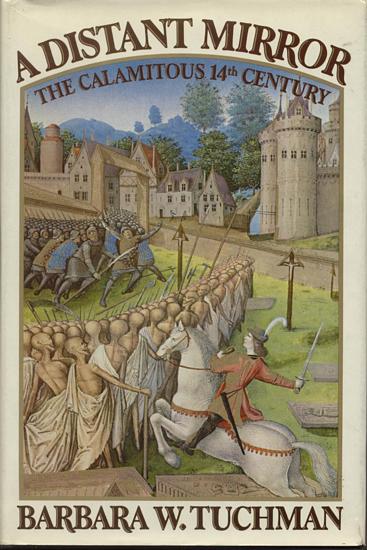
I have on my night stand a book I’ve been wanting to read for some time, A Distant Mirror: The Calamitous 14th Century. The author, Barbara Tuchman, has written what many believe to be a riveting and fascinating story of life in the 14th century. This would be the days during which Europe’s way of life, no, very existence, was threatened by corrupt church politics, public immorality, the incursion of ‘heathen hordes’, a 100 Years War, and the death of 1/3 of the population due to the Black Death, the bubonic plague.

I think any citizen surviving the 14th Century would probably laugh at us for claiming that we have it bad.

I think we as Christians need to be less confident in our knowledge of ‘what God is doing’ and more confident in what he has called us to do, and then just do it.

Asking

I mentioned a week or two ago what James Montgomery Boice taught me about how to get smart. His curiosity was well developed. You can read about that here.

Wanting to inspire my children to his level of curiosity and intelligence, I told my children all about this.

Several weeks later I was working on a project of some kind, and my second son was hanging around. He was, as children are want to do, pestering me with an unending barrage of questions.

Finally I had had enough and I asked him if he wouldn’t really rather go play outside. He declined, preferring to stay and ask me questions that I could not answer.

Finally, my answer giving limit was reached, and I asked him to please do something else.

He said, “But Dad, you said this is the way to get smart.” (And, of course, being a son, he just wanted to be with me, but that was nothing he could express.)

It takes pretty good skill to fail as an intellectual mentor AND as a father at the same time. But I accomplished it.

That Is How You Become Smart

I was looking at the moon last night, and for the first time in fifty three, years of life wondered why some portions of it are darker than others. I suppose the difference is caused by lunar landscape features, light reflecting differently off plains and mountains, but I may be wrong. What struck me is that over 53 years of living, I had never thought to ask the question.

In 1995, Hope Presbyterian Church hosted a conference featuring James Montgomery Boice. Dr. Boice was an evangelical leader of tremendous grace and skill, pastor of Philadelphia’s Tenth Presbyterian Church, and featured speaker on a broadly heard radio program.

He was not only a gifted communicator, he was, it was clear, a very smart man. He was not one, it should be noted, who used his intelligence as a perch from which to look down upon others. He was the paradigm of the Christian gentleman.

I soon learned that in addition to a clear abundance of intellectual gifts, he was smart because he was curious. He would have asked about the moon much, much earlier.

After the conference, I drove Dr. Boice to Tampa to catch a train to return to Philadelphia. Along the way, he asked many questions about the places we passed. Questions I had never thought to ask, and questions, therefore, for which I had no answers.

I told my kids later that this is how one gets smart. But asking lots of questions.

And by reading.

On that same trip, Dr. Boice told me that he was beginning to re-read Will and Ariel Durant’s 11-volume world history set The Story of Civilization.

This was his second time reading it.

He did not tell me this to impress me. I was impressed, anyway.

I’m a late bloomer. By the time Dr. Boice had reached my age, he was nearing the end of his life due to the sudden and overwhelming onslaught of liver cancer. But I’m learning to ask questions, and I’m learning to read (not Durant, but this).

And I’m wondering how many other curious things in my world are right there in front of me but which I’ve failed to see?

Hermeneutics, Life, and Death

Someone asked me the other day, “What’s hermeneutics?”

I explained to her that it is the science of interpretation of a text, and that in our circles it refers to the interpretation of the Bible.

I also told her that the difference between proper hermeneutics and improper hermeneutics can be the difference between life and death.

I was not being overdramatic.

* * * * *

Early in our parenting journey I was given a small booklet which proposed to me that the key to parenting success was the art of the rod. Moving from the proverb which promises a spoiled child to the parent who spares the rod, this booklet taught that the biblical method of parenting demanded frequent and forceful spankings.

Once vulnerable and trusting young Christian parents are told such things, they may just believe them. I did. For a time.

The problem is that the passage does not demand spankings but discipline, and a broader reading of scripture calls for an attitude of grace which views children as God’s image bearers and not as mere Pavlovian dogs or Skinnerian objects.

The difference between the booklet’s understanding and that of the above paragraph is not merely one of ‘point of view’. The differences are rooted in a proper and an improper hermeneutic practice.

And this difference is deadly.

I early saw the fallacy in the ‘beat them into godliness’ school. I also learned that my baser nature made me an untrustworthy bearer of the rod. But though I have grown in my understanding, others have not. I have been blind to the horrible damage, the unconscionable acts, which have been perpetrated in the name of such ‘biblical’ parenting.

Here, here, here, here, and here, my good and gifted friend TulipGirl has shared the sad, sad news of a case of child abuse which resulted in death. This case involves Christian parents who are the followers of such methods. They did not spare the rod, and as a result, a child is not spoiled, but dead.

TulipGirl has written passionately and articulately about this particular tragedy. If you have not done so already, go read what she has written. If you are a follower of Christ, weep not only for the children, but for the honor and reputation of Christ.

If you follow her links, you will see this tragedy set in the larger context of the frightening power wielded by the unrepentant teachers of such false systems. TulipGirl does not relish the role of the confrontationist, and she makes every effort to speak fairly and with grace. But if the name Pearl (or Ezzo) adorns the spines of the parenting books you or your friends trust, you should read and ponder what TulipGirl has to say.

We should be saddened by such stories. But we should be saddened as well by the broader carelessness which characterizes the hermeneutics of those who assume to themselves the mantle of ‘teacher’ in the Christian world. Hermeneutics is a matter of life and death. In this case, faulty hermeneutics has led to a child’s death. In other cases, it leads to impoverishment. In others, to a bondage of spirit from which people with difficulty emerge.

Not everyone who spouts Bible verses or claims to be ‘biblical’ is to be believed or trusted. And I say that as someone who spouts Bible verses and claims to be biblical.

* * * * *

The woman who asked about hermeneutics is following a path that will serve as a healthy antidote to the tyranny of the experts that plagues the Christian church. She has picked up R. C. Sproul’s excellent little intro to the subject called Knowing Scripture. She’ll be okay.

I commend the book to you. But I commend as well prayer for Christ’s church, for her teachers, and for those who teach the teachers. May we all be true to him who gave his Son not to condemn the world, but so that the world might be saved through Him.

Hibernating

I’m really not dead, yet. Just busily consumed with life. I love to write and to post, and my backlog is immense.

I refuse to get on the cart. Besides, it’s against regulations.

And it’s clearly too early to go through my clothes and look for loose change.

Stay put. I’ll return.

Tapping In

On a Thursday a few weeks ago, I had started my work day at about 6:00 AM. At 7:00 PM after a 13-hour, non-stop day, an opportunity opened to attend a Bible study at a nearby college, the invitation coming from the students themselves. I was so tired, I turned down what would have been a great opportunity. But I was spent.

What did this holy man of God do instead?
A) devoted himself to an hour of prayer or
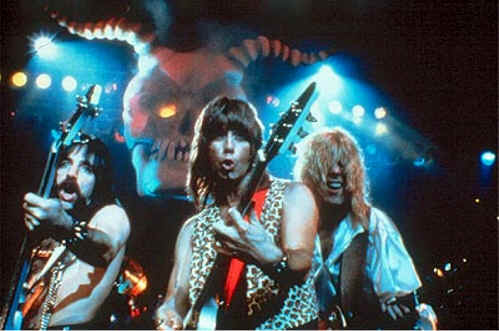
B) popped This Is Spinal Tap into the DVD player to watch 90 minutes of brain-relaxing absurdity.

Yes, it was ‘B’.


This is Spinal Tap parodies the lives of aging rock ‘n’ roll bands (and contrary to what people think, Spinal Tap was NOT a real band). It was innovative for its time, inventing the ‘mockumentary’.

This is one of those movies that is funnier when I think about it later than when I actually watched it. I’ve laughed louder at the 18 inch Stonehenge and the disappearing drummers more SINCE seeing it than I did WHEN I saw it.

Comedy, and especially satire, depends so much on the familiarity of the audience with certain nuances of the subject matter. I didn’t get all the jokes, but it was a great way to rest the brain after a long, long day.

I love lists of movies, but I’m often puzzled by them. This is Spinal Tap is listed as #29 on the American Film Institutes’ list of 100 funniest movies.

It strikes me that in culture there are certain canonical answers to certain questions, answers which are expected but which do not necessarily reflect the studied opinion of the answerer.

So, who was the greatest writer in the english language? Shakespeare, of course.

What was the greatest movie ever made? Citizen Kane, clearly.

And what were the funniest movies ever made? Among others, clearly, This Is Spinal Tap.

Page 18 of 71

Powered by WordPress & Theme by Anders Norén