
Concerning Life as It Is Supposed to Be

Category: Uncategorized Page 11 of 71

The Most Brilliant Observation

Sometimes the most brilliant observations are the most obvious. Like the day I realized that my children’s fears though irrational, were nevertheless fears, and should be approached as such, and not brushed off.

Recently, I’ve seen this principle at work in my study of the Bible, and in my wrestling through life. The other day, for example, I realized that Matthew 6:34 followed – are you ready for this? – Matthew 6:33. It was that obvious. It hit me over the head like an apple from a tree.

Anxiety wants to be my best friend, my constant companion. But, really, he’s not very much fun to have around. But somehow, I tolerate and, at times, welcome him. But frankly, I’d like him to leave.

Jesus tells us that Anxiety is not good company in Matthew 6:34.

“Therefore do not be anxious about tomorrow, for tomorrow will be anxious for itself. Sufficient for the day is its own trouble.”

Read in isolation, this is an exhortation to simply show Anxiety the door. But like the battered wife, mysteriously, I often lack the will to walk away from my abuser.

But read in context, while Anxiety still finds plenty of access to my heart, I find that there is a way to minimize his appeal.

“But seek first the kingdom of God and his righteousness, and all these things will be added to you.” (http://www.gnpcb.org/esv/search/?q=mat+6.33)

The question is always the attachment of my heart. With my eyes longing for the glory of the kingdom of God, with my arms hanging on to the shepherd for my sheepish life, Anxiety’s influence dims.

But I can’t do this alone. It was a friend in my church who spoke to me about the impact of Matthew 6:33 in his life which reminded me of Matthew 6:34. It is the weekly worship with God’s people that redirects my attention and hunger to Jesus. It is the woman whom God gave me whose hugs and acceptance reminds me that God gives what I need even when I’m unworthy.

In the pantheon of brilliant observations, this is near the top.
God, Gays, Heaven, and the End of the World

Some say that there is no such thing as bad publicity. If that is so, then, it has been a good few weeks for the Bible.

But maybe not.

First, except for those living off the grid in a cabin deep in the Montana wilderness, we all know that certainly (probably? maybe?) the beginning of the end comes this Saturday, at 6:00 PM, New Zealand time. Harold Camping has often been wrong and never in doubt. But he always hedges his bets. His earlier prediction was detailed in a book 1994? with its carefully placed and distinctly ambiguous mark of punctuation. Now he ratchets up his precision (though some in his ‘camp’ say his math could be wrong – there always seems to be an ‘out’). The Bible, his followers say, is always right, and so we wait.

Then, recently, the Presbyterian Church (USA) reached a milestone as the tally of those presbyteries supporting a change in the church’s constitution which would allow actively gay clergy reached the total necessary for approval. This was not unexpected and generated much media conversation about what the Bible does and does not say about homosexuality. The religion editor for the Orlando Sentinel quoted a scholar who, while having the integrity not to try to deny the Bible’s opposition to homosexual sex, nevertheless dismisses such opposition as hopelessly colored by the primitive times in which those prohibitions were written.

Finally, Stephen Hawking has declared that heaven is no more than a fairy tale for those who are afraid of death. In the wake of that claim, which should come as no news to anyone, media has been all over actor Kirk Cameron’s Facebook response and relatively silent on the response of Bishop N. T. Wright (a fairly smart man in his own right) which was respectful and reasoned.

The media loves a tussle, because we love a tussle. But if we are not careful in all of this, there will be serious collateral intellectual damage. The great temptation for any of us once we get hold of a book which possesses authority is that we will want that book to say what we want it to say. If WE believe that communism is right, or capitalism, or whatever, we will want the Book to side with us and we will begin to read it that way.

And for others, hearing people argue passionately opposite sides while claiming the same authority will cause many to determine the book itself has no value. If the book can be made to say whatever its handlers want it to say, then it says nothing at all. If you can prove anything from the bible, then you can prove nothing, and the book is worthless.

As a pastor all of this makes me very cautious in my approach to scripture. We all need to come to the text with deep humility, aware of our own biases and weaknesses and of the ease with which we could slip into error. My prayer, and the prayer that I hope others pray for me and for other pastors, is that when I speak with the Bible as my authority, that I will do so with care, speaking clearly that upon which the Bible itself is clear, and with restraint upon every other thing.

Best Paragraph on Marriage

Both challenging and encouraging is this from Bill Mills, founder of Leadership Resources International. Most of you have never heard of Bill or of the mission’s organization he founded, but his servant’s heart and passion for grace oozes from this summary of the husband’s and wife’s role in marriage.

“There is no insight that will change a marriage. There is only one thing that will transform our lives together, and that is the heart of a servant. Only the heart of God pouring through us to one another can give life to a relationship. If all of the competition in our marriages was in trying to outdo one another in being each other’s servant, if all of our fights were over the towel and basin — trying to be there first to wash one another’s feet — there is nothing else we would need to learn about marriage. If God would give us the heart of a servant toward one another, our relationships would overflow with His life and His glory.”

This comes from Bill’s book Naked and Unashamed: Recapturing Family Intimacy available here.

Response to a Terrorist’s Death

Rarely does my first open of the newspaper in the morning produce such surprising news as this morning when the headline announced that Osama bin Laden had been killed. This had been so long in coming and so often frustrated that I never imagined anything ever happening.

My initial surprise then bled over into reflections upon what the proper response to this should be, particularly among Christians.

I find that I cannot be a fan of death in any of its forms. Death is in this world as a judgment, a curse; the Bible teaches that death is an enemy. I am appalled at the aberration of human thinking that leads to the murder of 3000 innocent men, women, and children simply going to work ten years ago. I’m appalled at the twisted thinking that leads those trained to save life to determine that that unborn child is not life and qualifies for termination. Death is the enemy of what it means to be human.

And yet, death is an enemy which in this world has to be mustered to our use. It is in this broken world the currency of justice, and a weapon given to those who rule for the cause of peace.

“For rulers are not a terror to good conduct, but to bad. Would you have no fear of the one who is in authority? Then do what is good, and you will receive his approval, for he is God’s servant for your good. But if you do wrong, be afraid, for he does not bear the sword in vain. For he is the servant of God, an avenger who carries out God’s wrath on the wrongdoer.” (Romans 13:3, 4)

I have said before that because of the possibility of misusing this weapon that the government should take great care in, if not abandon, its use. But it is a just weapon which has its place and I would be loathe to suggest that the government had anything less than a calling to find this man and bring justice to him.

But somehow I find the celebrations to be unseemly. Death is death. No matter how evil is the one who has received justice, death is still an awful thing in a broken world.

Several Twitter posts helped bring this to a sense of perspective for me.

Author and critic Jeffrey Overstreet rightly challenges the sentiment which may underly our celebrations:

Do not rejoice when your enemy falls,
and let not your heart be glad when he stumbles,
lest the Lord see it and be displeased,
and turn away his anger from him. (Proverbs 24:17-18)

Challenging words for those who honor the God in whose book they reside. Death should not be the catalyst for a party, should it?

And yet, there is a desire to celebrate. Musician Derek Webb pinpoints the proper context for that celebration in his short post:

dont celebrate death, celebrate justice

In celebrating justice we celebrate an attribute of God which his kingdom brings in increasing measure. Justice is something to cheer, albeit inwardly. And our celebration ought to be focused upon the God in whose hand is justice.

Finally, I was encouraged as well by the thoughts of minor league pitcher Dirk Hayhurst (aka @TheGarfoose):

While I understand the God Bless America sentiment, how about God Bless every nation terrorism has caused senseless pain and suffering?

Such encourages us to subdue the nationalism and recognize that an enemy of something greater than our country has been brought to justice. And this is good.

Special Gifts

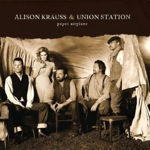
New music with ancient themes. Love these special gifts. Lyrics from each are so typical of each artist.

61bo4PGbrbL SL500 AA300

“Every silver lining
Always seems to have a cloud…”

— “Paper Airplane”, Paper Airplane, Alison Krauss and Union Station

51 C0qw6itL SL500 AA300

“I’ve done a thousand things wrong
(Far too many for me to name)
But I’m not too far gone
To fall
Headlong
Into the arms that love me”

— “Undamned”, The Long Surrender, Over the Rhine

(And thanks to the special woman who gave them to me!)

Limpid Leader

Limpid

The picture above is of one Limpid Lizard, one of the cast of a favorite comic strip of mine from many years ago. I post it from sheer nostalgia and was reminded of this alliterative character by a recent book on leadership.

A number of years ago my friend Bill Mills told me to trust no leader who does not limp. In his mind, of course, was the incident along the Jabbok where in wrestling with the Angel of God Jacob learned the meaning of grace, and carried with himself forever the reminder of his dependence upon God. He became a limping, and trustworthy, leader.

Coming highly recommended to me by a fellow pastor, I recently read Dan Allender’s similarly slanted book Leading with a Limp. Allender’s contention is that no one can authentically lead without being honest about his weaknesses and sins among those whom he leads. Leadership can, in some circles, be all about bluster and deception, about assumed strength and self-confidence, with the consequent fear that if one’s weaknesses became known, leadership capital would evaporate. Allender dismisses such illusions with an appeal for leaders to me more honest and transparent, believing that a certain authentic strength arises from such.

To articulate with any authority Allender’s counsel may take another reading. Or perhaps not. Perhaps my inability to articulate the prescriptive side of Allender’s thesis arises from the weakness of prescription in the book. He does not quite seem clear on what it is I am supposed to do with this knowledge. And yet, what he says in many ways rings true. It is good to be reminded with all that is expected of leaders that being someone they are not need not be one of them.

“This is Jesus. I want a lot of it.”

I was asked the other day about why I believe we should use leavened bread in the celebration of the Lord’s Supper. In response, I passed on something I wrote about that several years ago.

The Passover meal celebrated by Jesus and his disciples would have used a loaf of unleavened bread. Whatever it looked and felt like, my guess is that it was certainly NOT a wafer. And I would be surprised if it would have been mistaken for a Matzoh cracker. The wafer and the cracker have arisen as convenient forms for unleavened bread

But as they have, they have lost completely the picture of anything that would resemble food that sustains the hungry soul. There is no question that the bread used at the last supper was unleavened. There would have been no other bread available in a Jewish household on those occasions.

Communion breadBut if the Lord’s supper was to be celebrated more frequently than during the Passover, and in Acts it clearly seemed to be, then it would not be a perpetual diet of unleavened bread. That would not adequately convey our coming to Christ for regular sustenance. Rather, what should be used, and I suspect WAS used, was the regular leavened bread of everyday life.

The unleavened bread of Passover was symbolic of depravation… that in fleeing Egypt, there was not time to leaven the bread. But with the Lord’s supper we have quit fleeing, and we come regularly to eat with the one who sustains us… Jesus.

We should eat a big loaf of good, wholesome, leavened bread, and take a big chunk of it, acknowledging our hunger for and dependence upon him.

This reminded the woman who was asking of a little girl in her former church who would every week tear off about a third of the communion bread and shove it into her mouth saying,

“This is Jesus. I want a lot of it.”

Somehow I think that she was better at ‘discerning the body of Christ’ than many of the rest of us.

Census Bureau: Heaven and Hell Division

Every discussion of Rob Bell’s book Love Wins seems to include the idea that the position of historic Christianity is that heaven will be enjoyed by a select few. (My previous posts here and here include quotes containing that language.)

I am not scholarly enough to know what the majority opinion of Christianity has been. I do know that some infer from this passage that heaven is populated like Yellowstone and hell like Manhattan:

“Enter by the narrow gate. For the gate is wide and the way is easy that leads to destruction, and those who enter by it are many. For the gate is narrow and the way is hard that leads to life, and those who find it are few.” (Matthew 7:13-14)

That is a rather questionable inference from a passage not intended to address that subject at all.

I draw my heavenly census data from two related but distant passages of scripture. The first is the promise to Abraham:

And he brought him outside and said, “Look toward heaven, and number the stars, if you are able to number them.” Then he said to him, “So shall your offspring be.” (Genesis 15:5)

God saw fit to second that motion:

“I will surely bless you, and I will surely multiply your offspring as the stars of heaven and as the sand that is on the seashore.” (Genesis 22:17)

Of course, the New Testament (e.g. Romans 4) shows that these promises are intended to apply to those sharing Abraham’s faith, not his blood.

I’m of the distinct opinion that we will find heaven crowded. Very crowded. I think Abraham would have believed so. And John the apostle as well. His vision was so vast that it staggared his mind.

Then I looked, and I heard around the throne and the living creatures and the elders the voice of many angels, numbering myriads of myriads and thousands of thousands, 12 saying with a loud voice, “Worthy is the Lamb who was slain, to receive power and wealth and wisdom and might and honor and glory and blessing!” (Revelation 5:11-12)

Against this backdrop, I think both John and Abraham would have scoffed at any who would have suggested that only “a select few Christians will spend forever in heaven”. Don’t you?

More on Hell

Of all the talk that Rob Bell’s book Love Wins has generated, the most curious to me is the charge that those of us committed to historic Christianity have had so little to do with the doctrine of hell that we have thrown the door wide open for erroneous and heretical views. A Facebook friend posted this position:

The hubbub about Rob Bell is our fault. If evangelicals were not embarrassed about hell, we would not have this problem.

And with wider distribution was this on the Justin Taylor blog, Between Two Worlds, where Mr. Taylor posted with approval a longer post by Tony Payne. In this post, after deserved praise for Jonathan Edwards’ “Sinners in the Hands of an Angry God” (which, sadly, many may think is the only topic Edwards ever addressed because of its ubiquity, a fault Mr. Taylor corrects), Mr. Payne seems to confirm that there is a dearth of Hell preaching. Taylor suggests we are made uncomfortable by it.

This disappearance of hell is noted as well by John Wilson in an op-ed piece in the Wall Street Journal:

Something strange has happened in evangelical churches over the past generation. Not in every congregation, but in the main, sermons devoted to the grim prospect of hell have become rare, and even talk of heaven is muted.

I, for one, have no way to measure a) how much preaching on hell there is and b) how much is ‘just right’ in the broader culture. I do measure a) how much my sheep need to hear and b) how they can best hear and c) how any doctrine they hear is to be balanced against other aspects of gospel doctrine. And though an occasional reminder regarding my responsibility to preach the ‘whole counsel of God’ and what that looks like can be healthy, generally the appeals I hear are aimed at skewing my preaching in one direction or another depending upon the controversy du jour or the narrow focus of the complainant.

But the logic that an evangelical embarrassment and neglect has opened the door for a ‘heretical’ corrective makes no sense. Corrective to what?

IF the doctrine of hell has been systematically ignored in Christian churches, how does if follow that anyone would want to write a book dismantling a doctrine that has been ignored anyway? And how then could a book challenging a neglected subject capture a best selling audience? (It is now #3 at Amazon, ‘sandwiched’ between two diet books.)

I really think the opposite is probably true. It is an OVERemphasis and a misrepresentation of hell that has created the market and environment for Bell’s book and position to fly. Hell has been so gracelessly presented over the past generations that the preaching of conservative Christianity is equated with ‘hellfire and brimstone’. There is a discomfort regarding the doctrine not because it has been ignored, but because it has been mishandled. People are not turned off to hell because it has been silenced; they are turned off because we have allowed it to become severed from the full story of grace.

Richard Mouw, quoted in Geoff Henderson’s blog, reveals the unfortunate bent attached to so much teaching on hell when he asks

Why don’t folks who criticize Rob Bell for wanting to let too many people in also go after people…who want to keep too many people out? Why are we rougher on salvific generosity than on salvific stinginess?

Rob Bell is nothing if not a guide to sensing what a broad swath of American culture is feeling. And to this we should listen.

Some would have us respond by speaking more and more about hell. If we do it well, good could come. But I fear we will only perpetuate the caricature and harden, not soften, hearts. But we need not follow the lead of others like Rob Bell in recasting the doctrine in a way that makes it unrecognizable to the historic Christian soil it is such a rich part of.

The response should be for preachers to continue to preach carefully and faithfully a Christianity that is full of grace and truth, and for congregants to stick closely to faithful shepherds who evidence those twin passions. The shepherds should know what their sheep need to hear, and the sheep should trust their shepherds.

The End of the World, Part III

Subsequent to my posting titled “The End of the World” we had, as you all know, an earthquake and tsunami which did incomprehensible damage to the people and nation of Japan. That touches us all differently, but for some like the young man in my church who grew up in Japan, the impact was deeply felt.

But the earthquake led inevitably to people determining that this was another harbinger of the end of the world, because Jesus mentioned earthquakes in some of his prophetic teaching. I understand the longing for Jesus’ return. But there have been earthquakes in abundance since Jesus spoke, and wars, and rumors of wars. It may be that we are misreading those texts.

Which leads me to encourage your listening to the last couple of Christian education classes at the church I pastor. Ra McLaughlin, a superb teacher, has been teaching a class on basic biblical interpretation which we have only recently begun to record. But the two classes we recorded, posted here and here, have both been on the subject of the interpretation of prophecy. I think that all should find these very helpful.

Finally, though, as people in these matters wrestle with and debate the questions which swirl around the issues of life and death, present and future (in theological parlance, ‘eschatology’), Richard Lovelace has the best word:

“We must also insist that there is one factor of belief which almost always tends to disturb the practical usefulness of any eschatology: the notion that we can be certain now where we are on the eschatological time line. This is especially true if we assume we are near the end of the line, as so many have in past history….” (Richard F. Lovelace, Dynamics of Spiritual Life, page 413)

Page 11 of 71

Powered by WordPress & Theme by Anders Norén