Concerning Life as It Is Supposed to Be

Month: January 2009 Page 2 of 4

The Inauguration

I did not set out Tuesday to coordinate the inauguration of America’s first African-American president with lunch with an African-American friend; that is just the way it worked out. I’m glad it did, however.

My friend James grew up riding in the back of the bus and going to segregated schools and being refused pain killer for dental work. So it was a bit surreal to sit there with him at a restaurant while the TV screens around us showed scenes of the inaugural events.

As we were eating, James received a text which he showed me. The texter claimed to know why it was so cold all across the country. It was because, he said, that it had been so often claimed that ‘it would be a cold day in Hell when a black man became president’.

We shared a laugh with our pizza.

Benjamin Gump

I’ve not seen The Curious Case of Benjamin Button, though I hear it is worth seeing. However, even though I’ve only seen the trailer, this take on it is still hilarious.

(By the way, I checked. The screen writer is the same for both movies.)

Guilt and the Local Economy

The economic downturn has effected everyone in one degree or another. It has made me more sensitive to the needs of local merchants and small businesses. These are often companies which, because of their small size, are not as resilient as larger companies, and therefore not as able to absorb the ups and downs of the market. I bake and sell cinnamon rolls as a hobby, and of the five coffee shops I once supplied, three have gone out of business, one is struggling mightily, and the fifth is having a hard time selling rolls.

So, I am sensitive to the local merchants, and really, really want to support small, local, independents as much as possible.

It is just hard. I am not alone in that assessment.

When it comes to books, I tend to buy everything from Amazon.com. I am an Amazon Prime member, which means that after paying one fee each year, we can order anything from them and it is sent within 24 hours and ships free 2nd-day. So, normally, within two or three days of placing my order, I have what I was after. For $3.95 more, no matter the size of the item, I can have it the next day.

That is hard to beat.

But I wanted to try. So, at Christmas, I really wanted to buy The Tale of Despereaux. There is only one independent children’s bookshop near our house, and it is a 20 minute drive from our house, but I went there. It was small, but pleasant, and had one remaining copy, which I immediately snapped up. The kind proprietor suggested another book by the same author, and being a sucker for books, I bought that one, too.

That of course is the value of the independent, local bookstore. Personal service. I paid for the books, and while I waited for them to gift wrap them for me (for free) I wandered next door to look at the grown-up book store (‘adult’ bookstore would convey the wrong impression). There I found a book that I had been wanting to read, Good to Great, by Jim Collins. HPC associate Geoff loved it, and loaned me his copy, but I want to own my own so that I can mark it up. However, the book was $29.99, and it was Christmas, and one ought not to buy things for himself at Christmas. So, I let it be.

After Christmas, I began pondering all of this. I still wanted the book, so I decided to try an experiment. What would be the cost of supporting the local economy versus not doing so? Pretty steep in this regard. If I were to buy Good to Great, here would be the consequent costs:

Local bookshop:
Price of book: $31.94 (including tax)
Time to drive to and from store, pick it out, pay for it, etc.: One hour ($20.00@$20/hour) I’m not paid by the hour, but I chose this rate just for arguments’ sake.
Cost of trip at $.20/mile: $5.00
Total cost: $56.94
Obviously, I wouldn’t necessarily incur all those costs. I’d probably try to combine trips so that the time and transportation costs would be reduced. We still might be looking at $35-$40.

Used, online:
Price of book: $11.49 (including tax and shipping)
Time to find and order online: 15 minutes ($5.00)
Total cost: $16.49
With this, I’ve saved a minimum of $20 and perhaps much more. My time is hard to calculate, since it is, in once sense, priceless.
Amazon.com
Price of book: $18.87 (including tax and shipping)
Time to find and order online: 45 seconds ($0.30)
Total cost: $19.17
With this, I’ve saved at least $15, and still have a brand new book.

If I were closer to the bookstore, perhaps things would be different. I’d calculate the value of the relationship with the store owner, the value of visibility as a Christian, the opportunity to meet other book lovers, and so on. However sheepishly I must do it, I find I’ll still be buying books from the big boys online. It is just too convenient. And cheap.

Arguing Beyond

On Wednesday night, our elders met for a very long meeting. It was good, there was much we shared, there was great honesty, and God was honored.

However, at one point, one of the elders made a point, which I passionately hopped on. I made a very strong case addressing, I thought, the weaknesses in his position.

He later pointed out to me that he had not made a case, he had simply raised a question. Which was true. And I had to confess to him that I was arguing against a ghost standing beyond him. He had raised a question, and in the question I heard an implied conclusion that had been drawn and defended by many in my experience over the years. So, his question triggered an automatic response aimed not at him, but at those ghosts beyond him.

I apologized to him.

This arguing ‘beyond’ I find I do too often. I must be reminded to take the time to really hear what another is saying before I respond. So, to all who have the occasion of ever differing with me, know that sometimes the intensity of my response is aimed at those beyond you, and not necessarily at you.

Overheard at Panera

Woman tries to sit and drops her cane near a table at which a husband and wife sit.

Wife: Get it, Frank. [Frank obliges.]

Cane woman: [To wife] Thank you.

Wife: You’re welcome.

Poor Frank. He gets no credit.

NY Times on Mark and John

This article, Who Would Jesus Smack Down, appeared in the Sunday NYTimes on January 11 and soon became one of this week’s most emailed articles, a measure of the article’s public popularity. I would encourage you to read the whole article. One friend called it a ‘fantastic article’ and went on to say, ‘When I think about the Times’ readership reading this article I get excited because it will strike a favorable chord with those who don’t (for whatever reason) like traditional church style and culture.”

Certainly, it is good for those who have formed stereotypical ideas of church and the norms of the Christian life, it is good to have someone like Driscoll and Keller out there turning heads and breaking the molds.

In shaking up some stereotypes, however, the article perpetuates others. I have this irresistible urge to isolate and comment on a few of them.

“But what is new about Driscoll is that he has resurrected a particular strain of fire and brimstone, one that most Americans assume died out with the Puritans: Calvinism, a theology that makes Pat Robertson seem warm and fuzzy.”

Wow. Where does one start with that? Calvinism as a strain of ‘fire and brimstone’? The fire in Calvinism is not simply a deep appreciation for the holy justice of God; it is more the heart on fire and impassioned for the things of a God of grace. There is more warmth and ‘fuzzy’ comfort in Reformed truth than there is fire and brimstone.

“Yet his message seems radically unfashionable, even un-American: you are not captain of your soul or master of your fate but a depraved worm whose hard work and good deeds will get you nowhere, because God marked you for heaven or condemned you to hell before the beginning of time.”

I suppose this is one way of looking at it. But if any who read this blog would like to understand the sweet nuances of what we know as the ‘perseverance of the saints’ I’d sure love to talk with you about it. Tell me what Starbucks and a day and time, and let’s do it.

“Calvinism has somehow become cool…”

That is so, uh, cool! I’m hip again!

At Mars Hill [Driscoll’s church], members say their favorite movie isn’t “Amazing Grace” or “The Chronicles of Narnia” — it’s “Fight Club.”

“Fight Club” is a far better movie than “Narnia.” I don’t understand it, but it has struck a chord with a certain demographic.

“What really grates is the portrayal of Jesus as a wimp, or worse. Paintings depict a gentle man embracing children and cuddling lambs. Hymns celebrate his patience and tenderness. The mainstream church, Driscoll has written, has transformed Jesus into “a Richard Simmons, hippie, queer Christ,” a “neutered and limp-wristed popular Sky Fairy of pop culture that . . . would never talk about sin or send anyone to hell.”

I could never put it like that. But no one who loves Christ can be comfortable with the way Jesus is portrayed in must popular and public media.

Eventually the author tries to summarize Reformed theology for the Times’ readers. I want to make some comments on this, but let me say this first; to her credit, the author is attempting to summarize something very complex for an audience that would not have the patience to really hear it opened at length. She gives it a good try, and I don’t know if I could do better in such a short space. She says:

“Human beings are totally corrupted by original sin and predestined for heaven or hell, no matter their earthly conduct.”

Responsible representations of Reformed Christianity note that conduct does matter. We MUST grasp hold of Christ by faith and we must bear fruit in keeping with repentance. These actions do not earn our salvation, but confirm it. Nevertheless, it is not exactly correct to exclude conduct from the picture.

“We all deserve eternal damnation, but God, in his inscrutable mercy, has granted the grace of salvation to an elect few.”

I love to hear the words ‘mercy’ and ‘grace’ here. But ‘few’? Where did that come from? The elect will be, according to God’s promise to Abraham and John’s vision in Revelation, uncountable. Sadly, I find many Calvinists still thinking in terms of few. That’s just not right.

While John Calvin’s 16th-century doctrines have deep roots in Christian tradition, they strike many modern evangelicals as nonsensical and even un-Christian. If predestination is true, they argue, then there is no point in missions to the unsaved or in leading a godly life.

Ironically, of course, many of the greatest missionaries, preachers, and evangelists have been the most passionate Calvinists. And the reality is a deep appreciation of Reformed-tinted grace drives us toward, not away from, godliness.

“Over the past two decades, preachers in places as far-flung as Minneapolis and Washington, D.C., in denominations ranging from Baptist to Pentecostal, are pushing “this new, aggressive, mission-minded Calvinism that really believes Calvinism is a transcript of the Gospel,” according to Roger Olson, a professor of theology at Baylor University.”

Olson is no friend of Calvinism. Curious she would seek him out for comment.

“Calvinism is a theology predicated on paradox: God has predestined every human being’s actions, yet we are still to blame for our sins; we are totally depraved, yet held to the impossible standard of divine law.”

Actually, Christianity is predicated on what some see as paradox. God is one God in three persons. Jesus is both God and Man. Nothing new here.

“Unlike fundamentalists who isolate themselves, creating “a separate culture where you live in a Christian cul-de-sac,” as one spiky-haired member named Andrew Pack puts it, Mars Hillians pride themselves on friendships with non-Christians. They tend to be cultural activists who play in rock bands and care about the arts, living out a long Reformed tradition that asserts Christ’s mandate over every corner of creation.”

This is a far better assessment of what Reformed Christians ought to be.

“Nowhere is the connection between Driscoll’s hypermasculinity and his Calvinist theology clearer than in his refusal to tolerate opposition at Mars Hill.”

This is where the article gets a bit scary. It is Calvinistic to refuse to tolerate opposition? The appeal is made to Calvin’s practice:

“John Calvin had heretics burned at the stake and made a man who casually criticized him at a dinner party march through the streets of Geneva, kneeling at every intersection to beg forgiveness.”

This is the point at which the understandable misunderstandings of Calvinism leave off and the slander of the man John Calvin begin. For a journalist, this is not acceptable and should be corrected or proved. It has been a while since I last studied Calvin’s life, but this much I’m sure of: there was one heretic burned while he was in Geneva, Michael Servetus. I’ve read differing accounts regarding Calvin’s involvement in this, but it seems clear that it was the Geneva council which ordered the execution, not Calvin, and some accounts suggest that he pled for leniency. But even it he had a direct hand in this, to then generalize one incident into a blanket plural statement is unjust.

As to the other assertion, I’ve never heard of that one before. It is so far out of character regarding what I know of Calvin as to be ludicrous. Calvin could be moved to invective when the honor of God was at stake, but not in defense of his own paltry honor.

“Mars Hill is not 16th-century Geneva, but Driscoll has little patience for dissent.”

All that follows that comment should be taken with a grain of salt. if the author can repeat hearsay about Calvin, she can repeat hearsay about Driscoll. That said, we should note that Mars Hill / Driscoll are independent. There is no ecclesiological accountability as there is in Presbyterian churches. This is, to me, their Achilles heel. A great weakness which could easily undue a great work.

And finally:

“Driscoll’s New Calvinism underscores a curious fact: the doctrine of total human depravity has always had a funny way of emboldening, rather than humbling, its adherents.”

An odd statement indeed. Those who most truly understand the doctrines of grace should be the most humble. If we who are reformed have not expressed and lived that humility, then we have not in the least understood the Calvinism we pretend to profess.

I can’t believe what I’ve just done. I’ve interacted with the NYTimes on the subject of Calvinism. Would that have happened without Mark Driscoll (or Tim Keller)? Not likely. Thanks, Mark.


Pugnacious Language

Once upon a time, I was having a conversation with a ‘theonomist’ over lunch. You need have no idea what a theonomist is or was to understand the drift of the conversation. My friend was deeply persuaded of his convictions.

Among my criticisms of his ‘theonomic’ position was one which to me revealed something of the problematic fruit of the position. Authors in that camp tended to use quite abusive language when speaking of their opponents, and I found this lack of charity toward fellow Christians to be disturbing.

In defense, my friend made reference to the pointed and pugnacious language that Calvin employed critiquing those whose positions he opposed. Lack of charity was not, apparently the issue. The issue was that I was too sensitive and too wimpy to not see that such language is acceptable, if not absolutely manly and courageous in the heat of battle.

This insipid excuse for a man, this dog, this spineless Calvinistic lemming seemed to be persuaded that…

Oops.

My friend seemed to be persuaded that if it was okay for Calvin, it would be okay for us.

But not so fast.

As I have said time and again, there is much to be appreciated and emulated in Calvin. But not this. John T. McNeill, the editor of the Westminster/John Knox edition of Calvin’s Institutes articulates the same concern. McNeill says:

“On occasion, Calvin shows a typically humanist mastery of the language of disparagement and vituperation. His horror of abuses led him at times to use epithets of abuse, and he sometimes resorts to this in assailing the legitimate views of an opponent. This is a deplorable feature by which in parts Calvin’s work is marred for the sensitive reader, but it is not so prevalent as some critics have charged; and in his case invective is not a substitute for argument, but a misconceived attempt to enhance its force.” (page lxxi)

I began writing this a week ago for the sake of those who would be reading Calvin this year. Now it has taken on a certain unexpected relevance given a recent article in the NY Times about Seattle Pastor Mark Driscoll.

I am a fan of Driscoll. And I am obviously a fan of Calvin. But there are things about both men that need to be heard with discernment. We cannot follow either man completely.

At the same time, both men are in some respects larger than life, and around such men falsehood and error will swirl. We need to take what we hear, especially in newspapers and on the internet with great care.

I hope in an upcoming post to comment more directly on this Times article. Stay tuned. Learn from Calvin; learn from Driscoll, you… good person.

UPDATE: Philadelphia’s Philip Ryken has some brief comments on the NYTimes piece here. I’ll post my more lengthy response tomorrow.

Overheard at Starbucks

“I’m going to start playing the saxophone. For ninety days, I’ll be horrific. At the end of the year, I’ll be able to perform.”

That’s confidence for you. Or bravado.

Read Any Biographies Lately? Part 2

This is a very selective list from my very selective memory. I list them in no particular order.

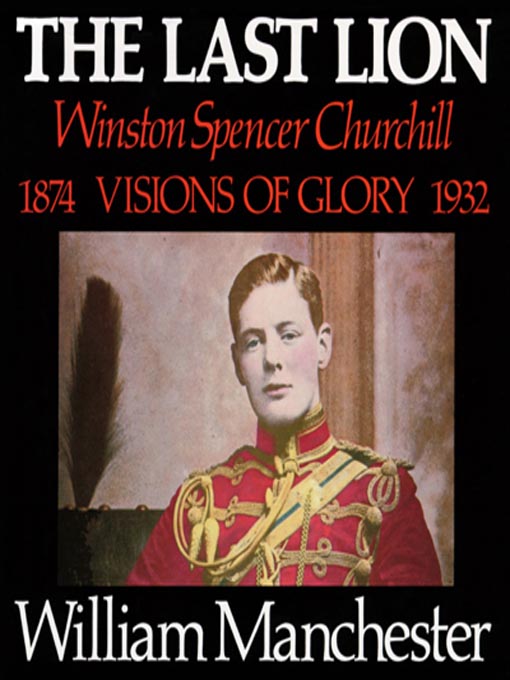
William Manchester, The Last Lion This is a two-volume bio of Winston Churchill which ends with him becoming prime minister. The proposed third volume was never published. Manchester is a spell binding author. In order to show how Churchill was a product of the age in which he was raised, the first 100 pages of the first volume is an overview of Victorian England, in which the phenomenal ministry of Charles Spurgeon is referenced. Those first 100 pages are worth the read. For a long time I awaited the publication of the third volume. Eventually, I wrote to Mr. Manchester asking for insight into when we might be able to read the volume. I received a gracious, handwritten note from Mr. Manchester’s personal secretary informing me that he had had a stroke and would not be finishing the work. That made me very sad.

William Manchester, American Caesar This bio of Douglas MacArthur is another Manchester treasure. It would be interesting for me to revisit this one after finishing my read of Truman since paths of these two men, shall we say, clashed. MacArthur is an interesting study in leadership. Perhaps this is why this book shows up on the lists of several prominent Christian leaders in a list at the back of Kent Hughes’ Disciplines of a Godly Man.

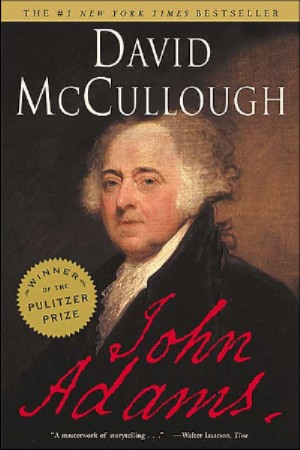
David McCullough, John Adams I’ve already said enough about this one. Rarely do I stay up late at night just to read a book. This one fell into that category.

Andrew Bonar, The Memoirs and Remains of Robert Murray McCheyne Perhaps McCheyne is not known to you and perhaps the title puts you off. (I mean, what are ‘remains’ anyway? Are there pieces of bone and hair in a baggie in the back?) However, McCheyne, a Scottish pastor, was a man, like Jim Eliot, whose spiritual insight matured early and whose life ended early, but whose impact lasted far beyond his years. He was a man in love with his Savior.

James W. Alexander, Archibald Alexander I’m a pastor, so I might be drawn inordinately to books about pastors. Archibald Alexander was not only a pastor, but in 1812 he was installed as the founding professor of Princeton Seminary. I found this bio very encouraging as a pastor and as a father. It was written by his son, who himself became a professor at Princeton. If you are familiar with another Princeton professor, the son of Charles Hodge, by the name of A. A. Hodge, three guesses what the ‘A. A.’ stands for.

George Marsden, Jonathan Edwards I am a fan of both this book and the one by Ian Murray of the same title. I was reading the Murray bio when my now 17 year old daughter was born. If you read either bio you will learn why we gave her the name ‘Jerusha’. I prefer the Marsden bio because it’s newer and because he does expose Edwards’ humanness in a way that makes him seem far more rounded.

James Robertson, Stonewall Jackson I’ve read three biographies of Jackson. All three treat Jackson with great respect and not disdain. He was a curious and in some ways puzzling man with sufficient idiosyncrasies to label him an odd genius. All that, together with his obvious piety, make him a man worth knowing.

Arnold A. Dallimore, George Whitefield A two volume work of massive scope of a man whose life impacted Christianity in England and on the American continent. He was a friend of John and Charles Wesley and of Benjamin Franklin. He was passionate about his Calvinism and his evangelism, a combination that is far more common than critics imagine. The amazing thing here is that at the end of volume one, Whitefield is only 25 years old. Wow.

Ian Murray, Martyn Lloyd-Jones I am told that in the 60s there were two churches in London to which students studying there would flock, John Stott’s All Souls and D. Martyn Lloyd-Jones Westminster Chapel. The two men differed, but both had huge and influential ministries. I’d read a bio of either. This two-volume work was written by a man very close to Lloyd-Jones, and so probably lacks the critical distance one might want to see in a biography. But I don’t care. He was an amazing man with an amazing ministry.

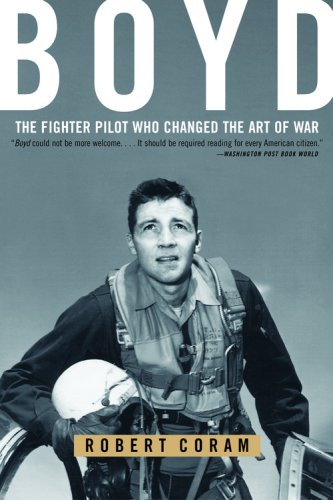
Robert Coram, Boyd: The Fighter Pilot Who Changed the Art of War An intern at our church was an Air Force guy who put me onto this book about John Boyd, an Air Force fighter pilot who rethought how war was to be fought. His ideas were rejected by the Air Force and embraced by the Marine Corps, and continue to be the subject of heated debate. The book is fascinating on that score, and as a study of leadership. The author is a devotee of Boyd, and so is perhaps imbalanced because of that. Still fascinating.

And finally, one that I would like to read, is this:

Donald Carson, Memoirs of an Ordinary Pastor [Okay, I haven’t read this one yet, but I love the title and hope to read it soon, though I suspect this guy was not as ordinary as the title suggests.]

So, what are your favorites?

Read Any Biographies Lately?

A friend the other day wanted to know what biographies I would recommend. I’ve a few, which I will mention here, but I’m particularly interested in what biographies you all might recommend as well.

When I was a boy, I devoured Landmark biographies from our local library. They were small, easy to read, and written about all kinds of really interesting people. I’m older now, and the biographies I read are correspondingly longer, and the time available proportionally shorter, so I don’t read them as much. And I find that I read biographies differently now than I used to.

When I was younger, biographies inspired me. They opened up horizons for what I might do and gave me encouragement as to how to live my life. As I grew older I found that biographies began to frustrate me as I realized that the men about whom I was reading were men of rare gifts and unusual accomplishments alongside of which my own abilities paled. Inspiration faded into regret.

That was, of course, my pride interfering. As I read them now, I read them for the insight they give to the human side of history. But, more significantly, I read them to see the hand of God’s remarkable providence in the lives of people who have impacted the world in which we live.

A couple weeks ago, I took up David McCullough’s massive bio of Harry Truman. Creatively titled Truman, it is over 900 pages long. I had settled in for the months it was going to take me to complete.

That time has now been extended.

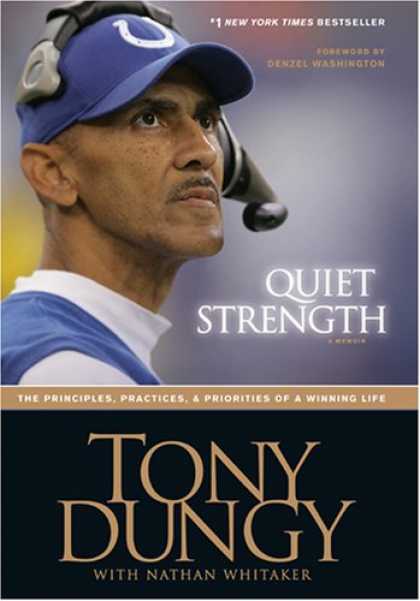
For Christmas, my son gave me Quiet Strength, Tony Dungy’s ghost written memoir, with the admonition that I must read it. He read it last summer, as did my associate Geoff, and both were great fans of the book.I have always been impressed with Dungy, and so it did not take much to get me to put Truman on the shelf and take up Dungy.

The book itself is no masterpiece. But the man about whom it is written is a gem. I could gush for some time about this guy. And just a couple days ago, my sister recommended this book about Theodore Roosevelt, which led me to a David McCullough work on Roosevelt. This may end up being the year of the biography.

Back to the original question: What are my favorites? I’ll save that for the next post.

Page 2 of 4

Powered by WordPress & Theme by Anders Norén